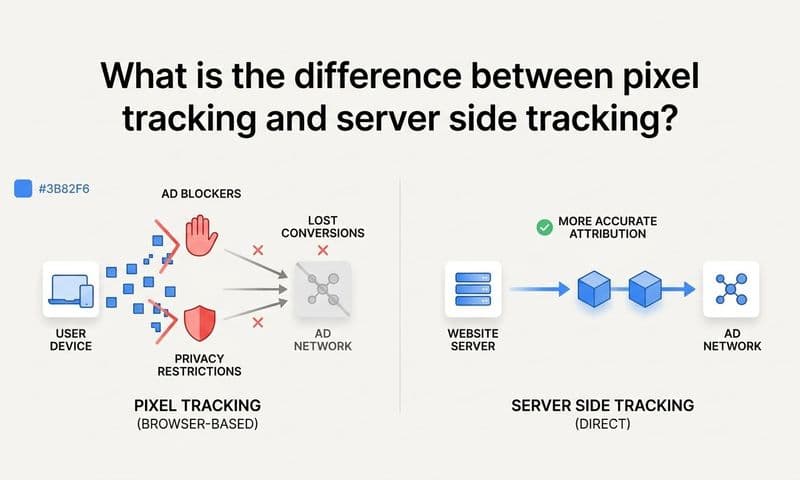

Browser-based tracking is losing ground fast. Cookie deprecation, ad blockers, and tightening browser privacy settings are making client-side pixels less reliable by the day. For B2B SaaS marketing teams that depend on accurate conversion data to make budget decisions, this creates a real problem: the data you're optimizing against may be incomplete, delayed, or simply wrong.
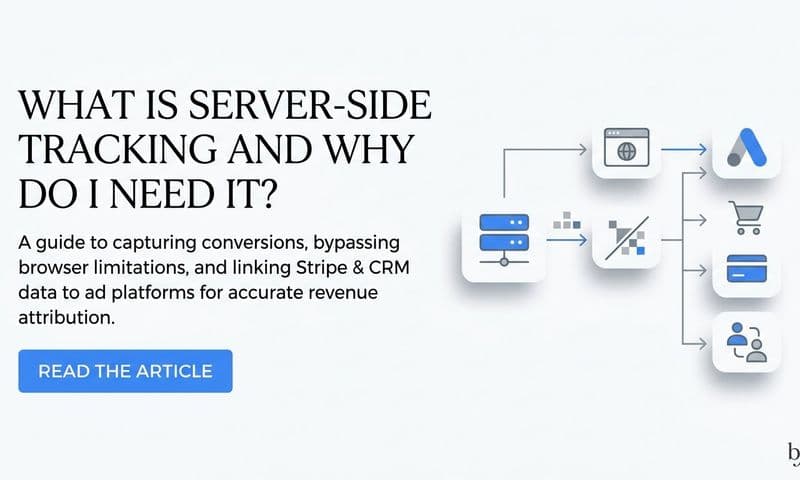
API-based tracking solutions bypass the browser entirely. They send conversion events directly from your server to ad platforms and analytics tools, producing cleaner data, fewer gaps, and attribution you can actually trust. Whether you're running paid campaigns on Meta and Google, managing a complex multi-touch funnel, or trying to connect ad spend to closed revenue, server-side tracking has become a foundational requirement in 2026.
Here are the top API-based tracking solutions evaluated on data accuracy, integration depth, attribution capabilities, and ease of setup for marketing and growth teams.
1. Cometly
Best for: B2B SaaS marketing teams that need end-to-end attribution from first ad click to closed-won revenue.
Cometly is a marketing attribution and analytics platform built specifically for B2B SaaS companies, combining server-side conversion tracking with multi-touch attribution and revenue reporting in one place.
 9 Best Attribution Platforms for Agencies in 2026
Where This Tool Shines
Cometly's core strength is connecting the dots across the entire revenue journey. Most tracking tools stop at the lead or the click. Cometly goes further, linking ad spend directly to pipeline entries and closed-won deals by integrating with Stripe and CRM data. That means your marketing team can see not just which campaigns generated leads, but which ones generated revenue.
The AI ads manager adds another layer of value. Instead of manually sifting through campaign data, Cometly's AI identifies which ads and channels are actually driving results and surfaces recommendations for scaling or cutting spend. For teams managing significant budgets across multiple platforms, this kind of signal clarity is genuinely useful.
Key Features
Server-Side Conversion API Integration: Sends conversion events directly to Meta CAPI, Google Enhanced Conversions, and other ad platforms, bypassing browser limitations for more reliable data.
Multi-Touch Attribution: Tracks every touchpoint across the full customer journey, giving marketing teams a complete picture of what influenced each conversion.
Pipeline and Revenue Attribution: Connects ad data to Stripe and CRM records so you can measure actual revenue impact, not just lead volume.
AI Ads Manager: Analyzes campaign performance across channels and recommends which ads to scale, pause, or reallocate budget toward.
70+ Native Integrations: Connects with ad platforms, CRMs, and data tools without requiring custom engineering work.
Real-Time Customer Journey Analytics: Provides first-party data enrichment and live visibility into how prospects move through the funnel.
Best For
Cometly is the right fit for B2B SaaS marketing teams and growth leaders who want a single source of truth across their entire revenue funnel. It's particularly well-suited for companies running paid acquisition across multiple channels and needing to connect ad performance to actual pipeline and revenue, not just top-of-funnel metrics.
Pricing
Paid plans available with pricing based on company size and data volume. Contact Cometly directly for a tailored quote that fits your team's needs.
2. Segment
Best for: Data and engineering teams that need a flexible, centralized event routing layer.
Segment is a customer data platform that acts as a centralized data pipeline, collecting server-side events and routing them to hundreds of downstream tools.
 9 Best Conversion Tracking Alternatives to Pixels in 2026
Where This Tool Shines
Segment's value is in its flexibility. Rather than being locked into a single analytics or ad platform, you collect events once and send them anywhere: Meta CAPI, Google Enhanced Conversions, your data warehouse, your CRM, your email platform. For companies with mature data infrastructure, this hub-and-spoke model reduces duplication and keeps data consistent across tools.
The Protocols feature is worth calling out separately. It enforces schema governance on your event data, catching naming inconsistencies and schema drift before they corrupt downstream reports. For teams that have experienced the pain of mismatched event names across tools, this is a meaningful capability.
Key Features
Server-Side Event Collection: Collects events via source libraries and a robust HTTP API, keeping data collection off the browser.
300+ Destination Integrations: Routes events to Meta CAPI, Google Enhanced Conversions, data warehouses, and hundreds of other tools.
Identity Resolution: Unifies user profiles across touchpoints and sessions for more accurate attribution.
Protocols: Enforces data quality and schema governance to maintain consistent event naming and structure.
Real-Time and Batch Forwarding: Supports both real-time event streaming and batched delivery depending on destination requirements.
Best For
Segment is best suited for companies with dedicated data or engineering resources who need maximum flexibility in how they collect and route event data. It requires more technical setup than purpose-built attribution tools but offers unmatched destination coverage.
Pricing
Free tier available for up to 1,000 monthly tracked users. Paid plans start at $120 per month. Enterprise pricing is available for larger data volumes.
3. Stape
Best for: Marketing teams that want server-side GTM deployments without managing infrastructure.
Stape is a server-side tagging infrastructure provider that hosts and manages Google Tag Manager server containers, making CAPI and Enhanced Conversions deployment accessible without deep engineering resources.
 9 Best API-Based Tracking Solutions for B2B SaaS in 2026
Where This Tool Shines
Setting up a server-side GTM container from scratch involves provisioning cloud infrastructure, configuring domains, and managing server costs. Stape removes all of that. You get a managed server container environment where you can deploy Meta CAPI and Google Enhanced Conversions tags the same way you would in a standard GTM setup, just server-side.
The first-party cookie extension is a particularly practical feature. It extends cookie lifespans beyond the limits imposed by Safari's ITP and similar browser restrictions, which helps maintain session continuity and improves attribution accuracy for returning visitors.
Key Features
Managed GTM Server Container Hosting: Handles infrastructure so you can focus on tag configuration rather than server management.
Pre-Built CAPI and Enhanced Conversions Connectors: Simplifies setup for the two most critical server-side ad platform integrations.
First-Party Cookie Extension: Extends cookie lifespans to improve session tracking and attribution accuracy across browsers.
User Data Enrichment: Improves event match quality scores by enriching events with available user data before sending to ad platforms.
No Infrastructure Management Required: Fully managed environment with simple setup, even for non-technical marketers.
Best For
Stape is ideal for marketing teams and agencies that already use Google Tag Manager and want to upgrade to server-side tracking without involving engineering. It's a practical middle ground between fully manual GTM server setups and more comprehensive attribution platforms.
Pricing
Starts at approximately $25 per month depending on server request volume. Volume-based pricing is available for higher-traffic deployments.
4. RudderStack
Best for: Data-forward teams that want open-source flexibility and warehouse-native architecture.
RudderStack is an open-source customer data platform with a warehouse-native architecture, allowing data teams to collect server-side events and sync them directly to cloud data warehouses.
 9 Best API-Based Tracking Solutions for B2B SaaS in 2026
Where This Tool Shines
RudderStack's warehouse-native approach is its defining characteristic. Instead of treating your data warehouse as just another destination, RudderStack treats it as the primary source of truth. Events flow into Snowflake, BigQuery, or Redshift first, and from there you can activate data back into ad platforms and CRMs via Reverse ETL. For teams that already have a strong data warehouse practice, this architecture fits naturally.
The open-source option also gives engineering teams full control over deployment, customization, and data residency. For companies with strict data governance requirements, self-hosting is a meaningful advantage.
Key Features
Open-Source Server-Side SDKs: Available for multiple programming languages, giving engineering teams flexibility in implementation.
Warehouse-Native Architecture: Syncs directly to Snowflake, BigQuery, and Redshift as primary destinations, not afterthoughts.
200+ Destination Integrations: Covers Meta CAPI, Google Ads, and a broad range of marketing and analytics tools.
Reverse ETL: Activates warehouse data back into ad platforms and CRMs for audience building and campaign optimization.
Self-Hosted or Cloud Options: Supports both deployment models depending on your data control and compliance needs.
Best For
RudderStack suits data engineering teams at growth-stage or enterprise SaaS companies that want open-source flexibility, warehouse-first architecture, and the ability to self-host their data infrastructure.
Pricing
Free open-source tier available. Cloud plans start at $0 for up to 500,000 monthly events. Enterprise pricing available for larger volumes.
5. Elevar
Best for: Teams focused on maximizing Meta CAPI and Google Enhanced Conversions match quality.
Elevar is a conversion tracking platform purpose-built to improve the accuracy of Meta CAPI and Google Enhanced Conversions through first-party data enrichment and event deduplication.
 9 Best Conversion API Tools for Marketers in 2026
Where This Tool Shines
Elevar is laser-focused on one thing: making sure the events you send to Meta and Google are as complete and accurate as possible. It does this by enriching server-side events with first-party user data, which directly improves event match quality scores. Higher match quality means the ad platform's algorithm gets better optimization signals, which typically translates to more efficient campaign performance.
The automatic deduplication between browser pixel and server-side events is a critical feature that's easy to overlook. Without proper deduplication, running both a browser pixel and a server-side API simultaneously can inflate conversion counts and send incorrect signals to ad platform algorithms.
Key Features
Server-Side Event Tracking: Sends conversion events directly to Meta CAPI and Google Enhanced Conversions, bypassing browser limitations.
First-Party Data Enrichment: Maximizes event match quality by enriching events with available customer data before transmission.
Automatic Event Deduplication: Prevents double-counting of events sent via both browser pixel and server-side API simultaneously.
Pre-Built Platform Integrations: Connects with major e-commerce and SaaS platforms without requiring custom development.
Data Accuracy Reporting: Provides visibility into match quality scores and event accuracy metrics over time.
Best For
Elevar is a strong fit for performance marketing teams that run significant Meta and Google ad spend and want to ensure their conversion signals are as accurate and complete as possible for algorithm optimization.
Pricing
Plans start at $50 per month. Higher-tier plans are available based on event or order volume.
6. Triple Whale
Best for: Marketing teams that want server-side tracking combined with creative analytics and multi-touch attribution.
Triple Whale is an attribution and analytics platform that pairs a first-party server-side pixel with multi-touch attribution modeling and creative performance analytics.
 9 Best API-Based Tracking Solutions for B2B SaaS in 2026
Where This Tool Shines
Triple Whale's combination of server-side data collection and creative analytics is its standout differentiator. Most tracking tools focus on which channels drive conversions. Triple Whale goes a level deeper, showing you which specific ads and creatives are performing within those channels. For teams that produce a high volume of ad creative and need to understand what's resonating, this is genuinely useful data.
The multi-touch attribution models, including linear, time-decay, and data-driven options, give marketers flexibility in how they evaluate channel contribution. Switching between models within the same dataset helps teams pressure-test their assumptions about which channels deserve budget.
Key Features
First-Party Server-Side Pixel: Collects conversion data directly, reducing reliance on browser-based tracking.
Multi-Touch Attribution Models: Supports linear, time-decay, and data-driven attribution across the full customer journey.
Creative Analytics Dashboard: Evaluates ad-level performance to identify which creatives are driving the most efficient results.
Cohort Analysis and LTV Reporting: Tracks customer lifetime value and cohort behavior over time for longer-term performance assessment.
Multi-Platform Integration: Connects with Meta, Google, TikTok, and other major ad platforms in a unified dashboard.
Best For
Triple Whale is well-suited for marketing teams running multi-channel paid campaigns with significant creative volume, particularly those who want attribution modeling and creative performance data in a single interface.
Pricing
Plans start at $129 per month. Pricing scales based on monthly revenue or ad spend volume.
7. Northbeam
Best for: CMOs and performance marketers managing high-spend, multi-channel campaigns that require budget forecasting.
Northbeam is a marketing intelligence platform that layers media mix modeling on top of server-side event data, helping marketing leaders make confident budget allocation decisions.
Where This Tool Shines
Northbeam operates at a higher strategic layer than most tracking tools. While other platforms help you understand what happened, Northbeam helps you model what will happen if you shift budget between channels. Its media mix modeling capability is designed for teams spending enough across channels to make incremental budget decisions meaningful.
The incrementality testing tools add rigor to channel performance evaluation. Rather than relying solely on attribution models that can overweight certain channels, incrementality testing helps marketers validate whether a channel is actually driving lift or simply taking credit for conversions that would have happened anyway.
Key Features
Server-Side Data Collection: Gathers conversion events using first-party pixel infrastructure for reliable, clean data.
Media Mix Modeling: Provides cross-channel budget forecasting to guide spend allocation decisions at a strategic level.
Custom Attribution Windows: Allows configuration of attribution windows by channel and campaign type for more accurate measurement.
Incrementality Testing: Validates whether individual channels are generating true incremental lift in conversions.
Executive Reporting Dashboards: Designed for CMO and leadership visibility with high-level performance summaries.
Best For
Northbeam is built for performance marketing teams and CMOs at companies with significant monthly ad budgets who need media mix modeling and incrementality testing to make confident cross-channel budget decisions.
Pricing
Custom pricing based on ad spend volume. Typically suited for teams with substantial monthly advertising budgets. Contact Northbeam for a quote.
8. Rockerbox
Best for: Mid-market companies with complex, multi-channel acquisition funnels that include offline and view-through channels.
Rockerbox is a marketing attribution platform that combines server-side tracking with multi-touch attribution modeling and view-through analysis for companies with sophisticated acquisition funnels.
Where This Tool Shines
Rockerbox handles attribution complexity that simpler tools struggle with. Its view-through attribution modeling is particularly valuable for companies running upper-funnel channels like display, video, or connected TV, where conversions often happen long after the impression and are easy to miss with standard click-based attribution.
The unified marketing data platform also brings together paid, organic, and offline channel data in one place. For mid-market companies that run a mix of digital and offline acquisition, having a single platform that can attribute across all of those channels reduces the need for manual data stitching in spreadsheets.
Key Features
Server-Side Event Tracking: Collects conversion data with first-party infrastructure, reducing browser dependency.
Multi-Touch Attribution: Models contribution across paid, organic, and offline channels throughout the customer journey.
View-Through Attribution: Captures the influence of upper-funnel impressions that don't result in immediate clicks.
Unified Marketing Data Platform: Connects ad platforms and CRM data into a single attribution environment.
Custom Reporting and BI Export: Supports custom reporting configurations and data export to business intelligence tools.
Best For
Rockerbox is a strong fit for mid-market and growth-stage companies with complex, multi-channel funnels that include offline touchpoints, upper-funnel display or video campaigns, and a need for flexible attribution modeling.
Pricing
Custom pricing designed for mid-market and growth-stage companies. Contact Rockerbox directly for a tailored quote.
9. Heap
Best for: Product-led growth teams that need complete behavioral data without manual event instrumentation.
Heap is a product analytics platform that automatically captures all user interactions server-side without requiring pre-defined event schemas or manual tagging.
Where This Tool Shines
Heap's auto-capture approach solves one of the most persistent pain points in product analytics: the instrumentation gap. With traditional event tracking, you can only analyze events you thought to track in advance. Heap captures everything automatically, which means you can retroactively analyze user behavior you didn't know you'd need to measure when you first set things up.
For product and marketing teams at product-led growth companies, this is particularly valuable. You can go back in time and analyze the behavioral patterns of users who converted to paid, without needing engineering to instrument those specific events before the fact.
Key Features
Automatic Server-Side Event Capture: Captures all user interactions without requiring pre-defined schemas or manual event tagging.
Retroactive Analysis: Enables analysis of historical behavioral data using events defined after the fact.
Session Replay and Journey Visualization: Provides qualitative context for quantitative behavioral data.
Ad Platform and CRM Integration: Connects product behavioral data with marketing and sales data for cross-functional analysis.
Funnel Analysis and Cohort Reporting: Tracks conversion funnels and cohort behavior for both product and marketing use cases.
Best For
Heap is ideal for product-led growth companies and product marketing teams that need comprehensive behavioral analytics without creating engineering bottlenecks around event instrumentation.
Pricing
Free tier available for up to 10,000 monthly sessions. Paid plans available for higher volumes. Contact Heap for enterprise pricing details.
Choosing the Right API-Based Tracking Solution for Your Team
The right tool depends on what problem you're actually trying to solve. Here's a quick breakdown to help you decide.
If you're a B2B SaaS marketing team that needs to connect ad spend directly to pipeline and closed-won revenue, Cometly is the most purpose-built option. It combines server-side conversion tracking with multi-touch attribution, CRM integration, and AI-driven campaign recommendations in a single platform. For teams that have struggled to prove marketing's impact on revenue, this is where to start.
If you need a flexible data routing layer and have engineering resources to support it, Segment or RudderStack will give you the most destination coverage and architectural control. RudderStack is the better choice if your team is warehouse-first and wants open-source flexibility.
If your primary goal is improving Meta CAPI and Google Enhanced Conversions match quality without overhauling your stack, Stape or Elevar are practical, focused solutions that deliver results without heavy implementation overhead.
For teams that need strategic budget allocation tools layered on top of server-side data, Northbeam and Rockerbox serve different segments of that need. Northbeam fits high-spend teams that want media mix modeling. Rockerbox fits mid-market companies with complex, multi-channel funnels including offline channels.
If creative analytics and multi-touch attribution in a single interface is the priority, Triple Whale is worth evaluating. And if behavioral product data without engineering bottlenecks is the goal, Heap stands apart from the rest of this list as a product analytics tool rather than a pure ad tracking solution.
For B2B SaaS teams ready to move beyond unreliable browser-based pixels and build attribution they can actually trust, exploring how server-side tracking connects to full-funnel revenue reporting is the natural next step. Get your free demo of Cometly today and see how it connects every touchpoint from first ad click to closed-won revenue.