Outbound campaigns are supposed to generate pipeline. Your team is sending email sequences, running LinkedIn ads, making cold calls, and layering in retargeting. Activity is happening. But when leadership asks which outbound channels are actually driving revenue, the honest answer is usually: we're not entirely sure.
This is the core tension B2B SaaS marketing teams face. Outbound generates motion across multiple channels simultaneously, but the data rarely tells a coherent story. Email activity lives in your sales engagement platform. Ad performance lives in LinkedIn Campaign Manager or Google Ads. Deal data lives in your CRM. And somewhere in the space between those three systems, the connection between your outbound investment and your closed revenue quietly disappears.
Outbound campaign tracking is the discipline that closes this gap. Done well, it gives you a single, reliable view of which outbound touchpoints are driving meetings, opportunities, and closed-won deals. Done poorly, or not at all, it leaves your team making budget decisions based on activity metrics that feel productive but tell you almost nothing about what's actually working. This guide walks through what outbound tracking actually covers, where it breaks down, and how to build a framework that connects your outbound spend to real revenue outcomes.
The Gap Between Outbound Activity and Revenue Insight
Outbound campaigns are fundamentally different from inbound in one critical way: the prospect isn't looking for you. With inbound, a prospect types a search query, clicks a result, and arrives at your site with clear intent. With outbound, you're interrupting someone who may have never heard of your product. That distinction has major implications for tracking.
Because outbound relies on interruption rather than intent, the path from first touch to conversion is longer, more fragmented, and spread across more tools. A prospect might see a LinkedIn ad, receive a cold email three days later, get a follow-up call the following week, and then click a retargeting ad a month after that before finally booking a demo. Each of those touchpoints lives in a different system, owned by a different team, measured by different metrics.
This is the data fragmentation problem that makes outbound attribution so difficult. Your sales engagement platform tracks opens, clicks, and replies. Your ad platform tracks impressions, clicks, and conversions within its own attribution window. Your CRM tracks leads, opportunities, and deal stages. But none of these systems are talking to each other in a way that produces a unified picture of how a prospect moved from cold outreach to closed customer.
The result is what you might call the attribution gap: the space between a rep sending a first email or an ad serving its first impression, and the moment a deal closes. Most revenue attribution falls apart in this gap. Teams end up crediting the last thing that happened before a conversion, which is usually a demo booking or a direct visit, rather than the full sequence of outbound touches that actually built the relationship.
This isn't just a reporting inconvenience. When you can't connect outbound activity to revenue outcomes, you lose the ability to make confident investment decisions. You end up funding channels that look busy but don't close deals, while underinvesting in channels that quietly drive pipeline without getting credit for it. Fixing the attribution gap starts with understanding what outbound tracking actually needs to cover.
What Outbound Campaign Tracking Actually Covers
Outbound campaign tracking is the systematic process of tagging, capturing, and attributing every outbound touchpoint to downstream pipeline and revenue outcomes. That definition sounds straightforward, but in practice it requires connecting several layers of data that most teams treat as separate.
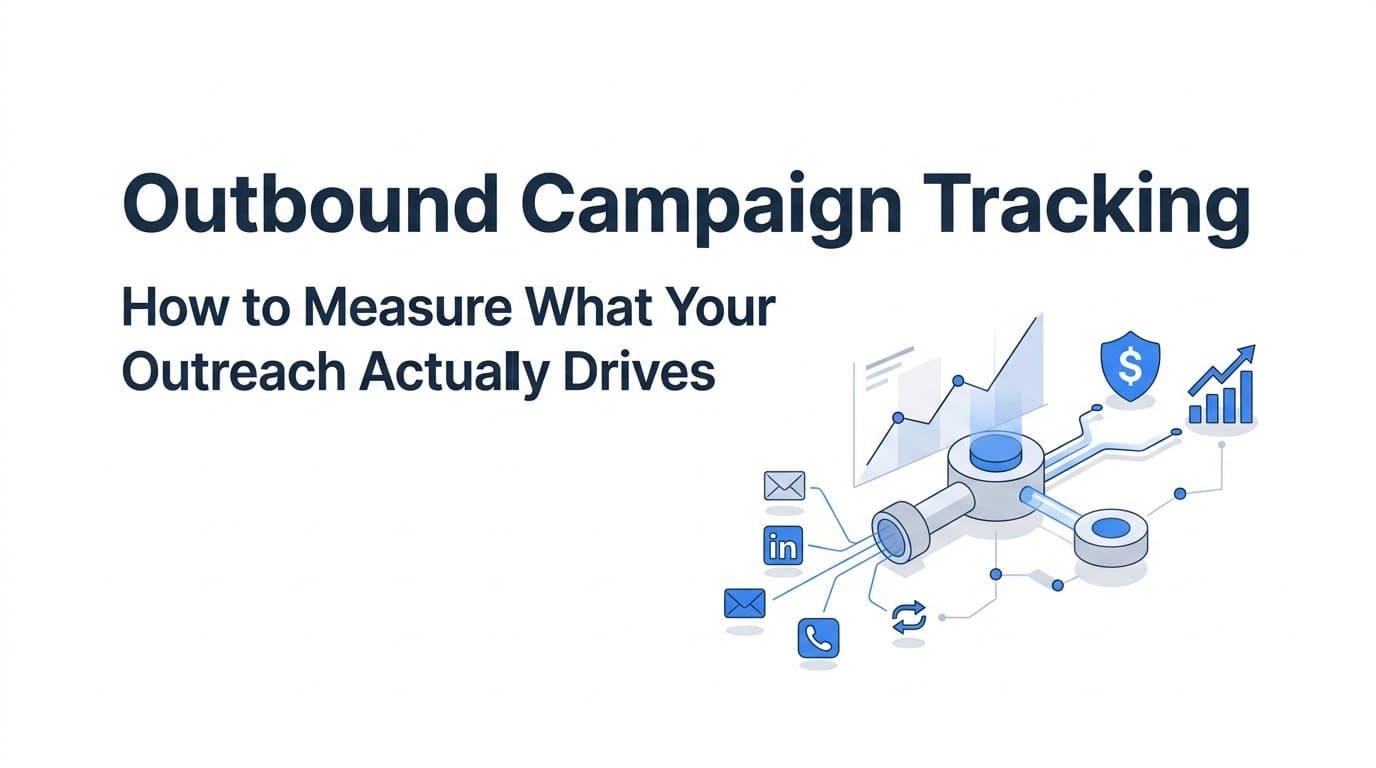
The touchpoints that need to be tracked span every outbound channel your team uses: paid social ads on LinkedIn or Meta, cold email sequences, LinkedIn InMail and connection messages, cold calls, retargeting campaigns targeting prospect lists, and even direct mail tracked through unique landing page URLs. Each of these touchpoints needs to be tagged in a way that allows you to trace it back to a specific campaign, message, and audience when a conversion eventually occurs.
One of the most important distinctions in outbound tracking is the difference between activity metrics and outcome metrics. Activity metrics are what your tools report by default: email open rates, click-through rates, reply rates, call connect rates, ad impressions, and LinkedIn engagement. These metrics are useful for evaluating rep performance and creative effectiveness, but they don't tell you whether your outbound campaigns are generating revenue.
Outcome metrics are what actually matter for budget decisions: meetings booked from outbound, opportunities created, pipeline value influenced by outbound touches, and closed-won revenue sourced from outbound campaigns. Most teams stop at activity metrics because they're easier to collect. Outcome metrics require a tracking infrastructure that connects the dots between a prospect's first outbound touchpoint and their eventual conversion.
Building that infrastructure relies on a few core technical components. UTM parameters are the foundation: every link in every outbound touchpoint should carry standardized UTM tags that identify the source, medium, campaign, and specific content variant. Without consistent UTM tagging, traffic from your cold email sequences and your LinkedIn ads collapses into the same unattributed bucket in your analytics platform.
Tracking pixels capture on-site behavior after a prospect clicks through from an outbound touchpoint, but pixels alone have significant limitations in B2B contexts. Server-side events fill the gaps by capturing conversion signals at the server level rather than relying on browser-based tracking. And CRM field mapping ensures that UTM data and touchpoint history are attached to lead and opportunity records, giving sales and marketing a shared view of how each prospect was sourced and nurtured.
Together, these components form the technical backbone of outbound campaign tracking. Without them, you're measuring activity. With them, you're measuring impact.
The Touchpoints That Matter Most in an Outbound Journey
To understand why outbound tracking is complex, it helps to walk through a realistic B2B outbound journey and count the touchpoints that need to be captured.
Picture a prospect who fits your ideal customer profile. They see a LinkedIn ad from your company while scrolling through their feed. They don't click. Three days later, a rep sends them a personalized cold email with a link to a relevant case study. They open it but don't reply. A week passes, and the rep follows up with a second email. This time, the prospect clicks through to your website and spends a few minutes on your pricing page before leaving. A retargeting ad reaches them the following week. They click it, land on a demo booking page, and schedule a call. Six weeks later, after two discovery calls and a trial, they become a customer.
That journey involved at least five distinct outbound touchpoints across three channels, spread over nearly two months. Each touchpoint contributed to the conversion. But which one gets credit?
This is where attribution model selection becomes critical. First-touch attribution gives all the credit to the LinkedIn ad that first reached the prospect. Last-touch attribution gives all the credit to the retargeting ad that preceded the demo booking. Both models tell a partial story, and both lead to flawed budget decisions.
If you optimize for first-touch, you'll over-invest in top-of-funnel awareness channels and undervalue the nurture sequences that kept the prospect engaged. If you optimize for last-touch, you'll over-invest in bottom-of-funnel retargeting and cut the cold email sequences that initiated the relationship in the first place.
Multi-touch attribution models distribute credit across the full outbound sequence, which is a much more accurate representation of how B2B deals actually close. Linear attribution gives equal credit to every touchpoint. Time-decay attribution weights recent touchpoints more heavily. Data-driven attribution uses conversion patterns to assign credit algorithmically based on which touchpoints most frequently appear in winning journeys.
For B2B outbound campaigns, multi-touch models are almost always more instructive than single-touch models. They reveal which combinations of channels and messages move prospects through the funnel, rather than just identifying which channel happened to be last in line before a conversion. This kind of insight is what allows teams to scale outbound programs intelligently rather than guessing at which channels deserve more budget.
Where Outbound Tracking Breaks Down and Why
Even teams that understand the importance of outbound tracking often find that their data is less reliable than it should be. The reasons are technical, behavioral, and structural, and they compound each other in ways that can significantly undercount the contribution of outbound campaigns to revenue.
The first failure point is UTM parameter loss. UTM tags work by appending parameters to a URL, but those parameters can be stripped by email clients, link preview tools, or redirect chains between your outreach tool and your landing page. When UTM data is lost, the traffic from that touchpoint arrives at your site unattributed, and the connection between that specific campaign and any subsequent conversion is broken.
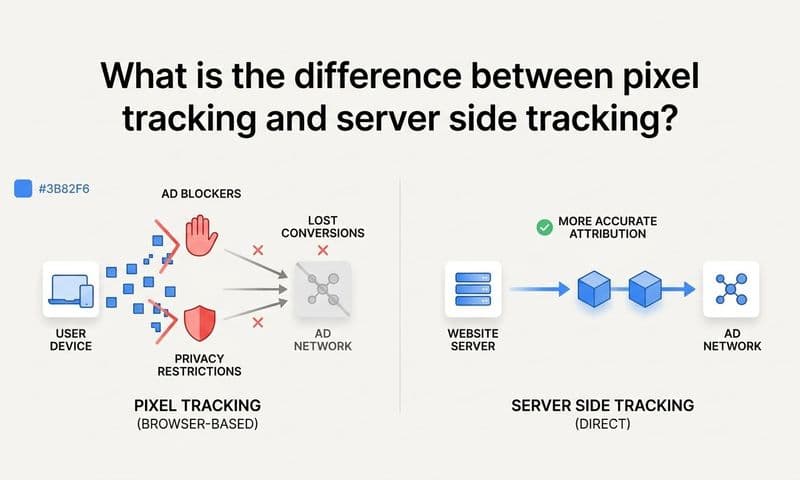
The second failure point is browser cookie loss. Traditional pixel-based tracking relies on cookies stored in the prospect's browser to identify them across sessions. But B2B prospects frequently switch between devices, use multiple browsers, and increasingly use privacy settings or ad blockers that prevent cookies from being set or retained. In long B2B sales cycles where months may pass between touchpoints, cookie-based attribution is particularly unreliable.
The third failure point is offline activity that never gets logged. Cold calls, in-person conversations at events, and direct mail responses often influence deals without leaving a digital trace. If a rep has a phone conversation that moves a prospect from cold to interested but doesn't log it in the CRM, that touchpoint is invisible to your attribution model. The deal eventually closes, and your data credits whatever digital touchpoint happened to be last.
The fourth failure point is ad platform attribution windows. Most ad platforms default to attribution windows designed for short-cycle e-commerce transactions: a 7-day click window or a 1-day view window. B2B sales cycles commonly run weeks or months. A LinkedIn ad that influenced a prospect in month one will receive zero credit for a deal that closes in month three because the conversion happened outside the platform's attribution window.
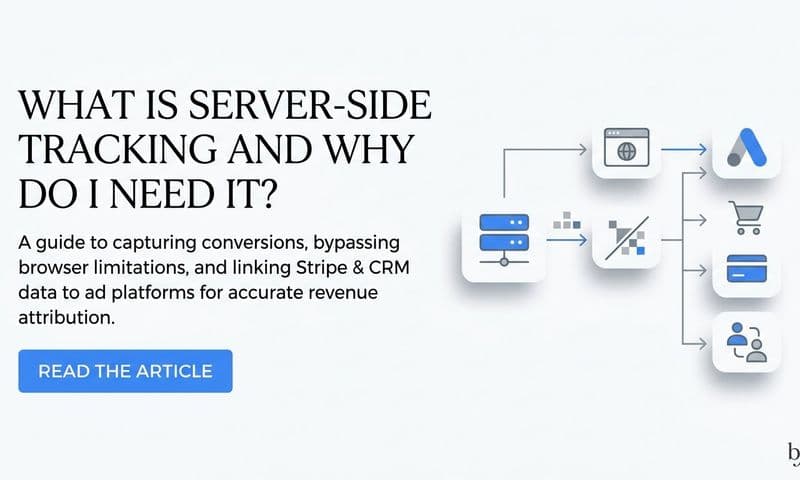
Server-side tracking and Conversion API integrations directly address the browser-based limitations. Instead of relying on a pixel in the prospect's browser to fire a conversion event, server-side tracking sends the event directly from your server to the ad platform. This bypasses ad blockers, cookie restrictions, and cross-device gaps, ensuring that conversion data reaches platforms like Meta and LinkedIn accurately even when browser conditions are imperfect.
Server-side tracking doesn't solve every outbound tracking challenge, but it significantly improves data accuracy for the portion of your outbound funnel that involves paid channels. Combined with disciplined UTM tagging and CRM logging practices, it forms a much more reliable foundation than pixel-only tracking alone.
Building a Reliable Outbound Tracking Framework
A reliable outbound tracking framework has three layers that build on each other. Skipping any one of them leaves gaps that will undermine your attribution data downstream.
The UTM Taxonomy Layer: Everything starts with a consistent, standardized UTM naming convention applied across every outbound channel. This means defining exactly how you'll label source, medium, campaign, and content parameters, and then enforcing that convention across your entire team. For example, cold email traffic might be tagged with source: outbound-email, medium: email, campaign: [campaign name], and content: [email variant]. LinkedIn ads would follow a parallel structure. Without this standardization, your analytics data becomes a mess of inconsistently labeled traffic that's impossible to aggregate or compare.
The UTM taxonomy should be documented in a shared reference that every rep, marketer, and agency partner uses. It should also be audited regularly, because UTM drift, where individuals start creating their own naming conventions, is one of the most common ways outbound tracking data degrades over time.
The CRM Integration Layer: UTM data captured on your website needs to travel with the prospect into your CRM. This requires mapping UTM parameters to lead and contact fields so that when a prospect fills out a form, books a demo, or is manually added by a rep, the source attribution data is attached to their record. From there, that data should carry forward to the opportunity record when a deal is created.
This layer is where sales and marketing alignment becomes a tracking issue, not just a cultural one. If reps aren't logging touchpoints in the CRM, or if UTM data isn't being passed to opportunity records, your pipeline attribution will be incomplete. The CRM is the connective tissue between outbound activity and revenue outcomes, and it needs to be configured to support attribution, not just contact management.
The Attribution and Analytics Layer: The final layer is a platform that brings ad spend data, CRM pipeline data, and conversion events together in a single view. This is where outbound campaign tracking moves from data collection to decision-making. With a unified attribution dashboard, you can see not just which campaigns generated clicks or leads, but which campaigns generated pipeline and closed revenue, and at what cost.
Platforms like Cometly are built specifically for this use case. By connecting your ad platforms, CRM, and server-side conversion events, Cometly creates a single source of truth for outbound attribution. You can see which LinkedIn campaigns influenced opportunities, which email sequences contributed to closed deals, and where your outbound budget is generating the strongest return, all in real time.
Metrics That Tell the Full Outbound Story
Once your tracking framework is in place, the metrics you focus on should shift from activity to outcomes. The numbers that matter for outbound budget decisions are fundamentally different from the numbers your sales engagement platform surfaces by default.
Cost per opportunity: How much outbound spend does it take to create a qualified sales opportunity? This metric requires knowing both the ad spend and outreach costs associated with a campaign and the number of opportunities that campaign influenced. Without proper tracking, you can calculate cost per lead, but cost per opportunity requires CRM integration to connect outbound touches to deal creation.
Pipeline influenced by outbound: What is the total value of open opportunities that had at least one outbound touchpoint in their journey? This metric captures the reach of your outbound program beyond just the deals it sourced directly, including deals where outbound accelerated a relationship that started elsewhere.
Outbound-sourced revenue: Of your closed-won deals, how much revenue came from accounts where outbound was the first touchpoint? This is the clearest measure of outbound's direct contribution to revenue and requires first-touch attribution data tied to CRM deal records.
Time-to-close by channel: Do prospects who first engage through LinkedIn ads close faster or slower than prospects who first engage through cold email? Time-to-close by channel reveals which outbound approaches attract buyers who are closer to a purchase decision, which is valuable for prioritizing budget and rep effort.
Connecting ad spend data to revenue data also enables true ROI comparisons between channels. You can evaluate the cost of a LinkedIn ad sequence versus a cold email sequence on the basis of actual closed revenue rather than clicks or replies, which is a fundamentally different and more useful comparison.
AI-driven analytics add another dimension by surfacing patterns that aren't obvious from manual reporting. Cometly's AI layer can identify which ad creatives or email subject lines correlate with higher downstream conversion rates, which audience segments respond to specific outbound sequences, and which campaign combinations are most likely to generate pipeline. These insights allow teams to scale what's working and cut what's generating activity without generating revenue, which is the core promise of outbound campaign tracking done well.
Putting It All Together
Outbound campaign tracking is not a reporting exercise. It is the foundation for making confident, defensible decisions about where to invest your outbound budget. When every touchpoint is connected to pipeline and revenue, you stop guessing and start optimizing based on what actually closes deals.
The teams that build this capability gain a real competitive advantage. They can scale their best-performing campaigns with confidence because they know which channels, messages, and sequences are driving revenue. They can cut spend on channels that look active but don't convert. And they can have credible conversations with leadership about outbound ROI because the data tells a complete story from first impression to closed-won revenue.
Getting there requires discipline at the UTM level, integration at the CRM level, and a platform that connects everything into a single attribution view. Cometly is built specifically to give B2B SaaS teams this end-to-end visibility. It captures every outbound touchpoint, connects ad spend data to CRM pipeline data through server-side conversion tracking, and uses AI to surface the insights that help you scale what works.
If your outbound campaigns are generating activity but you can't confidently connect that activity to revenue, it's time to fix the foundation. Get your free demo and see how Cometly gives you the attribution clarity your outbound program needs to grow with confidence.