
If your marketing reports show fewer conversions than you expected, the problem often is not your campaigns. It is your tracking setup. Assisted conversions, the touchpoints that contribute to a sale without being the final click, are among the most underreported data points in digital marketing.
When assisted conversions are not being tracked, you lose visibility into which channels are actually nurturing leads toward a decision. You might cut a paid search campaign that was warming up prospects for weeks, or double down on a channel that only captures last-click credit.
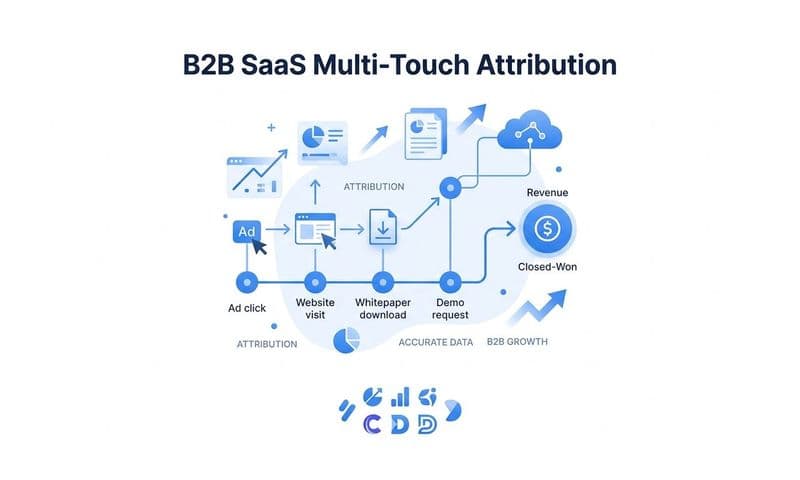
For B2B SaaS companies running multi-touch campaigns across paid ads, email, organic search, and social, this blind spot is especially costly. A prospect might click a LinkedIn ad, return via organic search, read a case study from a retargeting ad, and then convert through a direct visit. Without assisted conversion tracking, only that final direct visit gets credit. The other three touchpoints look invisible and underperforming.
This guide walks you through a practical, sequential process to diagnose why assisted conversions are not being tracked, fix the root causes, and set up a tracking infrastructure that captures every meaningful touchpoint in your customer journey. Whether you are running Google Ads, Meta, or a multi-channel mix, these steps will help you stop making budget decisions based on incomplete data and start attributing revenue to the channels that actually drive it.
Step 1: Diagnose Where Your Tracking Is Breaking Down
Before fixing anything, you need to identify the specific failure points in your current setup. Jumping straight to solutions without a proper diagnosis often means patching the wrong problem while the real gap keeps bleeding data.
Start by checking your attribution window settings in Google Ads, Meta Ads Manager, and your analytics platform. Short attribution windows, such as a 1-day or 7-day click window, will cut off assisted touchpoints that occur earlier in longer sales cycles. If your average prospect takes three to six weeks from first touch to conversion, a 7-day window is structurally incapable of capturing most of the journey.
Next, review which conversion events you are currently firing. Many teams only track final-stage events like form submissions or purchase confirmations. Assisted conversions require mid-funnel events, such as demo requests, content downloads, and email signups, to be tracked as well. If those events are missing, the earlier touchpoints that drove those actions have nowhere to register.
Look for gaps in your UTM parameter coverage. If campaigns are missing UTMs or using inconsistent naming conventions, sessions will be misattributed to direct traffic and assisted touchpoints will be lost entirely. Pull a traffic source report and look for an unusually high percentage of direct traffic. This is often a signal that UTM attribution is breaking down, not that users are actually typing your URL directly.
Check whether your tracking pixel is loading on every page. Pages built on different subdomains, CMS templates, or third-party tools like landing page builders are common places where pixels get missed during initial setup. Use your browser's developer tools or a tag auditing tool to verify pixel presence across your full site.
Common failure indicator: A high percentage of direct traffic in your reports often signals UTM or referral attribution loss, not actual direct visits. If direct traffic spikes coincide with campaign launches, that is a clear sign attribution is breaking.
Success check: Before moving to the next step, you should be able to name at least one specific technical or configuration gap in your current setup. If everything looks fine on the surface, dig deeper into your UTM consistency and pixel coverage before proceeding.
Step 2: Extend Attribution Windows to Match Your Sales Cycle
One of the most common reasons assisted conversions are not being tracked is that attribution windows are simply too short for the actual length of your sales cycle. This is a configuration issue, not a technical one, and it is easy to fix once you know where to look.
In Google Ads, navigate to your conversion action settings and review the click-through attribution window. The default is 30 days, which works reasonably well for ecommerce but often falls short for B2B SaaS. If your prospects typically take 45 to 90 days from first ad interaction to closed deal, a 30-day window will miss the early-funnel touchpoints entirely. For longer sales cycles, extending to a 60 or 90-day window will surface more of the assisted interactions that preceded the final conversion.
In Meta Ads Manager, attribution settings are configured at the campaign level. A common starting point is a 7-day click and 1-day view window, but this should be calibrated against your actual conversion data. If you are seeing a significant number of conversions happening beyond the 7-day mark in your CRM, your Meta attribution window needs to expand to match.
Cross-reference your CRM data to understand your actual average sales cycle length. Pull a report on closed-won deals and measure the time between first marketing touch and close date. That number is your baseline for setting attribution windows. If the average is 45 days, your windows should be at least 45 days, ideally longer to capture outliers.
It is also worth understanding the difference between attribution windows for reporting and windows for optimization. Changing your reporting window helps you see more assisted touchpoints historically. Changing your optimization window affects how the ad platform's algorithm bids in real time. Adjust both thoughtfully, and document your changes so you can measure their impact on reported conversion volume. For a deeper look at how different models assign credit, reviewing the most common ad attribution models can help you choose the right configuration.
Tip: Align your attribution window decisions with your pipeline data, not just your ad platform defaults. Platforms default to windows that work for the average advertiser, not for your specific sales cycle.
Success check: After updating your attribution windows, revisit your conversion reports over the following two weeks. You should see an increase in the number of touchpoints associated with each conversion path, and your assisted conversion volume should start to climb.
Step 3: Implement Server-Side Tracking to Recover Lost Signals
Browser-based pixel tracking alone is increasingly unreliable. Ad blockers, browser privacy updates, and cookie restrictions cause a meaningful portion of conversion events to go unrecorded, which directly affects your assisted conversion data. If your pixel is not firing, the touchpoint never gets logged.
Server-side tracking solves this by sending conversion events directly from your server to ad platforms like Meta and Google, bypassing browser-level restrictions entirely. This is done through tools like Meta's Conversion API (CAPI) and Google's Enhanced Conversions. Instead of relying on a browser to fire a pixel, your server sends the event data directly, regardless of what the user's browser settings or extensions are doing.
To set up server-side tracking, you need to pass first-party data alongside your conversion events. This typically includes identifiers like hashed email addresses or phone numbers collected during lead capture. These identifiers allow the ad platform to match the server-side event to a real user, even when cookie-based matching is not possible.
Event deduplication is a critical piece of this setup. When you run both browser pixel and server-side tracking simultaneously, the same conversion event can be reported twice: once from the browser and once from the server. Use event IDs to match browser and server events so the platform can deduplicate them accurately. Without this step, your conversion volume will be inflated and your optimization signals will be distorted.
Server-side tracking is especially important for capturing assisted touchpoints that happen after a user has opted out of cookies or is browsing in a privacy-protected environment. These users are not invisible, they are simply invisible to browser-based tracking. Server-side methods recover that signal using first-party identifiers instead.
The shift toward browser privacy across major platforms and operating systems has significantly reduced pixel match rates across the industry. Server-side tracking is now considered a foundational best practice for any team that wants accurate conversion measurement, not just a technical nice-to-have.
Success check: After implementing CAPI or Enhanced Conversions, check your event match quality scores in Meta Events Manager and your conversion volume in Google Ads. Improved match quality scores and increased conversion volume are both indicators that your server-side setup is working correctly.
Step 4: Set Up Multi-Touch Attribution Tracking Across All Channels
Fixing individual platform settings is not enough if you want a complete picture of assisted conversions. Each ad platform reports its own data in isolation, and each one takes credit for conversions that other platforms also influenced. To see the full picture, you need a unified attribution layer that captures touchpoints across every channel in a single view.
Start by ensuring every paid channel, including Google, Meta, LinkedIn, and any other active platform, is passing UTM parameters consistently. Use a standardized naming convention so your analytics platform can group and compare touchpoints accurately. Without consistent UTMs, your multi-touch reports will have gaps and misattributed sessions that make the data unreliable. Learning how to use naming conventions for ad creative insights can help you build a system that scales across channels.
Connect your CRM to your attribution platform so that lead and opportunity data can be matched back to the original ad touchpoints. This closes the loop between marketing activity and actual pipeline or revenue. Without this connection, you can see which channels drive clicks and form fills, but you cannot see which channels drive deals.
Choose an attribution model that reflects how your business actually acquires customers. Last-click attribution will always underreport assisted touchpoints because it gives zero credit to every interaction except the final one. Linear attribution distributes credit equally across all touchpoints, making it a strong choice for surfacing assisted conversion value. Time-decay attribution gives more weight to touchpoints closer to the conversion, which partially credits assisted touches. Data-driven attribution uses machine learning to assign credit based on actual conversion path patterns and is generally the most accurate option when you have sufficient data volume.
Use a dedicated attribution platform that can ingest data from your ad platforms, website, and CRM simultaneously. This creates a single source of truth rather than relying on each ad platform's self-reported data, which is inherently biased toward their own channel. When Meta reports a conversion, it does not tell you that Google also touched that prospect three times before the final click. B2B revenue attribution software is specifically designed to solve this cross-channel visibility problem.
Tip: Run two attribution models side by side, such as last-click versus linear, and compare how credit is distributed across channels. The delta between the two reveals which channels are being systematically undervalued in your current reporting.
Success check: You should be able to see multi-touchpoint conversion paths showing two or more channels contributing to individual conversions. If every conversion path shows only a single touchpoint, your multi-touch setup is not capturing the full journey yet.
Step 5: Audit and Fix Your Conversion Event Configuration
Even with the right attribution windows and server-side tracking in place, assisted conversions can still go missing if your conversion events are misconfigured. This step is about making sure you are tracking the right events in the right places.
Review which events you are currently tracking. Many teams only track final conversion events like form submissions or purchase completions. To capture assisted conversions, you also need to track micro-conversions: the mid-funnel actions that signal intent and move prospects closer to a decision. For B2B SaaS, this includes content downloads, webinar signups, free trial starts, demo requests, pricing page visits, and email opt-ins.
Check for event firing issues using your ad platform's diagnostic tools. In Meta Events Manager, the Test Events feature lets you trigger events in real time and confirm they are being received correctly. In Google Ads, Enhanced Conversions verifies that your tags are loading and firing on the correct pages. Run these checks on your key landing pages, thank-you pages, and any mid-funnel content pages where micro-conversions should be occurring.
Ensure conversion events are not being blocked by consent banners or cookie management platforms. If a user declines cookies, browser-based events may not fire at all. This is another scenario where server-side tracking provides a safety net, allowing you to capture the event using first-party data even when browser tracking is restricted.
Verify that your events are passing the correct parameters alongside the conversion signal. For B2B SaaS, passing lead quality signals such as company size, industry, or deal stage alongside conversion events allows your attribution platform to weight touchpoints more accurately and helps ad platform algorithms optimize toward higher-quality leads rather than just volume. A structured lead tracking process ensures these signals are captured consistently.
Tip: Build a conversion event map that documents every event you need to track, the page or action where it should fire, and which platform it feeds into. This document makes future audits faster and reduces the chance of gaps going unnoticed when your site or campaigns change.
Success check: Every key action a prospect can take on your site should have a corresponding tracked event. If you find gaps during this audit, add the missing events before moving to the reporting step. Reporting on incomplete data will only give you a partial picture.
Step 6: Validate Your Data and Build a Reporting Framework for Assisted Conversions
Once your tracking infrastructure is in place, the final step is building a reporting framework that makes assisted conversion data visible and actionable for your team. Data that exists but is never reviewed does not drive better decisions.
In Google Analytics 4, use the Conversion Paths report under the Advertising section to see the sequence of channels that contributed to each conversion. This report shows how many touchpoints preceded the final conversion and which channels appeared most often as assisted steps. It is one of the clearest native views of multi-touch behavior available without a third-party tool. If you are experiencing gaps in this data, reviewing common causes of Google Analytics missing conversions can help you identify what is going wrong.
In your attribution platform, build a dashboard that compares assisted conversion volume by channel alongside direct conversion volume. This gives you a complete picture of each channel's true contribution to revenue, not just its last-click performance. A channel that drives few last-click conversions but appears consistently in multi-touch paths is doing critical nurturing work that deserves budget consideration.
Cross-reference your attribution data with your CRM pipeline data. If a channel shows high assisted conversion volume but low closed-won revenue, investigate whether those leads are lower quality or simply taking longer to close. The goal is to connect assisted touchpoints all the way to revenue, not just to lead volume.
Set a regular cadence, weekly or bi-weekly, to review assisted conversion trends. Look for channels that consistently appear in multi-touch paths but receive little budget. These are often undervalued channels that are doing significant nurturing work without getting credit in last-click reports.
Tip: Share assisted conversion reports with your media buyers and growth team. Budget decisions made without this data often result in cutting channels that are doing the most important work in the middle of the funnel, the part of the journey that last-click attribution never sees.
Success check: Your team should be able to answer the question "which channels are contributing to conversions but not getting last-click credit?" using your new reporting setup. If you can answer that question with data, your assisted conversion tracking is working.
Putting It All Together
Fixing assisted conversion tracking is not a one-time task. It is an ongoing commitment to building a measurement infrastructure that reflects how your customers actually buy. The steps in this guide cover the full spectrum: diagnosing the root cause, extending attribution windows, implementing server-side tracking, unifying multi-touch data, auditing conversion events, and building reporting that makes assisted conversions visible.
When all of these pieces are in place, you stop making budget decisions based on last-click data and start optimizing based on the full customer journey.
Here is a quick reference checklist to keep your setup on track:
Identify tracking gaps: Audit your current setup for UTM inconsistencies, missing pixels, and short attribution windows.
Extend attribution windows: Match your windows to your actual sales cycle length using CRM data as your benchmark.
Implement server-side tracking: Deploy CAPI or Enhanced Conversions to recover signals lost to browser restrictions.
Standardize UTM parameters: Use a consistent naming convention across every paid channel.
Connect your CRM: Link your CRM to your attribution platform to close the loop between touchpoints and revenue.
Add micro-conversion events: Track mid-funnel actions so assisted touchpoints have events to register against.
Build a reporting dashboard: Surface assisted conversion data by channel so your team can act on it.
Cometly is built to help B2B SaaS teams do exactly this. It connects your ad platforms, CRM, and website into a single attribution view so you can see every touchpoint that contributed to a conversion, not just the last one. From capturing every ad click and CRM event to feeding enriched conversion data back to Meta and Google, Cometly gives your team the complete picture needed to make smarter budget decisions.
If your current setup is leaving assisted conversions untracked, the cost is not just missing data. It is misallocated budget and missed growth. Get your free demo today and start capturing every touchpoint to maximize your conversions.