Marketing teams at B2B SaaS companies spend an enormous amount of time pulling data, formatting spreadsheets, and building reports that are outdated the moment they are shared. This manual reporting cycle creates a dangerous lag between what is happening in your campaigns and what your team actually knows. By the time decisions get made, the opportunity has often passed.
Automated marketing analytics reporting solves this problem by replacing manual data work with real-time, structured insights that flow directly to the people who need them. But automation alone is not enough. Without the right strategies behind it, automated reports can produce noise instead of clarity.
This article outlines seven proven strategies to build an automated reporting system that captures every touchpoint, connects ad spend to revenue, and gives your growth team the confidence to act fast. Whether you are managing paid acquisition across multiple channels, tracking pipeline attribution, or trying to prove marketing ROI to leadership, these strategies will help you move from reactive reporting to proactive, data-driven decision-making.
1. Centralize All Your Marketing Data Into a Single Source of Truth
The Challenge It Solves
B2B SaaS marketing teams typically manage data across Meta, Google, LinkedIn, TikTok, a CRM, a website analytics tool, and often a product analytics layer. Without a unified data layer, teams spend hours manually reconciling numbers that frequently contradict each other. The result is not just wasted time. It is a reporting foundation built on conflicting signals.
The Strategy Explained
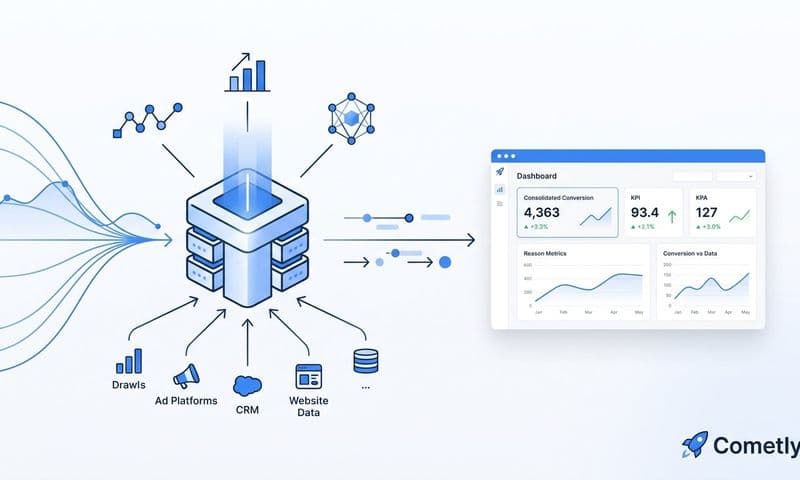
Data centralization means connecting every source of marketing data into a single, normalized layer that automated reports can pull from reliably. This starts with native integrations that eliminate manual exports and continues with server-side tracking that reduces data loss from browser-based limitations. Think of it like replacing a dozen separate filing cabinets with one shared database everyone reads from simultaneously.
When your ad platforms, CRM, and website behavior all feed into one system, your automated reports stop telling different stories depending on which platform you are looking at. You get one version of the truth, and every report is built on it. Marketing attribution software plays a central role in making this centralization work at scale.
Implementation Steps
1. Audit every data source your team currently uses and list all the platforms feeding into your reporting workflow.
2. Connect each source through native integrations or API connections to a central attribution platform rather than relying on manual CSV exports.
3. Implement server-side tracking alongside your existing pixel-based setup to capture conversion events that browser limitations would otherwise miss.
4. Validate that data from each source is flowing correctly before building any automated reports on top of it.
Pro Tips
Do not try to centralize everything at once. Start with your highest-spend ad platforms and your CRM, then layer in additional sources. A clean foundation with two or three sources is far more valuable than a messy one with ten. Accuracy always beats volume when it comes to marketing analytics and reporting.
2. Map Your Reporting Structure to the Full Customer Journey
The Challenge It Solves
Most automated reports default to top-of-funnel metrics: impressions, clicks, and MQL volume. For B2B SaaS companies with longer sales cycles, this creates a massive blind spot. Reporting only on lead volume means your team has no visibility into what happens after a lead enters the funnel, which channels are producing opportunities that actually close, and where deals are stalling.
The Strategy Explained
Structuring your automated reports around the full B2B customer journey means capturing touchpoint data at every stage, from first ad click through MQL, SQL, opportunity, and closed-won revenue. This is not just a reporting preference. It is a fundamental shift in how your team understands marketing performance.
When your reports include mid-funnel and bottom-funnel data, you can see which campaigns are generating leads that convert versus campaigns generating leads that churn at the sales handoff. That distinction changes budget decisions entirely. Understanding lead attribution at each stage is what separates surface-level reporting from genuinely actionable insights.
Implementation Steps
1. Define the key stages in your sales funnel and ensure each stage has a corresponding event tracked in your CRM and attribution platform.
2. Build automated report templates that include funnel progression metrics alongside top-of-funnel acquisition data.
3. Map each marketing touchpoint to the funnel stage it influenced so your reports show channel contribution across the entire journey, not just the first or last interaction.
4. Set up automated alerts when conversion rates between funnel stages drop below expected thresholds.
Pro Tips
Work backward from closed-won revenue when designing your report structure. Ask which data points leadership needs to approve budget increases, then build your automated reports to answer those questions directly. Reports that end at the lead stage rarely move budget conversations forward.
3. Choose and Lock In the Right Attribution Model for Your Reports
The Challenge It Solves
Different attribution models tell fundamentally different stories about which channels are driving results. If your automated reports switch between models or if different team members are pulling reports using different attribution settings, you end up comparing incompatible numbers. This creates confusion, undermines trust in your data, and slows down decision-making.
The Strategy Explained
For B2B SaaS companies with longer sales cycles, first-touch and linear models often surface top-of-funnel channel value that last-click models completely hide. A prospect might engage with a LinkedIn ad six months before converting through a branded Google search. Last-click attribution gives LinkedIn zero credit. Linear or time-decay models distribute credit more fairly across the journey.
The goal is not to find the "perfect" model. It is to choose a model that reflects your actual sales cycle and apply it consistently. Understanding the most common ad attribution models is a good starting point, and exploring revenue attribution models specifically helps you align your choice with how your business actually closes deals.
Implementation Steps
1. Review your average sales cycle length and the typical number of touchpoints before a deal closes to inform your model selection.
2. Compare two or three attribution models side by side using historical data to see how channel credit distribution changes across each model.
3. Select the model that most accurately reflects how your buyers actually move through the funnel and document it as your standard.
4. Lock that model as the default in your automated reporting platform so every report uses the same baseline for comparison.
Pro Tips
Run a secondary model in parallel for exploratory analysis, but always anchor leadership reports to your locked-in primary model. Consistency over time is what makes trend analysis meaningful. If you change your attribution model, treat it as a major reporting event and document it clearly so historical comparisons remain valid. Reviewing attribution challenges in marketing analytics can help you anticipate common pitfalls before they affect your reporting.
4. Automate Cross-Channel Performance Tracking in Real Time
The Challenge It Solves
Running paid campaigns across Meta, Google, LinkedIn, and TikTok without a unified reporting layer means each platform claims credit for the same conversions. This inflates total attributed revenue and makes it nearly impossible to understand true channel contribution. Weekly manual reporting cycles make this worse by the time you see the data, the budget decision you needed to make three days ago has already defaulted to inaction.
The Strategy Explained
Automated cross-channel dashboards normalize performance data across platforms using consistent attribution logic. Instead of logging into four different ad platforms and manually compiling results, your team sees a single view of how each channel is performing against shared revenue and pipeline goals. Staying current with marketing analytics trends reinforces why real-time cross-channel visibility has become a baseline expectation for growth teams, not a nice-to-have.
Real-time visibility changes how your team operates. When a campaign starts underperforming, you can pause it immediately rather than discovering the issue in next week's report. When a channel is scaling efficiently, you can shift budget toward it while the momentum is live. Choosing the right marketing analytics platform is what makes this level of real-time visibility operationally sustainable.
Implementation Steps
1. Connect all active ad platforms to a centralized attribution dashboard that normalizes spend, impressions, clicks, and conversion data using a single attribution model.
2. Set up real-time performance views that refresh automatically rather than relying on scheduled exports or manual pulls.
3. Define performance thresholds for each channel and configure automated alerts when campaigns fall below or exceed those benchmarks.
4. Review your cross-channel dashboard daily during active campaigns and use it as the basis for budget reallocation decisions rather than platform-native reports.
Pro Tips
Implement these tips to improve ad performance alongside your cross-channel automation setup. Real-time data is only valuable if your team has a clear process for acting on it. Define decision rules in advance: for example, if a campaign's cost per opportunity exceeds a set threshold for three consecutive days, it triggers a budget review.
5. Feed First-Party Conversion Data Back Into Ad Platforms
The Challenge It Solves
Browser-based tracking is increasingly limited by cookie restrictions, ad blockers, and iOS privacy changes. When conversion signals are incomplete, ad platform algorithms optimize toward the wrong outcomes and your automated reports are built on sampled or missing data. The accuracy problem compounds over time as more traffic goes untracked.
The Strategy Explained
Server-side tracking and Conversion API integrations with Meta and Google send conversion events directly from your server rather than relying on a browser pixel. This bypasses the limitations that degrade client-side tracking and ensures your ad platforms receive complete, high-quality conversion signals. The downstream effect is significant: better data in means better algorithmic optimization, which means better campaign performance and more reliable automated reports.
This is one of the most technically impactful investments a B2B SaaS marketing team can make right now. Understanding why you need ad tracking management software helps frame the business case for prioritizing this infrastructure work alongside your reporting automation goals.
Implementation Steps
1. Audit your current tracking setup to identify what percentage of conversions are being captured by your existing pixel-based implementation versus what is likely being missed.
2. Implement server-side tracking to capture conversion events at the server level and send them to your attribution platform with full context.
3. Set up Conversion API integrations with Meta and Google to pass enriched, server-verified conversion events back to each ad platform.
4. Monitor match rates in your ad platform event manager after implementation to confirm signal quality has improved.
Pro Tips
Do not treat server-side tracking as a one-time setup task. Audit your event data quality regularly, especially after platform updates or changes to your website infrastructure. A degraded server-side signal is harder to detect than a broken pixel, so build monitoring into your standard reporting workflow. Exploring marketing analytics metrics worth tracking will help you define exactly what to monitor during these audits.
6. Build Automated Reports Around Revenue and Pipeline Metrics, Not Just Leads
The Challenge It Solves
Many marketing teams report on lead volume and cost-per-lead but struggle to connect those metrics to closed revenue. For B2B SaaS companies, this creates a credibility gap with leadership. Finance and executive teams think in terms of CAC, payback period, and pipeline velocity, not MQL count. When marketing reports cannot speak that language, budget conversations stall.
The Strategy Explained
Connecting Stripe revenue data and CRM pipeline stages to your automated marketing reports closes this gap. When your reports show pipeline velocity alongside ad spend, leadership can see exactly how marketing investment translates into revenue outcomes. Understanding pipeline velocity as a reporting metric gives your team a shared language with sales and finance.
Exploring B2B revenue attribution software options helps clarify what is possible when your marketing data is connected to actual revenue outcomes. And knowing how to accurately measure payback period gives leadership the financial context they need to approve meaningful budget increases rather than incremental ones.
Implementation Steps
1. Connect your CRM to your attribution platform so pipeline stage data flows into your automated reports alongside acquisition metrics.
2. Integrate your payment processor or billing system to pull actual revenue data into your marketing dashboards.
3. Build report templates that include CAC, pipeline contribution by channel, and payback period as standard metrics alongside cost-per-click and cost-per-lead.
4. Create a leadership-facing report view that leads with revenue and pipeline metrics and uses acquisition data as supporting context rather than the headline.
Pro Tips
When you present revenue-connected reports for the first time, walk leadership through the methodology. Showing how ad spend connects to closed revenue through a clear attribution chain builds trust in the data and makes future budget conversations much more straightforward. The goal is to make marketing's financial contribution undeniable.
7. Use AI-Driven Insights to Turn Automated Reports Into Actionable Decisions
The Challenge It Solves
Automated reporting surfaces data, but data alone does not tell you what to do next. A dashboard full of metrics still requires a human analyst to identify patterns, flag anomalies, and translate numbers into recommendations. For growth teams managing campaigns across multiple channels, this analysis layer becomes the bottleneck that keeps automated reporting from reaching its full potential.
The Strategy Explained
Layering AI analysis on top of your automated reporting infrastructure closes the gap between data collection and decision-making. AI can identify patterns across large datasets far faster than manual analysis, flagging creative fatigue, surfacing high-performing audience segments, and recommending budget reallocation based on performance trends. Understanding how SaaS growth teams attribute revenue to marketing efforts illustrates why this intelligence layer is becoming essential for teams that need to move fast.
The shift in marketing analytics trends toward AI-powered recommendations reflects a broader reality: the teams that win are not the ones with the most data. They are the ones who can extract decisions from that data fastest. AI bridges the gap between a well-built automated reporting system and the confident, rapid decision-making that drives growth.
Implementation Steps
1. Ensure your automated reporting foundation is solid before layering AI on top. AI recommendations are only as good as the data they analyze.
2. Identify the decisions your team makes most frequently, such as budget reallocation, creative rotation, and audience expansion, and configure AI analysis to prioritize those areas.
3. Review AI-generated recommendations as part of your standard reporting cadence rather than treating them as a separate workflow.
4. Track which AI recommendations you act on and measure the outcome to calibrate your team's confidence in the system over time.
Pro Tips
Use AI recommendations as a starting point for decisions, not the final word. The best outcomes come from combining AI pattern recognition with your team's contextual knowledge about your market, your buyers, and your brand. AI tells you what the data suggests. Your team decides what to do with it.
Putting It All Together: Your Implementation Roadmap
Automated marketing analytics reporting is not just a time-saving tool. It is a competitive advantage for B2B SaaS teams that need to move fast, prove ROI, and scale what is working.
The seven strategies outlined here build on each other deliberately. Start by centralizing your data into a single source of truth. Then structure your reporting around the full customer journey rather than just top-of-funnel metrics. Lock in the right attribution model so your reports produce consistent, comparable outputs over time. Automate cross-channel visibility so your team can act on real-time performance data rather than waiting for a weekly manual pull.
From there, layer in first-party data quality through server-side tracking and Conversion API integrations. Shift your report metrics toward revenue and pipeline so leadership can see marketing's financial contribution clearly. And finally, use AI-driven insights to turn your automated reports into a decision engine rather than just a data archive.
Platforms like Cometly are built specifically for this workflow. Cometly connects your ad platforms, CRM, and website into a single attribution layer with real-time dashboards, AI-powered recommendations, and 70-plus native integrations. The result is a reporting system that does not just tell you what happened. It tells you what to do next.
Start with one strategy, implement it fully, and build from there. The foundation you build now will compound in value as you add each additional layer. The teams that move fastest are the ones who have already done this work.
Ready to elevate your marketing reporting with precision and confidence? Discover how Cometly's AI-driven recommendations can transform your ad strategy. Get your free demo today and start capturing every touchpoint to maximize your conversions.