You've invested budget across paid search, LinkedIn, content, and email. Leads are coming in. Some deals are closing. But when someone asks which channels are actually driving revenue, the honest answer is: you're not entirely sure. Sound familiar?
This is the challenge at the heart of modern B2B SaaS marketing. Teams are running sophisticated campaigns across multiple channels, yet their understanding of how prospects actually move from first awareness to paying customer remains frustratingly incomplete. The customer journey, as a concept, gets mentioned in every strategy meeting. But truly understanding its betekenis, its meaning and practical implications, is what separates marketing teams that scale confidently from those that guess and hope.
The customer journey is not just a diagram on a slide deck. It is the actual sequence of interactions your prospects have with your brand before they buy, and understanding it in detail changes everything: how you allocate budget, how you optimize campaigns, and how you attribute revenue to the right sources. For B2B SaaS marketers, this is not a theoretical exercise. It is the foundation of every smart decision you make about where to invest next.
This guide will walk you through what the customer journey really means, why touchpoints are the building blocks of that journey, how attribution models shape your view of it, and what it takes to track and act on journey data in a way that actually moves the needle.
More Than a Funnel: What the Customer Journey Actually Means
Most marketers learned about the funnel early in their careers: awareness at the top, consideration in the middle, decision at the bottom. It is a useful mental model, but it is also a significant oversimplification of how B2B buying actually works. The customer journey is something richer and messier than a funnel suggests.
At its core, the customer journey is the complete sequence of interactions a prospect has with your brand, from the very first ad impression or organic search result they encounter, through evaluation, purchase, onboarding, and ongoing retention. It captures not just the marketing moments but the full arc of the relationship between a buyer and your product.
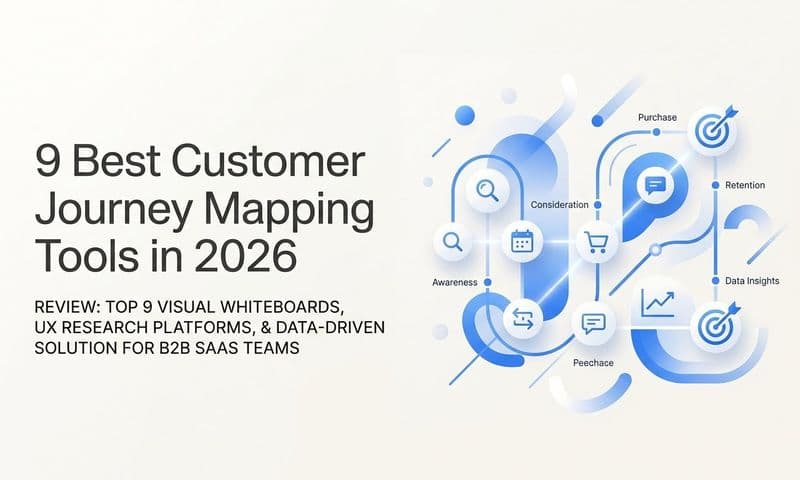
In B2B SaaS contexts, the journey typically moves through four broad stages. Awareness is where a prospect first discovers that your product exists, often through paid ads, organic content, a LinkedIn post, or a recommendation. Consideration is where they begin actively evaluating options, reading reviews on G2 or Capterra, watching demos, and comparing features. Decision is where the final purchase choice is made, often involving multiple stakeholders and internal approval processes. Retention is where the journey continues after the sale, shaping whether a customer expands, renews, or churns.
Each of these stages demands different messaging, different channels, and different measurement approaches. What works to build awareness on LinkedIn is not the same as what closes a deal in a sales conversation. Treating the entire journey as a single undifferentiated pipeline leads to misaligned campaigns and wasted spend.
Here is the critical thing to understand: in B2B SaaS, the journey is rarely linear. Prospects loop back. They research competitors after watching your demo. They go quiet for weeks and then re-engage. Multiple stakeholders at the same company interact with your brand independently, each at different stages of their own evaluation. A VP of Marketing might discover you through a podcast ad while a Head of Operations is simultaneously reading your comparison pages after a Google search. Both of those journeys eventually converge into a single buying decision.
This non-linear, multi-stakeholder reality is why the funnel metaphor falls short. The customer journey is better understood as a web of interconnected touchpoints, each carrying influence, each contributing to the final decision. And that is exactly why tracking it properly matters so much.
Touchpoints: The Building Blocks of Every Customer Journey
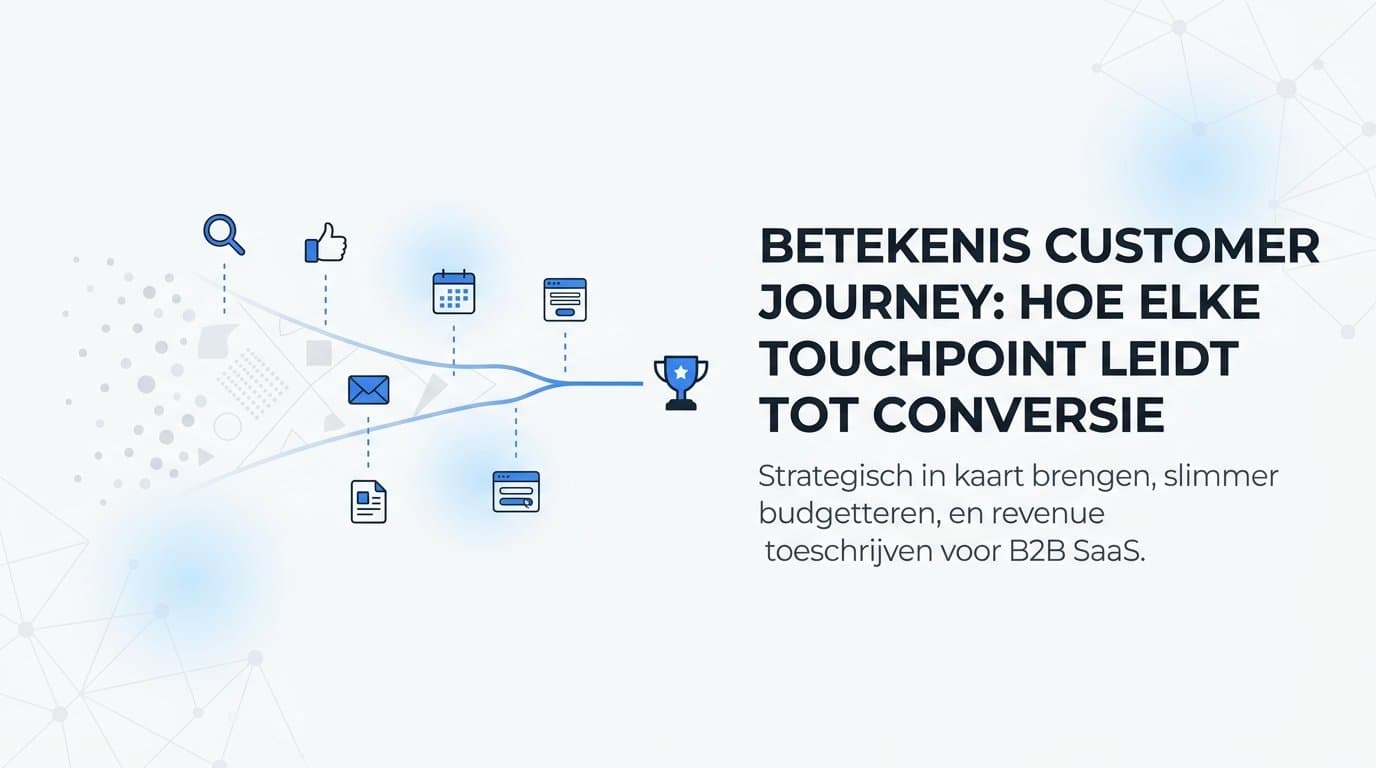
If the customer journey is the story, touchpoints are the individual sentences that make it up. A touchpoint is any interaction between a prospect and your brand, across any channel, at any stage of the journey. Paid search ads, organic blog posts, LinkedIn sponsored content, direct website visits, email sequences, webinars, free trial sign-ups, product demos, and sales calls are all touchpoints. So are review site visits, retargeting ads, and even a referral from a colleague.
Each touchpoint carries influence over the final buying decision. Some plant the initial seed of awareness. Others build credibility during evaluation. Some nudge a hesitant prospect back into the pipeline. And some are the final push that converts consideration into commitment. The challenge is knowing which touchpoints are doing which jobs.
In B2B SaaS, this challenge is particularly acute because sales cycles are long. A prospect might interact with your brand dozens of times over several months before a deal closes. They might see a LinkedIn ad in January, read a comparison article in February, attend a webinar in March, request a demo in April, and sign a contract in May. That is five distinct touchpoints across four months, and each one played a role in the outcome.
Without proper tracking infrastructure, most of that journey is invisible. You see the demo request and the closed deal, but the LinkedIn ad and the webinar that built the intent never get credited. This is the attribution gap that plagues B2B marketing teams, and it leads to predictable consequences: top-of-funnel channels get defunded because they appear not to generate direct conversions, and last-click channels receive disproportionate credit and budget even when they are simply harvesting intent that other channels created.
This is where multi-touch attribution becomes essential. Rather than assigning all credit to a single touchpoint, multi-touch attribution distributes credit across all the interactions that contributed to a conversion. It acknowledges that the LinkedIn ad, the webinar, and the demo request all mattered, and it gives marketing teams a far more accurate picture of what is actually driving pipeline.
The goal is not to perfectly quantify the influence of every touchpoint down to the decimal point. The goal is to move from a distorted view of your journey to an informed one, where budget decisions are grounded in real data about which channels initiate, nurture, and close high-value customer relationships.
Attribution Models and What They Reveal About Your Journey
Attribution models are the frameworks you use to assign credit to touchpoints across the customer journey. Different models tell different stories, and understanding what each one reveals, and conceals, is essential for B2B SaaS marketers who want an accurate view of their pipeline.
First-touch attribution gives all credit to the very first interaction a prospect had with your brand. It is useful for understanding which channels are most effective at initiating new journeys and building top-of-funnel awareness. If you want to know what is bringing new prospects into your orbit, first-touch data is valuable.
Last-click attribution gives all credit to the final interaction before a conversion. It is the default model in many ad platforms and analytics tools, which makes it extremely common and extremely misleading for B2B teams. Last-click ignores every touchpoint that built awareness and consideration before the final click, making it appear as though the journey started and ended with one interaction.
Linear attribution distributes credit equally across all touchpoints in the journey. It acknowledges that every interaction contributed something, though it does not differentiate between a touchpoint that sparked initial interest and one that simply appeared in the path by coincidence.
Time-decay attribution weights touchpoints more heavily the closer they are to the conversion event. The logic is that recent interactions had more direct influence on the decision. This can be useful for shorter sales cycles but may undervalue the awareness-building work that happens early in longer B2B journeys.
Data-driven attribution uses algorithmic analysis to distribute credit based on actual conversion patterns in your data. It looks at which touchpoint combinations most reliably lead to conversions and assigns credit accordingly. For teams with sufficient data volume, this is generally the most accurate model available.
The risk of committing to a single attribution model is that you end up with a partial view of your journey. A team relying exclusively on last-click attribution will systematically undervalue their LinkedIn awareness campaigns, their content marketing, and their webinar program, because those touchpoints rarely appear as the final click before a conversion. Over time, this leads to budget cuts in exactly the channels that are doing the most important work of building intent.
The smarter approach is to compare multiple attribution models side by side. When you look at first-touch data alongside linear and data-driven models, patterns emerge: you can see which channels consistently initiate journeys, which ones nurture prospects through the middle stages, and which ones are reliably present at the close. That layered view is what gives marketing leaders the confidence to make budget decisions that reflect the full complexity of how their customers actually buy.
Tracking the Journey in Real Time: The Data Infrastructure That Makes It Possible
Understanding the betekenis of the customer journey at a conceptual level is one thing. Actually capturing accurate data about every touchpoint in real time is another challenge entirely, and it is one that many B2B SaaS teams are currently losing.
Traditional pixel-based tracking, the kind that relies on browser cookies and client-side scripts, has become increasingly unreliable. Browser privacy updates, iOS tracking restrictions, and the widespread use of ad blockers all create gaps in the data that distort journey analysis. When a significant portion of your website visitors are not being tracked by your pixels, your attribution data is incomplete by definition. You are making budget decisions based on a partial picture of reality.
Server-side tracking addresses this problem at the infrastructure level. Rather than relying on a browser to fire a pixel, server-side tracking sends event data directly from your server to ad platforms and analytics tools. This approach is not subject to browser restrictions or ad blockers, which means it captures a much higher percentage of actual user interactions across the journey.
Conversion API integrations, such as Meta's CAPI and Google's enhanced conversions, work on the same principle. They allow you to send first-party event data directly from your systems to ad platforms, bypassing the browser entirely. The result is more complete, more accurate conversion data that gives both your team and the ad platform's machine learning algorithms a better signal to work with.
But capturing web-based touchpoints is only part of the picture. In B2B SaaS, a significant portion of the journey happens offline: sales calls, follow-up emails, contract negotiations, and CRM stage progressions. Without CRM integration, all of that activity is invisible to your marketing attribution system. You might know that a prospect clicked a LinkedIn ad and visited your pricing page, but you have no visibility into whether they became a qualified opportunity, moved through the pipeline, or closed as a customer three months later.
CRM integration closes this gap. When your marketing attribution platform connects to your CRM, it can tie revenue events, like a deal moving to closed-won, back to the originating marketing touchpoints. This is what makes true end-to-end journey tracking possible: you can trace a closed deal all the way back to the first ad impression that started the journey, and every touchpoint in between.
From Journey Insights to Smarter Ad Spend
Journey data is only valuable if it changes how you make decisions. The practical payoff of understanding the full customer journey is the ability to allocate budget with genuine confidence rather than educated guesses.
When you can see which channels initiate high-value journeys versus which ones simply appear at the end of a journey that someone else started, your budget allocation logic changes completely. You stop defunding awareness channels because they do not show direct conversions, and you start investing in the touchpoints that reliably put the right prospects into your pipeline in the first place.
Here is where AI-powered analysis of journey data becomes a meaningful advantage. Patterns that are invisible in standard channel reporting become clear when AI analyzes large volumes of journey data across your entire customer base. Which ad creative combinations drive the fastest journeys from first touch to closed deal? Which channels consistently produce customers with the highest lifetime value? Where in the journey do prospects most commonly stall or disengage? These are questions that manual analysis struggles to answer, but that AI can surface from the data you already have.
The connection between journey analytics and ad platform optimization is equally important. When you feed enriched, conversion-ready event data back to Meta, Google, and other platforms, their machine learning algorithms gain a much stronger signal about what a high-value conversion actually looks like. Instead of optimizing toward cheap clicks or surface-level lead form submissions, the platform can optimize toward the prospects most likely to complete a full high-value journey and become paying customers.
This is the compounding benefit of good journey tracking: better data leads to better algorithmic optimization, which leads to higher-quality prospects entering your pipeline, which generates even more journey data to learn from. Teams that invest in this infrastructure early tend to see their ad efficiency improve over time as the system learns from increasingly rich conversion signals.
The alternative, running ads without feeding accurate journey data back to platforms, means you are paying for the platform's optimization while giving it incomplete information. The algorithm does its best with what it has, but what it has is a distorted picture of your actual customer journey.
Building a Journey-Centric Marketing Operation
Moving from fragmented channel reporting to a unified view of the customer journey is not a single project. It is an operational shift that requires connecting the right data sources, choosing the right attribution framework, and committing to decisions based on journey-level insights rather than last-click metrics.
The practical starting point is integration. Your ad platforms, CRM, and website need to feed data into a single attribution system that can stitch touchpoints together into coherent journey views. Without that foundation, you are working with siloed data that tells you what happened in each channel but not how those channels interact to create, nurture, and close pipeline.
Once that integration is in place, the next step is establishing your attribution approach. For most B2B SaaS teams, this means moving beyond last-click and adopting multi-touch models that reflect the complexity of your actual buying journeys. Comparing models side by side, as described earlier in this guide, gives you the layered perspective needed to make confident budget decisions.
The ultimate goal of understanding the betekenis of the customer journey is not academic. It is to make every marketing dollar work harder by knowing exactly which touchpoints drive pipeline and revenue, and investing accordingly.
This is precisely what Cometly is built to deliver. Cometly connects your ad platforms, CRM, and website data into a single attribution system, tracks every touchpoint from first ad click to closed-won revenue, and gives your team the real-time, accurate journey data needed to scale with confidence. With multi-touch attribution, server-side tracking, Conversion API integration, and AI-powered analysis built into one platform, Cometly provides the complete journey visibility that B2B SaaS marketing teams need to move from guesswork to precision.
The Journey Never Ends, But Your Blind Spots Can
The customer journey is not a concept you understand once and set aside. It is a living data asset that evolves with every campaign you run, every new channel you test, and every customer who moves through your pipeline. When tracked and analyzed properly, it becomes the most powerful tool your marketing team has.
The question worth asking right now is honest and direct: can you genuinely see every touchpoint in your customers' journeys? Do you know which channels initiate your highest-value relationships, which ones nurture prospects through the middle stages, and which ones close deals? If the answer is anything less than yes, there are gaps in your data that are costing you both budget efficiency and revenue.
Auditing your current tracking setup is the right first move. Check whether your pixel-based tracking is capturing the full picture, whether your CRM data is connected to your marketing attribution, and whether you are comparing attribution models or relying on a single default view.
When you are ready to close those gaps and build a complete, real-time view of every customer journey, Get your free demo of Cometly and see exactly how every touchpoint connects to the revenue your team is working to drive.