You've just pulled up your ad performance dashboard, coffee in hand, ready to review last week's campaigns. The numbers look decent on the surface, but something feels off. A chunk of your conversions are showing up as "direct" or "unattributed." Your Meta campaigns are reporting fewer results than you know you're generating. And your cost per acquisition has been creeping up even though you haven't changed your targeting.
This is not a reporting glitch. It's not a pixel misconfiguration you can fix with a quick support ticket. What you're experiencing is the slow-motion collapse of cookie based tracking, the technology that has underpinned digital advertising attribution for the better part of three decades.
Cookie tracking was never flawless, but for a long time, its limitations were manageable. That's no longer true. Browser restrictions, Apple's privacy changes, and evolving privacy regulations have combined to create a structural breakdown in how ad platforms collect and interpret conversion data. The result is that marketers are making budget decisions based on increasingly incomplete and distorted information.
This article will walk you through exactly how cookie tracking works, why it's failing, what that means for your campaigns, and what a modern, resilient attribution stack actually looks like. By the end, you'll have a clear picture of the problem and a practical path forward.
How Cookie Tracking Works (And Why It Was Always Fragile)
To understand why cookie based tracking is breaking down, you need to understand what it was actually doing in the first place. Cookies are small text files that a website stores in your browser. When you visit a site, that site can write a cookie to your browser and read it back on future visits. This is how a website remembers your login session or shopping cart. These are first-party cookies, set by the domain you're actually visiting.
Third-party cookies work differently. When you visit a website that has an ad network's tracking pixel embedded, that ad network sets its own cookie in your browser, even though you never directly visited the ad network's domain. The next time you visit a different site that also has that ad network's pixel, the network can read its cookie back and recognize you as the same user. This is the mechanism that powers retargeting, cross-site audience building, and most of what digital advertisers think of as attribution.
The attribution chain works like this: you click an ad, a cookie is written to your browser recording that click, and when you later complete a purchase, the platform reads that cookie and matches the conversion back to the original ad. Simple in concept, but riddled with structural weaknesses from day one.
Cookies are device-specific. If you see an ad on your phone and convert on your laptop, those are two separate browsers with two separate cookie jars. The attribution chain breaks completely. Cookies are also browser-specific, meaning switching from Chrome to Safari on the same device creates a new, unlinked session. And cookies can be cleared, either manually by the user or automatically by the browser, which wipes the attribution record entirely.
These weren't edge cases even in the early days of digital advertising. They were built-in limitations that the industry largely tolerated because the scale of trackable users was large enough to make the data directionally useful. What's changed is that the trackable population has shrunk dramatically, and the gaps have grown from manageable noise to significant signal distortion.
The Forces Actively Dismantling Cookie Tracking Right Now
The erosion of cookie based tracking isn't something that's coming. It's already well underway, driven by three converging forces: browser-level restrictions, Apple's privacy framework, and regulatory pressure on consent.
Safari's Intelligent Tracking Prevention (ITP) was introduced in 2017 and has been progressively tightened since. ITP blocks third-party cookies entirely and, in certain scenarios, limits first-party cookie lifespans to as little as seven days. Since Safari is the dominant mobile browser and holds significant desktop market share as well, a substantial portion of your web traffic is already operating in an environment where traditional third-party cookie tracking simply does not function.
Firefox's Enhanced Tracking Protection takes a similar approach, blocking third-party cookies by default for all users. Chrome, which holds the largest share of browser traffic globally, has been moving toward restricting third-party cookies as well, though the specific timeline has shifted. The direction of travel is unambiguous across every major browser: third-party cookies are being phased out.
Apple's App Tracking Transparency (ATT) framework, introduced with iOS 14.5, added another layer of disruption. ATT requires apps to ask users for explicit permission before tracking them across apps and websites. Opt-in rates have generally been low, which dramatically reduced the volume of conversion signals flowing back to platforms like Meta. Advertisers who were used to seeing near-complete conversion data in their dashboards suddenly found themselves looking at partial, modeled estimates instead of real numbers. This wasn't a temporary adjustment period. It represented a permanent reduction in signal quality for any platform relying on device-level tracking identifiers.
Regulatory pressure compounds all of this. Privacy laws in various regions have introduced stricter requirements around cookie consent. When users are given a genuine choice, a meaningful share of them opt out of tracking. Every opt-out shrinks the pool of trackable users further, creating a systematic bias in your attribution data: the users you can track are not representative of all your converters, which means your optimization decisions are being made on a skewed sample.
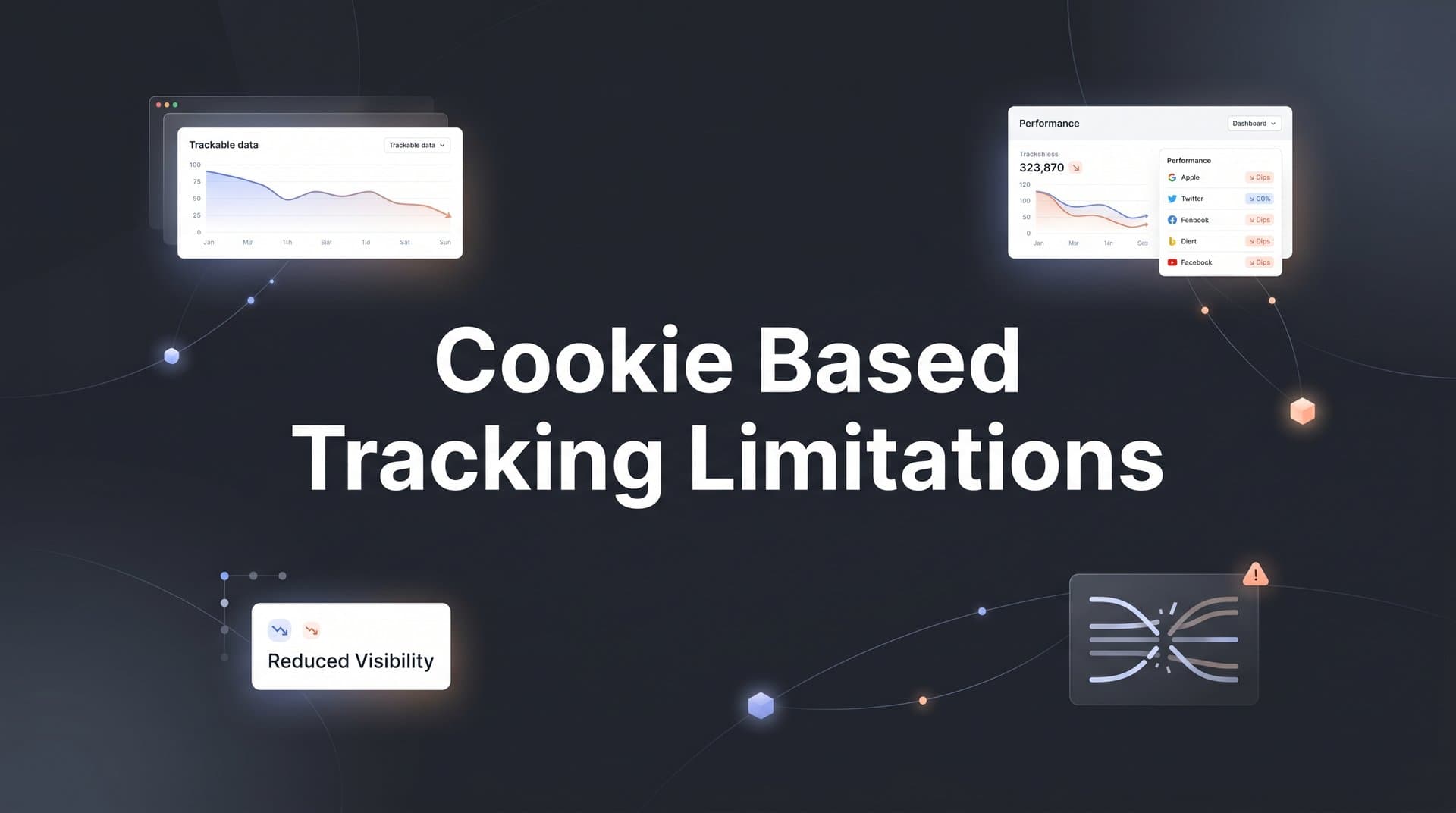
The combined effect of these forces is that cookie based tracking limitations are not theoretical. They are actively degrading the data your ad platforms use to report results and make optimization decisions right now.
What Cookie Tracking Limitations Are Doing to Your Ad Campaigns
Understanding the mechanics of cookie failure matters, but what marketers really need to grasp is the downstream impact on campaign performance and budget decisions. The consequences show up in three interconnected ways.
Underreported conversions: When cookies are blocked or expire before a user converts, the ad platform cannot match the conversion event back to the original ad click. The conversion still happened. The revenue still came in. But from the platform's perspective, that sale is invisible. Meta and Google report fewer results than you actually generated, which makes your campaigns look less effective than they are. This leads to budget cuts on campaigns that are actually working and misallocation toward campaigns that only appear to be performing better because their attribution happens to be more intact.
Attribution gaps across the customer journey: Modern buyers don't follow a straight line from ad click to purchase. They see an ad on Instagram, research on their laptop, compare options on a tablet, and convert days later on their desktop. In a cookie-based system, each of those sessions is a separate, unlinked event. The attribution model has no way to stitch them together into a coherent picture of what actually drove the conversion. You end up crediting the last touchpoint you can see, which is often not the touchpoint that actually drove the decision.
Ad platform algorithm degradation: This is the consequence that most marketers underestimate. Platforms like Meta and Google use machine learning to optimize ad delivery, targeting, and bidding. These algorithms depend on conversion signal data to learn which users, behaviors, and contexts are most likely to produce results. When cookie limitations reduce the volume and accuracy of those signals, the algorithms are working with incomplete training data. They make worse targeting decisions, bid inefficiently, and drive up your cost per acquisition over time. The damage isn't just in your reporting. It compounds into actual performance decline.
The practical result is that marketers running campaigns today on cookie-dependent infrastructure are operating with a distorted view of what's working, making optimization decisions based on incomplete data, and inadvertently degrading the performance of the ad platforms they're paying to use. Fixing conversion tracking gaps is no longer optional for advertisers who want accurate performance data.
Server-Side Tracking and First-Party Data: How Modern Attribution Actually Works
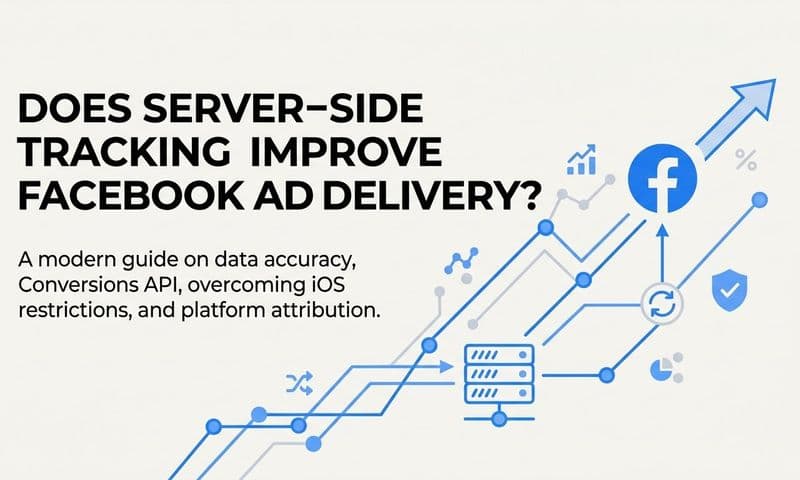
The good news is that the solution to cookie based tracking limitations doesn't require waiting for the industry to agree on a new standard. It requires shifting where and how data is collected.
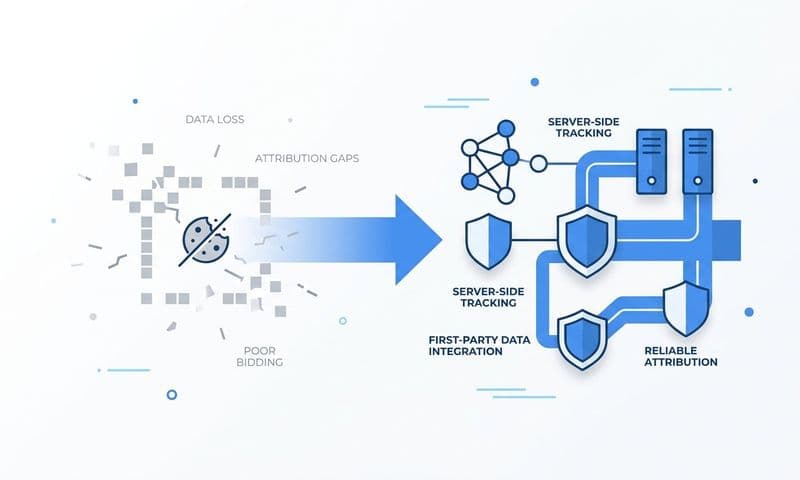
Server-side tracking is the architectural change that removes browser-level vulnerabilities from the equation entirely. Instead of relying on a JavaScript pixel firing in the user's browser to capture a conversion event, server-side tracking moves that logic to your server. When a conversion occurs, your server captures the event data and sends it directly to the ad platform via an API, bypassing the browser completely. Meta's Conversions API (CAPI) and Google's Enhanced Conversions are the primary implementations of this approach for the two largest ad platforms.
Because the data never passes through the browser, it is not affected by ITP, Enhanced Tracking Protection, ad blockers, or cookie consent choices. The conversion event is captured and transmitted regardless of what the user's browser settings look like. This immediately restores a significant portion of the conversion signal that cookie limitations were suppressing.
First-party data strategy works alongside server-side tracking to create a durable attribution foundation. First-party data is information collected directly by your business through owned channels: your website, your CRM, email sign-ups, form submissions, and logged-in user behavior. Because this data is collected with user consent and stored by you rather than a third-party ad network, it is not subject to third-party cookie restrictions.
The real power comes from combining server-side tracking with first-party identifiers like hashed email addresses and phone numbers. When a user converts and you have their email address from a previous interaction, you can match that conversion back to the original ad click using the email as the identifier rather than a cookie. This works even when the user has switched devices, cleared their cookies, or opted out of browser tracking. The match is based on a durable, consent-based identifier rather than a fragile browser-stored file.
This combination restores the signal quality that ad platform algorithms need to optimize effectively, reduces underreporting of conversions, and gives marketers a more accurate view of what their campaigns are actually generating. Exploring the full range of server-side tracking benefits reveals just how significant this architectural shift can be for campaign performance.
Multi-Touch Attribution: Understanding the Full Revenue Picture
Even with server-side tracking in place, there's a deeper attribution problem that cookies were never equipped to solve: most conversions involve multiple touchpoints across multiple channels, and assigning all the credit to the last click gives you a systematically wrong picture of what's driving revenue.
Last-click attribution, which has been the default for most ad platforms and analytics tools, works reasonably well in a world where users take a single, linear path from ad to purchase. That world has never really existed, and it certainly doesn't exist now. A user might encounter your brand through a YouTube pre-roll ad, click a retargeting ad on Meta a week later, read a blog post through organic search, and then convert after clicking a branded search ad. Last-click attribution gives all the credit to the branded search ad and zero credit to everything that built the awareness and intent that led to that final click.
Multi-touch attribution distributes conversion credit across every meaningful interaction in the customer journey. Different models handle this distribution differently: linear models give equal credit to all touchpoints, time-decay models weight touchpoints closer to conversion more heavily, and data-driven models use algorithmic analysis of actual conversion patterns to assign credit based on real influence rather than position in the sequence. Understanding customer attribution tracking at this level of depth is what separates marketers who optimize on real data from those working with incomplete signals.
Critically, multi-touch attribution done well does not depend on third-party cookies. It relies on server-side event data, CRM records, and first-party identifiers to stitch together the customer journey across channels and devices. This makes it both more accurate and more resilient than cookie-based last-click models.
The practical payoff is significant. When you can see which touchpoints across the full funnel are actually contributing to conversions, you can allocate budget based on real influence rather than attribution bias. Channels that play a critical role in building awareness and intent get the investment they deserve. Campaigns that only look good because they capture the last click before conversion stop receiving disproportionate budget. Over time, this produces more efficient spend and better returns across the board.
Building a Tracking Architecture That Holds Up
Knowing that cookie based tracking limitations are real and that better alternatives exist is one thing. Building the infrastructure to actually implement those alternatives is another. Here's what a resilient tracking stack looks like in practice.
Server-side event collection: The foundation is moving your primary conversion tracking off the browser and onto your server. This means implementing server-side integrations with your key ad platforms, using tools like Meta's Conversions API and Google's Enhanced Conversions, so that conversion events are captured and transmitted reliably regardless of browser conditions. Reviewing the top server-side tracking tools available today can help you identify the right implementation approach for your stack.
CRM integration: Your CRM is the authoritative record of your customer data. Connecting it to your attribution infrastructure allows you to enrich conversion events with first-party identifiers, match offline conversions back to ad interactions, and build a complete picture of the customer journey from first touch to closed deal. This is especially important for businesses with longer sales cycles where the gap between ad interaction and conversion can span weeks or months.
Conversion sync to ad platforms: Feeding enriched, server-side conversion data back to Meta, Google, TikTok, and other platforms does more than improve your reporting. It improves the quality of the signals those platforms use for targeting and optimization. When the algorithm receives accurate, complete conversion data, it makes better decisions about who to show your ads to and how much to bid. This creates a compounding improvement in campaign performance over time, because better data produces better optimization, which produces better results, which produces more data.
A centralized attribution platform: Individual integrations with each ad platform are not enough on their own. You need a single place where data from all channels and touchpoints is unified, so you can compare performance across platforms, apply consistent attribution models, and make budget decisions based on a complete picture rather than siloed platform-specific reports. The best marketing attribution software consolidates this data and surfaces actionable insights across every channel you run.
This is where Cometly fits in. Cometly captures every touchpoint from ad click to CRM event, applies AI-powered attribution analysis across all your channels, and syncs enriched conversion data back to your ad platforms. It gives marketers accurate, complete data that does not rely on fragile browser cookies, and it surfaces AI-driven recommendations that help you identify what's actually driving revenue and where to scale. Instead of patching a broken cookie-based system, you're building on a foundation designed for the way tracking actually works today.
The Bottom Line on Cookie Tracking and What to Do Next
Cookie based tracking limitations are not a future problem on the horizon. They are an active constraint degrading your attribution accuracy and ad performance right now. Every day you run campaigns on cookie-dependent infrastructure, you're making budget decisions based on incomplete data, feeding ad platform algorithms lower-quality signals, and missing conversions that your tracking simply cannot see.
The solution is not to find a better cookie. It's to build a data infrastructure that doesn't depend on one. Server-side tracking removes browser-level vulnerabilities. First-party data creates a durable, consent-based foundation for attribution. Multi-touch attribution gives you an honest picture of which channels and campaigns are actually driving revenue across the full customer journey. And conversion sync ensures that the ad platforms you're paying are working with the best possible data to optimize on your behalf.
Marketers who make this shift don't just fix their reporting. They gain a genuine competitive advantage. While competitors are optimizing based on distorted, cookie-limited data, you're making decisions based on a complete and accurate picture of what's working. That advantage compounds over time as your ad platform algorithms improve, your budget allocation gets sharper, and your understanding of the customer journey deepens.
Ready to elevate your marketing game with precision and confidence? Discover how Cometly's AI-driven recommendations can transform your ad strategy. Get your free demo today and start capturing every touchpoint to maximize your conversions.