You're spending thousands on ads. Your dashboards show decent click-through rates. But when it comes to conversions, the numbers don't add up. Your analytics platform says one thing, your ad manager says another, and your CRM tells a completely different story. Here's what's actually happening: up to 60% of your customer journey is invisible. Not because your tracking is broken, but because browsers are actively blocking the cookies that make tracking possible.
This isn't a technical glitch you can fix with better implementation. Safari, Firefox, and Chrome have fundamentally changed how tracking works, and the old playbook no longer applies. Campaigns that appear to underperform might be driving significant revenue—you just can't see it anymore. The marketers who understand this shift and adapt their measurement strategy will have a massive advantage over those still relying on outdated tracking methods.
Let's break down exactly what's happening, why it matters for your bottom line, and what you can do about it.
The Browser Privacy Revolution That Changed Marketing Forever
In 2017, Apple launched Intelligent Tracking Prevention (ITP) in Safari, and the marketing world hasn't been the same since. What started as a feature to protect user privacy became the beginning of a fundamental shift in how browsers handle tracking data. Safari now limits first-party cookies to just seven days of storage. In certain scenarios involving cross-site tracking, that window shrinks to 24 hours. Third-party cookies—the kind that follow users across different websites—are blocked entirely.
Firefox followed suit with Enhanced Tracking Protection (ETP), which blocks known tracking scripts and cookies by default. Mozilla maintains a list of tracking domains, and anything on that list gets stopped before it can collect data. Chrome, despite multiple delays, continues moving toward its Privacy Sandbox initiative, which will fundamentally change how advertisers track and target users without traditional cookies. Understanding the cookie deprecation impact on tracking is essential for every marketer navigating this landscape.
Here's what this means in practical terms: the JavaScript pixels you've been using to track conversions now face severe limitations. When Safari expires a first-party cookie after seven days, a returning customer looks like a brand new visitor. Your attribution breaks. The user who clicked your ad two weeks ago, researched your product, and finally converted today? That conversion doesn't connect back to your original ad campaign.
The distinction between first-party and third-party cookies matters more than ever. First-party cookies are set by your own domain—like when someone logs into your website. Third-party cookies are set by external domains, typically used for cross-site tracking and retargeting. Browsers treat these very differently now. While first-party cookies get limited lifespans, third-party cookies are often blocked completely.
This creates a cascading problem for attribution. Traditional tracking relied on dropping a cookie when someone clicked your ad, then recognizing that same cookie when they converted. With cookies blocked or expiring quickly, this connection breaks. You see the click. You see the conversion. But you can't connect them. Your multi-touch attribution model falls apart because you can't track users across multiple sessions and touchpoints.
The shift happened gradually, then suddenly. Early adopters of privacy features were a small percentage of users. Now, these protections are default settings that most users never change. If you're still relying entirely on pixel-based tracking, you're measuring only a fraction of your actual marketing performance. The question isn't whether cookie blocking affects your data—it's how much of your data you're missing.
How Cookie Blocking Creates Attribution Blind Spots
Picture this: a potential customer sees your Facebook ad on Monday, clicks through to your site, and browses your product pages. They're interested but not ready to buy. On Wednesday, they search for your brand on Google, click your ad again, and read some reviews. On Friday, they return directly to your site and make a purchase. In a world without cookie blocking, you'd see this complete journey and credit the appropriate touchpoints.
With cookie blocking, here's what actually gets recorded: three separate "new users" with no connection between them. The Facebook click might be tracked. The Google click shows up as a different person. The direct conversion appears to come from nowhere. Your attribution model sees three isolated events instead of one customer journey. This isn't just a reporting problem—it fundamentally breaks how you understand campaign performance.
When cookies get blocked or expire, specific tracking failures occur. Missing touchpoints mean your first-touch attribution can't identify where customers originally came from. Broken user journeys make multi-touch attribution impossible because you can't connect the dots between interactions. Duplicate user counts inflate your audience size because returning visitors look like new ones. Each of these issues compounds the others. Many marketers discover their cookie tracking not working only after noticing massive discrepancies in their reports.
The discrepancy between your ad platforms and analytics tools becomes impossible to ignore. Meta Ads Manager shows 100 conversions. Google Analytics shows 75. Your CRM records 120. Which number is right? The frustrating answer: none of them. Each platform sees a different slice of reality based on what cookies they can access and how users interact with their tracking systems. Meta might catch conversions that Google misses. Your CRM captures purchases that neither ad platform sees.
This fragmentation has a direct impact on campaign optimization. Ad platform algorithms need accurate conversion data to learn which audiences respond best, which creative drives results, and how to allocate budget effectively. When cookie blocking hides 40-50% of your conversions, the algorithm optimizes based on incomplete information. It might think a campaign is underperforming when it's actually your best performer—the conversions just aren't being tracked.
The problem gets worse over time. As algorithms receive more incomplete data, they drift further from optimal performance. They start targeting audiences that convert in ways your tracking can see, rather than audiences that actually convert at the highest rates. You end up optimizing for visibility instead of results. The campaigns that survive are the ones that happen to convert in ways your broken tracking can measure, not necessarily the ones driving the most revenue.
Attribution models that once provided clear insights now generate misleading conclusions. Last-click attribution overweights whatever touchpoint happens to have a working cookie. First-click attribution misses the actual first interaction because that cookie expired weeks ago. Even sophisticated multi-touch models fail when they're missing half the touches. Exploring different attribution tracking methods can help you understand which approaches work best in this new environment. You're making strategic decisions based on a partial picture, and the missing pieces are the ones that matter most.
The Hidden Cost of Inaccurate Data on Your Ad Spend
Incomplete attribution doesn't just create reporting confusion—it actively costs you money. When you can't accurately track which campaigns drive revenue, budget allocation becomes guesswork. You might kill a campaign that's actually profitable because conversions aren't being attributed correctly. Meanwhile, you continue funding campaigns that look good in your dashboard but deliver minimal real-world results.
This misallocation compounds over time. Let's say you're spending $50,000 monthly across five campaigns. Campaign A drives significant revenue but cookie blocking hides 60% of its conversions. Campaign B drives minimal revenue but happens to convert in ways your tracking captures. Based on visible data, you shift budget from A to B. Your overall ROAS drops, but your dashboard shows improvement because you're measuring the wrong thing.
The impact extends beyond simple budget shifts. Ad platform algorithms rely on conversion data to optimize delivery. When you feed incomplete data to Meta's algorithm, it learns to find more users who convert in trackable ways—not users who actually convert at the highest rates. The algorithm becomes increasingly confident in patterns that don't reflect reality. You're teaching it to optimize for measurement visibility instead of business outcomes. Understanding best practices for tracking conversions accurately is critical to avoiding these costly mistakes.
ROAS calculations become fundamentally unreliable when cookie blocking hides conversions. If you're seeing a 3x ROAS based on tracked conversions, but 50% of conversions aren't being tracked, your actual ROAS might be 6x. You think you're breaking even on certain campaigns when you're actually doubling your money. Or worse, you think you're profitable when you're actually losing money because the conversions you can track aren't representative of overall performance.
The strategic decisions you make based on this incomplete data ripple through your entire marketing operation. You might abandon channels that actually work well. You could double down on tactics that appear successful but aren't. Your creative testing becomes unreliable because you can't accurately measure which ads drive results. Even your audience targeting suffers because you're building lookalike audiences from incomplete conversion data.
The competitive disadvantage adds up quickly. While you're making decisions based on partial data, competitors who've solved attribution are scaling with confidence. They know which campaigns actually drive revenue. They can accurately test new channels and creative approaches. They're feeding complete data to ad platform algorithms, which means better optimization and lower costs. The gap between accurate and inaccurate attribution isn't just academic—it's the difference between scaling profitably and burning budget on guesswork.
Server-Side Tracking: The Privacy-Proof Alternative
Traditional tracking places a JavaScript pixel in the user's browser. When someone converts, that pixel fires and sends data to your analytics platform or ad manager. This browser-based approach worked well for years, but it's exactly what privacy features are designed to block. The solution isn't better browser-based tracking—it's bypassing the browser entirely.
Server-side tracking works fundamentally differently. Instead of relying on a pixel in the user's browser to report conversions, your server sends conversion data directly to ad platforms and analytics tools. When someone makes a purchase on your site, your backend system captures that event and transmits it server-to-server. No cookies required. No browser restrictions to navigate. The data flows from your infrastructure to the ad platform's infrastructure without touching the user's browser at all.
This architectural difference makes server-side tracking immune to cookie blocking. Safari's ITP can't limit what it never sees. Firefox's Enhanced Tracking Protection can't block server-to-server communication. Ad blockers installed in browsers have no visibility into backend data flows. The privacy features that break traditional tracking simply don't apply to server-side implementations. For a deeper comparison, explore Google Analytics vs server side tracking to understand the key differences.
The practical impact is immediate and measurable. Conversions that pixel-based tracking misses completely show up in server-side tracking. The user who clicked your ad three weeks ago and finally converted? Server-side tracking can connect that conversion back to the original click because you're not relying on an expired cookie. The iOS user whose browser blocks your tracking pixel? Their conversion still gets recorded because your server handles the data transmission.
Server-side tracking captures the complete customer journey by connecting data points that browser-based tracking can't see. When someone converts, your server knows their purchase history, their CRM status, their lifetime value—information that never existed in a browser cookie anyway. This enriched data gets sent to ad platforms, giving their algorithms a much clearer picture of what success actually looks like.
The technical implementation requires more setup than dropping a pixel on your site, but the accuracy gains are substantial. You need to configure your server to capture conversion events, set up secure connections to ad platform APIs, and ensure proper data handling for privacy compliance. Once implemented, you're measuring marketing performance based on actual business outcomes rather than whatever your tracking pixels manage to capture.
Why This Matters for Algorithm Optimization
Ad platforms use conversion data to train their optimization algorithms. When you send complete, accurate conversion data through server-side tracking, the algorithm learns from real patterns instead of partial data. It can identify which audiences actually convert, which creative resonates, and how to allocate budget for maximum return. Your campaigns get better over time because the algorithm is learning from truth, not from whatever cookie-dependent tracking manages to capture.
Building a Cookie-Resistant Attribution Strategy
Server-side tracking solves the technical problem, but a complete attribution strategy requires connecting multiple data sources into a unified view. The goal is capturing the entire customer journey regardless of which cookies work and which don't. This means building infrastructure that doesn't depend on any single tracking method.
First-party data collection becomes your foundation. When someone fills out a form, subscribes to your email list, or creates an account, you're capturing information with their explicit consent. Email addresses, phone numbers, and user IDs provide persistent identifiers that don't expire when cookies do. This first-party data tracking lets you track users across sessions and devices without relying on browser cookies at all.
The key is capturing this information early in the customer journey. If you wait until purchase to collect first-party data, you've already lost visibility into the earlier touchpoints. Smart marketers use lead magnets, content upgrades, and early-stage offers to collect email addresses before the sales process begins. Once you have that identifier, you can track the user's journey even when cookies fail.
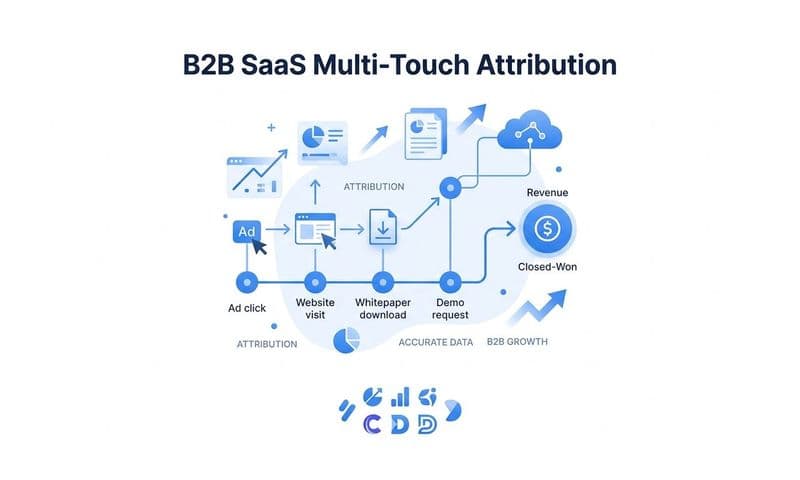
Connecting your CRM, ad platforms, and website creates a unified tracking system that's greater than the sum of its parts. When someone clicks your ad, that event gets logged with a user identifier. When they fill out a form on your site, that identifier connects to their CRM record. When they make a purchase, that conversion gets attributed back to the original ad click through the CRM connection. You're building a complete picture by stitching together data from multiple sources. Effective customer attribution tracking depends on this unified approach.
This integration requires technical work but delivers massive value. Your CRM becomes the central source of truth for customer data. Ad platforms receive conversion information through server-side APIs. Your analytics tool tracks on-site behavior. Each system contributes its piece of the puzzle, and you can see the complete customer journey regardless of cookie blocking.
Conversion sync takes this integration further by feeding enriched data back to ad platforms. Instead of just telling Meta that someone converted, you send additional context: their customer lifetime value, which products they purchased, whether they're a repeat customer. This enriched data helps ad algorithms optimize more effectively. They can prioritize audiences likely to become high-value customers rather than just optimizing for any conversion.
The Technical Components That Make It Work
A cookie-resistant attribution strategy combines several technical elements. Server-side tracking captures conversions that browsers block. First-party data provides persistent user identifiers. CRM integration connects touchpoints across the customer journey. Conversion APIs feed enriched data back to ad platforms. Analytics tools aggregate everything into actionable insights. Each component addresses a specific weakness in cookie-dependent tracking.
The implementation doesn't have to happen all at once. Start with server-side tracking to capture conversions you're currently missing. Add first-party data collection to build persistent user profiles. Connect your CRM to unify customer data. Implement conversion sync to improve ad platform optimization. Each step improves attribution accuracy and reduces dependence on cookies that browsers are actively blocking. For a comprehensive walkthrough, review this cookieless tracking implementation guide.
Future-Proofing Your Marketing Measurement
Cookie blocking isn't a temporary challenge that browsers will eventually reverse. Privacy features are intensifying, not relaxing. Chrome's Privacy Sandbox continues evolving. Safari's ITP gets stricter with each update. Firefox expands its tracking protection. The trend is clear: browser-based tracking will become less reliable over time, not more. Staying ahead of cookieless tracking future trends is essential for long-term success.
Marketers who adapt now gain a significant competitive advantage. While others struggle with incomplete data and broken attribution, you'll have accurate visibility into campaign performance. You'll know which channels actually drive revenue. Your ad algorithms will optimize based on complete conversion data. Your budget allocation will reflect reality instead of measurement limitations. This isn't just about fixing a tracking problem—it's about building sustainable infrastructure for data-driven marketing.
The action steps are straightforward. First, audit your current tracking to understand exactly what you're missing. Run a test: compare your ad platform conversion counts to your actual sales. The gap between these numbers reveals how much cookie blocking affects your measurement. Second, implement server-side tracking to capture conversions that pixel-based tracking misses. Third, connect your data sources—CRM, ad platforms, analytics tools—into a unified attribution system. Reviewing the attribution tracking setup process can help you get started quickly.
These changes require investment, both in technology and in process. You might need to upgrade your analytics stack. Your team needs to understand how server-side tracking works. Your technical infrastructure must support secure data transmission between systems. The upfront cost is real, but so is the cost of continuing to make decisions based on incomplete data.
The marketers who win in this new environment are the ones who treat attribution as strategic infrastructure rather than a technical detail. Accurate measurement isn't just about reporting—it's the foundation for every optimization decision you make. When you can see the complete customer journey, you can make confident choices about where to invest, which campaigns to scale, and how to improve performance. When your data is incomplete, you're guessing.
Think about the compounding effect of better attribution over time. Each month, you make slightly better budget allocation decisions. Your ad algorithms learn from more complete data. Your creative testing becomes more reliable. Your audience targeting improves. Small advantages compound into significant performance gains. The gap between accurate and inaccurate attribution grows wider with every passing quarter.
Moving Forward with Confidence
Cookie blocking has fundamentally changed marketing measurement, but it hasn't made accurate attribution impossible. The tools and strategies exist to capture the complete customer journey despite browser privacy features. Server-side tracking bypasses cookie restrictions entirely. First-party data provides persistent identifiers that don't depend on cookies. Connected systems create unified visibility across all touchpoints. Conversion sync feeds enriched data back to ad platforms for better optimization.
The question isn't whether to adapt—it's how quickly you can implement solutions that restore measurement accuracy. Every day you operate with incomplete attribution is a day you're making decisions based on partial information. Campaigns that drive real revenue might be getting cut because conversions aren't being tracked. Budget is flowing to channels that look good in dashboards but underperform in reality. Ad algorithms are optimizing for the wrong signals because they're receiving incomplete data.
This shift represents an opportunity as much as a challenge. The marketers who solve attribution while competitors struggle with broken tracking will capture market share. They'll scale campaigns with confidence while others hesitate. They'll make data-driven decisions while others rely on intuition. The infrastructure you build now determines your competitive position for years to come. Exploring cookieless tracking solutions for marketers is the first step toward regaining control.
Accurate attribution transforms marketing from guesswork into science. You stop wondering which campaigns work and start knowing with certainty. You can test new channels confidently because you'll accurately measure results. You can scale winning campaigns aggressively because you trust your data. You can optimize creative and targeting based on what actually drives conversions, not just what your broken tracking happens to capture.
The path forward is clear: audit your current tracking gaps, implement server-side solutions, connect your data sources, and feed enriched information back to ad platforms. Each step improves measurement accuracy and reduces dependence on cookies that browsers are actively blocking. The technical work required is manageable. The competitive advantage gained is substantial.
Ready to elevate your marketing game with precision and confidence? Discover how Cometly's AI-driven recommendations can transform your ad strategy—Get your free demo today and start capturing every touchpoint to maximize your conversions. Stop guessing which campaigns drive revenue and start knowing with certainty. Your complete customer journey is waiting to be revealed.