Third-party cookies are going away, and the tracking infrastructure that most ad campaigns were built on is changing fast. Safari and Firefox blocked third-party cookies years ago. Chrome has been rolling out its Privacy Sandbox alternatives. The result? Retargeting audiences shrink, attribution models lose accuracy, and media spend becomes harder to justify.
The good news is that purpose-built solutions exist across every category: server-side tracking, first-party data platforms, identity resolution, browser-native APIs, and more. The challenge is knowing which one fits your situation.
The tools on this list were selected based on server-side tracking capabilities, first-party data infrastructure, cross-platform attribution accuracy, ease of integration, and pricing transparency. Here are the top cookie deprecation solutions worth your attention in 2026.
1. Cometly
Best for: Marketers who need accurate attribution and ad optimization in a cookieless world
Cometly is an AI-powered marketing attribution platform built to give marketers clear, accurate data on which ads and channels are actually driving revenue.
 9 Best Cookie Deprecation Solutions for Marketers in 2026
Where This Tool Shines
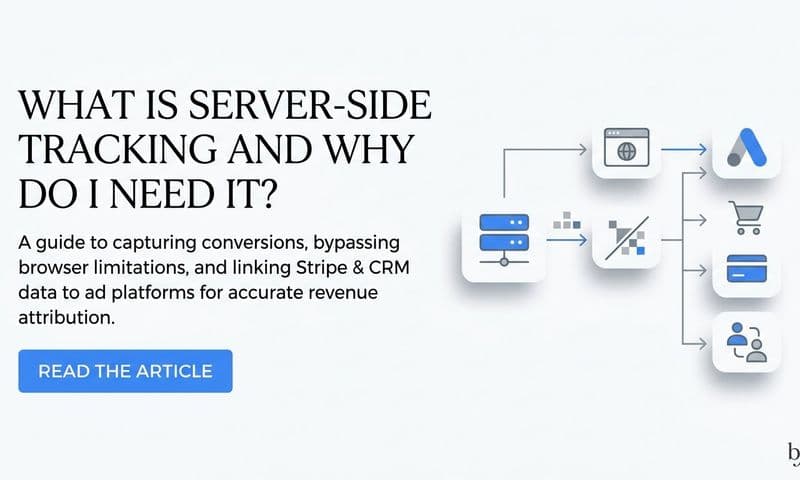
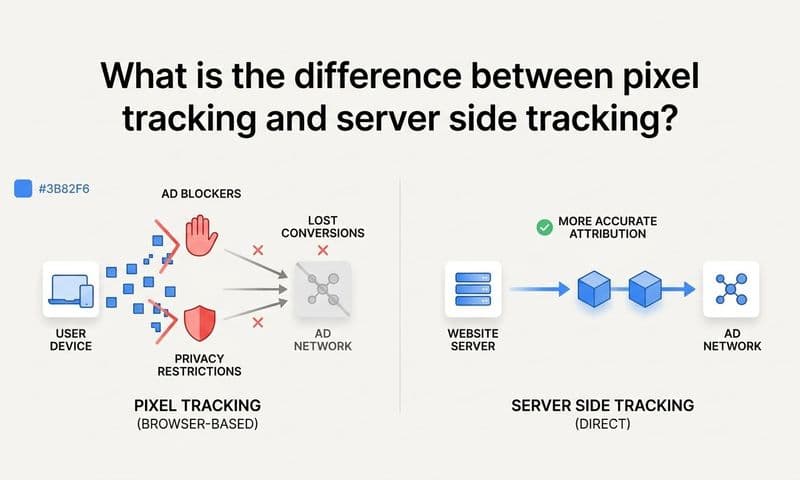
Cometly's server-side tracking moves data collection off the browser entirely, bypassing cookie restrictions and ad blockers that would otherwise cause data loss. This means your conversion signals stay intact even as browser-side tracking becomes less reliable.
What sets Cometly apart from generic analytics tools is its Conversion Sync feature, which sends enriched first-party conversion data back to Meta, Google, and other ad platforms. This feeds better signals to ad platform algorithms, improving targeting and optimization without relying on third-party cookies at all.
Key Features
Server-Side Tracking: Captures conversion events from your server rather than the browser, bypassing cookie restrictions and improving data accuracy across campaigns.
Multi-Touch Attribution: Tracks the full customer journey across ad platforms and CRM events, so you see every touchpoint that contributed to a conversion.
Conversion Sync: Sends enriched, conversion-ready events back to Meta, Google, and more, helping ad platform AI optimize toward your best customers.
AI-Powered Recommendations: Analyzes your campaign data to surface which ads are performing and where to scale or cut spend with confidence.
AI Chat: Lets you ask natural-language questions about your marketing data and get instant, actionable answers without needing to dig through dashboards.
Best For
Digital marketers and performance-focused teams running paid campaigns on Meta, Google, and other platforms who need reliable attribution data as browser-side tracking degrades. Particularly valuable for agencies managing multiple clients and ad accounts.
Pricing
Custom pricing based on ad spend. A free demo is available to explore the platform before committing.
2. Google Privacy Sandbox
Best for: Advertisers and publishers looking for browser-native, privacy-preserving alternatives to third-party cookies
Google Privacy Sandbox is a collection of browser-native APIs built directly into Chrome to replace third-party cookie functionality with privacy-preserving alternatives.
 9 Best Cookie Deprecation Solutions for Marketers in 2026
Where This Tool Shines
Because Privacy Sandbox APIs are built into the Chrome browser itself, there is no additional infrastructure to deploy. For advertisers who rely heavily on Chrome-based audiences, this is the most direct path to maintaining interest-based targeting without third-party cookies.
The Attribution Reporting API is particularly relevant for marketers because it allows conversion measurement at the campaign level without exposing individual user data to advertisers, keeping reporting functional even in a cookieless context.
Key Features
Topics API: Categorizes users into broad interest topics based on browsing history, without sharing that history across sites.
Attribution Reporting API: Measures ad conversions and campaign performance without relying on third-party cookies or cross-site tracking.
Protected Audiences API: Enables remarketing and custom audience targeting without individual user tracking across the web.
No Infrastructure Required: All APIs run natively in Chrome, so adoption requires no server-side setup from advertisers.
Best For
Advertisers and ad tech companies looking for a browser-native baseline solution, particularly those already operating within the Google ecosystem who want a standards-based approach to cookieless targeting.
Pricing
Free. The APIs are built into the Chrome browser and available to any developer or advertiser at no cost.
3. Segment (Twilio)
Best for: Teams that need a centralized first-party data layer across multiple tools and channels
Segment is a leading Customer Data Platform that collects, unifies, and activates first-party data across hundreds of downstream tools.
 8 Best Attribution-Focused Platforms vs Segment: Which Approach Fits Your Marketing Stack in 2026
Where This Tool Shines
Segment's core value in a cookieless world is its ability to capture first-party data at every touchpoint, from web and mobile to server-side events, and route that data to your entire marketing stack. Instead of relying on third-party cookies to stitch together user journeys, Segment builds that picture from data you actually own.
Its identity resolution capability is especially useful for connecting anonymous sessions to known users after they log in or convert, creating a more complete view of the customer journey without any third-party cookie dependence.
Key Features
Real-Time Data Collection: Captures first-party events from web, mobile apps, and server-side sources in a single unified stream.
Identity Resolution: Stitches together anonymous and known user profiles to build complete customer records across sessions and devices.
400+ Integrations: Pre-built connectors let you activate your first-party data across your entire marketing and analytics stack.
Protocols: Data governance and schema enforcement tools that keep your event data clean and consistent across teams.
Best For
Mid-market to enterprise marketing and data teams that want a robust first-party data infrastructure powering their entire tool stack, not just a single channel.
Pricing
Free tier available for small volumes. Team plan starts at $120/month. Business plan is custom pricing for larger organizations.
4. LiveRamp
Best for: Advertisers and publishers who need deterministic, people-based identity that works across the open web
LiveRamp is a data connectivity platform specializing in identity resolution, enabling audience matching across channels without third-party cookies through its RampID and Authenticated Traffic Solution.
 9 Best Cookie Deprecation Solutions for Marketers in 2026
Where This Tool Shines
LiveRamp's Authenticated Traffic Solution (ATS) is one of the most widely adopted cookieless identity frameworks on the open web. It works by encouraging publishers to authenticate users (typically through email-based logins), then translating that authenticated identity into RampID for use across the advertising ecosystem.
For advertisers, this means you can reach and measure real people across publisher inventory without relying on cookies. For publishers, it means monetizing authenticated audiences at higher CPMs than anonymous inventory.
Key Features
Authenticated Traffic Solution (ATS): Enables cookieless identity resolution on publisher inventory using authenticated user signals.
RampID: A persistent, people-based identifier that works across devices and channels without third-party cookies.
Data Clean Rooms: Privacy-safe collaboration environments for matching and analyzing data between brands and publishers without exposing raw user records.
Ecosystem Integrations: Connects with major DSPs, SSPs, and walled gardens for broad activation reach.
Best For
Enterprise advertisers and large publishers who need a scalable, deterministic identity solution for programmatic advertising on the open web.
Pricing
Custom enterprise pricing. Contact LiveRamp directly for a quote based on your data volume and use case.
5. The Trade Desk (Unified ID 2.0)
Best for: Programmatic advertisers looking for an open, interoperable identity standard across the ad tech ecosystem
Unified ID 2.0 (UID2) is an open-source identity framework built on encrypted, hashed email addresses, designed as an industry-wide replacement for third-party cookies in programmatic advertising.
 9 Best Cookie Deprecation Solutions for Marketers in 2026
Where This Tool Shines
UID2's biggest strength is its open-source, interoperable design. Hundreds of publishers, advertisers, data providers, and DSPs have adopted it, meaning the identity graph it creates has real scale across the open web. Because it is governed by Prebid.org rather than a single company, it carries more neutrality than proprietary identity solutions.
The framework is built on user consent and encryption, so email addresses are never stored or shared in plain text. Users can also opt out centrally, which helps with regulatory alignment.
Key Features
Open-Source Standard: Freely available and governed independently by Prebid.org, with broad industry adoption across publishers and ad tech platforms.
Email-Based Identity: Uses encrypted, hashed email addresses as the identity signal, with user consent built into the framework.
Cross-Ecosystem Interoperability: Works across publishers, advertisers, data providers, and DSPs for consistent identity resolution.
User Opt-Out Management: Centralized opt-out mechanism that respects user privacy preferences across the ecosystem.
Best For
Programmatic advertisers and publishers who want a widely adopted, neutral identity standard for cookieless targeting and measurement across the open web.
Pricing
Free to implement as an open-source standard. The Trade Desk DSP platform has separate pricing for advertisers who use it for campaign execution.
6. Adobe Real-Time CDP
Best for: Enterprise organizations needing real-time audience activation from unified first-party profiles
Adobe Real-Time CDP is an enterprise customer data platform that unifies first-party profiles in real time and activates audiences across Adobe Experience Cloud and external channels without third-party cookie dependence.
 9 Best Cookie Deprecation Solutions for Marketers in 2026
Where This Tool Shines
Adobe Real-Time CDP is built for organizations that have significant volumes of first-party data across multiple systems and need to unify and activate that data quickly. Its real-time profile unification means that when a customer takes an action, their profile updates instantly and audiences refresh accordingly.
The platform's native integration with Adobe Experience Cloud makes it particularly powerful for teams already using Adobe Analytics, Adobe Target, or Adobe Journey Optimizer, as data flows seamlessly between products without needing additional middleware.
Key Features
Real-Time Profile Unification: Combines online and offline data sources into a single, continuously updated customer profile.
Adobe Sensei AI Segmentation: AI-driven audience building that identifies high-value segments from your first-party data.
Data Governance Framework: Built-in controls for managing how data is used across activation channels, with policy enforcement at the platform level.
Native Experience Cloud Integration: Deep connectivity with Adobe Analytics, Target, Journey Optimizer, and third-party destinations.
Best For
Large enterprises with mature first-party data strategies and existing Adobe Experience Cloud investments who need real-time audience activation at scale.
Pricing
Custom enterprise pricing. Adobe Real-Time CDP is typically suited for large organizations with significant data volumes and budget.
7. Meta Conversions API (CAPI)
Best for: Facebook and Instagram advertisers who need reliable conversion signal quality as browser tracking degrades
Meta Conversions API is Meta's server-side event tracking solution that sends conversion data directly from your server to Meta, bypassing browser limitations entirely.
 9 Best Cookie Deprecation Solutions for Marketers in 2026
Where This Tool Shines
The Meta Pixel has always been vulnerable to browser restrictions, ad blockers, and iOS privacy changes. Conversions API solves this by moving the data transfer to your server, where none of those browser-side limitations apply. The result is more complete conversion data reaching Meta's ad platform, which translates to better ad delivery optimization.
CAPI works best when implemented alongside the Meta Pixel rather than replacing it. The two sources together provide redundant signal coverage, and Meta's deduplication logic handles overlapping events automatically.
Key Features
Server-to-Server Data Transfer: Sends conversion events from your server directly to Meta, bypassing browser cookie restrictions and ad blockers.
Improved Event Match Quality: Higher-quality signals lead to better ad delivery optimization and more accurate attribution within Meta's platform.
Pixel Redundancy: Works alongside the Meta Pixel for dual-signal coverage, with built-in deduplication to prevent double-counting.
Custom and Offline Events: Supports custom conversion events and offline conversion data, not just standard web events.
Best For
Any business running Facebook or Instagram campaigns that wants to recover conversion signal quality lost to iOS privacy changes, ad blockers, or browser cookie restrictions.
Pricing
Free to use. Implementation requires server infrastructure or a partner integration (such as Cometly's Conversion Sync, which automates this process).
8. Permutive
Best for: Publishers who need to build and monetize cookieless audiences from their own content and behavioral data
Permutive is a publisher-focused data platform that processes audience data on-device, enabling cookieless audience targeting and monetization without sending personal data to external servers.
Where This Tool Shines
Permutive takes a fundamentally different architectural approach from most data platforms: instead of sending user data to a central server for processing, it runs audience segmentation directly in the browser. This means user data never leaves the device, which is a strong privacy story for publishers operating under increasing regulatory scrutiny.
For publishers, this translates into the ability to offer advertisers precise, first-party audience segments built from real content engagement, without any third-party cookie infrastructure. This is increasingly valuable as advertisers look for cookieless inventory with verified audience quality.
Key Features
On-Device Processing: Audience segmentation runs in the browser, keeping personal data local and never transmitting it to external servers.
First-Party Audience Segments: Built from publisher content consumption and behavioral data, creating high-quality segments advertisers can target directly.
SSP and DSP Integrations: Direct connections with major supply-side and demand-side platforms for seamless audience activation and monetization.
Cohort-Based Targeting: Groups users into audience cohorts rather than tracking individuals, preserving privacy while enabling relevant targeting.
Best For
Digital publishers of all sizes who want to build a sustainable, cookieless advertising business by monetizing their first-party audience data without relying on third-party tracking infrastructure.
Pricing
Custom pricing for publishers. Contact Permutive directly for a quote based on your traffic volume and monetization needs.
9. Stape
Best for: Marketers who want server-side tracking without complex infrastructure setup
Stape is a server-side tagging platform that simplifies deploying server-side Google Tag Manager, helping marketers move tracking off the browser and onto a first-party server endpoint.
Where This Tool Shines
Server-side GTM is one of the most effective ways to maintain tracking accuracy as browser restrictions tighten, but setting it up from scratch requires meaningful technical resources. Stape removes that barrier with one-click container deployment, making server-side tracking accessible to teams without dedicated engineering support.
Its first-party domain proxying feature is particularly valuable: by routing tracking through your own domain rather than a third-party script URL, cookies set by your tags are treated as first-party cookies by the browser, extending their lifespan significantly compared to third-party alternatives.
Key Features
One-Click Server-Side GTM Deployment: Launches a server-side GTM container in minutes without manual cloud infrastructure configuration.
Custom Loader: Serves your GTM script from a custom endpoint to bypass ad blockers and improve data collection completeness.
Multi-Platform Support: Supports server-side tracking for Google, Meta, TikTok, Snapchat, and other major ad platforms through GTM templates.
First-Party Domain Proxying: Routes tracking through your own domain so cookies are set as first-party, extending their lifespan in modern browsers.
Best For
Marketing teams and agencies already using Google Tag Manager who want to migrate to server-side tracking quickly, without building and managing cloud infrastructure from scratch.
Pricing
Free plan available for low-volume use. Paid plans start at $20/month, scaling with traffic volume and feature needs.
Which Cookie Deprecation Solution Is Right for You?
The honest answer is that most marketers will need more than one of these tools working together. Cookie deprecation is not a single problem with a single fix; it is a structural shift in how data flows across the web.
Here is a quick guide based on your primary need:
If you run paid ads and need accurate attribution: Start with Cometly. Its server-side tracking, multi-touch attribution, and Conversion Sync give you a complete picture of what is driving revenue while feeding better signals back to your ad platforms.
If you need to unify your first-party data across tools: Segment is the go-to CDP for most teams. Adobe Real-Time CDP is the enterprise option if you are already in the Adobe ecosystem.
If you are a publisher building a cookieless monetization strategy: Permutive is purpose-built for your situation.
If you want to improve Facebook and Instagram ad performance specifically: Implementing Meta Conversions API (or using Cometly's Conversion Sync, which handles this automatically) should be a priority.
If you want server-side tracking without heavy engineering lift: Stape is the fastest path to server-side GTM deployment.
The marketers who adapt fastest to the cookieless environment will be the ones who invest in owned data infrastructure now, before signal loss compounds into a real competitive disadvantage. Cometly is a strong starting point for any performance marketing team that wants attribution clarity and AI-driven optimization across every channel.
Ready to see exactly which ads and channels are driving your revenue? Get your free demo and start capturing every touchpoint with the accuracy your campaigns deserve.