Word of mouth is quietly one of the most powerful growth engines in B2B. Buyers trust peer recommendations over any ad you could run, and a single enthusiastic customer can send a wave of qualified prospects your way. Yet when you open your attribution dashboard, that wave is invisible. The leads show up as direct traffic, or worse, they get credited to the last Google ad they clicked before signing up.
This is the central tension that keeps growth leaders up at night. You know referrals are working. Your sales team hears it on discovery calls. Your best customers mention they came in through a colleague's recommendation. But when you try to prove it in the data, the trail goes cold.
The problem is not that word of mouth is unmeasurable. It is that most B2B teams are trying to measure it with tools designed for a different kind of traffic. Referral-driven growth travels through private Slack channels, LinkedIn DMs, analyst conversations, and hallway chats at industry events. None of those leave a UTM parameter behind.
This article is for the marketing teams and growth leaders who know their referral channel is real but cannot yet quantify it. We will walk through why word of mouth is so difficult to track in B2B, what signals actually reveal referral activity, and how to build a layered framework that brings meaningful clarity to what is otherwise an invisible channel. By the end, you will have a practical approach for connecting referral influence to pipeline and revenue, even when the digital footprint is incomplete.
Why Word of Mouth Is Harder to Track in B2B Than You Think
In B2C, a referral link does a lot of the work. Someone shares a code, a friend clicks it, and the conversion is logged. Clean, trackable, attributable. B2B referrals rarely work that way, and the reasons go deeper than just missing UTM parameters.
The first challenge is the channel itself. B2B word of mouth travels through environments that are fundamentally private. A founder recommends your product in a members-only Slack community. A VP of Marketing mentions your platform in a LinkedIn DM thread. An analyst includes your name in a private briefing. A prospect hears about you from a peer at an industry conference. None of these interactions generate a trackable event in your analytics stack. They happen in what practitioners call the dark funnel, the portion of the B2B buyer journey that unfolds entirely outside your visibility.
This is closely related to the concept of dark social, a term used to describe content and recommendations shared through private channels like messaging apps, email threads, and closed community groups. When a prospect receives a recommendation through one of these channels and then navigates directly to your website, their session appears as direct traffic in tools like Google Analytics. The referral influence is real, but the source is masked. Over time, this creates a systematic undercount of how much your word of mouth channel is actually contributing.
The second challenge is timing. B2B sales cycles are long. A referral touchpoint that happens in January might not result in a demo request until April and a closed deal until September. Standard attribution models, especially last-click, are designed to credit the touchpoint closest to the conversion event. That means the referral conversation from eight months ago gets zero credit, while the retargeting ad the prospect clicked the week before signing up gets all of it.
Even multi-touch attribution models struggle here, because they rely on tracked touchpoints. If the referral conversation never generated a trackable event, it cannot be included in any attribution model, regardless of how sophisticated that model is.
The third challenge is organizational. Most B2B teams have not built the habits or systems to capture qualitative referral signals at scale. Sales reps are focused on moving deals forward, not logging how each prospect first heard about the company. Marketing teams are measured on metrics their tools can report, which tends to exclude the channels their tools cannot see.
The result is a systematic blind spot. Word of mouth is likely contributing more to your pipeline than your attribution data suggests, and without a deliberate effort to surface those signals, you will continue to underinvest in the programs that generate it.
The Signals That Reveal Referral Activity Across Your Funnel
Perfect attribution for word of mouth is not realistic. But meaningful signal is absolutely achievable, and it starts with knowing where to look.
The most reliable signal is also the simplest: ask. Self-reported attribution through a "How did you hear about us?" field on your lead forms and in your sales discovery call script captures intent directly from the prospect. It is not perfect, people do not always remember every touchpoint, but it consistently surfaces referral influence that no tracking pixel would ever catch. This field should be a standard part of every intake form and every CRM record. If you are not collecting it today, that is the first thing to fix.
The key is treating this data seriously. Too many teams collect it but never analyze it. Building a regular review of self-reported attribution data into your pipeline reviews and marketing reporting gives you a qualitative layer that complements everything else in your stack.
The second signal is traffic pattern analysis. Branded search spikes and direct traffic surges are often correlated with referral activity. If you run a webinar, get mentioned in a popular industry newsletter, or have a customer present about your product at a conference, you will often see a lift in branded searches and direct visits in the days that follow. Tracking these patterns over time and cross-referencing them with known activity like event attendance, community mentions, or partner campaigns lets you build a circumstantial but meaningful picture of referral influence.
The third signal comes from your CRM, specifically from disciplined source tagging. When every lead record includes a source field that distinguishes between paid search, organic, direct, customer referral, partner referral, and community mention, you create the infrastructure to analyze referral-sourced leads separately from every other channel. This requires UTM discipline on the trackable side and consistent sales team habits on the qualitative side, but the combination gives you a much cleaner baseline for identifying inbound volume that cannot be explained by your paid or owned channels.
UTM parameters matter here even when they feel redundant. If you are running a structured referral program or sending partner links, every one of those links should carry a UTM source and medium that clearly identifies the referral origin. This keeps referral traffic from collapsing into your direct or organic buckets and makes it visible in your analytics platform.
Together, these three signals, self-reported data, traffic pattern analysis, and CRM source tagging, form the foundation of a word of mouth measurement approach that does not require perfect tracking. They are imperfect individually, but layered together they give you enough signal to make real decisions.
Building a Word of Mouth Tracking Framework for B2B Teams
A framework is only useful if it is practical enough for your team to actually use. The goal here is not to build an elaborate measurement system that requires a data team to maintain. It is to create consistent habits and structures that accumulate useful signal over time.
Think of a word of mouth tracking framework as having three data layers working in parallel.
Quantitative signals: These come from your analytics platform and CRM. Direct traffic volume, branded search trends, lead source distribution, and conversion rates by source are all quantitative inputs. They tell you what is happening at scale but rarely tell you why.
Qualitative data: This comes from sales conversations, customer interviews, and self-reported attribution fields. It tells you the story behind the numbers. When a sales rep logs that a prospect mentioned a specific customer's name during discovery, that is qualitative signal that no dashboard can generate on its own. Customer interviews that ask "how did you first hear about us?" and "who else did you talk to before evaluating us?" surface referral patterns that would otherwise stay invisible.
Behavioral patterns: These are the indirect signals, repeat visits before a form fill, content sharing patterns, and referral link click behavior if you have a structured program in place. They do not tell you definitively that a referral influenced a prospect, but they add context to the other two layers.
The structural piece that makes all of this work is a referral source taxonomy inside your CRM. This means defining a clear set of categories for how prospects find you and using them consistently. A practical taxonomy for most B2B teams includes categories like customer referral, partner referral, community mention, analyst recommendation, event or conference, and word of mouth or peer recommendation. The exact categories matter less than the consistency with which they are applied.
Closing the loop between marketing and sales is where most frameworks break down. Marketing can build the infrastructure, but if sales reps are not logging referral source information during discovery calls, the qualitative layer stays empty. This is a training and culture challenge as much as a systems challenge. Sales reps who understand why this data matters tend to collect it more reliably. Making it a required field in your CRM, rather than optional, also helps significantly.
The institutional memory that comes from consistent source logging over months and years is genuinely valuable. It tells you which customers refer the most, which communities generate the highest-quality leads, and which partner relationships are actually driving pipeline. No tracking pixel can replicate that.
How Attribution Models Help You Quantify Referral Impact
Once you have the signals in place, attribution models become the tool for translating those signals into revenue impact. And not all attribution models are equally suited to capturing word of mouth influence.
Last-click attribution is the default in many analytics tools, and it is the worst model for measuring referral impact. By crediting only the final touchpoint before conversion, it systematically ignores every early-stage interaction, including the referral conversation that may have been the reason the prospect started evaluating you in the first place. If your team is still relying primarily on last-click data to make channel investment decisions, your word of mouth channel is almost certainly being undervalued.
Multi-touch attribution models distribute credit across the full customer journey, which makes them better suited to capturing referral influence. When a prospect's journey includes a self-reported referral at the top of the funnel, a few organic content visits in the middle, and a demo request at the bottom, a multi-touch model acknowledges all of those touchpoints rather than giving everything to the last one.
Position-based attribution, which gives more weight to the first and last touchpoints in a journey, can be particularly useful for B2B teams because it highlights the importance of the initial awareness moment, which is often where a referral lives. Data-driven attribution models go further by using historical conversion patterns to assign credit dynamically, which can surface the insight that referral-influenced prospects convert at higher rates or carry larger deal sizes on average.
The most actionable step here is connecting your pipeline and revenue data back to referral source tags in your CRM. When you can see not just how many leads came from customer referrals but how those leads converted through each pipeline stage, what average deal size they carried, and how long their sales cycles were, you can calculate the actual revenue contribution of word of mouth. That is the number that justifies investment in referral programs, community building, and customer advocacy.
This kind of analysis requires your CRM data and your revenue data to be connected, and it requires the source tagging discussed earlier to be consistent. When those pieces are in place, attribution stops being a theoretical exercise and starts being a tool for real budget decisions.
Tools and Tactics That Strengthen Your Referral Measurement
The framework and signals described above give you the strategic foundation. The right tools make them operational at scale.
Referral program software is one of the most practical investments a B2B team can make for word of mouth measurement. By issuing unique tracking links or referral codes to customers and partners, you convert informal recommendations into measurable conversion events. When a referred prospect clicks a unique link, visits your site, and eventually converts, that journey is tracked from the first touchpoint. This does not capture every word of mouth interaction, but it brings structure to a meaningful portion of what would otherwise be invisible.
The discipline of UTM parameter management sits alongside this. Every referral link, every partner email, every community post that links back to your site should carry consistent UTM parameters. This is not glamorous work, but it is the foundation of clean attribution data. Without it, referral traffic bleeds into your direct and organic buckets and disappears from your reporting.
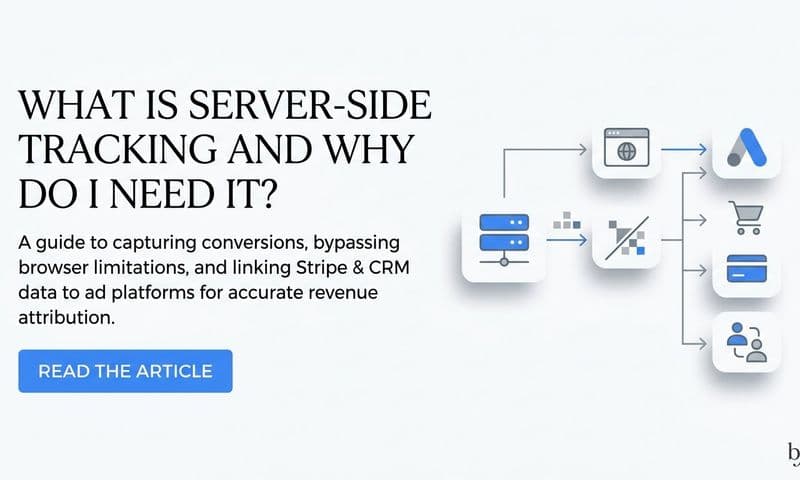
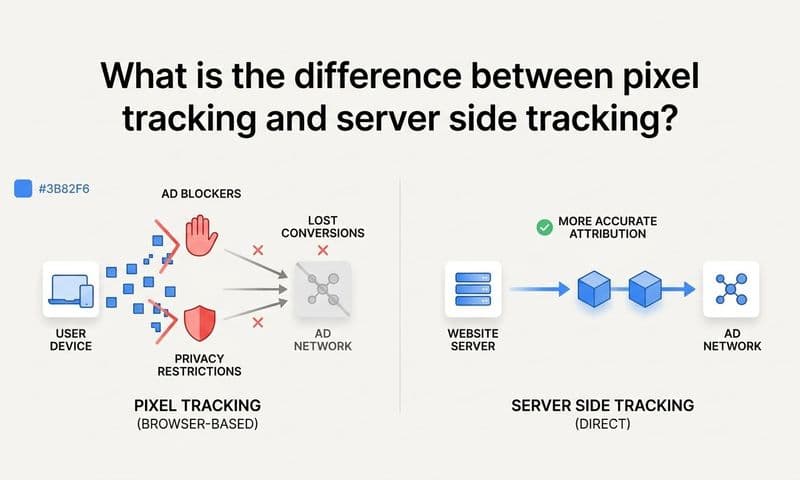
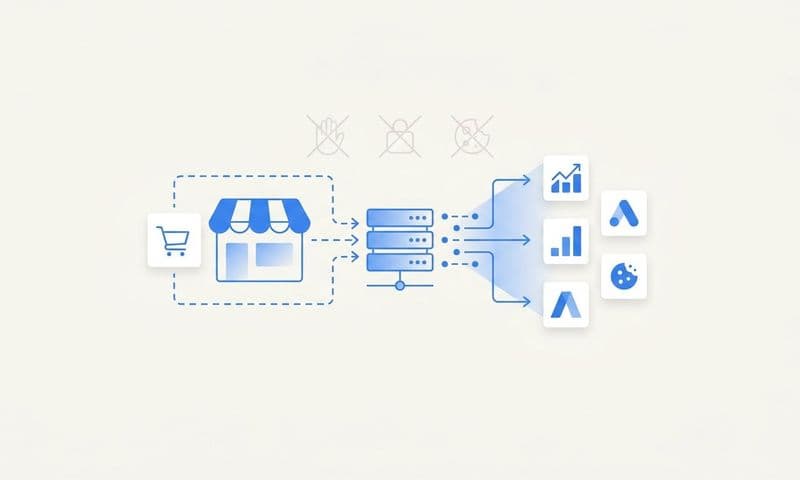
Server-side tracking and Conversion API integrations have become increasingly important as browser-based tracking has become less reliable. Ad blockers, cookie restrictions, and browser privacy updates all reduce the accuracy of client-side tracking. When a referred prospect arrives on your site and converts, you want that conversion event captured accurately regardless of their browser settings. Server-side tracking sends conversion data directly from your server to ad platforms and analytics tools, bypassing the browser entirely and ensuring that referral-influenced conversions are not lost to tracking gaps.
A unified marketing attribution platform is where all of these inputs come together. When your ad data, CRM events, web analytics, and conversion data are connected in a single view, you can see how referral-sourced leads behave differently from paid or organic leads across the full funnel. Do they visit more pages before converting? Do they have shorter sales cycles? Do they carry higher average contract values? These behavioral differences are only visible when your data sources are unified.
Cometly is built to provide exactly this kind of unified view. By connecting your ad platforms, CRM, and website data into a single attribution layer, it gives marketing teams the ability to track every touchpoint in the customer journey, including the referral signals that standard tools miss. With server-side tracking and Conversion API support built in, conversion events tied to referral traffic are captured accurately even when browser-based tracking falls short.
Turning Referral Insights Into a Scalable Growth Strategy
Measurement is only valuable when it changes how you act. Once you have referral signal flowing through your CRM and attribution platform, the natural next question is: what do you do with it?
Start by identifying the patterns in your referral data. Which customer segments generate the most referrals? Which product tiers or use cases seem to produce the most enthusiastic advocates? Which communities or events correlate with inbound referral spikes? These patterns tell you where to invest in amplification. If a particular customer profile consistently sends you warm introductions, that is a signal to build a structured advocacy program around that segment. If a specific community consistently drives high-quality inbound, that is a signal to invest more in your presence there.
Referral data should also inform your paid media strategy in a direct way. If your attribution data shows that referral-sourced leads convert faster and at higher rates than leads from paid channels, that insight should influence how you allocate your budget. It should also inform how you build lookalike audiences in platforms like Meta and Google. When you feed your ad platforms enriched conversion data that includes signals from referral-influenced leads, those platforms can optimize toward the behavioral patterns that high-quality prospects exhibit.
This is where Conversion API integrations become strategically important beyond just tracking accuracy. By sending enriched, conversion-ready events back to ad platforms, you help those platforms understand what a high-value conversion looks like. If referral-influenced prospects are your highest-converting and highest-value segment, feeding that signal back into your ad platform's optimization engine helps it find more people like them. The referral data you collect becomes a competitive advantage in your paid media performance.
Co-marketing and partner programs are another lever that referral insights can inform. If your data shows that a specific integration partner or technology ecosystem consistently sends you qualified referrals, that is a relationship worth formalizing. Structured co-marketing programs, joint content, shared events, or partner referral agreements bring accountability and tracking to what was previously an informal arrangement.
The broader principle is that referral measurement is not a reporting exercise. It is a growth input. The teams that treat it that way build compounding advantages over time, because they are continuously learning which relationships and behaviors drive their best customers, and they are systematically investing in more of them.
Putting It All Together
Word of mouth tracking in B2B is not about achieving perfect attribution. The dark funnel is real, and some referral influence will always remain invisible to your tools. The goal is to build enough signal that you can make smarter decisions about where to invest, what is working, and which customer relationships are driving your best growth.
The layered approach described in this article brings meaningful clarity to what is otherwise an opaque channel. Self-reported attribution captures the qualitative signal that no pixel can replicate. CRM source taxonomy creates the infrastructure for consistent analysis over time. Multi-touch attribution models distribute credit more fairly across the full customer journey. And server-side tracking ensures that the conversion events you can capture are captured accurately.
None of these pieces work in isolation. Together, they form a system that gets smarter the longer you use it, accumulating institutional knowledge about which channels, communities, and customer profiles drive your most valuable referrals.
Cometly connects all of these data points into a single, accurate view of the customer journey. From first referral touchpoint to closed-won revenue, it gives marketing teams and growth leaders the visibility they need to stop guessing and start scaling what works.
Ready to see exactly which channels and touchpoints are driving your pipeline? Get your free demo and start capturing every touchpoint from first referral to closed-won revenue.