Most marketing teams run campaigns across multiple platforms but struggle to connect the dots between ad clicks, website visits, and actual revenue. You know your campaigns are generating results, but which ones? Which touchpoints nudge a prospect forward, and which ones deserve the credit for closing the deal?
That is exactly what customer journey attribution solves. It maps every interaction a prospect has with your brand, from the first ad impression to the final purchase, and assigns value to each touchpoint along the way. Without it, you are essentially guessing where to spend your budget. With it, you can confidently scale what works and cut what does not.
This customer journey attribution guide walks you through the entire process of setting up attribution for your marketing campaigns. By the end, you will know how to define your customer journey stages, choose the right attribution model, connect your data sources, and use attribution insights to optimize your ad spend.
Whether you are running paid campaigns on Meta, Google, TikTok, or LinkedIn, this guide gives you a clear framework to follow. Let us get started.
Step 1: Map Out Your Customer Journey Stages
Before you can attribute credit to any touchpoint, you need to understand what the journey actually looks like. Think of this step as drawing the map before you start navigating. Without a clear picture of how prospects move from stranger to customer, your attribution data will be hard to interpret.
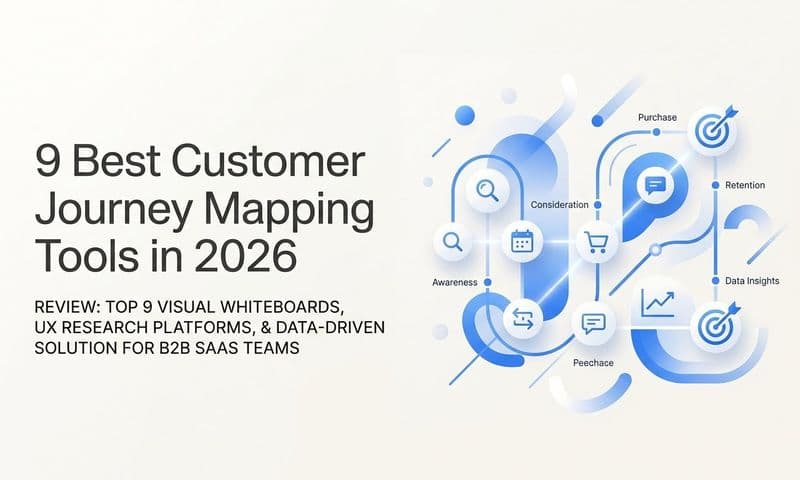
Most customer journeys follow a recognizable pattern: awareness, consideration, decision, and post-purchase. Here is what each stage typically involves from a marketing perspective.
Awareness: This is where prospects first encounter your brand. Common touchpoints include paid social ads, display advertising, organic search results, and content marketing. The goal here is visibility and first impressions.
Consideration: Prospects are now evaluating their options. They might visit your website multiple times, read blog posts, watch demo videos, or engage with retargeting ads. Email sequences and comparison content often play a big role at this stage.
Decision: The prospect is ready to act. This stage typically includes high-intent touchpoints like branded search ads, direct website visits, pricing page views, demo requests, and sales conversations.
Post-Purchase: Attribution does not stop at the sale. Upsell campaigns, loyalty emails, and referral programs all contribute to customer lifetime value and deserve to be tracked.
To build your journey map, start by documenting the channels active at each stage and the conversion actions that signal progression. For example, an ad click might signal awareness, a demo booking signals decision intent, and a closed deal signals conversion. Exploring stages of the customer journey in more detail can help you define these milestones precisely.
One important nuance: B2B journeys tend to involve significantly more touchpoints and longer timelines than B2C journeys. A B2B prospect might interact with your brand a dozen times over several weeks before requesting a demo. A B2C shopper might convert within a few hours of seeing an ad. Your journey map should reflect your specific audience.
The most common mistake at this stage is overcomplicating the map. Start with three to five core stages and refine over time as your attribution data reveals how prospects actually behave. Using dedicated customer journey mapping tools can streamline this process significantly. A map you will actually use beats a perfect one you never finish.
Once your journey map is documented, you have the foundation everything else is built on. Every attribution decision you make from here should connect back to this map.
Step 2: Choose the Right Attribution Model for Your Goals
Attribution models are the rules that determine how credit gets distributed across touchpoints. Choosing the right model is one of the most consequential decisions in your attribution setup, because the model you use directly shapes which campaigns look effective and which ones get cut.
Here is a clear breakdown of the core models and what each one is best suited for.
First-Touch Attribution: All credit goes to the very first touchpoint in the journey. This model is useful when you want to understand which channels are best at generating initial awareness and bringing new prospects into your funnel.
Last-Touch Attribution: All credit goes to the final touchpoint before conversion. This is the default in many ad platforms and is useful for understanding which channels close deals. The downside is that it completely ignores everything that happened earlier in the journey.
Linear Attribution: Credit is distributed equally across every touchpoint in the journey. This model gives you a balanced view of the full funnel but can make it hard to identify which touchpoints are truly driving the most value.
Time-Decay Attribution: Touchpoints closer to the conversion receive more credit than earlier ones. This model is a reasonable middle ground for teams that want to weight recent interactions more heavily without ignoring earlier touchpoints entirely.
Position-Based (U-Shaped) Attribution: The first and last touchpoints each receive a larger share of credit, with the remaining credit distributed among the middle interactions. This model acknowledges both the importance of initiating the journey and closing it.
Data-Driven Attribution: Algorithms analyze your actual conversion data to assign credit based on which touchpoints statistically contribute most to conversions. This is the most accurate model when you have sufficient data volume, and it removes the guesswork from credit assignment.
So which model should you choose? For most teams just getting started, multi-touch attribution is the right move. Single-touch models like first-touch or last-touch tell a partial story. They overvalue one moment in the journey and ignore everything else. Our ultimate guide to attribution models breaks down each option in even greater detail to help you decide.
Here is where it gets interesting: the model you choose will often reveal that certain channels are dramatically undervalued by last-click reporting. A retargeting campaign might get all the last-click credit, while the awareness-stage video ad that introduced the prospect to your brand gets nothing. Multi-touch attribution surfaces that hidden contribution.
Platforms like Cometly let you compare multiple attribution models side by side, so you can see exactly how credit shifts across touchpoints depending on the model. This is incredibly useful when you are trying to make the case for investing in upper-funnel channels that last-click reporting consistently undervalues.
The success indicator for this step is simple: you should be able to articulate why you chose your model and what specific question it answers for your team. If you cannot explain that clearly, revisit your choice before moving forward.
Step 3: Connect Your Data Sources Into a Unified Tracking System
Here is the hard truth about multi-platform marketing: every ad platform thinks it deserves the credit. Meta will claim a conversion. Google will claim the same conversion. TikTok might claim it too. When you look at each platform's reporting in isolation, your total attributed conversions can easily exceed your actual sales by a wide margin.
This is called platform self-attribution bias, and it is one of the biggest obstacles to accurate attribution. The solution is to connect all of your data sources into a single, unified tracking system that deduplicates conversions and gives you one source of truth. Understanding how to fix attribution discrepancies in data is essential for getting this right.
The data sources you need to connect typically include your ad platforms (Meta, Google Ads, TikTok, LinkedIn), your website analytics, and your CRM or e-commerce platform. Each of these systems captures a piece of the customer journey. Your attribution tool's job is to stitch them together.
Before you connect anything, make sure your UTM parameters are consistent across all campaigns. UTMs are the tracking codes appended to your URLs that tell your analytics system where traffic came from. If your UTM naming conventions are inconsistent, your attribution data will be fragmented and unreliable. Standardize your naming conventions first, then connect your sources.
Now, a critical topic for 2025 and 2026: server-side tracking. Traditional client-side tracking relies on browser cookies and JavaScript pixels to capture user behavior. The problem is that browser cookie restrictions, ad blockers, and Apple's App Tracking Transparency framework have made client-side tracking increasingly unreliable. A meaningful portion of conversions simply go unrecorded when you rely solely on pixel-based tracking.
Server-side tracking solves this by sending conversion data directly from your server to your attribution platform, bypassing the browser entirely. This approach is far more resistant to the tracking limitations that have become standard in the current environment. If you are serious about attribution accuracy, server-side tracking is no longer optional.
Cometly's server-side tracking is built specifically to address these challenges. It captures conversion data that client-side pixels miss, giving you a more complete and accurate picture of your customer journeys. When you connect your ad platforms and CRM into Cometly, every click, lead, and sale is tracked in one place, with deduplication handled automatically.
The goal of this step is to eliminate data silos. When every touchpoint is captured in a single system, you can finally see the full journey instead of disconnected fragments from each platform's dashboard.
Step 4: Implement Cross-Platform Touchpoint Tracking
Connecting your data sources is the infrastructure layer. This step is about making sure every individual interaction within that infrastructure is actually captured and attributed correctly. Think of it as the quality control phase of your setup.
Start by deploying tracking pixels and server-side events on your website. You want to capture every meaningful visitor interaction: page views, time on site, scroll depth on key pages, and most importantly, conversion events. Your conversion events should map directly to the journey stages you defined in Step 1.
The conversion events worth configuring typically include form submissions, demo bookings, free trial sign-ups, purchases, and any CRM stage changes that signal meaningful progression. Each of these events should be tied back to the originating ad, campaign, and channel. Effective customer attribution tracking ensures that no touchpoint becomes an orphaned data point that distorts your attribution.
Cross-platform tracking introduces a few common gaps that you need to address proactively.
Direct traffic misattribution: When a prospect visits your site directly (by typing your URL or clicking a bookmark), many analytics tools record this as "direct" traffic even when the visit was actually driven by a prior ad interaction. Proper UTM tagging and server-side tracking reduce this problem significantly.
Cross-device journeys: A prospect might see your ad on their phone, research your product on a tablet, and convert on a desktop. Without cross-device tracking, these interactions appear as three separate anonymous users rather than one connected journey. CRM integration and logged-in user tracking help bridge these gaps.
Offline conversions: If your sales process involves phone calls, in-person meetings, or manual CRM updates, those conversion signals need to be imported into your attribution system. Leaving offline conversions out of your data creates a skewed picture of what is actually driving revenue. Learning how to properly track the full customer journey helps you account for these offline interactions.
Once your tracking is configured, verify the entire setup by testing the full journey yourself. Click one of your live ads, navigate through your website, complete a conversion action, and then check your attribution dashboard to confirm that every touchpoint appears correctly. This end-to-end test is the most reliable way to catch tracking gaps before they corrupt your data at scale.
Step 5: Analyze Attribution Data and Identify Revenue Drivers
With your tracking in place and data flowing in, you can now start asking the questions that actually matter: which channels and campaigns are driving revenue, and which ones are consuming budget without contributing to conversions?
Start by reading your attribution reports through the lens of your chosen model. Look at which channels are credited with revenue, which campaigns appear most frequently in converting journeys, and which touchpoints tend to appear early versus late in the path to purchase. These patterns are where your optimization opportunities live.
One of the most valuable exercises at this stage is comparing models side by side. Pull up last-touch attribution and then compare it to a multi-touch model. Understanding the difference between single-source and multi-touch attribution makes this comparison far more insightful. You will almost certainly find channels that are undervalued by last-click but show up consistently in the early stages of high-converting journeys.
When evaluating performance, keep your focus on revenue-connected metrics rather than vanity metrics. Impressions, reach, and even clicks can look impressive while contributing nothing to actual revenue. The metrics that matter are attributed conversions, attributed revenue, cost per acquisition by channel, and return on ad spend calculated against real sales data, not platform-reported conversions.
This is where AI-powered tools become genuinely useful. Cometly's AI-powered recommendations surface high-performing ads and campaigns that you might otherwise miss when manually reviewing large datasets. Instead of spending hours sorting through reports, you get clear signals about where to focus your attention and where to pull back.
Look for patterns in your data beyond individual channel performance. Which combinations of touchpoints lead to the highest conversion rates? Do prospects who engage with a specific piece of content before a demo request convert at higher rates? Leveraging customer journey analytics helps you uncover these multi-touchpoint sequences that consistently precede a purchase. These patterns reveal the strategic insights that move your marketing from reactive to intentional.
The natural question at this stage becomes: now that you know what is working, what do you do about it?
Step 6: Optimize Campaigns and Feed Better Data Back to Ad Platforms
Attribution data is only valuable if you act on it. This step is where your analysis translates into concrete campaign decisions and a smarter feedback loop with your ad platforms.
Start with budget reallocation. Use your attribution insights to shift spend toward the channels and campaigns that are genuinely driving revenue under your chosen model. If a specific Meta campaign consistently appears as an initiating touchpoint in high-value journeys, it deserves more budget, even if its last-click conversion numbers look modest. Conversely, campaigns that consume significant budget without appearing meaningfully in converting journeys are candidates for reduction or elimination.
Cut or adjust underperforming touchpoints thoughtfully. Not every low-attribution touchpoint should be cut immediately. Some touchpoints play a supporting role in the journey that is difficult to quantify. Use your model comparisons from Step 5 to distinguish between touchpoints that are genuinely underperforming and those that are simply undervalued by your current model.
Now for one of the most impactful optimizations available to modern marketers: feeding enriched conversion data back to your ad platforms. Meta, Google, and other platforms rely on their own machine learning algorithms to optimize ad delivery. Those algorithms perform best when they receive accurate, detailed conversion signals. Reviewing the ultimate guide to revenue attribution can help you understand how to connect revenue data back to your campaigns effectively.
Cometly's Conversion Sync feature addresses this directly. It sends enriched, conversion-ready events back to Meta, Google, and other platforms, giving their algorithms a more accurate picture of who your real buyers are. The result is improved targeting, stronger lookalike audience performance, and better overall ad ROI. You are essentially feeding the ad platform AI better information so it can find more people who look like your actual customers.
Finally, establish a regular review cadence so your attribution insights stay actionable rather than becoming stale data. A weekly review is appropriate for campaign-level adjustments: pausing underperformers, scaling winners, and catching tracking issues early. A monthly review is the right cadence for evaluating your attribution model, reassessing your journey map, and making strategic channel-level decisions.
Attribution is not a set-and-forget system. The more consistently you review and act on your data, the more accurate and useful your insights become over time.
Putting It All Together: Your Attribution Action Checklist
You now have a complete framework for implementing customer journey attribution across your marketing campaigns. Here is a quick-reference checklist to keep your setup on track.
1. Map your customer journey stages, identifying the channels and conversion events active at each stage.
2. Choose an attribution model that matches your business goals, starting with multi-touch attribution for full-funnel visibility.
3. Connect all data sources including ad platforms, website analytics, and your CRM into a unified tracking system with consistent UTM parameters.
4. Implement server-side tracking to capture conversions that client-side pixels miss due to browser restrictions and iOS limitations.
5. Configure cross-platform touchpoint tracking and verify your setup with an end-to-end test before relying on the data.
6. Analyze attribution reports with a focus on revenue-connected metrics and compare models side by side to surface undervalued channels.
7. Optimize budget allocation based on attribution insights and feed enriched conversion data back to ad platforms to improve algorithmic targeting.
Remember that attribution is iterative. Your first journey map will not be perfect, and your initial model choice may evolve as your data matures. The goal is to start with a solid foundation, build good data habits, and refine your approach over time. Complexity can be layered in gradually as your team becomes more comfortable interpreting and acting on attribution data.
The marketers who get the most out of attribution are not necessarily the ones with the most sophisticated setups. They are the ones who consistently use their data to make better decisions, week after week.
Cometly brings all six of these steps together in a single platform. From server-side tracking and multi-touch attribution to AI-powered recommendations and Conversion Sync, it gives your team the tools to capture every touchpoint, understand what is actually driving revenue, and continuously improve your campaigns with confidence. Get your free demo today and start building the attribution foundation your marketing deserves.