
Enterprise tracking solutions come with a reputation for opaque pricing, long sales cycles, and feature sets that vary wildly depending on who you ask. For B2B SaaS marketing teams trying to justify budget and choose the right platform, that ambiguity is a real problem.
This guide cuts through the noise by breaking down nine of the most widely used enterprise tracking and attribution platforms: what they offer, who they are built for, and what you can realistically expect to pay. Whether you are evaluating multi-touch attribution, server-side conversion tracking, or full revenue attribution, the goal is to give you an honest, side-by-side view so you can make a confident decision.
We have included Cometly as our top recommendation because it was built specifically for B2B SaaS companies that need to connect ad spend directly to pipeline and closed revenue. But every tool on this list has a legitimate use case, and we will tell you exactly when each one makes sense.
1. Cometly
Best for: B2B SaaS companies connecting ad spend to pipeline and closed-won revenue
Cometly is a marketing attribution platform built specifically for B2B SaaS companies that need to track the full customer journey from first ad click to closed deal.
 9 Best Attribution Platforms for Agencies in 2026
Where This Tool Shines
Most attribution tools stop at the web conversion. Cometly goes further by connecting ad data to your CRM, so you can see which campaigns are actually driving pipeline and revenue, not just form fills. For B2B SaaS teams with long sales cycles and multiple offline touchpoints, this distinction matters enormously when making budget decisions.
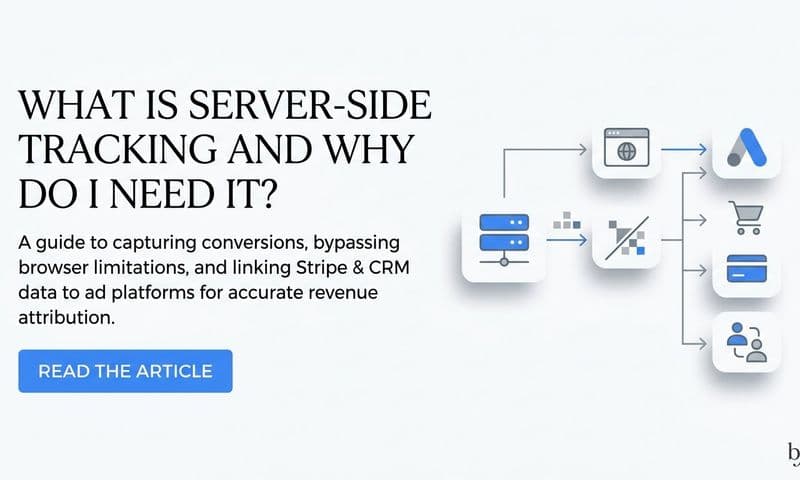
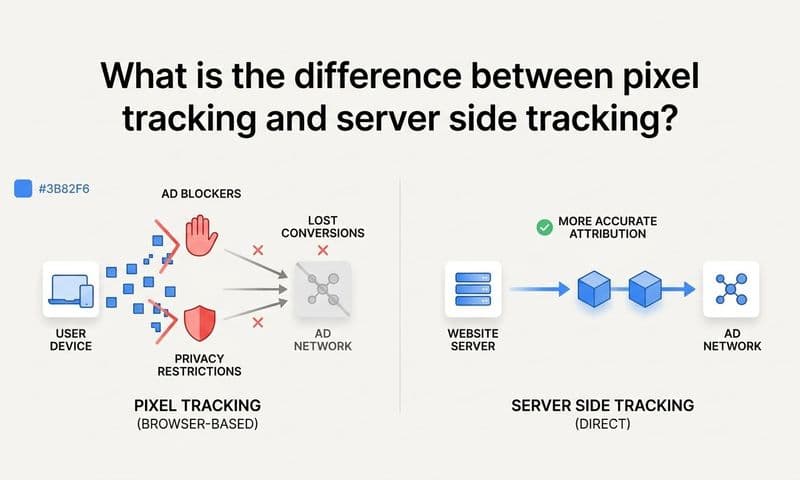
The server-side Conversion API integration is a key differentiator. As browser-based tracking becomes less reliable due to privacy restrictions and ad blockers, Cometly's first-party data infrastructure keeps your attribution accurate. The AI ads manager adds a layer of actionable intelligence on top of the data, helping teams identify which campaigns to scale and which to cut.
Key Features
Multi-Touch Attribution: Tracks the full customer journey from first ad click to closed-won revenue across every channel.
Server-Side Conversion Tracking: Conversion API integration captures first-party data accurately, even when browser-based pixels miss events.
AI Ads Manager: Identifies high-performing campaigns and surfaces scaling recommendations based on actual revenue impact.
Pipeline and Revenue Attribution: Stripe integration connects ad spend directly to subscription revenue and deal value in your CRM.
70+ Native Integrations: Connects with major ad platforms, CRMs, and analytics tools without requiring custom engineering work.
Customer Journey Analytics: Real-time insights into touchpoint performance across the entire funnel.
Best For
Cometly is the strongest fit for B2B SaaS marketing teams and growth leaders who are running paid campaigns and need to prove revenue impact, not just traffic or lead volume. It is particularly well-suited for teams using Stripe and a major CRM who want a single source of truth for marketing performance data.
Pricing
Plans start at approximately $99/month, scaling based on ad spend tracked and feature tier. Pricing is published transparently on the website, which is uncommon in this category.
2. HubSpot Marketing Hub
Best for: Teams already operating within the HubSpot CRM ecosystem
HubSpot Marketing Hub is a comprehensive inbound marketing platform with native multi-touch attribution reporting built directly into its CRM-connected environment.
 9 Best Ad Attribution Platforms Compared for B2B SaaS Teams in 2026
Where This Tool Shines
If your team lives in HubSpot, the attribution reporting here is genuinely useful. You can tie marketing activities directly to contact and deal records without needing a separate integration layer. Campaign-level revenue attribution is available on Professional and Enterprise tiers, giving you a view of which marketing programs are influencing pipeline.
The native ad integrations with Google, Meta, and LinkedIn allow contact-level attribution, meaning you can see which individual contacts came from which campaigns. For teams that do not want to manage a separate attribution tool, HubSpot's built-in capabilities can cover a lot of ground.
Key Features
Multi-Touch Attribution Models: Includes first touch, last touch, linear, time decay, and U-shaped models out of the box.
CRM-Level Attribution: Ties marketing activities to contact and deal records for revenue-level reporting.
Ad Tracking: Contact-level attribution across Google, Meta, and LinkedIn campaigns.
Campaign Analytics Dashboard: Centralizes performance data across channels with revenue influence reporting.
Custom Reporting Builder: Lets teams create attribution views tailored to their funnel stages and business logic.
Best For
HubSpot Marketing Hub is the right choice for companies already invested in the HubSpot ecosystem who want attribution without adding another tool. It is less compelling for teams using a different CRM or those who need advanced server-side tracking capabilities.
Pricing
Professional tier starts at approximately $800/month. Enterprise tier starts at approximately $3,600/month. Pricing scales by number of marketing contacts in the database.
3. Salesforce Marketing Cloud
Best for: Large enterprises with complex multi-channel operations already on Salesforce CRM
Salesforce Marketing Cloud is an enterprise-grade marketing platform with advanced data management, multi-channel campaign execution, and attribution reporting through its Marketing Intelligence module.
 9 Best Enterprise Tracking Solutions and What They Actually Cost in 2026
Where This Tool Shines
For organizations running Salesforce CRM at the core of their revenue operations, Marketing Cloud offers deep integration between marketing activity and opportunity data. The Marketing Intelligence module (formerly Datorama) provides cross-channel attribution reporting that pulls from multiple data sources into a unified view.
Journey Builder adds another layer by letting teams map and analyze multi-step customer journeys across email, ads, and other channels. The platform's enterprise-grade data governance and audience segmentation tools are genuinely powerful for large teams managing complex campaigns at scale.
Key Features
Marketing Intelligence (Datorama): Cross-channel attribution and performance reporting across all connected data sources.
Salesforce CRM Integration: Connects marketing data directly to opportunity and revenue records in Salesforce.
Advertising Studio: Links ad data to CRM audiences for conversion tracking and lookalike targeting.
Journey Builder: Maps and analyzes multi-step customer journeys across channels and touchpoints.
Enterprise Data Governance: Advanced audience segmentation and data management tools built for large organizations.
Best For
Salesforce Marketing Cloud is built for large enterprises with dedicated marketing operations and Salesforce admin resources. It is not a practical choice for lean B2B SaaS teams or companies without existing Salesforce infrastructure.
Pricing
Custom pricing only. The modular structure means costs vary significantly depending on which products are included. Total cost of ownership is typically high and requires a full sales conversation to scope accurately.
4. Marketo Engage (Adobe)
Best for: Mid-market to enterprise B2B companies with dedicated marketing operations teams
Marketo Engage is an enterprise B2B marketing automation platform with revenue cycle analytics and multi-touch attribution, now part of the Adobe Experience Cloud.
 9 Best Enterprise Tracking Solutions and What They Actually Cost in 2026
Where This Tool Shines
Marketo's revenue cycle analytics give marketing operations teams a detailed view of how programs influence pipeline at each funnel stage. The program influence reporting model is particularly useful for B2B companies running multiple simultaneous campaigns across a long sales cycle, where understanding which programs touched a deal before it closed is genuinely valuable.
The account-based marketing analytics capabilities make Marketo a strong fit for teams running ABM strategies alongside traditional demand generation. Integration with Salesforce and Microsoft Dynamics allows revenue attribution at the CRM deal level.
Key Features
Revenue Cycle Analytics: Funnel stage attribution and program influence reporting for multi-touch B2B journeys.
Advanced Lead Scoring: Scoring models tied to marketing program performance and engagement signals.
Multi-Touch Attribution: Tracks program, channel, and campaign influence across the full revenue cycle.
CRM Integration: Deep integration with Salesforce and Microsoft Dynamics for deal-level revenue attribution.
ABM Analytics: Account-level engagement tracking for teams running account-based marketing programs.
Best For
Marketo is the right fit for mid-market and enterprise B2B companies with dedicated marketing operations resources. Teams without MOps support will find the platform difficult to configure and maintain at the level needed to get value from its attribution capabilities.
Pricing
Quote-based pricing that scales by database size. Positioned for mid-market to enterprise budgets. Requires a sales conversation to get accurate pricing for your specific use case.
5. Rockerbox
Best for: Performance marketing teams that want MTA, media mix modeling, and incrementality in one platform
Rockerbox is a unified marketing measurement platform that combines multi-touch attribution, media mix modeling, and incrementality testing for brands that need to move beyond last-click reporting.
 9 Best Marketing Tracking Software Options and What They Cost in 2026
Where This Tool Shines
Rockerbox's unified measurement approach is its core differentiator. Rather than forcing teams to choose between MTA and MMM, it brings both methodologies into a single dashboard alongside incrementality testing. This gives marketers a more complete picture of channel contribution, particularly useful when evaluating channels like TV, podcast, or direct mail that do not show up cleanly in pixel-based attribution.
The raw data access feature is a practical advantage for analytics-heavy teams. If your organization has a data warehouse and wants to run custom analysis beyond what the dashboard offers, Rockerbox makes that possible without requiring you to rebuild your data pipeline from scratch.
Key Features
Unified Measurement: Combines MTA, media mix modeling, and incrementality testing in a single dashboard.
Cross-Channel Attribution: Covers paid, organic, direct, and offline channels in one view.
Raw Data Access: Exports event-level data to your data warehouse for custom analysis.
Deduplicated Conversion Reporting: Prevents double-counting across channels for more accurate performance data.
Broad Integrations: Connects with major ad platforms, e-commerce systems, and CRMs.
Best For
Rockerbox is well-suited for performance marketing teams at growth-stage and enterprise brands with meaningful paid media budgets who want a sophisticated measurement framework without stitching together multiple tools.
Pricing
Custom pricing, not publicly listed. Typically positioned for brands with significant monthly ad spend. A demo and sales conversation are required to get a quote.
6. Triple Whale
Best for: E-commerce and DTC brands focused on paid social attribution and creative performance
Triple Whale is a performance analytics platform focused on paid social attribution and creative analytics, with AI-powered spend recommendations and a strong emphasis on Meta and TikTok ad performance.
 9 Best Conversion Tracking Platforms Compared for B2B SaaS in 2026
Where This Tool Shines
Triple Whale's creative analytics capabilities stand out in a category where most tools focus on channel-level data. The ability to see which specific ad creatives are driving the most efficient conversions gives media buyers and creative teams a direct feedback loop for improving ad performance. This is particularly valuable for brands running high-volume paid social campaigns where creative iteration is a primary growth lever.
The Sonar post-purchase survey feature adds a qualitative layer to the attribution picture. When pixel data is incomplete due to iOS privacy changes or ad blockers, survey-based attribution helps fill in the gaps with self-reported customer data.
Key Features
Pixel and Server-Side Attribution: Combines pixel-based and server-side tracking for more complete paid social attribution.
Creative Analytics: Identifies which ad creatives drive the most efficient conversions at the campaign and ad level.
AI Spend Recommendations: Surfaces budget allocation suggestions based on current campaign performance.
Blended ROAS Dashboard: Combines contribution margin and blended ROAS in a single performance view.
Sonar Post-Purchase Surveys: Supplements pixel data with self-reported attribution from customers at checkout.
Best For
Triple Whale is built for e-commerce and DTC brands running heavy paid social budgets, particularly on Meta and TikTok. It is less suited for B2B SaaS companies with long sales cycles or teams that need CRM-level revenue attribution.
Pricing
Free tier available with limited features. Paid plans start at approximately $129/month and scale based on annual revenue or ad spend. Agency plans are available for teams managing multiple brands.
7. Northbeam
Best for: High-volume advertisers that need machine learning-powered attribution across all channels
Northbeam is a machine learning-powered attribution platform designed for high-volume advertisers that combines multi-touch attribution with media mix modeling for cross-channel spend optimization.
Where This Tool Shines
Northbeam's machine learning approach to attribution is designed to handle the complexity that comes with running large ad budgets across many channels simultaneously. Rather than relying on fixed attribution models, it uses algorithmic weighting to assign credit based on observed conversion patterns. This makes it more adaptive than rule-based attribution tools when channel mix or customer behavior shifts.
The data pipeline integrations with Snowflake and BigQuery make Northbeam a practical choice for data-mature organizations that want attribution outputs feeding into their existing analytics infrastructure rather than siloed in a separate dashboard.
Key Features
ML-Based Attribution: Algorithmic multi-touch attribution across all paid and organic channels using machine learning models.
Media Mix Modeling: Macro-level channel contribution analysis to complement granular MTA data.
Granular Reporting: Campaign, ad set, and creative-level attribution in a single reporting environment.
Custom Attribution Windows: Configurable lookback windows and model settings to match your sales cycle.
Data Warehouse Integrations: Native connectors for Snowflake and BigQuery for teams with existing data infrastructure.
Best For
Northbeam is built for high-volume advertisers and data-mature marketing teams that need sophisticated attribution modeling and want their data feeding into a broader analytics stack. It is not the right fit for early-stage teams or those without data engineering resources.
Pricing
Custom pricing only, typically structured around monthly ad spend volume. A demo and custom quote are required.
8. Segment (Twilio)
Best for: Technical teams that need a flexible data infrastructure layer for routing event data
Segment is a customer data platform that collects, unifies, and routes event data from websites, apps, and servers to any downstream analytics or attribution tool, giving technical teams full control over their data infrastructure.
Where This Tool Shines
Segment is not an attribution tool in the traditional sense. It is the data infrastructure layer that makes attribution possible at scale. By creating a single, clean event stream from all your data sources and routing it to the tools downstream, Segment solves the data quality and consistency problems that cause attribution to break down in complex tech stacks.
The Profiles product builds unified customer identity across touchpoints, which is foundational for any multi-touch attribution model that needs to stitch together a coherent customer journey. For engineering teams that want full control over what data gets collected, transformed, and sent where, Segment offers a level of flexibility that purpose-built attribution tools cannot match.
Key Features
Unified Event Collection: Captures events from web, mobile, server, and cloud sources in a single data stream.
400+ Downstream Connections: Routes data to attribution platforms, CRMs, data warehouses, and analytics tools.
Profiles: Builds unified customer identity across all touchpoints for accurate cross-device tracking.
Privacy and Data Governance: Consent management and data governance controls for first-party data compliance.
Functions and Protocols: Custom event transformations and data quality enforcement rules.
Best For
Segment is the right choice for engineering-led organizations that want to own their data infrastructure and feed clean, consistent event data into multiple downstream tools. It is not a standalone attribution solution and works best when paired with a dedicated attribution or analytics platform.
Pricing
Free tier available up to 1,000 monthly tracked users. Team plan starts at approximately $120/month. Business and enterprise pricing is custom, based on monthly tracked users and feature requirements.
9. Google Analytics 4 (with BigQuery)
Best for: Teams that need a free baseline analytics layer with Google Ads integration and raw data access
Google Analytics 4 is Google's free web and app analytics platform with event-based tracking, native Google Ads integration, and enterprise-level data export to BigQuery for teams that need raw event-level analysis.
Where This Tool Shines
The combination of GA4 and BigQuery is genuinely powerful for teams with SQL skills and a need for raw event-level data. BigQuery export gives analysts access to every event collected by GA4, enabling custom attribution models, funnel analysis, and cohort reporting that go well beyond what the GA4 interface offers natively. For teams running Google Ads as a primary channel, the native integration provides campaign-level conversion attribution that is difficult to replicate elsewhere without additional cost.
GA4 360, the enterprise tier, adds higher data processing limits, SLA guarantees, and more advanced integrations for organizations that need reliability at scale. The cost is significant and sold through Google Marketing Platform resellers, but for large organizations already invested in the Google ecosystem, it can represent strong value relative to standalone enterprise analytics tools.
Key Features
Event-Based Tracking: Granular user behavior tracking across web and app in a flexible, schema-free event model.
Google Ads Integration: Native campaign-level conversion attribution for teams running Google Ads.
BigQuery Export: Raw event-level data export for custom attribution modeling and advanced analysis.
Exploration Reports: Funnel analysis, path analysis, and cohort reporting built into the GA4 interface.
GA4 360: Enterprise tier with higher data limits, SLA guarantees, and advanced integration capabilities.
Best For
GA4 is the right baseline analytics layer for almost any digital business, particularly those running Google Ads. However, it does not provide the depth of multi-touch attribution or CRM-connected revenue attribution that B2B SaaS teams typically need. It works best as a complementary tool alongside a dedicated attribution platform.
Pricing
Standard GA4 is free. GA4 360 is custom-priced and sold through Google Marketing Platform resellers, typically based on event volume. BigQuery costs are usage-based after free tier limits are reached.
Which Tool Is Right for Your Team
The right enterprise tracking solution depends on two things above all else: how transparent the pricing is and how deeply the attribution connects to your actual revenue. For B2B SaaS teams, those two criteria narrow the field quickly.
If you need a dedicated attribution platform built for B2B SaaS with transparent pricing and real revenue connection, Cometly is the strongest starting point. It covers the full journey from ad click to closed deal, includes server-side tracking for accurate first-party data, and gives you AI-driven recommendations you can act on immediately without a data engineering team.
For teams already deep in the HubSpot ecosystem, HubSpot Marketing Hub's built-in attribution removes the need for a separate tool. For large enterprises on Salesforce, Marketing Cloud and Marketo Engage offer the depth and CRM integration that complex organizations require, though both come with significant implementation overhead and opaque pricing.
Rockerbox and Northbeam are strong choices for performance marketing teams that need sophisticated measurement frameworks combining MTA and media mix modeling. Triple Whale is the clear winner for DTC and e-commerce brands running paid social at volume. Segment is infrastructure, not attribution, but it is essential for teams that need clean, reliable event data flowing into their broader analytics stack. GA4 remains a valuable free layer for web analytics and Google Ads attribution, but it should not be your only attribution tool if revenue-level reporting matters.
Pricing transparency and attribution depth should be your two primary evaluation criteria. Most platforms in this category require a sales conversation before you see a number, which makes it harder to budget confidently. Cometly's transparent pricing model is a practical advantage for teams that need to move quickly and justify spend without a lengthy procurement process.
Ready to see exactly which ads are driving pipeline and revenue for your B2B SaaS business? Get your free demo and start capturing every touchpoint from first click to closed deal.