You pause a Facebook campaign that has been reporting strong returns. Two weeks later, your pipeline quietly dries up. You dig into your CRM and realize the deals you thought Facebook was driving were already in progress before those ads ever ran. Sound familiar?
This is one of the most common and costly experiences in B2B SaaS marketing, and the attribution window is almost always at the center of it. When Facebook tells you a campaign generated 40 conversions last week, that number is not a neutral fact. It is the output of a set of rules Meta uses to decide which conversions to claim, and those rules are frequently misunderstood, misconfigured, or simply misaligned with how your buyers actually behave.
An attribution window is the period of time after a user interacts with your ad during which a conversion can be credited back to that ad. If someone clicks your ad on Monday and signs up for a free trial on Thursday, and your window is set to 7-day click, Meta claims that conversion. Simple enough in theory. In practice, it gets complicated fast, especially for B2B SaaS companies where sales cycles stretch across weeks or months, multiple stakeholders are involved, and a single deal can touch a dozen different channels before it closes.
This article breaks down exactly how attribution windows work inside Meta, the specific problems they create for B2B SaaS marketers, how iOS privacy changes made everything worse, and what a more reliable measurement framework actually looks like.
Inside Meta's Attribution Engine: What the Windows Actually Measure
Meta Ads Manager currently offers four primary attribution window settings, and understanding what each one actually measures is the foundation of everything else.
1-day click: Meta credits a conversion to your ad if the user clicked the ad and converted within 24 hours. This is the most conservative window and the least likely to inflate results.
7-day click: Meta credits a conversion if the user clicked the ad and converted within seven days. This is currently the default window and the most commonly used setting for campaign optimization.
1-day view: Meta credits a conversion if the user saw your ad (without clicking) and converted within 24 hours. This is where things start to get contested. A view does not require any active engagement, just an impression that registered in Meta's system.
7-day click plus 1-day view: This combines both signals. Meta claims credit for any conversion from users who clicked within 7 days or viewed within 1 day. This window tends to produce the highest reported conversion numbers, and the most inflated ones.
It is worth noting that prior to the iOS 14 rollout in 2021, Meta's default window was 28-day click. That change significantly affects any marketer who is comparing current campaign performance against historical benchmarks set under the old default. You are not comparing apples to apples.
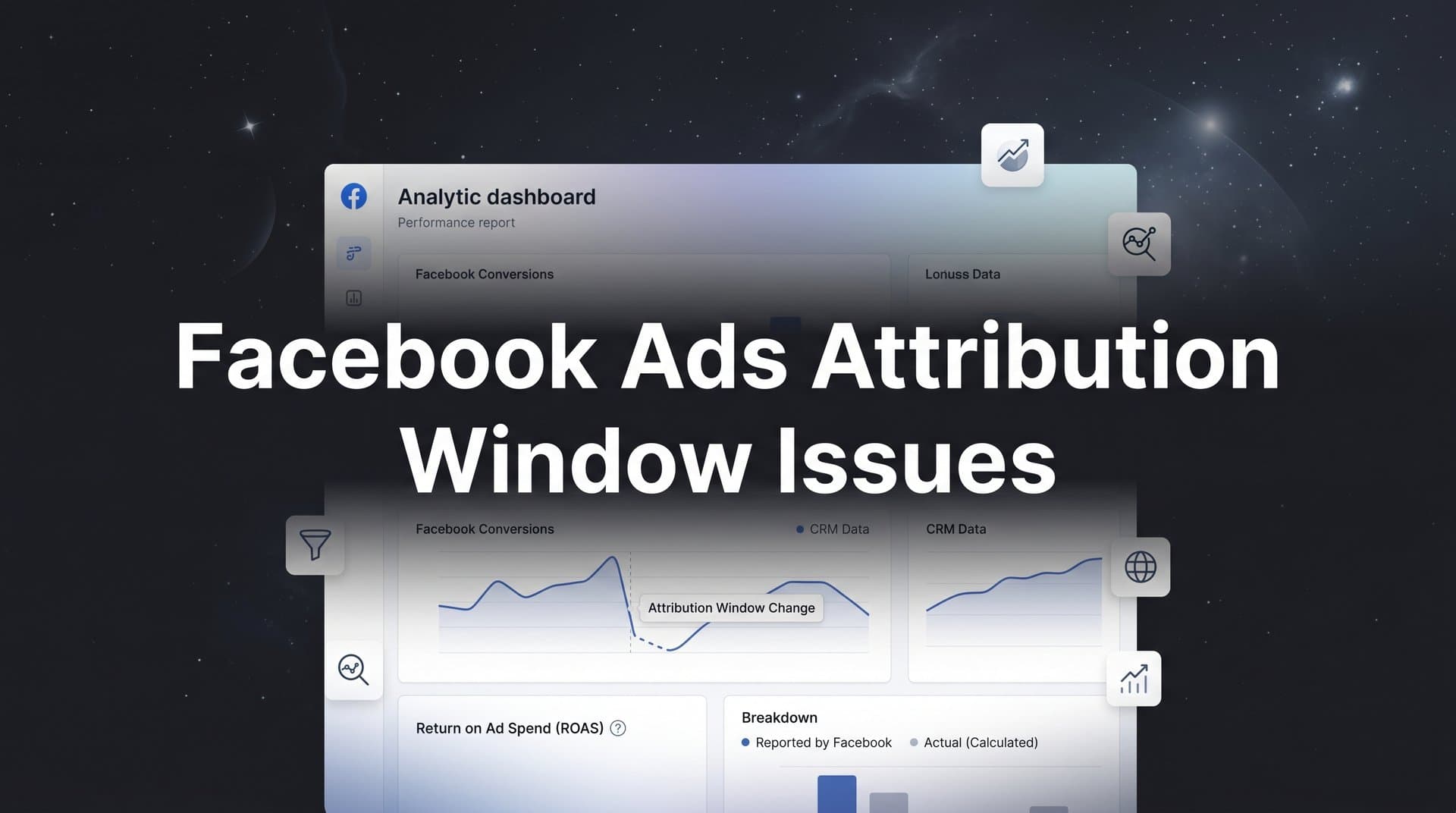
Here is where the confusion compounds. Meta uses two separate window configurations: one for campaign optimization and one for reporting. Your campaign might be optimizing toward a 7-day click conversion event while your reporting view is set to show a different window. These can be adjusted independently in Ads Manager, which means two people on the same team can look at the same campaign and see completely different conversion numbers simply because they are using different reporting windows.
When Meta assigns credit, the logic is straightforward but aggressive. If a user clicked or viewed your ad within the defined window and then converted, Meta claims that conversion. It does not matter if the user also clicked a Google search ad, opened a nurture email, or visited your pricing page directly three times before converting. Meta sees its touchpoint, the conversion happened within the window, and it takes credit. This is the core mechanism behind one of the most significant problems in multi-channel marketing measurement.
Five Attribution Window Problems That Distort Your Data
Knowing how the windows work is one thing. Understanding the specific ways they break down in practice is what separates marketers who make confident decisions from those who are constantly second-guessing their numbers.
Double-counting across platforms: This is the most pervasive problem in digital advertising measurement. When a prospect clicks a Facebook ad on Tuesday and a Google search ad on Thursday before converting on Friday, both platforms independently claim 100% credit for that conversion. Your Meta dashboard shows one conversion. Your Google Ads dashboard shows one conversion. Your CRM shows one new customer. The sum of what your ad platforms report will almost always exceed the actual number of conversions in your business. For teams making budget allocation decisions based on platform-reported numbers, this creates a systematically distorted picture of which channels are actually earning their spend.
View-through attribution inflation: The 1-day view window is particularly problematic for B2B SaaS. If your ads are running broad awareness campaigns to a large audience, a significant portion of your target market may have seen an impression at some point. When those people later convert through organic search, direct traffic, or a sales email, Meta can claim credit for the conversion simply because they were served an impression within the previous 24 hours. This makes it nearly impossible to isolate genuine ad-driven intent from organic demand that would have converted anyway.
Mismatched windows across campaigns: Many accounts accumulate campaigns over time, and different campaigns end up using different attribution windows, sometimes intentionally, sometimes by accident. When you compare a prospecting campaign optimized on 7-day click against a retargeting campaign that includes 1-day view, you are not comparing performance on equal terms. Budget decisions made on this basis are essentially decisions made on incomparable data. Understanding attribution window performance across your full account is essential before drawing any conclusions.
Window mismatch with actual conversion timing: Even the 7-day click window assumes a relatively fast consideration cycle. For B2B SaaS products with meaningful price points and multi-stakeholder buying processes, many genuine conversions happen outside that window entirely. A prospect who clicked your ad, entered a free trial, and converted to a paid plan three weeks later will not appear in your 7-day attribution data at all, even though your ad clearly contributed to that outcome.
Optimization toward the wrong signal: When Meta optimizes your campaign toward a conversion event defined within a specific window, it is finding users who convert quickly. For B2B SaaS, this can systematically bias your audience toward low-quality, fast-moving leads rather than the high-intent buyers with longer consideration cycles who ultimately generate the most revenue. You may be winning the attribution game while losing the revenue game.
Why B2B SaaS Sales Cycles Expose These Gaps More Than Any Other Business Model
The problems described above affect every advertiser using Meta, but they hit B2B SaaS teams harder and more consistently than almost any other category. The reason is structural: the way B2B software is bought is fundamentally incompatible with how Meta's attribution windows are designed.
B2B SaaS buyers rarely make decisions within seven days of seeing an ad. A realistic buying journey might look like this: a VP of Marketing sees a Facebook ad for your platform, clicks through to read a blog post, and moves on. Two weeks later, they mention it to their director. The director searches for your brand on Google, reads a comparison article, and signs up for a free trial. The trial runs for 14 days. Then it goes to procurement. The deal closes six weeks after the original ad click. Meta's 7-day window captures the first click. It never sees the close.
Multi-stakeholder buying journeys create a second layer of complexity. A single deal often involves multiple people from the same company, each interacting with your marketing across different devices, browsers, and sessions. The champion, the economic buyer, and the technical evaluator may each encounter your ads independently. Meta cannot stitch those interactions together into a single account-level view. It sees fragmented individual touchpoints and has no way to connect them to a single closed deal.
Pipeline and revenue attribution require a fundamentally different approach than what Meta's native windows offer. Meta's attribution stops at the conversion event, which for most B2B SaaS teams means a lead form submission, a free trial signup, or a demo request. What happens next, whether that lead becomes a qualified opportunity, whether it advances through the sales process, whether it closes and at what contract value, is invisible to Meta. This means Meta-reported conversions can look strong even when the underlying lead quality is poor and pipeline is weak.
For growth teams that report on pipeline influenced and revenue generated, not just leads created, this gap between Meta's data and CRM reality is not a minor inconvenience. It is a fundamental measurement problem that makes it difficult to justify or scale Facebook ad investment with confidence. Teams navigating this challenge often benefit from dedicated Facebook ads measurement frameworks that connect platform data to actual revenue outcomes.
How iOS Privacy Changes Widened the Attribution Gap
The structural problems with attribution windows were already significant before 2021. Apple's App Tracking Transparency framework, introduced with iOS 14.5, made them considerably worse.
ATT requires apps to explicitly request user permission before tracking activity across other apps and websites. A large portion of iOS users declined to grant that permission. The practical effect for Facebook advertisers was immediate and significant: the volume of pixel-based signals Meta receives from iOS users dropped substantially. Many clicks, views, and downstream conversions that happen on iOS devices simply go untracked, creating gaps in the data that Meta's attribution windows are trying to fill.
Meta responded with Aggregated Event Measurement (AEM), a framework designed to preserve some measurement capability within Apple's privacy constraints. But AEM comes with its own limitations, including restrictions on the number of conversion events you can track per domain and delays in reporting. The result is that the conversion data you see in Meta Ads Manager for iOS-driven traffic is often a blend of directly observed events and statistically modeled estimates.
This matters because modeled conversions are not the same as observed conversions. When Meta fills data gaps with statistical inference, the numbers in your attribution window reflect a combination of what actually happened and what Meta's models predict probably happened. For marketers making budget decisions based on reported ROAS, this distinction is not academic. It is the difference between allocating spend based on real performance and allocating spend based on an algorithm's best guess. These Facebook ads reporting discrepancies are one of the most common sources of confusion for performance teams.
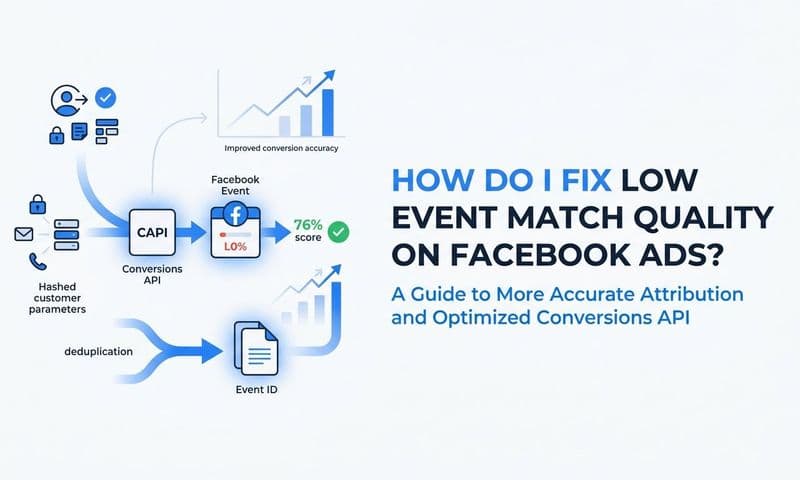
Server-side tracking through Meta's Conversion API (CAPI) is the most effective technical response to this problem. Rather than relying on a browser pixel that can be blocked, restricted, or prevented from firing by iOS privacy settings, CAPI sends conversion events directly from your server to Meta. This restores a meaningful portion of the signal that was lost to ATT, improving the accuracy of whatever attribution window you are using. Meta officially recommends running CAPI alongside the browser pixel for redundancy, and for B2B SaaS teams serious about measurement quality, it is no longer optional.
Building a Measurement Framework That Actually Holds Up
Given everything above, what does a more reliable approach to Facebook attribution actually look like? It starts with standardization and layers in additional data sources that sit outside Meta's control.
Standardize on 7-day click across all campaigns: For most B2B SaaS advertisers, the 7-day click window is the most defensible starting point. It reflects genuine intent, since a click requires active engagement, and it provides a reasonable window for consideration without inflating results with passive view-throughs. The critical step is consistency. If different campaigns in your account use different windows, cross-campaign comparisons are meaningless. Pick a standard and apply it everywhere before drawing any performance conclusions.
Layer in UTM parameters for an independent data record: UTM parameters are platform-agnostic tags you append to your ad URLs. When a user clicks a tagged link, your analytics platform records the source, medium, campaign, and other parameters you define. This creates a second data layer that operates entirely independently of Meta's attribution logic. When your Meta dashboard and your analytics platform tell different stories, UTM data helps you understand where the discrepancy is coming from. It will not solve the attribution problem on its own, but it gives you a reference point that Meta cannot manipulate.
Implement the Conversion API for signal quality: As discussed in the previous section, CAPI sends conversion data server-side, bypassing the browser restrictions that iOS privacy changes introduced. Implementing CAPI alongside your pixel improves the accuracy of Meta's conversion data across all attribution windows. Better input data means more reliable optimization and more trustworthy reporting. A practical guide to syncing conversion data to Facebook Ads can help your team implement this correctly.
Connect ad data to pipeline and revenue outcomes: This is the step most teams skip, and it is the most important one for B2B SaaS. Your attribution framework should not stop at the lead or trial signup. It should follow that lead through your CRM, tracking whether it became a qualified opportunity, whether it advanced to proposal stage, and whether it closed. When you can connect a Facebook ad click to a closed-won deal in your CRM, you have actual revenue attribution, not just conversion attribution. This requires integrating your ad platform data with your CRM data, which native Meta reporting cannot do.
Getting Outside the Walled Garden with Cross-Channel Attribution
Here is the uncomfortable truth about platform-native attribution: every ad platform is incentivized to claim as much credit as possible. Meta's attribution windows are not designed to give you an accurate picture of your marketing mix. They are designed to demonstrate Meta's value within Meta's measurement framework. The same is true of Google, LinkedIn, and every other platform with a native attribution tool.
This is not a criticism of any individual platform. It is simply the structural reality of walled-garden attribution. Each platform sees its own touchpoints clearly and other platforms' touchpoints not at all. The result is that the sum of what your platforms report will almost always exceed what your CRM records, sometimes by a wide margin.
A cross-channel attribution platform solves this by sitting outside the walled gardens. Rather than relying on each platform to self-report its contribution, a third-party attribution tool collects data from all your channels, deduplicates conversions, and assigns credit based on the actual customer journey. This is the only way to get a genuinely accurate picture of which campaigns are driving results across your full marketing mix. Evaluating the right Facebook attribution platform is a critical step toward achieving that visibility.
Multi-touch attribution models take this further by distributing credit across every touchpoint in the buyer journey rather than awarding all credit to a single interaction. Instead of asking "which channel gets credit for this conversion?", multi-touch attribution asks "how did each touchpoint contribute to this outcome?" For B2B SaaS teams with complex, multi-channel buyer journeys, this framing is far more useful for making budget and strategy decisions. Understanding which attribution model is best for your specific campaigns can meaningfully change how you allocate spend.
The ultimate goal for B2B SaaS marketing teams is connecting ad spend to pipeline and closed-won revenue, not just to Meta-reported conversions. When you can see that a specific Facebook campaign influenced five deals that generated a specific amount of pipeline, and that three of those deals closed, you have the data you need to make confident investment decisions. That level of visibility requires a measurement infrastructure that goes well beyond what any single ad platform can provide.
The Bottom Line on Facebook Attribution Windows
Facebook attribution windows are a starting point, not a final answer. They give you a filtered view of Meta's contribution to your marketing results, filtered through Meta's own rules, Meta's own data, and Meta's own incentives. For B2B SaaS teams with complex buying journeys, longer sales cycles, and multi-stakeholder deals, treating Meta's native reporting as the source of truth will consistently produce misleading data and flawed budget decisions.
The path forward is not to abandon Facebook attribution data. It is to contextualize it properly. Standardize your window settings across all campaigns. Layer in UTM parameters for an independent traffic record. Implement the Conversion API to improve signal quality and recover signal lost to iOS privacy restrictions. And most importantly, connect your ad data to your CRM so you can follow the buyer journey all the way to closed-won revenue.
This is exactly the problem Cometly is built to solve. Cometly captures every touchpoint from the first ad click to the closed deal, integrates with Meta's Conversion API to improve signal quality, and gives your team a single source of truth that no individual ad platform can provide. Instead of reconciling conflicting reports from Meta, Google, and your CRM, you get one accurate, unified view of what is actually driving revenue.
If your current attribution setup is leaving you with more questions than answers, it is time to change the framework. Get your free demo and see how Cometly connects your ad spend to real pipeline and revenue outcomes across every channel.