Retail chains operate in one of the most data-rich environments in marketing, yet many teams still struggle to connect ad spend to actual store or online revenue. When you are running campaigns across paid search, social, email, and display while managing multiple locations and product lines, knowing what is actually working becomes a genuine competitive advantage.
Marketing analytics for retail chains is not just about tracking clicks or impressions. It is about building a clear line of sight from the first ad touchpoint all the way through to a completed purchase, whether that happens online or in a physical location.
The challenge is real: retail chains generate enormous volumes of data from multiple sources, including ad platforms, point-of-sale systems, ecommerce platforms, loyalty programs, and CRMs. Without the right strategy to unify and interpret this data, marketing teams end up making budget decisions based on incomplete information.
This article outlines seven practical strategies that retail chain marketers can use to turn fragmented data into clear, actionable insights. From building a unified attribution framework to using server-side tracking for more accurate conversion data, each strategy is designed to help you spend smarter, scale what works, and eliminate waste across your entire marketing mix.
1. Build a Unified Attribution Framework Across All Channels
The Challenge It Solves
When each ad platform reports its own results in isolation, your paid search dashboard claims credit for a conversion, your social platform claims the same conversion, and your email tool does too. The result is inflated numbers, double-counted revenue, and no clear picture of how your channels actually work together to drive purchases.
Retail chains are especially vulnerable to this problem because their customers interact with multiple channels before buying. A shopper might see a display ad on Monday, click a paid search result on Wednesday, and open a promotional email before finally converting on Friday. Without a unified framework, you only see fragments of that journey.
The Strategy Explained
A unified attribution framework assigns credit to every touchpoint in a customer's path to purchase using a consistent methodology applied across all channels. Rather than relying on each platform's native attribution, you centralize the logic so that credit is distributed according to rules you define and trust.
Multi-touch attribution models, such as linear, time-decay, or data-driven approaches, distribute credit across all interactions rather than awarding it entirely to the first or last click. For retail chains, this is critical because it reveals how awareness campaigns at the top of the funnel contribute to conversions that bottom-funnel channels ultimately close.
Choosing the right model depends on your customer journey length and business goals. Longer consideration cycles often benefit from time-decay models that weight recent interactions more heavily. Shorter, more transactional purchases may work well with linear attribution that treats all touchpoints equally. Understanding common attribution challenges in marketing analytics before you commit to a model helps you avoid the most costly implementation mistakes.
Implementation Steps
1. Audit all active marketing channels and identify every conversion event you want to track, from email clicks to in-store transactions.
2. Select an attribution model that reflects how your retail customers actually research and buy, and apply it consistently across all channels through a centralized attribution platform.
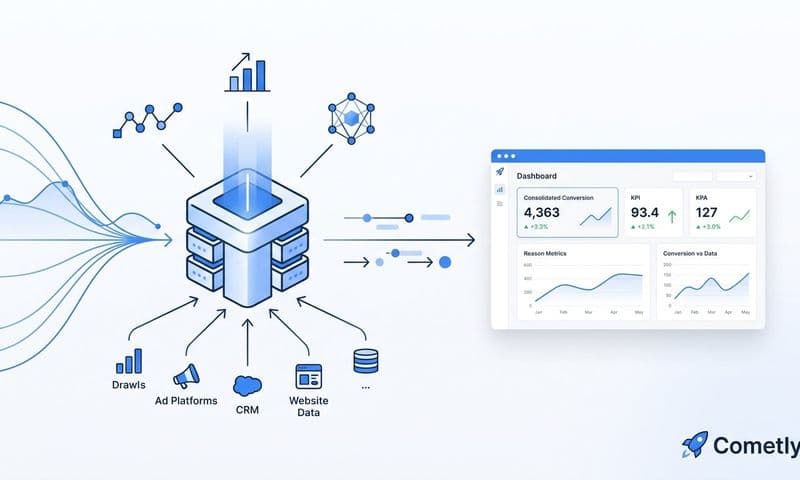
3. Connect your ad platforms, CRM, and ecommerce data into a single system so that attribution logic draws from a complete dataset rather than platform-specific reports.
4. Review attribution results regularly and compare models side by side to understand how different frameworks change your view of channel performance.
Pro Tips
Avoid relying solely on last-click attribution for retail campaigns. It systematically undervalues awareness and consideration channels, which often do the heavy lifting earlier in the journey. Running multiple attribution models simultaneously and comparing them gives you a more honest view of where your marketing budget is actually earning its return.
2. Use Server-Side Tracking to Capture Accurate Conversion Data
The Challenge It Solves
Browser-based pixels have become increasingly unreliable. Ad blockers, iOS privacy updates, and cookie restrictions mean a growing share of conversions never get reported back to your ad platforms. When your optimization algorithms are working from incomplete data, they make suboptimal decisions about who to target and how to bid, which directly affects your campaign efficiency.
For retail chains running high-volume campaigns, even a modest gap in conversion reporting can meaningfully distort performance data and lead to poor budget allocation decisions.
The Strategy Explained
Server-side tracking sends conversion events directly from your server to ad platforms, bypassing the browser entirely. This means ad blockers and cookie restrictions cannot intercept the data. Meta's Conversion API (CAPI) and Google's Enhanced Conversions are the two primary implementations retail marketers should prioritize.
When your ad platforms receive more complete conversion data, their machine learning algorithms have better signal to optimize targeting and bidding. The result is typically more efficient campaign performance because the platform is learning from a fuller picture of what actually drives conversions.
Server-side tracking also gives you greater control over what data is sent and when, which is important for maintaining data quality and consistency across your attribution system. Pairing this with the right performance marketing tracking software ensures your entire data pipeline stays accurate and actionable.
Implementation Steps
1. Identify the conversion events most important to your retail campaigns, such as purchases, add-to-cart actions, and in-store visit confirmations.
2. Implement server-side event tracking through your ecommerce platform or a dedicated tracking layer, and connect it to Meta CAPI and Google Enhanced Conversions.
3. Run browser-based and server-side tracking in parallel initially to measure the gap in reported conversions and understand how much data your pixel was missing.
4. Gradually shift optimization reliance toward server-side data as you validate its accuracy and completeness.
Pro Tips
Deduplication is critical when running both browser and server-side tracking simultaneously. Use event IDs to ensure the same conversion is not counted twice. Platforms like Meta have built-in deduplication logic, but it requires consistent event ID implementation on your end to work correctly.
3. Segment Campaign Performance by Location and Product Category
The Challenge It Solves
Aggregated reporting across all locations and product lines creates a false sense of clarity. An overall ROAS figure that looks acceptable might be masking a handful of high-performing markets subsidizing a much larger group of underperformers. Without granular segmentation, you cannot make the targeted budget decisions that actually move the needle.
This is one of the most common and costly blind spots for retail chains: the averages look fine, but the underlying performance distribution tells a very different story.
The Strategy Explained
Structuring your campaigns with consistent naming conventions and UTM tagging enables you to slice performance data by location, region, store type, and product category. This makes it possible to identify which markets are generating strong returns and which are underperforming, so you can reallocate budget with precision.
Learning how to use naming conventions for ad creative insights is foundational here. A well-designed naming structure applied consistently across campaigns means your analytics platform can automatically surface location-level and category-level breakdowns without requiring manual data manipulation.
Product category segmentation is equally valuable. Campaigns promoting high-margin categories may deserve more aggressive investment even if their volume is lower, while high-volume categories with thin margins require more careful efficiency management. Applying the right marketing analytics techniques to segment-level data is what turns raw numbers into budget decisions you can act on with confidence.
Implementation Steps
1. Define a standardized naming convention for all campaigns that includes location identifiers, product category codes, and campaign type designations.
2. Apply consistent UTM parameters to all paid media links so that traffic and conversion data can be filtered and segmented in your analytics platform.
3. Build segmented reporting views that show performance by location and product category side by side, making it easy to spot outliers in both directions.
4. Set performance benchmarks at the segment level rather than the aggregate level, so you can identify underperformers relative to their peer group rather than the overall average.
Pro Tips
Resist the temptation to create overly complex naming structures. The goal is consistency and usability. A naming convention that is too detailed often breaks down in practice because team members apply it inconsistently. Keep it simple enough that everyone follows it correctly every time.
4. Track the Full Customer Journey from First Ad Click to Purchase
The Challenge It Solves
Retail shoppers rarely convert on their first interaction. They research across channels and devices, compare options, and often take days or weeks before completing a purchase. If your analytics only captures the final click before conversion, you are making decisions based on a fraction of the actual journey.
This creates a systematic bias toward bottom-funnel channels and away from the awareness and consideration touchpoints that actually initiate purchase intent.
The Strategy Explained
Full customer journey tracking connects ad platform event data with CRM records and ecommerce transaction data to map the complete path from first impression to final purchase. This requires stitching together data from multiple sources using a consistent customer identifier, whether that is an email address, a hashed user ID, or a first-party cookie.
Using customer journey software that integrates natively with your ad platforms and CRM makes this significantly more manageable. The goal is to see, for any given customer segment, which sequence of touchpoints most reliably leads to high-value conversions.
This visibility also helps you understand cross-device behavior. A customer who sees a social ad on mobile and converts on desktop later will appear as two separate sessions in basic analytics. Journey-level tracking connects these interactions into a single coherent path.
Implementation Steps
1. Establish a first-party data strategy that captures customer identifiers at key touchpoints, including email capture, account login, and loyalty program enrollment.
2. Connect your ad platform click data to your CRM and ecommerce transaction records using a shared customer identifier to create unified journey records.
3. Map the most common conversion paths for your highest-value customer segments to identify which touchpoint sequences generate the strongest outcomes.
4. Use journey data to inform campaign sequencing, ensuring that your messaging at each stage of the funnel aligns with where customers actually are in their decision process.
Pro Tips
Pay particular attention to the time lag between first touch and conversion in your journey data. If your customers typically take two weeks to convert after their first interaction, campaigns with short attribution windows will consistently underreport their true contribution. Adjusting your attribution windows to reflect actual journey length gives you a more accurate picture.
5. Connect Ad Spend Directly to Revenue and Pipeline Metrics
The Challenge It Solves
Standard ad platform reporting tells you how many clicks, impressions, and platform-attributed conversions your campaigns generated. What it does not tell you is whether those conversions translated into profitable revenue. Clicks and cost-per-click are not business outcomes. Revenue is.
Many retail marketing teams make budget decisions based on platform metrics that do not correlate with actual business performance, which leads to spending money on campaigns that look efficient in the dashboard but generate little real return.
The Strategy Explained
Revenue attribution connects every dollar of ad spend to actual transaction data from your ecommerce platform or point-of-sale system. Instead of optimizing toward platform-reported conversions, you optimize toward real revenue, which may tell a very different story about which campaigns are worth scaling.
Understanding revenue attribution models and how they apply to retail is essential for building this capability. The key is integrating your ad platform data with your actual sales data so that revenue figures in your marketing reports come from your transaction records, not from platform estimates.
This approach also enables margin-aware optimization. When you know not just the revenue but the margin profile of the products being purchased through each campaign, you can prioritize spend toward the campaigns generating the most profitable transactions rather than just the highest volume. Tracking the right digital marketing performance metrics alongside revenue data ensures your optimization decisions reflect true business outcomes rather than surface-level platform signals.
Implementation Steps
1. Integrate your ecommerce platform or point-of-sale transaction data with your marketing analytics platform so that revenue figures are pulled directly from your sales records.
2. Build revenue-based reporting that shows actual transaction value attributed to each campaign, ad set, and creative, replacing or supplementing platform-reported conversion values.
3. Calculate true ROAS using actual revenue data rather than platform-estimated values, and use this as your primary optimization metric for budget allocation decisions.
4. Segment revenue attribution by product category and location to identify which campaigns are generating the most valuable transactions, not just the most transactions.
Pro Tips
If you are working with B2B revenue attribution software or subscription-based retail models, consider tracking customer lifetime value rather than single transaction revenue. A campaign that drives lower initial order values but attracts high-LTV customers is often more valuable than one generating large one-time purchases.
6. Leverage AI-Driven Insights to Identify High-Performing Campaigns
The Challenge It Solves
Retail chains running campaigns across dozens of locations and product lines generate more data than any team can practically analyze through manual review. By the time a human analyst identifies a trend, flags an underperformer, and escalates it for action, the campaign has already spent through a significant portion of its budget inefficiently.
The scale of retail marketing data makes manual optimization both slow and incomplete. There are simply too many variables, segments, and interactions to monitor effectively without automated assistance.
The Strategy Explained
AI-driven analytics surfaces patterns across large datasets faster than traditional reporting workflows. For retail chains, this means automatically identifying which campaigns are scaling efficiently, which locations are underperforming relative to their benchmarks, and where budget reallocation would generate the highest return.
The most effective use of AI in retail marketing analytics is not replacing human judgment but accelerating it. AI flags the opportunities and anomalies that deserve attention, and your team makes the strategic decisions about how to act on them. This dramatically reduces the time between identifying a performance issue and taking corrective action. Exploring the power of AI marketing analytics in depth reveals just how significant the efficiency gains can be for high-volume retail operations.
Platforms like Cometly use AI to analyze campaign performance across every channel and surface actionable recommendations, helping retail marketing teams continuously improve their campaigns without requiring manual analysis of every data point.
Implementation Steps
1. Consolidate your campaign data from all channels into a single analytics platform so that AI analysis has access to a complete, unified dataset rather than siloed platform reports.
2. Define the performance metrics and thresholds that matter most to your retail business, such as revenue ROAS targets by location or category, so AI recommendations are calibrated to your actual goals.
3. Establish a regular cadence for reviewing AI-generated insights, whether daily or weekly, and build a workflow for acting on high-priority recommendations quickly.
4. Use AI insights to inform creative testing decisions, identifying which ad formats, messages, and offers are generating the strongest performance across different segments.
Pro Tips
The quality of AI recommendations depends entirely on the quality of the data feeding them. Before relying heavily on AI-driven insights, invest time in ensuring your tracking is accurate, your naming conventions are consistent, and your revenue data is properly integrated. Garbage in, garbage out applies here as much as anywhere in marketing analytics.
7. Build a Real-Time Marketing Dashboard as Your Single Source of Truth
The Challenge It Solves
Fragmented reporting across multiple ad platforms, an ecommerce backend, and a CRM creates delays and blind spots that cost retail chains real money. When your paid search data lives in one place, your social data in another, and your revenue data in a third, every optimization decision requires manual data aggregation before you can even begin analysis.
Weekly or monthly report cycles mean performance issues go undetected for days or weeks. In a high-spend retail environment, that lag is expensive.
The Strategy Explained
A centralized real-time dashboard consolidates cross-channel performance data into a single view, giving retail marketing teams the visibility they need to make faster, better-informed decisions. Rather than logging into five different platforms to understand campaign performance, you see everything in one place, updated continuously.
The dashboard should connect ad platform data, ecommerce transaction records, and CRM data so that the metrics you see reflect actual business outcomes rather than platform-specific vanity metrics. This is what transforms a reporting tool into a genuine decision-making resource. Reviewing the top marketing analytics dashboard companies can help you identify which platforms offer the real-time data integration retail chains actually need.
Understanding why you need ad tracking management software is the starting point for building this capability. The right platform does the data aggregation work automatically, so your team spends time on analysis and action rather than pulling and cleaning reports.
Implementation Steps
1. Identify the core metrics your retail marketing team needs to monitor daily, including revenue by channel, ROAS by location, cost per acquisition by product category, and overall budget pacing.
2. Connect all relevant data sources to a centralized analytics platform that updates in real time, including your ad platforms, ecommerce system, and CRM.
3. Build dashboard views tailored to different stakeholders: a high-level executive view showing overall revenue and spend efficiency, and a granular operational view for campaign managers showing performance by location and category.
4. Set automated alerts for significant performance changes, such as a location's ROAS dropping below threshold or a campaign's spend pacing ahead of its budget, so issues are flagged immediately rather than discovered in a weekly report.
Pro Tips
A dashboard is only as useful as the decisions it enables. Avoid the temptation to include every available metric. Focus on the indicators that directly inform your most frequent optimization decisions, and keep the interface clean enough that the most important signals are immediately visible without scrolling or filtering.
Putting It All Together
Retail chains that invest in the right marketing analytics strategies gain a clear advantage: they know which campaigns drive revenue, which channels contribute at each stage of the journey, and where budget is being wasted.
The seven strategies outlined here build on each other deliberately. Start with a unified attribution framework and accurate server-side tracking as your foundation. Without these two elements in place, every other analysis you run will be built on incomplete data.
Layer in location-level segmentation and full customer journey visibility next. These capabilities let you understand how different audiences in different markets move through your funnel, which is where the most actionable optimization insights typically live for multi-location retail chains.
Then connect everything to revenue metrics and use AI-driven insights to continuously optimize. The combination of accurate revenue attribution and AI-powered analysis is what separates retail marketing teams that react to problems from those that anticipate and prevent them.
The goal is not to collect more data. It is to have the right data, organized in a way that makes decisions obvious. A real-time marketing dashboard that ties ad spend to actual revenue gives retail marketing teams the confidence to scale what is working and cut what is not, without second-guessing every budget decision.
Cometly is built to help marketing teams achieve exactly this. By connecting your ad platforms, CRM, and ecommerce data into a single attribution platform, Cometly gives retail marketers the complete picture they need to grow with confidence. From multi-touch attribution and server-side tracking to AI-driven recommendations and real-time dashboards, every capability maps directly to the strategies covered in this article.
If you are ready to stop guessing and start making data-driven decisions, Get your free demo today and start building a marketing analytics system that scales with your retail chain.