
You've done the research. You've watched the demo. You've read the features page three times. And yet, somehow, you still have no idea what this attribution platform is actually going to cost you every month. Sound familiar?
This is one of the most common frustrations marketers face when evaluating attribution tools. Pricing pages are deliberately vague, "contact us for pricing" replaces actual numbers, and the real cost only surfaces after you've invested hours in a sales process. By the time you understand the full picture, you're already emotionally committed to a vendor.
For B2B SaaS teams managing real ad budgets and reporting to revenue-focused leadership, this opacity is more than annoying. It creates planning problems. You cannot build a credible business case for attribution software if you cannot estimate what it will cost, or what it will save.
This article cuts through the ambiguity. We will walk through how attribution platforms typically structure their pricing, what actually drives your monthly bill, which fees tend to stay hidden until invoice day, and how to think about ROI before committing. Whether you are evaluating your first attribution tool or reconsidering your current one, this breakdown will help you ask the right questions and avoid the wrong surprises.
How Attribution Platform Pricing Is Typically Structured
Before you can evaluate monthly attribution platform cost, you need to understand the three main pricing models vendors use. Each one creates a different cost profile depending on how your team uses the platform.
Per-seat pricing: The platform charges based on the number of users with access. This model is common in tools that position themselves as collaborative analytics platforms. It works well for small teams but can become expensive quickly as you add analysts, channel managers, and agency partners who need view access.
Event or conversion volume tiers: The platform charges based on how much data you send through it, typically measured in monthly tracked events, conversions, or ad impressions processed. This is the most common model across self-serve attribution tools. Your bill scales with your data volume, which ties cost directly to campaign activity.
Flat-rate subscriptions tied to ad spend or revenue: Some platforms charge a percentage of tracked ad spend or a flat monthly fee based on revenue tiers. This model is straightforward but can become disproportionately expensive as your ad budget grows, even if your feature usage stays the same.
The pricing model matters because it determines where your costs will spike. A volume-based platform becomes expensive during product launches. A seat-based platform becomes expensive as your team grows. A spend-based platform penalizes success.
Feature depth is the other major pricing variable. Entry-level plans almost universally offer last-click or first-touch attribution. These are simple models that credit either the final touchpoint before conversion or the very first. They are easy to implement but deeply insufficient for B2B SaaS teams with long, multi-touch sales cycles.
Multi-touch attribution models, including linear, time-decay, and data-driven approaches, are typically gated behind higher tiers. The same is true for server-side tracking, Conversion API integrations, AI-driven attribution recommendations, and pipeline or revenue attribution tied to CRM data. If your team needs full-funnel visibility, you are almost certainly looking at a mid-tier or premium plan.
Finally, contract structure plays a significant role in effective monthly cost. Most platforms offer a discount for annual commitments, often in the range of one to two months free compared to month-to-month billing. However, annual contracts also lock you in before you fully understand whether the platform delivers on its promises. Some enterprise features are only available on annual contracts, which means the flexibility of monthly billing comes at both a higher price and a lower feature ceiling.
The Real Cost Drivers Behind Your Monthly Bill
Once you understand the pricing model, the next question is what actually moves the number up. For most B2B SaaS teams, three factors consistently determine which pricing tier they land on and how quickly costs escalate.
Data volume: Event volume is the most common billing lever across attribution platforms. Every page view, ad click, form submission, trial signup, and CRM stage change that gets tracked counts toward your monthly limit. For B2B SaaS teams running active demand generation campaigns, this number adds up faster than expected. A single product launch or a surge in paid traffic can push you into the next tier mid-month, triggering overage charges or forcing an unplanned upgrade.
The challenge is that data volume is hard to predict in advance, especially if you are scaling campaigns or entering new channels. Many teams underestimate their volume when selecting a plan and end up paying more than the advertised tier price almost immediately.
Integration breadth: The number of ad platforms and CRM connections your team needs often determines which plan tier is accessible. A team running campaigns only on one paid channel with a simple CRM setup might fit within a basic plan. But most growth-stage B2B SaaS teams are running paid social, paid search, and possibly display or content syndication simultaneously, while also needing CRM integration to connect ad activity to pipeline stages. Broader channel coverage typically requires higher plans, not because the data is harder to process, but because vendors use integration limits as a natural tier separator.
Advanced feature requirements: This is where the cost gap between basic and premium plans becomes most pronounced. Server-side tracking and Conversion API support are increasingly critical for data accuracy as browser-based tracking loses reliability due to ad blockers and cookie deprecation. These capabilities are almost never available on entry-level plans.
AI attribution recommendations, which surface insights about which campaigns and creatives are actually driving conversions, are similarly reserved for higher tiers. Pipeline and revenue attribution, which connects ad spend to closed-won deals rather than stopping at lead generation, is often the most premium feature set available. For B2B SaaS teams where the average deal involves multiple stakeholders and a sales cycle measured in weeks or months, this capability is not optional. It is the difference between knowing which ads generated leads and knowing which ads generated revenue.
The practical implication is straightforward: if your team needs full-funnel attribution with server-side tracking and CRM integration, budget for a mid-tier or premium plan from the start. Trying to start on a basic plan and upgrade later often means paying for a second onboarding process and losing continuity in your historical data.
Hidden Fees That Inflate Your Monthly Attribution Platform Cost
The advertised monthly price is rarely the price you actually pay. For mid-market and enterprise attribution tools especially, several additional costs appear after the contract is signed. Knowing where to look before you commit can prevent significant budget surprises.
Onboarding and implementation fees: Many attribution platforms, particularly those targeting growth-stage and enterprise customers, charge a one-time onboarding fee to cover initial setup, tracking configuration, and integration work. These fees can range from modest to substantial depending on the platform and the complexity of your tech stack. They are almost never listed on the public pricing page. Ask about them directly during the sales process, and get the answer in writing.
Overage charges: Volume-based pricing plans come with monthly event or conversion limits. When you exceed those limits, the platform typically charges a per-event overage rate. The problem is that overages often happen at the worst possible times, during a major campaign launch, a seasonal spike, or a successful demand generation push. The months when your marketing is performing best are exactly the months when your attribution bill unexpectedly increases. Some platforms cap overage exposure; others do not. This is a critical contract detail to clarify before signing.
Historical data access: Some platforms charge separately to import historical conversion data or to extend the lookback window beyond a default period. For teams migrating from another attribution tracking tool, this can be a meaningful additional cost. Losing historical data continuity is also a real problem for benchmarking and trend analysis, so many teams feel compelled to pay for it even when they did not anticipate the fee.
Additional workspaces and white-label reporting: For agencies or SaaS companies managing multiple brands or product lines, the ability to create separate workspaces or client accounts is often gated or charged separately. White-label reporting, which allows agencies to present attribution data under their own branding, is similarly treated as a premium add-on. If your use case involves managing attribution for multiple clients or business units, the actual monthly cost can be materially higher than the base plan price suggests.
Support tiers: Many platforms offer only community or email support on entry-level plans. Access to dedicated support, a customer success manager, or priority response times often requires a higher-tier plan or a separate support contract. For teams that need help during a critical campaign or integration issue, discovering this limitation after signing is a frustrating experience.
What You Should Expect to Pay at Each Business Stage
Rather than citing specific dollar amounts that change frequently and vary by vendor, it is more useful to think about what each stage of business growth demands from an attribution platform and how those demands map to cost tiers.
Early-stage SaaS teams: If you are running limited ad spend across one or two channels and your primary goal is understanding which campaigns are generating trial signups or demo requests, entry-level attribution plans can provide functional coverage. The trade-off is significant: you will likely be limited to last-click or first-touch attribution, basic integration options, and minimal CRM connectivity. For teams at this stage, the lower monthly cost is appropriate as long as you understand that the data picture you are getting is incomplete.
The risk at this stage is making channel investment decisions based on oversimplified attribution models. Last-click attribution consistently over-credits bottom-of-funnel channels like branded search while under-crediting the awareness and consideration touchpoints that actually initiated the buying journey.
Growth-stage teams: Once you are running multi-channel campaigns across paid social, paid search, and organic, and your sales cycle involves multiple touchpoints before a conversion, you need mid-tier attribution capabilities. This means cross-channel attribution models, CRM integration to track lead quality beyond volume, and enough event volume capacity to handle active campaigns without hitting limits regularly.
At this stage, the monthly cost increases meaningfully, but so does the actionability of the data. The ability to compare how different channels contribute to pipeline across the full sales cycle is where attribution starts to directly influence budget allocation decisions.
Scale-stage companies and agencies: At higher ad spend levels and with larger teams, the requirements shift toward enterprise-tier capabilities: server-side event tracking, Conversion API integration for accurate data even as browser-based tracking degrades, revenue attribution tied to closed-won deals in the CRM, dedicated support, and the ability to manage multiple workspaces or client accounts. Monthly costs at this tier are substantially higher, but the business case is also strongest because the volume of ad spend being optimized is large enough that even modest efficiency improvements justify the platform investment many times over.
Evaluating ROI: When the Monthly Cost Is Worth It
Here is the reframe that changes how most marketing leaders think about attribution platform cost: the question is not what the platform costs per month. The question is what inaccurate attribution is costing you right now.
If your team is running paid campaigns across multiple channels without reliable attribution data, you are almost certainly funding some channels or campaigns that are not contributing meaningfully to pipeline or revenue. You just cannot see it clearly enough to act on it. That invisible waste is typically far more expensive than the cost of the tool that would expose it.
Think about what happens when a team is working from last-click attribution data. Branded search gets credited for conversions that were actually initiated by a LinkedIn campaign three weeks earlier. The LinkedIn budget gets cut because the numbers look weak. The branded search budget stays or grows because it looks like the primary driver. Over time, the team is essentially defunding the channel that creates demand while over-investing in the channel that captures it. This misallocation compounds quietly, month after month.
The ROI case for multi-touch attribution is not about the platform paying for itself through some abstract efficiency gain. It is about having the data to make a specific decision: stop spending here, reallocate to there. Teams that use attribution data to identify and cut underperforming campaigns and move that budget toward higher-converting sources often recover the platform cost within the first billing cycle, not because the platform is magic, but because the waste it exposes is real and actionable.
The strongest ROI case comes from connecting attribution all the way to revenue, not just leads. Most general analytics tools stop at lead generation or MQL attribution. But in B2B SaaS, a channel that generates a high volume of leads may produce very few closed deals. A channel that generates fewer leads may produce a disproportionate share of revenue. Without revenue attribution tied to CRM data, you cannot see this distinction. You end up optimizing for lead volume rather than pipeline quality, which is a fundamentally different and often worse outcome.
When evaluating whether a platform's monthly cost is justified, ask this: if this platform helped us identify even one channel or campaign that we are currently overfunding, how quickly would that saving exceed the annual contract value? For most teams running meaningful ad spend, the answer is: very quickly.
Choosing a Platform That Grows With Your Budget and Needs
Evaluating attribution platforms is not just about finding the lowest monthly price. It is about finding a pricing structure and feature set that remains useful and predictable as your team scales.
Prioritize pricing transparency: Look for platforms that publish their pricing tiers clearly and do not require a sales call to understand the cost structure. Transparent pricing signals that the vendor is confident in the value they deliver and is not relying on a sales process to obscure limitations. It also makes internal budget planning far easier.
Avoid structures that penalize growth: Steep overage fees, per-seat pricing that escalates with every new team member, or spend-based pricing that increases proportionally as your ad budget grows can all create situations where the platform becomes more expensive precisely when your marketing is performing well. Look for predictable tier structures with clear upgrade thresholds and reasonable overage policies.
Invest in first-party data infrastructure: As third-party cookies continue to deprecate and browser-based tracking becomes less reliable, platforms that offer server-side tracking and Conversion API support natively are worth the premium. These capabilities protect data accuracy at the source, which means the attribution insights you build your strategy on remain reliable over time. A platform that relies entirely on client-side tracking is building on a foundation that is actively eroding.
Choose purpose-built over generic: A platform built specifically for B2B SaaS, with native integrations across ad channels, CRM systems, and revenue data, will deliver more actionable insight per dollar than a general analytics tool that requires heavy customization to approximate the same output. Generic tools can technically be configured for B2B attribution use cases, but the effort, expertise, and often additional tooling required to get there adds real cost and time that rarely appears in the initial pricing comparison.
The goal is a platform that gives your team a single, accurate source of truth for marketing performance, from first ad click to closed-won revenue, without requiring a data engineering team to maintain it.
The Bottom Line on Attribution Platform Investment
Monthly attribution platform cost varies widely, driven by data volume, feature depth, integration breadth, and contract structure. Entry-level tools offer basic coverage at lower price points, but they typically cannot deliver the multi-touch, full-funnel visibility that B2B SaaS teams actually need. Mid-tier and premium platforms cost more, but they unlock the data quality and analytical depth that makes attribution actionable rather than decorative.
The most important reframe is this: the monthly cost of attribution software is not the primary financial consideration. The primary consideration is what poor attribution is costing you in misdirected ad spend, misallocated budgets, and marketing decisions made on incomplete data. A platform that helps you see clearly what is driving pipeline and revenue pays for itself through better decisions, not just cost savings.
Look for transparent pricing, predictable scaling, first-party data infrastructure, and a platform built for the specific complexity of B2B SaaS buying journeys. Those criteria narrow the field considerably and point toward tools designed to deliver real revenue visibility rather than surface-level reporting.
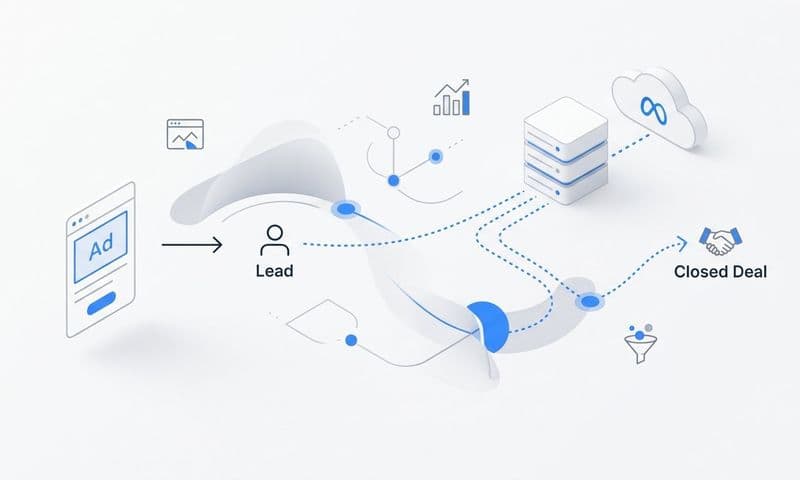
Cometly is built exactly for this use case. It connects your ad platforms, CRM, and website to track the entire customer journey in real time, from first ad click to closed-won revenue. With multi-touch attribution, server-side tracking, Conversion API support, AI-driven recommendations, and native integrations across 70-plus channels and tools, Cometly gives B2B SaaS marketing teams the full-funnel visibility they need to make confident, data-backed decisions about where to invest and where to cut.
If you are ready to stop guessing and start seeing exactly which campaigns are driving revenue, Get your free demo and see how Cometly can give your team a clear, accurate picture of marketing performance from day one.