iOS 14 changed everything for digital marketers. Apple's App Tracking Transparency framework gave users the power to opt out of cross-app tracking—and most of them did. The result? Fragmented data, unreliable attribution, and ad platforms struggling to optimize campaigns effectively.
If you've noticed your Facebook ads reporting fewer conversions than your actual sales, or your Google Ads showing inconsistent ROAS, you're experiencing these limitations firsthand. Your dashboard might show 50 conversions while your CRM confirms 200 actual sales. That gap isn't just frustrating—it's costing you money as ad platforms optimize based on incomplete data.
But here's the good news: iOS 14 didn't eliminate tracking—it just requires a smarter approach.
This guide walks you through the exact steps to regain visibility into your customer journey, improve your attribution accuracy, and feed better data back to ad platforms so their algorithms can actually optimize for your best customers. Whether you're running campaigns for an ecommerce brand or driving leads for a SaaS company, these steps will help you adapt to the privacy-first landscape and make confident, data-driven decisions again.
The marketers thriving right now aren't the ones complaining about iOS changes—they're the ones who rebuilt their tracking infrastructure to work with it. Let's get you there.
Step 1: Audit Your Current Tracking Setup and Identify Gaps
Before you can fix your tracking, you need to understand exactly what's broken. Most marketers skip this step and jump straight to implementing new tools—then wonder why nothing improves.
Start by comparing your platform-reported conversions against your actual business data. Pull your Facebook Ads Manager conversion numbers for the past 30 days. Now compare them to the actual sales or leads recorded in your CRM, Shopify backend, or payment processor during the same period.
The difference between these numbers is your tracking gap—and it's probably larger than you think. Many businesses discover they're missing 40-60% of their actual conversions in their ad platform reporting. That's not a minor discrepancy. That's ad algorithms optimizing with less than half the picture.
Document this gap as a percentage. If Facebook reports 100 conversions but your CRM shows 250, you have a 60% tracking gap. This number becomes your baseline for measuring improvement.
Next, identify which events are being captured client-side versus server-side. Client-side tracking relies on browser pixels—the technology most affected by iOS 14 restrictions. If all your conversion tracking happens through the Meta Pixel or Google Tag firing in the user's browser, you're vulnerable to every iOS update, browser setting, and ad blocker out there. Understanding pixel tracking alternatives for iOS users becomes essential in this environment.
Check your event setup in each platform's Events Manager. Look for events marked as coming from "Browser" or "Pixel" versus those coming from "Server" or "Conversions API." If you see mostly browser-based events, that's your first red flag.
Now trace where attribution breaks down in your customer journey. For most businesses, the breakdown happens between the initial ad click and the final conversion. A user clicks your Facebook ad on their iPhone, browses your site, then returns later on their laptop to complete the purchase. Traditional pixel tracking loses this connection entirely.
Map out your typical customer journey touchpoints: ad click, landing page visit, product page view, add to cart, checkout initiation, purchase completion. At which point does tracking typically fail? For iOS users, it's often right at the beginning—the ad click itself never gets properly attributed.
Create a simple spreadsheet documenting your findings: total conversions by source, tracking gap percentage, which events are client-side, and where attribution breaks down. This becomes your roadmap for the next steps.
Success indicator: You have a clear percentage of missing conversions and know which touchpoints are most affected by iOS tracking limitations.
Step 2: Implement Server-Side Tracking Infrastructure
Server-side tracking is your most powerful weapon against iOS 14 limitations. Instead of relying on code that runs in a user's browser—where it can be blocked by iOS restrictions, browser settings, or ad blockers—server-side tracking sends data directly from your server to ad platforms and analytics tools.
Think of it this way: client-side tracking is like mailing a letter through a system where anyone can intercept it. Server-side tracking is like having a private courier deliver it directly. The data gets where it needs to go, regardless of what happens on the user's device.
The implementation starts with setting up a server-side data layer. This is a unified system that captures user actions on your website and sends them to your server for processing before forwarding to your analytics and advertising platforms. You're creating a central hub that controls all your tracking data.
For most businesses, this means implementing a solution like Google Tag Manager Server-Side, setting up a custom tracking server, or using a platform like Cometly that handles the server-side infrastructure for you. Understanding the differences between Google Analytics vs server-side tracking helps you make the right choice for your business.
Configure your server to capture critical events: page views, button clicks, form submissions, add-to-cart actions, checkout initiations, and completed purchases. Each of these events should include relevant data like product IDs, transaction values, and user identifiers when available.
Connect this infrastructure to your website using a first-party subdomain. Instead of sending data to facebook.com or google.com directly from the user's browser, you send it to tracking.yourdomain.com—your own server. This approach bypasses many browser restrictions because it's technically first-party data collection.
Next, integrate your CRM and backend systems into this data layer. When a lead converts to a customer in your CRM, that event should flow through your server-side tracking infrastructure. When someone completes a purchase in your payment processor, that conversion should be captured server-side, not just client-side.
This integration is crucial because it allows you to track the complete customer lifecycle, not just the actions visible in a browser session. A user might fill out a form on mobile, get contacted by your sales team, and close the deal days later on a different device. Server-side tracking connected to your CRM captures that entire journey.
Set up proper event formatting and data structure. Each platform has specific requirements for how events should be formatted—Meta wants certain parameters, Google wants others. Your server-side infrastructure should format events correctly for each destination automatically.
Test your implementation thoroughly. Send test events through your server-side tracking and verify they appear correctly in each platform's Events Manager or analytics dashboard. Check that event timestamps are accurate, conversion values are correct, and user identifiers are being captured when available.
Success indicator: Events fire from your server regardless of user browser settings, iOS opt-outs, or ad blockers. Your tracking continues working even when client-side methods fail.
Step 3: Configure Conversion APIs for Each Ad Platform
Server-side infrastructure is only valuable if you connect it properly to your ad platforms. That's where Conversion APIs come in—they're the direct pipelines that send your server-side data to Meta, Google, and other advertising platforms.
Start with Meta's Conversions API (CAPI). This is Facebook's server-to-server tracking solution that receives events directly from your server rather than relying on the Meta Pixel alone. Access your Meta Events Manager and navigate to the Conversions API setup section.
You'll need to generate an access token that authenticates your server to send data to Meta. This token acts as a secure credential proving that the events are coming from your legitimate business server, not from some random source trying to manipulate your data.
Configure which events to send through CAPI. At minimum, send your key conversion events: purchases, leads, sign-ups, and add-to-cart actions. Include as much customer information as possible with each event—email addresses, phone numbers, first and last names, city, state, and country.
Meta uses this information for "event matching"—connecting the server-side event back to a specific user profile. The more matching parameters you provide, the better Meta can attribute the conversion and use it for optimization. Aim for an event match quality score above 6.0, ideally above 7.0. If you're experiencing issues with your current setup, our guide on Facebook Ads tracking pixel issues can help you troubleshoot.
Here's the critical part: configure event deduplication. Since you're likely running both the Meta Pixel (client-side) and Conversions API (server-side), you need to prevent the same conversion from being counted twice. Use event IDs—unique identifiers for each conversion—so Meta knows when a pixel event and a CAPI event represent the same action.
For Google Ads, implement Enhanced Conversions. This feature allows you to send hashed first-party data (email addresses, phone numbers) along with your conversion events, improving Google's ability to match conversions back to ad clicks even when cookies or other identifiers are unavailable.
Access your Google Ads conversion tracking settings and enable Enhanced Conversions for each conversion action you're tracking. You can implement this through Google Tag Manager or by sending the data directly from your server using the Google Ads API. For Shopify merchants, we have a detailed walkthrough on how to set up Google Ads conversion tracking for Shopify.
Configure the customer data you'll send with each conversion. Google accepts email, phone number, first name, last name, and address information. This data gets hashed before transmission for privacy, but Google can still use it to match conversions accurately.
If you're running campaigns on other platforms—TikTok, Pinterest, Snapchat—check if they offer similar server-side tracking solutions. Most major ad platforms now provide Conversion APIs or equivalent server-side tracking options. For TikTok specifically, explore the best tools for tracking TikTok ads to maximize your attribution accuracy.
Monitor your API connection health regularly. Each platform provides dashboards showing how many events are being received, what the match quality looks like, and whether there are any errors or issues with your implementation. Check these dashboards weekly to catch problems early.
Success indicator: Your Conversions API shows high event match quality scores (above 6.0 for Meta), and your ad platforms are receiving significantly more conversion events than they were capturing through pixels alone.
Step 4: Build a First-Party Data Strategy
The most valuable asset in a privacy-first advertising world isn't clever tracking tricks—it's first-party data collected directly from your customers with their consent. This is data you own, data that can't be blocked by iOS updates, and data that dramatically improves your attribution accuracy.
Start by capturing email addresses and phone numbers as early as possible in the customer journey. Don't wait until checkout to ask for this information. Offer a lead magnet, discount code, or early access in exchange for an email address on your landing pages.
This early capture is crucial for identity resolution—matching a user's actions across devices and sessions. When someone gives you their email, you can connect their initial iPhone visit to their later desktop purchase, even when traditional tracking fails completely. Our comprehensive guide on first-party data tracking setup walks you through this process step by step.
Implement email capture on high-traffic pages, not just conversion pages. If you're driving significant traffic to a blog post or product category page, add an email capture form there. The goal is to identify users before they disappear into the iOS black hole of untrackable sessions.
Use UTM parameters consistently across every single campaign, ad group, and creative. This discipline becomes even more critical when other tracking methods fail. Your UTM structure should capture source, medium, campaign, ad group, and ideally creative-level detail.
Create a standardized UTM naming convention and stick to it religiously. If your Facebook campaigns use one naming structure and your Google campaigns use another, you'll struggle to compare performance accurately. Document your convention and ensure everyone on your team follows it.
Implement click ID capture and storage. When someone clicks a Facebook ad, that click includes a unique identifier (fbclid). When they click a Google ad, it includes gclid. These click IDs are gold for attribution—they allow you to connect ad clicks to downstream conversions definitively.
Store these click IDs in your database along with the user's session information. When that user later converts, you can send the original click ID back to the ad platform through the Conversions API, enabling perfect attribution even when cookies and pixels fail.
Build a system for progressive profiling. Don't ask for everything at once—collect basic information initially, then gather more details over time as the relationship develops. First visit: email address. First purchase: phone number and address. Post-purchase: preferences and interests. Each piece of data improves your attribution and targeting capabilities.
Ensure your data collection is transparent and privacy-compliant. Use clear opt-in language, provide easy opt-out mechanisms, and respect user preferences. Privacy compliance isn't just about following regulations—it's about building trust that encourages users to share their data willingly. As the industry moves toward cookieless attribution tracking, this trust becomes even more valuable.
Create a unified customer database that connects data from all sources: website interactions, CRM records, email engagement, purchase history, and ad platform data. This single customer view is what makes accurate attribution possible when traditional tracking breaks down.
Regularly clean and update your first-party data. Remove invalid emails, update changed phone numbers, and merge duplicate records. The quality of your first-party data directly impacts your attribution accuracy and ad targeting effectiveness.
Success indicator: You can match most conversions back to their original ad source using first-party identifiers like email addresses or click IDs, even when traditional cookie-based tracking fails.
Step 5: Deploy Multi-Touch Attribution to See the Full Journey
Last-click attribution was always flawed, but iOS 14 made it completely unreliable. When platform tracking breaks down, last-click models attribute conversions to whatever touchpoint happened to fire properly—usually the last one before purchase, which often isn't the ad that actually drove the conversion.
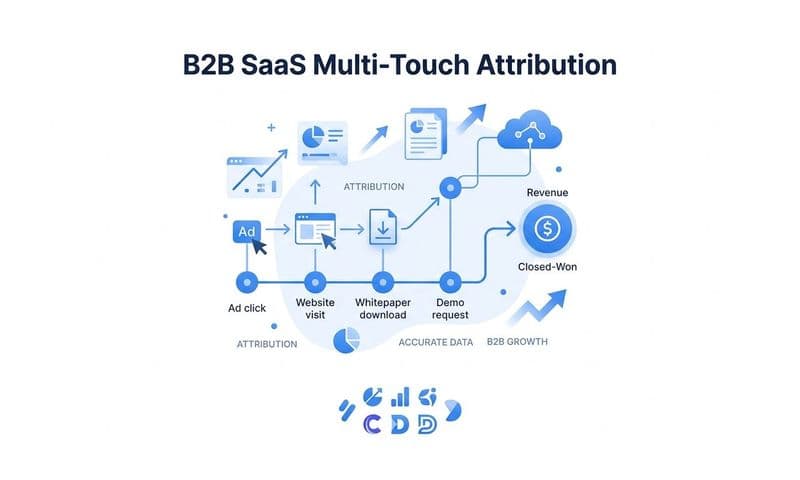
Multi-touch attribution solves this by tracking and crediting every touchpoint in the customer journey, from first awareness through final purchase. When iOS blocks a Facebook ad click from being tracked, multi-touch attribution can still show that Facebook's role in introducing the customer to your brand.
Start by implementing a tracking system that captures the complete customer journey. This means logging every interaction: which ad they clicked first, which pages they visited, which emails they opened, which retargeting ads they saw, and which channel they used for the final conversion. Effective touchpoint tracking analytics makes this visibility possible.
Your server-side tracking infrastructure from Step 2 makes this possible. Since you're capturing events at the server level, you can build a complete timeline of user interactions that isn't dependent on cookies or cross-site tracking.
Choose attribution models that make sense for your business. First-touch attribution shows which channels are best at generating awareness. Last-touch shows which channels close deals. Linear attribution spreads credit equally across all touchpoints. Time-decay gives more credit to recent interactions. Understanding different attribution tracking methods helps you select the right approach.
The key insight: different models tell different stories, and all of them are more accurate than what ad platforms report in isolation. A channel that looks weak in last-click might be your best awareness driver in first-touch analysis.
Compare attribution models side by side to understand true channel performance. You might discover that Facebook drives initial awareness, Google captures search intent, and email closes the deal. Each channel plays a role, but last-click attribution would only credit email.
Use path analysis to identify your most common conversion paths. What sequence of touchpoints typically leads to a purchase? Do customers usually see a Facebook ad, then search for your brand, then convert? Or do they discover you through content, get retargeted on Facebook, then purchase directly?
Understanding these patterns helps you optimize your entire funnel, not just individual channels. If you know that Facebook-to-Google-to-Direct is a high-value path, you can ensure you're investing appropriately in both Facebook awareness campaigns and Google branded search.
Set up attribution windows that reflect your actual sales cycle. If your typical customer takes two weeks to convert, using a seven-day attribution window will undervalue your awareness channels. Extend your windows to capture the full journey—30 days for consideration, 90 days for awareness in many cases.
Monitor how attribution changes when you adjust these windows. A channel that looks mediocre with a seven-day window might be your top performer with a 30-day window. This is especially true for channels that drive initial awareness rather than immediate conversions.
Create custom reports that show channel performance across different attribution models. Don't rely solely on what ad platforms report—they only see their own piece of the puzzle. Your multi-touch attribution system sees the complete picture.
Success indicator: You can see which campaigns influence conversions even when direct tracking fails. You understand the role each channel plays in your customer journey, not just which one gets credit for the last click.
Step 6: Feed Enriched Conversion Data Back to Ad Platforms
All the tracking infrastructure you've built isn't just for your own reporting—it's ammunition for ad platform algorithms. When you send high-quality, complete conversion data back to Meta, Google, and other platforms, their machine learning systems can optimize far more effectively than they can with fragmented iOS-limited data.
This is where the strategy comes full circle. You've captured more complete data through server-side tracking, enriched it with first-party information, and attributed it accurately through multi-touch analysis. Now you send that enriched data back to the platforms so they can learn from your best customers.
Start by syncing all conversions, not just the ones platforms can track themselves. If Meta's pixel only captured 60 conversions but your CRM shows 150 actual sales from Meta traffic, send all 150 conversions back through the Conversions API. This complete picture helps Meta's algorithm understand what success actually looks like.
Include conversion value data with every event you send. Don't just tell Meta that a purchase happened—tell Meta the purchase was worth $247. Don't just tell Google that someone became a lead—tell Google that lead converted to a $5,000 customer.
This value data transforms how algorithms optimize. Instead of optimizing for conversion volume (which might include lots of low-value purchases), they can optimize for conversion value (prioritizing high-value customers). The result is better ROAS and more profitable campaigns. Following best practices for tracking conversions accurately ensures your data quality remains high.
Send downstream conversion events that platforms can't see on their own. When a lead from a Facebook ad becomes a qualified opportunity in your CRM, send that event back to Meta. When a trial user from Google Ads converts to a paying customer, send that conversion back to Google.
These downstream events are incredibly valuable for optimization. Ad platforms can learn which early-stage conversions (clicks, sign-ups, trials) typically lead to high-value outcomes (qualified leads, paying customers, renewals). Over time, the algorithms get better at finding users who will complete the full journey, not just the first step.
Implement this through your Conversions API setup. Configure events for each stage of your customer lifecycle: lead, qualified lead, opportunity, closed deal, renewal, expansion. Send these events with the original click IDs or user identifiers so platforms can connect them back to specific campaigns. For lead-focused businesses, lead generation attribution tracking provides additional strategies for this workflow.
Use offline conversion tracking for events that happen outside your website. If your sales team closes deals over the phone or in person, those conversions should still flow back to ad platforms. Upload offline conversion data regularly—weekly at minimum, daily if possible.
Monitor how conversion sync improves your campaign performance. After implementing complete conversion data sharing, watch for improvements in cost per acquisition, ROAS, and conversion volume. Platforms typically need 1-2 weeks to incorporate new data into their optimization, so be patient.
Compare campaign performance before and after implementing enriched conversion sync. Many businesses see 20-40% improvements in campaign efficiency simply because ad algorithms finally have accurate data to optimize against.
Set up automated syncing so this happens continuously without manual intervention. Your goal is a system where every conversion—regardless of where or how it happens—automatically flows back to the ad platforms that influenced it.
Success indicator: Ad platforms receive more conversions than they detect on their own, and your campaigns show improved optimization performance as algorithms learn from complete, accurate data rather than fragmented tracking.
Your Path Forward: From Tracking Chaos to Data Confidence
Overcoming iOS 14 tracking limitations isn't about finding workarounds—it's about building a more resilient, privacy-compliant measurement infrastructure that works regardless of what Apple, Google, or any other platform decides to change next.
The six steps you've just learned—auditing your gaps, implementing server-side tracking, configuring Conversion APIs, building a first-party data strategy, deploying multi-touch attribution, and feeding enriched data back to ad platforms—create a system that actually improves over time as you collect more first-party data and refine your attribution models.
Here's your quick implementation checklist to keep you on track:
✓ Audit completed with tracking gap quantified — You know exactly how much data you're missing and where the breakdowns occur.
✓ Server-side tracking infrastructure live — Events fire from your server, bypassing browser and iOS restrictions entirely.
✓ Conversion APIs configured for all major platforms — Meta, Google, and other ad platforms receive direct server-side data with high match quality.
✓ First-party data capture in place — You're collecting emails, phone numbers, and click IDs to enable identity resolution across devices and sessions.
✓ Multi-touch attribution deployed — You can see the complete customer journey and understand each channel's true contribution to conversions.
✓ Conversion sync feeding data back to ad platforms — Algorithms optimize based on complete, accurate conversion data rather than fragmented tracking.
The marketers who thrive in this privacy-first era are those who invest in accurate, first-party attribution rather than relying on platform-reported data alone. They understand that iOS 14 wasn't the end of effective digital advertising—it was the beginning of a more sophisticated, data-driven approach that respects user privacy while delivering better business results.
Start with Step 1 today. Audit your tracking gaps and quantify exactly what you're missing. That single action will clarify your priorities and show you where to focus your implementation efforts. Within weeks, you'll be making confident, data-driven decisions based on complete data rather than guessing based on fragmented platform reports.
The infrastructure you build now will serve you for years, regardless of future privacy changes or platform updates. You're not just solving today's iOS 14 problem—you're building the foundation for sustainable, scalable marketing attribution.
Ready to elevate your marketing game with precision and confidence? Discover how Cometly's AI-driven recommendations can transform your ad strategy—Get your free demo today and start capturing every touchpoint to maximize your conversions.