
You've seen it before. The ad platform dashboard shows strong ROAS, conversion numbers look healthy, and the campaign appears to be performing. Then you check the CRM and the revenue numbers tell a completely different story. Deals aren't closing at the rate the platform suggests. Pipeline is thin. And no one can explain the gap.
This disconnect is one of the most common and costly problems in paid media today. Ad platforms are designed to show their own value, and they do it well. But their reporting exists in a silo, disconnected from the CRM data, pipeline stages, and closed-won revenue that actually define whether your ad spend is working.
ROI tracking for paid ads is the discipline that bridges this gap. It's not about adding more dashboards or obsessing over more metrics. It's about building a connected system where every dollar you spend on ads can be traced to a real business outcome. For B2B SaaS teams especially, where sales cycles are long and buyer journeys are complex, this kind of accountability is what separates teams that scale confidently from teams that guess and hope.
By the end of this article, you'll understand exactly why platform reporting falls short, which metrics actually matter for measuring paid ad ROI, how attribution models shape the picture you see, and how to build a tracking system that reflects what's really happening in your pipeline and revenue.
Why Your Ad Platform Numbers Don't Tell the Full Story
Ad platforms like Meta and Google are walled gardens. They collect data within their own ecosystems, apply their own attribution logic, and report results in ways that naturally favor their own channels. This isn't a conspiracy; it's just how the systems are built. But it creates a serious problem for marketers who rely on platform dashboards as their primary source of truth.
The most common issue is double-counting. Meta might attribute a conversion to a Facebook ad based on a view-through window. Google might claim the same conversion because the user also clicked a search ad. Your email platform might log it as an email-driven conversion. Suddenly, one actual sale appears three times across three different dashboards, each platform taking full credit.
Without an independent tracking layer sitting outside these platforms, there's no neutral referee to reconcile these competing claims. Budget decisions get made on inflated numbers, and the channels that appear most efficient on paper may not be the ones actually driving revenue.
The situation has become significantly more complicated since iOS 14 introduced Apple's App Tracking Transparency framework. When users opt out of tracking, ad platforms lose visibility into post-click behavior across apps and websites. Meta's signal quality dropped considerably as a result, meaning the conversion data flowing back to the platform became less complete and less accurate. Browser-based restrictions and the ongoing deprecation of third-party cookies across major browsers have compounded this problem further.
The result is that native platform reporting has become structurally less reliable over time. Marketers who haven't adapted their tracking infrastructure are making budget decisions based on increasingly noisy data. Independent ROI tracking is no longer a nice-to-have for sophisticated teams. It's a foundational requirement for anyone spending meaningfully on paid ads.
The fix isn't to stop trusting platforms entirely. It's to stop treating them as the only source of truth. When you layer in server-side tracking, CRM data, and revenue attribution, you gain the ability to cross-reference platform claims against what actually happened downstream in your pipeline. That cross-reference is where accurate ROI tracking begins.
The Metrics That Actually Connect Ads to Revenue
Not all metrics are created equal. There's a category of paid media metrics that feel important but don't connect to revenue: click-through rate, impressions, cost per click, and engagement rate. These are useful for diagnosing creative performance or audience relevance, but they tell you nothing about whether your ad spend is generating actual business value.
The metrics that matter for ROI tracking are the ones tied to money. Here's how to think about each one.
ROAS (Return on Ad Spend): The most commonly referenced revenue metric in paid media. Calculated as Revenue divided by Ad Spend, ROAS tells you how much revenue you're generating for every dollar spent. A ROAS of 4 means four dollars of revenue for every dollar in. Simple in theory, but only meaningful if the revenue figure is accurate and properly attributed.
CPA (Cost Per Acquisition): The total ad spend divided by the number of conversions. In B2B SaaS, "acquisition" needs to be defined carefully. A form fill is not an acquisition. A qualified lead might be. A closed-won deal definitely is. CPA is only useful when the conversion event it's measuring reflects a real business outcome.
CAC (Customer Acquisition Cost): Similar to CPA but includes all costs associated with acquiring a customer, not just ad spend. For B2B SaaS, CAC is one of the most important unit economics metrics because it directly informs pricing strategy, sales efficiency, and growth sustainability.
LTV-to-CAC Ratio: This is where ROI tracking for paid ads gets genuinely strategic. If your customer lifetime value is significantly higher than your acquisition cost, you have room to invest more aggressively. If the ratio is tight or inverted, scaling spend will accelerate losses. B2B SaaS teams that track LTV-to-CAC by channel can identify which paid sources attract the highest-value customers, not just the most customers.
The formula for true paid ad ROI is straightforward: (Revenue Attributed to Ads minus Total Ad Spend) divided by Total Ad Spend, multiplied by 100. To understand the full calculation methodology, see our guide on how to calculate ROI for marketing. But this formula is only as good as the revenue data feeding into it. If your revenue figures come from platform-reported conversions rather than actual CRM outcomes, the calculation is built on a flawed foundation.
For B2B SaaS specifically, pipeline attribution adds another layer. Because deals often take weeks or months to close, waiting for closed-won revenue to measure ad performance creates a significant lag. Pipeline attribution assigns ad credit to open opportunities, giving marketing teams visibility into contribution before the deal closes. This allows faster optimization decisions without sacrificing accuracy in the long run.
How Attribution Models Shape Your ROI Picture
Attribution is the process of assigning credit for a conversion to the marketing touchpoints that influenced it. The model you choose determines which campaigns appear profitable and which appear to underperform. Change the model, and the entire picture shifts.
The five most common attribution models each tell a different version of the same story.
First-Touch Attribution: Gives 100% of the credit to the first interaction a prospect had with your brand. Useful for understanding awareness and top-of-funnel performance, but ignores everything that happened afterward.
Last-Click Attribution: Gives 100% of the credit to the final touchpoint before conversion. This is still the default in many platforms and CRMs, but it systematically undervalues awareness channels and overvalues bottom-of-funnel tactics like branded search.
Linear Attribution: Distributes credit equally across all touchpoints in the conversion path. More balanced than first-touch or last-click, but treats a casual ad impression the same as a high-intent demo request click.
Time-Decay Attribution: Gives more credit to touchpoints that occurred closer to the conversion. Logical for short sales cycles, but can undervalue early-stage awareness campaigns in B2B contexts where the first ad interaction planted the seed weeks before a deal closed.
Data-Driven Attribution: Uses algorithmic weighting based on actual conversion path data to assign credit proportionally. This is generally the most accurate model for complex buyer journeys because it reflects real patterns rather than predetermined rules.
For B2B SaaS companies, multi-touch attribution is the most appropriate framework. A typical B2B buyer might see a LinkedIn ad, click a Google search ad two weeks later, attend a webinar, and finally convert after receiving a retargeting ad. Last-click attribution would give all the credit to the retargeting campaign and suggest you cut LinkedIn spend. Multi-touch attribution reveals that LinkedIn was the first touchpoint for a significant portion of your highest-value customers.
The choice of attribution model isn't a one-time configuration decision. It should evolve as your sales cycle changes, your channel mix shifts, and your data quality improves. Teams that revisit their attribution model regularly and test different views of their data make better budget decisions than teams that set it once and forget it.
The key insight is this: your attribution model is a lens, not a truth. The goal is to choose the lens that most accurately reflects how your buyers actually make decisions, and to have enough data quality to trust what you're seeing through it. Exploring the best marketing attribution tools for B2B SaaS can help you find the right platform to implement this effectively.
Building a Reliable ROI Tracking System
Understanding the theory of ROI tracking is one thing. Building the technical infrastructure to actually do it is another. There are four core components that every reliable paid ads ROI tracking system needs.
UTM Parameters: Every paid ad link should include UTM parameters that tag the source, medium, campaign, and creative. These tags pass through to your analytics platform and CRM, allowing you to trace leads and customers back to the specific ad that first brought them in. If you're new to this approach, our guide on what UTM tracking is and how it helps your marketing covers the fundamentals in detail.
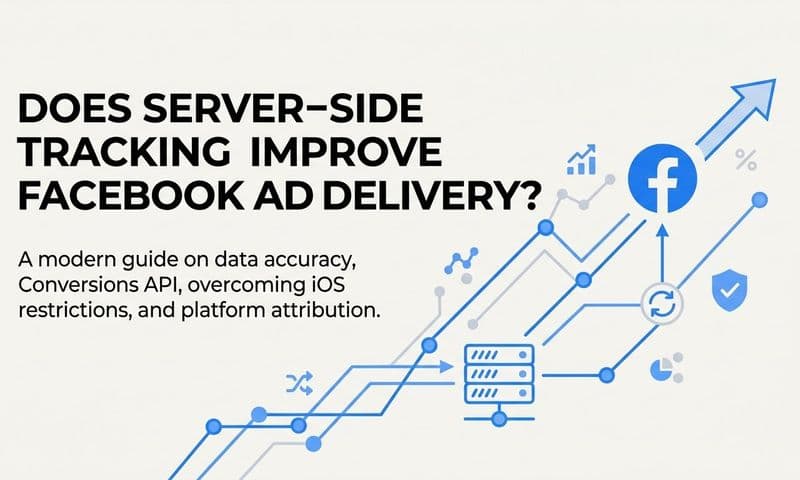
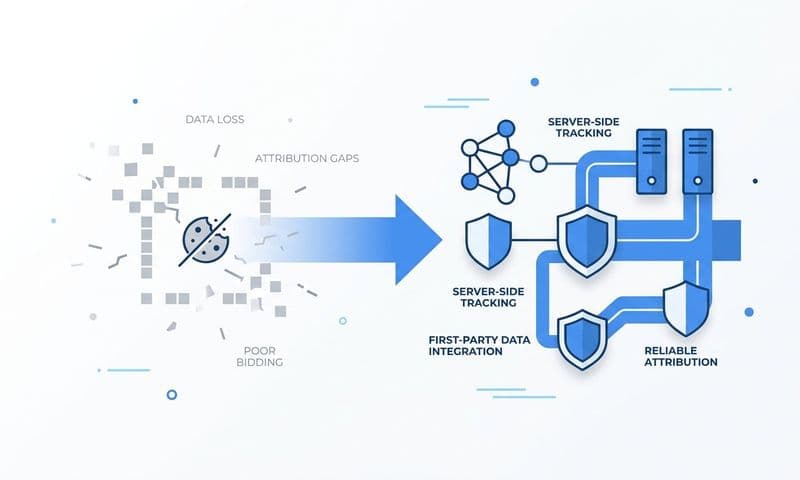
Server-Side Conversion Tracking: Browser-based tracking has become unreliable. Ad blockers strip pixels. Safari's Intelligent Tracking Prevention limits cookie lifespans. iOS restrictions reduce signal quality. Server-side tracking solves this by sending conversion events directly from your server to the ad platform, bypassing browser limitations entirely. Meta's Conversion API (CAPI) and Google's Enhanced Conversions are the primary implementations of this approach. They improve match rates, reduce data loss, and give ad platforms better signal to optimize against.
CRM Integration: This is where the loop closes. When a lead from a paid ad enters your CRM, the attribution data should travel with them. As they progress through pipeline stages and eventually close as a customer, that revenue should be traceable back to the originating ad touchpoints. Without CRM integration, your ROI tracking stops at the lead level and never reaches actual revenue.
Revenue Data Integration: For B2B SaaS companies using subscription billing platforms like Stripe, connecting revenue data to your attribution system creates the final link in the chain. When a deal closes and subscription revenue begins, that data should flow back to your attribution platform and be credited to the campaigns that influenced the customer's journey.
When these four components work together, something powerful happens. You stop relying on any single platform's self-reported data and instead build a single source of truth that aggregates signals from every layer of your marketing and sales system. Ad platform data, website events, CRM pipeline stages, and actual revenue all point to the same picture.
This is also where first-party data becomes critical. As third-party cookies continue to disappear across major browsers, the data you collect directly from your own users, through your own tracking infrastructure, becomes the most reliable foundation for attribution. Understanding why server-side tracking is more accurate makes the case for investing in this infrastructure now rather than later.
Platforms like Cometly are built specifically to connect these layers. By integrating with your ad platforms, CRM, and revenue data in one place, Cometly creates the unified attribution view that makes ROI tracking actionable rather than theoretical.
Turning ROI Data Into Smarter Scaling Decisions
Accurate ROI tracking isn't valuable because it produces interesting reports. It's valuable because it changes the decisions you make with your budget. Here's where the real payoff lives.
The most immediate application is budget reallocation. When you can see which campaigns are contributing to actual pipeline and closed revenue, not just platform-reported conversions, you can confidently pause spend on campaigns that look good on the surface but aren't generating real downstream value. You can also scale spend on campaigns that consistently appear in the journeys of high-value customers, even if their paid ads analytics look modest at the platform level.
This kind of reallocation requires courage, because it often means cutting campaigns that the ad platform is telling you are performing well. But when your ROI tracking connects all the way to closed-won revenue, you have the data to justify those decisions internally and to stakeholders who might otherwise push back.
AI-powered attribution adds another dimension to this. Modern attribution platforms use machine learning for ads to surface patterns in customer journey data that would be nearly impossible to detect manually. Which ad creative combinations consistently appear in the journeys of customers with the highest LTV? Which audience segments convert at lower CPA but retain longer? Which channel sequences, such as LinkedIn first touch followed by Google retargeting, produce the most pipeline? These patterns exist in your data, but they require AI to surface them at scale.
There's also a compounding benefit to feeding enriched conversion data back to the ad platforms themselves. When you send high-quality, server-side conversion events back to Meta and Google through their respective APIs, you improve the signal quality their algorithms use for targeting and optimization. Better signal means better audience matching, more efficient bidding, and improved ad delivery. Over time, this creates a compounding return: better data leads to better platform optimization, which leads to better results, which produces better data.
This feedback loop is one of the most underappreciated advantages of building a proper ROI tracking system. It's not just about measurement. It's about making the entire paid media engine run more efficiently.
Cometly's AI ads manager is designed to support exactly this kind of decision-making. By analyzing performance patterns across all your ad channels and surfacing recommendations based on what's actually driving revenue, it helps growth teams act on their data rather than just look at it.
From Ad Spend to Revenue Clarity: Your Next Steps
The progression from broken tracking to a fully connected ROI system follows a clear path. It starts with acknowledging that platform dashboards are not a reliable source of truth on their own. It moves through building the technical infrastructure to capture every touchpoint accurately. It requires choosing attribution models that reflect how your buyers actually behave. And it culminates in a system where every ad dollar is accountable to a real business outcome.
For B2B SaaS teams, this isn't optional infrastructure. Long sales cycles, complex buyer journeys, and high customer acquisition costs mean that even small improvements in attribution accuracy can translate to significant improvements in budget efficiency and revenue growth.
The goal was never more dashboards. The goal is clarity. Clarity about which campaigns are working, which channels deserve more investment, and which signals are worth trusting. When your ad data connects all the way to closed-won revenue, you stop guessing and start making decisions with real confidence.
Cometly is built to make this possible for B2B SaaS marketing teams. It connects your ad platforms, CRM, website events, and revenue data into a single attribution platform with AI-driven insights. From multi-touch attribution and server-side conversion tracking to pipeline attribution and Stripe revenue integration, it's designed to give you the single source of truth that makes ROI tracking actionable.
If you're ready to move beyond platform dashboards and build a paid ads ROI tracking system that reflects reality, start by auditing your current setup. Are your UTM parameters consistent? Is server-side tracking in place? Does your CRM data connect back to your ad campaigns? Are you looking at closed revenue or just lead volume?
Once you know where the gaps are, filling them becomes a clear project rather than an overwhelming one. And when the system is connected end to end, the clarity you gain is worth every hour you invested in building it.
Get your free demo today and see how Cometly connects your ad spend to closed-won revenue in real time.