Your Facebook campaign dashboard shows 47 conversions. Your analytics platform reports 31. Your CRM logged 52 new customers. Which number is real? If you're a digital marketer in 2026, you already know the answer: none of them are completely accurate. The tracking infrastructure that powered digital advertising for the past decade is crumbling, and the data gaps are costing you more than you realize.
iOS updates have blocked conversion tracking for millions of users. Chrome's privacy features are hiding customer journeys. Ad blockers are stripping out your pixels entirely. The result? Your ad platforms are making optimization decisions based on incomplete information, your attribution models are built on partial data, and your budget allocation is essentially guesswork dressed up in dashboards.
Server-side tracking has emerged as the solution that leading marketing teams are using to rebuild their data infrastructure from the ground up. Instead of relying on browser-based pixels that can be blocked, deleted, or restricted, server-side tracking sends conversion data directly from your server to ad platforms through secure API connections. It's not just a technical workaround—it's a fundamental shift in how modern marketers capture, control, and leverage customer data to drive better results.
The Mechanics Behind Server-Side Data Collection
Think of traditional tracking like sending postcards through the mail system. Your website drops a pixel (the postcard) into a visitor's browser, hoping it successfully delivers conversion data to Facebook or Google. But what happens when the postal service decides to block certain postcards? That's exactly what's happening with browser-based tracking today.
Server-side tracking works differently. Instead of relying on the browser to relay information, your server communicates directly with ad platforms through their APIs. When a visitor converts on your site, that event data is captured by your server first. Your server then processes this information, enriches it with additional context from your CRM or database, and sends it directly to Meta's Conversions API, Google's Measurement Protocol, or other platform endpoints.
The technical architecture involves three key components working together. First, your website or app captures user interactions and sends them to your own server rather than directly to third-party platforms. This creates a first-party data collection layer that you control completely. Second, your server processes these events, matching them with existing customer records, adding attribution data, and preparing them for transmission. Third, server-to-server API connections deliver this enriched data directly to advertising platforms, bypassing browsers entirely.
This approach fundamentally changes the data flow. Client-side tracking depends on JavaScript executing in the user's browser, which means it's subject to every limitation that browser imposes. Ad blockers can prevent the script from loading. Privacy settings can block third-party cookies. iOS restrictions can limit the data that gets shared. Server-side tracking sidesteps all of these barriers because the data transmission happens entirely between servers that you control and the platforms you advertise on.
The technical implementation creates a more resilient tracking infrastructure. When a user completes a purchase, your server receives that transaction data regardless of their browser settings. You can then choose exactly what information to share with each advertising platform, when to share it, and how to format it for maximum accuracy. The browser never gets a chance to interfere with this data flow because it's happening at the server level, where user privacy settings and ad blockers have no jurisdiction.
Why Browser-Based Tracking Is Failing Marketers
Apple's iOS 14.5 update in 2021 fundamentally broke the attribution model that digital advertising was built on. App Tracking Transparency requires apps to ask permission before tracking users across other companies' apps and websites. The result? Roughly 75% of iOS users opted out of tracking. For marketers running Facebook ads, this meant that conversion data from three-quarters of iPhone users simply vanished overnight.
The impact goes far beyond missing data points. When Facebook's pixel can't track conversions from iOS users, the platform's algorithm loses the signals it needs to optimize campaigns effectively. Your Lookalike Audiences become less accurate because they're built on incomplete conversion data. Your automated bidding strategies make decisions based on a fraction of your actual results. You're essentially teaching the algorithm with one hand tied behind your back.
Third-party cookie deprecation is accelerating this tracking crisis. Safari and Firefox have already blocked third-party cookies by default. Chrome has delayed its full deprecation but continues tightening privacy controls. Each browser update chips away at the infrastructure that client-side tracking depends on. Understanding server side vs client side tracking differences is essential for navigating these changes effectively.
Ad blockers add another layer of data loss. Millions of users run browser extensions specifically designed to prevent tracking pixels from loading. When your Facebook pixel or Google Analytics tag gets blocked, you lose visibility into those user journeys completely. These aren't just privacy-conscious outliers—ad blocker usage has grown substantially, particularly among younger demographics and tech-savvy audiences who often represent high-value customer segments.
The financial impact is staggering. When your conversion tracking only captures 60% of actual conversions, your cost-per-acquisition calculations are wrong by default. You're making budget allocation decisions based on incomplete data, often cutting spend on campaigns that are actually profitable but appear underperforming due to attribution gaps. Ad platforms are optimizing toward the conversions they can see, which may not represent your most valuable customer segments. The compounding effect of these data gaps means you're likely leaving significant revenue on the table without even realizing it.
Key Benefits That Drive Better Marketing Decisions
Complete conversion data transforms how ad platforms optimize your campaigns. When you implement server-side tracking, you're suddenly feeding Facebook and Google information about conversions that were previously invisible to them. That purchase from an iOS user with tracking disabled? Now captured and sent to Meta's Conversions API. That conversion that happened after the user cleared their cookies? Your server tracked it and transmitted it to Google. The algorithm finally sees the full picture of what's working.
This completeness directly improves campaign performance. Ad platforms use conversion data to train their machine learning models on what actions lead to desired outcomes. When you feed them accurate, comprehensive conversion signals through server-side tracking, their algorithms get better at identifying and targeting similar high-value users. Your Lookalike Audiences become more precise. Your automated bidding strategies make smarter decisions. Your ad delivery optimization actually optimizes toward real results instead of the limited subset of conversions that client-side tracking could capture.
First-party data ownership represents another fundamental advantage. With server-side tracking, conversion data flows through your infrastructure first before being shared with advertising platforms. This means you control exactly what data gets transmitted, how it's formatted, and what customer information is included. You can enrich conversion events with additional context from your CRM—customer lifetime value, subscription tier, product categories—before sending them to ad platforms. This enriched data enables more sophisticated optimization strategies that client-side pixels could never achieve.
The attribution benefits extend across your entire marketing stack. Server-side tracking captures events that client-side methods miss entirely, giving you visibility into the complete customer journey from initial ad click through CRM events. You can track conversions that happen days or weeks after the initial interaction, long after browser cookies would have expired. Implementing touchpoint tracking analytics becomes far more effective when your data foundation is complete.
Data accuracy improvements compound over time. As browser privacy features continue evolving and third-party cookie support declines further, the gap between server-side and client-side tracking accuracy will only widen. Marketers who implement server-side tracking now are building a data foundation that will remain reliable regardless of future browser restrictions or platform policy changes. You're future-proofing your attribution infrastructure while competitors continue relying on tracking methods that are actively being deprecated.
Implementation Approaches: From DIY to Platform Solutions
Building custom server-side tracking infrastructure gives you maximum control but requires significant technical resources. You'll need developers who understand server architecture, API integrations, and data processing pipelines. The implementation typically involves setting up a server environment to receive conversion data from your website or app, building logic to process and enrich that data, and creating integrations with each advertising platform's API. Meta's Conversions API, Google's Measurement Protocol, TikTok's Events API, and other platforms each have their own specifications and requirements.
The ongoing maintenance burden is substantial. Ad platform APIs evolve regularly, requiring updates to your integration code. You'll need monitoring systems to catch and troubleshoot data transmission failures. Server infrastructure must scale to handle traffic spikes during peak periods. Data processing logic needs refinement as you add new conversion events or change your attribution approach. For many marketing teams, the engineering resources required to build and maintain custom server-side tracking infrastructure exceed what's practical given competing technical priorities.
Platform solutions have emerged to handle the complexity of server-side tracking without requiring dedicated engineering teams. Reviewing the top server side tracking platforms can help you identify which solution fits your needs. These platforms sit between your website and advertising platforms, managing data collection, processing, enrichment, and transmission through a unified interface. Instead of building separate integrations for Meta, Google, TikTok, and other platforms, you send data to one endpoint and the platform handles distribution to all connected advertising platforms automatically.
The key advantage of platform solutions is speed to value. Implementation typically involves adding a tracking script to your website and configuring which events to capture and where to send them. The platform handles server infrastructure, API connections, data formatting, and error handling automatically. You can start capturing more complete conversion data within days rather than months of engineering work. Updates to ad platform APIs are managed by the platform provider, eliminating ongoing maintenance burden for your team.
Evaluating implementation approaches requires weighing several factors. Consider your technical resources realistically—do you have developers who can build and maintain server-side infrastructure, or would their time be better spent on product development? Assess your platform requirements—are you advertising across multiple channels that would each need separate integrations? Think about scalability—will your solution handle growth in traffic and conversion volume without requiring architecture changes?
Data accuracy and enrichment capabilities matter significantly. Some solutions simply forward basic conversion events, while others enrich data with attribution information, customer identifiers, and CRM data before transmission. A comprehensive server side tracking implementation guide can help you navigate these decisions. The ability to capture and sync CRM events, not just website conversions, becomes increasingly important as you build more sophisticated attribution models.
Maximizing ROI: Connecting Server Data to Attribution
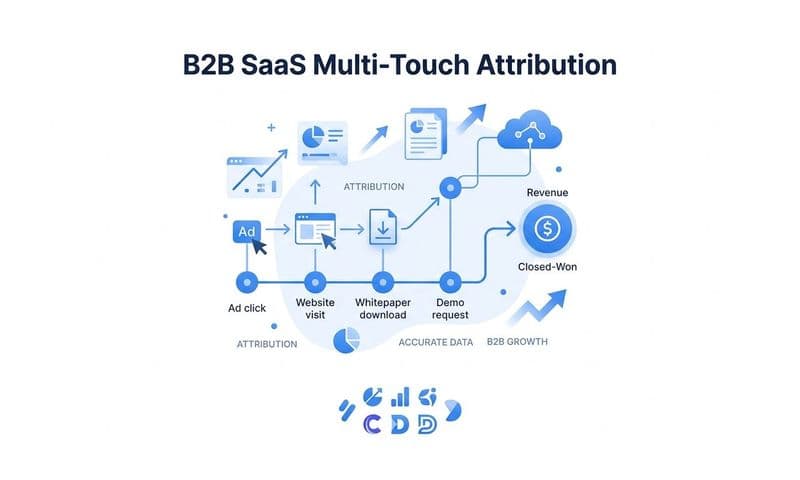
Accurate multi-touch attribution requires visibility into every touchpoint across the customer journey. Server-side tracking provides this foundation by capturing interactions that client-side methods miss entirely. When a prospect clicks your Facebook ad on their iPhone, browses your site, leaves without converting, then returns three days later through a Google search and completes a purchase, server-side tracking can connect these touchpoints into a coherent journey. The iOS restrictions that would have blocked the Facebook pixel from seeing the conversion don't affect server-side data transmission.
This complete journey visibility transforms attribution modeling from educated guesswork into data-driven analysis. You can accurately measure how different channels work together to drive conversions rather than attributing everything to the last click. Your attribution model can account for the Facebook ad that introduced the prospect to your brand, the Google search that brought them back, and the email campaign that finally converted them. Understanding various attribution tracking methods helps you select the right model for your business.
Syncing enriched conversion data back to advertising platforms creates a powerful optimization feedback loop. When you send conversion events to Meta's Conversions API or Google's enhanced conversions, you're not just reporting that a conversion happened—you're providing the platform's algorithm with detailed information about what led to that conversion. This enriched data helps the algorithm identify patterns and characteristics of high-value converters, improving its ability to find similar prospects in future ad delivery.
The impact on campaign performance can be substantial. Ad platforms optimize toward the signals you provide. When those signals are incomplete due to tracking limitations, the algorithm optimizes toward a biased sample that may not represent your best customers. Server-side tracking corrects this bias by ensuring the algorithm sees conversions from iOS users, privacy-conscious users, and others who would be invisible to client-side tracking. Following best practices for tracking conversions accurately ensures you maximize these performance gains.
Revenue attribution becomes actionable when you connect server-side data to your CRM and customer database. You can track not just initial conversions but the full customer lifetime value that results from each marketing touchpoint. That Facebook ad might have generated a modest initial purchase, but server-side tracking reveals that customers acquired through that campaign have 3x higher lifetime value than other channels. This insight enables sophisticated ROI analysis that accounts for long-term customer value rather than just immediate conversion metrics.
The ability to measure true marketing contribution to revenue depends on comprehensive data. Server-side tracking provides this by capturing every stage of the customer journey—from anonymous ad click through identified lead to closed deal and beyond. Leveraging marketing attribution platforms for revenue tracking helps you answer questions like "Which campaigns drive the highest-value customers?" and "What's the real ROI of each marketing channel?" with confidence that your data actually reflects reality.
Getting Started: Your Server-Side Tracking Roadmap
Begin by auditing your current tracking infrastructure to identify where data is being lost. Check your conversion tracking across different browsers and devices. Compare conversion counts in your ad platforms against your actual sales data or CRM records. The gap between what your pixels report and what actually happened reveals the scale of your tracking problem. iOS users, privacy-conscious browsers, and ad blocker users are likely creating significant blind spots in your current attribution.
Prioritize high-impact integrations based on where you're spending the most money and losing the most data. If Facebook ads represent your largest budget and iOS users are a significant portion of your audience, implementing Meta's Conversions API should be your first priority. If you're running substantial Google Ads spend, setting up server-side tagging through Google Tag Manager comes next. Learning how to set up server side tracking properly ensures you capture the conversion events that matter most to your business.
Your CRM integration deserves special attention because it connects marketing data to actual revenue outcomes. Server-side tracking that includes CRM events enables true closed-loop attribution from ad click through customer acquisition and beyond. You can track when a lead becomes an opportunity, when an opportunity closes, and what the actual revenue value is. This data, when synced back to advertising platforms, dramatically improves their ability to optimize toward high-value conversions rather than just volume.
Measure success through concrete improvements in tracking accuracy and business outcomes. Compare conversion counts before and after implementing server-side tracking—you should see a significant increase as previously invisible conversions become visible. Monitor match rates when sending data to advertising platforms—higher match rates indicate better data quality and more effective optimization. Utilizing real time data tracking capabilities helps you identify and resolve issues quickly.
ROAS impact provides the ultimate validation of server-side tracking implementation. As ad platforms receive more complete conversion data and optimize more effectively, you should see improvements in campaign performance. Cost per acquisition may decrease as algorithms target more efficiently. Conversion rates may improve as platforms identify better prospects. Revenue per dollar spent should increase as your marketing mix optimizes toward channels and campaigns that actually drive results rather than those that simply appear to perform well based on incomplete data.
The implementation process doesn't end with initial setup. Server-side tracking requires ongoing refinement as you add new conversion events, integrate additional platforms, and evolve your attribution approach. Regular audits ensure data continues flowing correctly as your website changes and platform APIs evolve. The investment in building robust server-side tracking infrastructure pays dividends over time as your data foundation becomes increasingly comprehensive and reliable.
The Competitive Advantage of Complete Data
Server-side tracking represents more than a technical upgrade to your analytics stack—it's a fundamental shift in how modern marketing teams capture, control, and leverage customer data. As browser privacy features continue evolving and tracking restrictions become more stringent, the gap between marketers using server-side tracking and those relying on traditional pixels will only widen. The competitive advantage belongs to teams who can make decisions based on complete, accurate data while competitors optimize campaigns based on partial information.
The privacy-focused landscape isn't reversing course. Browser manufacturers are doubling down on user privacy protections. Platform policies are evolving toward first-party data strategies. Exploring cookieless attribution tracking approaches prepares you for this inevitable transition. The tracking methods that powered digital advertising for the past decade are being systematically deprecated. Server-side tracking aligns with this trajectory rather than fighting against it, giving you a data infrastructure that will remain effective regardless of future privacy changes.
Your attribution accuracy directly impacts every marketing decision you make. Budget allocation, campaign optimization, creative testing, audience targeting—all of these depend on understanding what's actually driving conversions. When your tracking infrastructure only captures 60% of conversions, every decision based on that data is compromised. Server-side tracking restores confidence in your analytics by ensuring you see the complete picture of how customers discover and convert.
The marketers who thrive in this new landscape will be those who invested in building robust, privacy-compliant data infrastructure before it became absolutely necessary. Server-side tracking isn't just about recovering lost data—it's about building a foundation for sophisticated attribution, algorithmic optimization, and data-driven decision making that will define marketing excellence in the years ahead.
Ready to elevate your marketing game with precision and confidence? Discover how Cometly's AI-driven recommendations can transform your ad strategy—Get your free demo today and start capturing every touchpoint to maximize your conversions.