
SMS marketing is driving real pipeline for B2B SaaS companies, yet most marketing teams cannot tell you which text message campaigns actually contributed to revenue. Clicks happen, leads come in, deals close, and somewhere in the middle, attribution falls apart. You end up guessing which SMS sends moved the needle and which ones simply burned budget.
The root problem is structural. SMS sits outside the traditional ad platform ecosystem. Google Ads and Meta have no native visibility into SMS-driven conversions. Without deliberate tracking infrastructure, those clicks either show up as direct traffic, get lumped into an "unknown" bucket, or disappear from your data entirely.
This guide builds the system that fixes that. By the time you finish, you will have a working SMS marketing attribution tracking setup that follows every touchpoint from the first text message click through to closed-won revenue. You will know which campaigns, messages, and audience segments are generating pipeline, and you will have the data to confidently scale what works.
Here is what we are going to cover: how to structure your UTM parameters for SMS, how to use tracking links that preserve attribution data, how to configure your attribution platform to recognize SMS as a distinct channel, how to connect SMS leads to your CRM for pipeline attribution, how to analyze performance beyond surface metrics, and how to build SMS into a cross-channel attribution model that gives leadership the full picture.
Whether you are running SMS alongside paid ads, email, or organic channels, this guide gives you a single source of truth for your marketing data. Let's build it.
Step 1: Set Up UTM Parameters for Every SMS Campaign
UTM parameters are the foundation of SMS attribution tracking. Without them, your analytics platform has no way to distinguish a visitor who arrived from an SMS campaign from someone who typed your URL directly into a browser. Every SMS link needs a UTM string attached before it goes out the door.
There are five UTM parameters, and each one tells your analytics platform something different about where a visitor came from. For SMS campaigns, three are essential and two are optional but useful.
utm_source: Identifies the origin of the traffic. For SMS, always use sms. This is the parameter that tells your attribution platform this visitor came from a text message, not from Google, Meta, or anywhere else.
utm_medium: Describes the marketing channel type. Use text for SMS campaigns. This distinguishes SMS from email (where you would use email) and keeps your channel groupings clean.
utm_campaign: Names the specific campaign. Use a descriptive, lowercase, hyphenated format like trial-reengagement-june or demo-invite-q2. This is what lets you compare one SMS campaign against another inside your attribution dashboard.
utm_content: Optional but valuable for A/B testing. If you are sending two versions of a message to different segments, use this parameter to distinguish them: version-a versus version-b.
utm_term: Rarely used for SMS but can be helpful if you are segmenting by audience type or list source.
A properly structured UTM string for an SMS campaign looks like this: ?utm_source=sms&utm_medium=text&utm_campaign=trial-reengagement-june
Consistency is everything here. If one team member uses SMS with a capital S and another uses sms in lowercase, your analytics platform treats them as two separate sources. Your data fragments, comparisons become unreliable, and the whole system breaks down.
Before you send a single SMS campaign, create a UTM naming convention document and share it with everyone who touches campaign setup. Define your approved source values, medium values, and campaign naming format. Lock it down. Enforce it. Understanding what UTM tracking is and how it helps your marketing will make this process significantly easier for your entire team.
Common mistakes to avoid: using spaces in UTM values (use hyphens instead), inconsistent capitalization, and reusing the same campaign name across different sends. Each campaign send should have a unique, descriptive campaign name so you can isolate its performance later.
Success indicator: Every SMS link your team generates has a complete, consistently formatted UTM string attached, and your naming convention document is documented and accessible to the whole team before any campaign goes live.
Step 2: Use Tracking Links That Preserve Attribution Data
Here is the problem with raw UTM URLs in SMS: they are long, ugly, and eat into your character limit. A full UTM string can add 100 or more characters to a URL, which matters when you are working with SMS message length constraints and trying to keep your copy clean.
URL shorteners solve this, but not all shorteners are created equal. Many generic shorteners strip query parameters during the redirect, which means your UTM data disappears before the visitor ever lands on your page. You click the short link, the redirect happens, and the destination URL arrives without any of the tracking parameters you carefully built. Your attribution platform sees the session as direct traffic.
The solution is to use either your SMS platform's built-in link shortening with UTM passthrough explicitly enabled, or a branded short domain that you control and have configured to preserve query parameters through redirects.
If your SMS platform offers native link shortening, dig into the settings and confirm that UTM parameters pass through to the destination URL. Do not assume this is on by default. Many platforms require you to toggle it on or configure it at the account level.
If you are using a third-party shortener, look for one that explicitly supports query string passthrough. Some enterprise SMS and marketing platforms offer branded short domains where you can configure redirect behavior directly. This gives you control over the full redirect chain.
Redirect chains are another risk. If your short link redirects to a landing page that then redirects again to a different URL, attribution data can drop off at the second redirect depending on how each server handles the query string. Keep your redirect chains as short as possible, ideally a single redirect from the short URL to the final destination.
Testing before you send is non-negotiable. Click every tracking link yourself before it goes to your list. Check the browser URL bar on the destination page and confirm that your UTM parameters are present and correctly formatted. Do this on both desktop and mobile, since redirect behavior can differ between environments.
You are tracking at two levels here: click-through tracking at the SMS platform level (which tells you how many people tapped the link) and conversion tracking at your attribution platform level (which tells you what those people did after they clicked). Choosing the right marketing campaign tracking software ensures you have both layers covered without gaps in your data.
Success indicator: Every shortened SMS link you test lands users on the correct destination page with all UTM parameters visible and intact in the browser URL bar, on both desktop and mobile.
Step 3: Configure Your Attribution Platform to Capture SMS Touchpoints
UTM parameters and tracking links handle the traffic side. Now you need your attribution platform to recognize SMS as a distinct channel and record it correctly in the customer journey.
The first configuration task is channel mapping. Inside your attribution platform, you need to tell it that traffic arriving with utm_source=sms belongs to the SMS channel and should not be grouped into direct, referral, or unknown. Most attribution platforms allow you to define custom channel rules based on UTM parameters. Set up a rule that matches utm_source=sms and assigns it to an SMS channel group. Without this, your carefully tagged SMS traffic will get misclassified and your reports will be wrong.
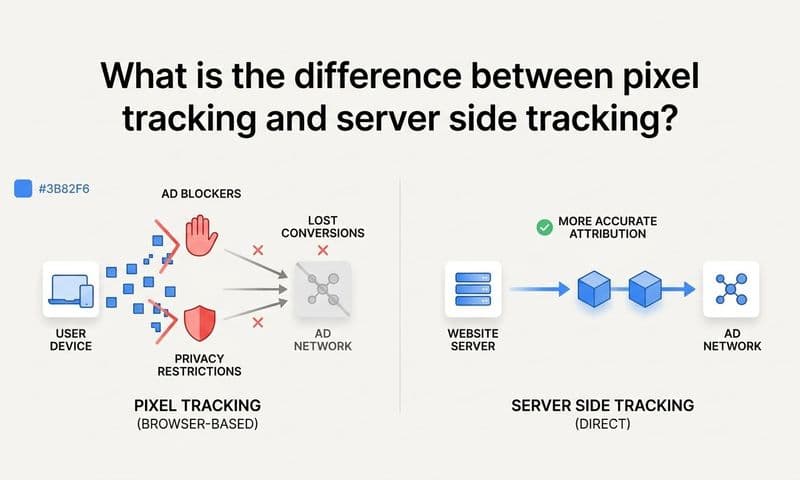
Next, address how your platform collects data. Browser-based pixel tracking has limitations. Users who click an SMS link on their phone, then later convert on a desktop browser, can break the attribution chain if your platform relies entirely on cookie-based tracking. Server-side tracking and first-party data collection close this gap by capturing conversion events at the server level, independent of browser cookies or ad blockers. These are among the most common attribution challenges in marketing analytics that teams encounter when scaling their tracking infrastructure.
This is where platforms like Cometly provide a structural advantage. Cometly connects your ad platforms, CRM data, and website behavior to build a unified customer journey view. SMS touchpoints are captured alongside paid and organic channels, and because Cometly uses server-side event tracking, those touchpoints are recorded even when browser-based pixels are blocked or a user switches devices between their first SMS click and their eventual conversion.
Conversion event setup is the next piece. Define which events you want to fire when an SMS-driven visitor takes a meaningful action: form submission, demo booking, trial signup, or any other conversion event that matters to your pipeline. Map these events inside your attribution platform so they are tied to the originating SMS campaign. A click is interesting data. A click that leads to a demo booking is revenue intelligence.
If your SMS platform supports webhook or API integrations, use them. Pushing click and opt-in events directly from your SMS platform into your attribution platform gives you richer data and a more complete picture of what happened before the landing page visit. Some SMS platforms can fire events at the moment a user clicks a link, which means your attribution platform gets the touchpoint data even if the user never completes a conversion on the destination page.
Success indicator: SMS appears as a distinct, correctly labeled channel in your attribution dashboard. You can see click data, session data, and conversion events tied to individual SMS campaigns, with no SMS traffic appearing in your direct or unknown buckets.
Step 4: Connect SMS Leads to Your CRM for Pipeline Attribution
Click data and session data tell you that people arrived from your SMS campaign. Pipeline attribution tells you whether those people became leads, opportunities, and customers. That second layer is where SMS attribution becomes genuinely useful for budget and strategy decisions.
The connection point between SMS clicks and CRM pipeline is the form submission. When an SMS-driven visitor lands on your page and fills out a form, that is your opportunity to capture their UTM data and write it into their CRM record. If you do not capture it at this moment, the attribution chain breaks. The lead exists in your CRM with no record of where they came from.
The mechanism for capturing UTM data at form submission is hidden form fields. When a visitor arrives on your landing page with UTM parameters in the URL, JavaScript reads those parameters and populates hidden fields in your form. When the visitor submits, those hidden fields are included in the form data and passed to your CRM as lead source fields. The contact record is created with the original SMS campaign name attached.
Most major form tools and landing page builders support hidden field population through URL parameters. Set this up for every lead capture form connected to SMS campaigns. Map the hidden fields to dedicated lead source fields in your CRM so the data lands in a structured, queryable place rather than a freeform notes field.
Once UTM data is flowing into your CRM as structured fields, Cometly's pipeline and revenue attribution can connect those original SMS touchpoints to deal stages and closed-won revenue. You can see not just how many leads an SMS campaign generated, but how much pipeline those leads created and how much revenue they eventually represented. The best marketing attribution tools for B2B SaaS companies are specifically designed to make this CRM-to-revenue connection seamless.
Multi-touch attribution matters here for B2B SaaS specifically. A prospect might first encounter your brand through a Google Ad, then receive an SMS re-engagement message, then book a demo after clicking a LinkedIn post. SMS is one of three touchpoints in that journey. Last-touch attribution would give all the credit to LinkedIn. First-touch attribution would give all the credit to Google. A linear or time-decay model distributes credit more fairly across all three touchpoints, including SMS.
Understanding where SMS sits in your typical buyer journey, whether it tends to be a first-touch acquisition channel or a mid-funnel re-engagement channel, determines which attribution model gives you the most accurate picture of its contribution.
Success indicator: CRM contact records created from SMS campaigns show the originating SMS campaign name in a dedicated lead source field. Those contacts appear in your attribution platform's pipeline view with their full touchpoint history attached.
Step 5: Analyze SMS Attribution Data and Optimize Campaign Performance
Once your tracking infrastructure is live and data is flowing, the real work begins: turning that data into decisions. Open rates and click rates are useful signals, but they are not the metrics that drive budget decisions. The metrics that matter for SMS attribution are further down the funnel.
Focus on these performance indicators when evaluating SMS campaigns:
Cost per lead: How much did you spend on this SMS campaign divided by the number of leads it generated. Compare this against your other channels to understand SMS's efficiency as a lead generation vehicle.
Cost per opportunity: Of the leads generated by SMS campaigns, how many converted to sales-qualified opportunities, and what did it cost to generate each one. This metric connects SMS activity to actual sales pipeline.
Pipeline influenced: The total value of open opportunities where SMS was a touchpoint in the customer journey, regardless of whether it was the first or last touch. This captures SMS's role in deals that have not yet closed.
Revenue attributed: Closed-won revenue that can be traced back to an SMS touchpoint, using whichever attribution model you have selected. This is the number that justifies SMS budget to leadership.
When comparing SMS against other channels, make sure you are using the same attribution model across all channels. Comparing SMS under last-touch attribution against paid ads under linear attribution produces meaningless comparisons. Your attribution platform should allow you to apply a consistent model across all channels and pull a side-by-side report. Reviewing the different types of marketing attribution models will help you choose the right framework before locking in your reporting structure.
Multi-touch attribution analysis reveals where SMS fits in your typical buyer journey. If SMS campaigns consistently appear as mid-funnel or late-funnel touchpoints in closed-won deals, that tells you SMS is a re-engagement and conversion channel, not an acquisition channel. That insight shapes how you use it and how you sequence it relative to other channels.
Cometly's AI-driven recommendations surface which campaigns and audience segments are generating the highest-quality pipeline from SMS. Instead of manually sorting through campaign data, you get direct signals about what to scale and what to cut. This is particularly valuable when you are running multiple SMS campaigns simultaneously and need to prioritize where to focus optimization effort.
When you see high click volume but low conversion rates on a specific SMS campaign, resist the instinct to blame the message. High clicks with low conversions typically signal a landing page or offer mismatch. The message did its job and got people to click. Something on the destination page failed to convert them. Investigate the landing page experience before rewriting your SMS copy.
Success indicator: You can pull a single report showing SMS campaign spend, leads generated, pipeline created, and revenue attributed, with no manual data stitching required. The report updates in real time as deals progress through your pipeline.
Step 6: Build SMS Into Your Full Cross-Channel Attribution Model
SMS attribution in isolation tells you part of the story. SMS attribution inside a cross-channel model tells you the whole story. The goal is a unified view where SMS touchpoints appear alongside Google Ads, Meta, LinkedIn, email, and organic channels, with consistent revenue attribution across all of them.
Start by ensuring your attribution platform's customer journey reports include SMS alongside all other channels. If you have completed Steps 1 through 5 correctly, SMS should already be appearing as a distinct channel. The next step is confirming that SMS touchpoints are showing up within the same journey timelines as paid ad impressions, CRM events, and website sessions for the same contacts.
Cross-channel data enables smarter sequencing decisions. You might discover that SMS campaigns perform significantly better when they follow a paid ad touchpoint rather than serving as a cold first contact. That insight tells you to build SMS into your retargeting sequences rather than using it for cold outreach. You might find that SMS sends to contacts who previously attended a webinar produce much higher conversion rates than SMS sends to cold lists. These are the kinds of sequencing insights that only become visible when you are looking at the full customer journey. Dedicated cross-channel marketing attribution software makes these journey-level patterns visible across every touchpoint simultaneously.
Cometly's 70-plus native integrations make this cross-channel view practical rather than theoretical. Connecting your ad platforms, CRM, and website tracking into a single attribution view means SMS is never analyzed in isolation. You see it in context, as one channel in a multi-channel journey, with consistent data definitions and attribution logic applied across everything.
Build a marketing dashboard that surfaces SMS alongside other channels with consistent metrics. Leadership should be able to see, in a single view, how SMS compares to paid search, paid social, and email in terms of pipeline generated and revenue attributed. When SMS has to compete for budget against other channels, that comparison needs to be based on the same metrics measured the same way.
Use your attribution platform to identify which channel combinations involving SMS produce the shortest sales cycles and highest average contract values. If contacts who experienced a paid ad followed by an SMS re-engagement message close faster and at higher values than contacts who only experienced paid ads, that is a sequencing insight worth building into your go-to-market motion. Understanding cross-channel attribution and marketing ROI gives you the framework to quantify exactly how much each channel combination contributes to overall revenue.
Success indicator: Your attribution dashboard shows SMS touchpoints within the same customer journey timelines as paid ads and CRM events. SMS is compared against other channels using consistent metrics and the same attribution model, giving leadership a complete and accurate picture of every channel's contribution to revenue.
Putting It All Together
SMS marketing attribution tracking is not a one-time setup. It is an ongoing system that connects your campaign activity to revenue outcomes, and it requires each layer to be working correctly for the whole thing to function. UTM parameters feed into tracking links, tracking links feed into your attribution platform, attribution data flows into your CRM, CRM pipeline data connects back to your attribution reports, and all of it comes together in a cross-channel view that shows every touchpoint's contribution to revenue.
Before you consider your attribution system complete, run through this checklist:
1. UTM parameters are configured with a consistent naming convention, documented, and followed by the entire team.
2. Tracking links are tested and verified to pass UTM parameters through to the destination URL on both desktop and mobile.
3. Your attribution platform is configured to recognize utm_source=sms as a distinct channel, separate from direct and unknown traffic.
4. Hidden form fields are capturing UTM data on all lead capture forms and passing it to your CRM as structured lead source fields.
5. Pipeline reports in your attribution platform show SMS-attributed revenue, not just click and session data.
6. Your cross-channel dashboard is live with SMS included alongside paid, organic, and email channels using consistent attribution logic.
The marketing teams that build this full data pipeline, from SMS click to CRM record to closed-won deal, are the ones who can make confident budget and sequencing decisions. They are not guessing which campaigns contributed to growth. They know.
Cometly is built to power exactly this kind of attribution system for B2B SaaS marketing teams. It connects your ad platforms, CRM, and website behavior into a single source of truth, captures every SMS touchpoint alongside paid and organic channels, and uses AI-driven recommendations to surface which campaigns are generating the highest-quality pipeline. From the first SMS click to closed-won revenue, every touchpoint is tracked, attributed, and actionable.
Ready to build a complete attribution system that includes SMS alongside every other channel driving your pipeline? Get your free demo and see how Cometly gives your team the data clarity to scale what works.