

Third-party cookies are effectively gone. Chrome's deprecation timeline, Safari's longstanding ITP restrictions, and Firefox's default blocking have forced marketers to rethink how they track conversions, attribute revenue, and optimize ad spend. The old approach of dropping a pixel and calling it done no longer holds up.
The good news: a new generation of tracking and attribution tools has emerged to fill the gap. In many ways, these alternatives deliver more accurate and durable data than cookies ever did. This list covers the best third-party cookie alternatives for marketers in 2026, with a focus on tools that use server-side tracking, first-party data, Conversion APIs, and multi-touch attribution to give you a complete picture of your marketing performance.
Whether you run paid search, social ads, or complex B2B funnels, there is a solution here built for how modern marketing actually works.
1. Cometly
Best for: B2B SaaS companies that need to connect ad spend to pipeline and closed-won revenue.
Cometly is a marketing attribution and analytics platform built specifically for B2B SaaS teams who need accurate, cookie-independent tracking from the first ad click to closed revenue.
 9 Best Attribution Platforms for Agencies in 2026
Where This Tool Shines
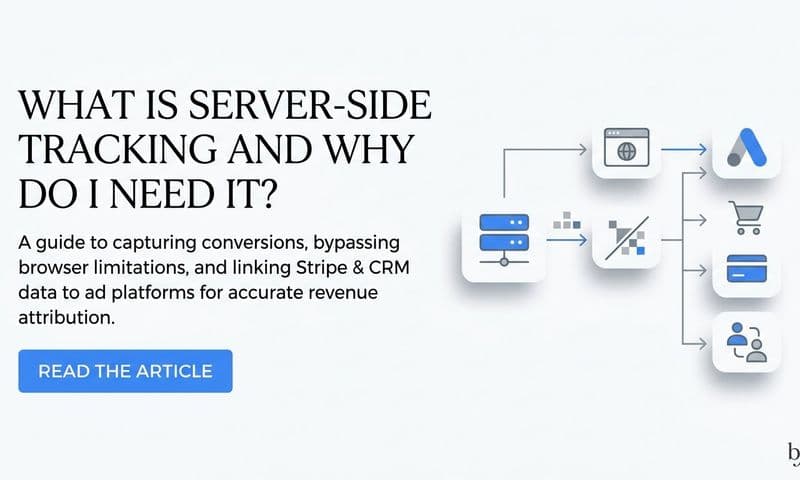
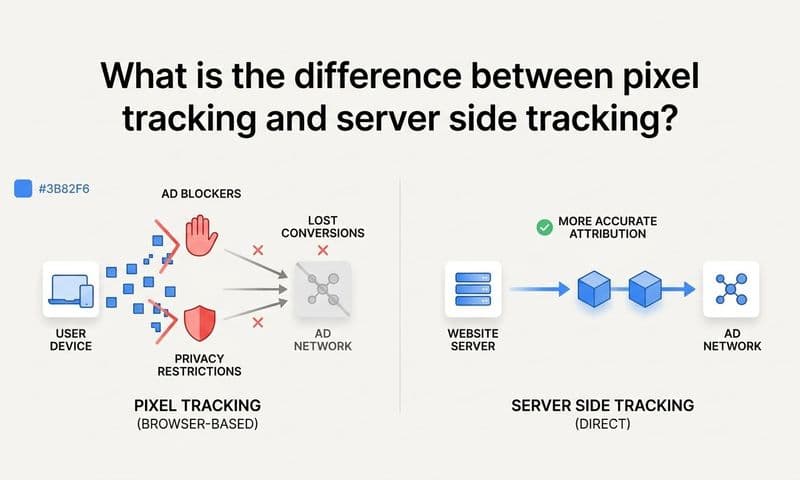
Cometly replaces cookie-dependent pixel tracking with server-side Conversion API integrations across Meta, Google, TikTok, and LinkedIn. This means your conversion signals reach ad platforms even when browsers block cookies or users have ad blockers installed. For B2B teams running long sales cycles across multiple touchpoints, that signal fidelity matters enormously.
What sets Cometly apart from generic analytics tools is its focus on revenue attribution. It integrates directly with Stripe and your CRM so you can trace every dollar of closed-won revenue back to the specific ad, campaign, or channel that started the journey. The AI ads manager layers on top of that data to surface which campaigns are actually performing and where to scale budget.
Key Features
Server-Side Conversion API Integration: Sends conversion events directly from your server to Meta, Google, TikTok, and LinkedIn, bypassing browser restrictions entirely.
Multi-Touch Attribution: Tracks the full customer journey from first ad click to closed revenue, giving credit to every touchpoint that influenced the deal.
AI Ads Manager: Analyzes campaign performance across all channels and surfaces recommendations on which ads to scale and which to cut.
Stripe and CRM Integration: Connects revenue data directly to ad spend so you can measure pipeline and closed-won revenue, not just form fills or page views.
70+ Native Integrations: Creates a single source of truth by pulling data from your entire marketing stack into one unified view.
Best For
Cometly is the right fit for B2B SaaS marketing teams and growth leaders who are tired of last-click attribution and need to prove the real revenue impact of their ad spend. It is especially valuable for teams running multi-channel paid campaigns with long, complex sales cycles where cookie-based tracking was always inadequate.
Pricing
Paid plans are available. Contact Cometly directly for current pricing details based on your team size and data volume.
2. Segment
Best for: Teams that need a centralized first-party data layer to feed their entire marketing stack.
Segment is a customer data platform (CDP) by Twilio that collects first-party event data from web, mobile, and server sources and routes it to every tool in your stack without relying on third-party cookies.
 9 Best Conversion Tracking Alternatives to Pixels in 2026
Where This Tool Shines
Segment solves a foundational problem: fragmented data. When you collect first-party events through Segment, every downstream tool, your ad platforms, your CRM, your email provider, receives the same clean, consistent data. That consistency is what makes cookie-free attribution actually work at scale.
The Profiles feature is particularly powerful for B2B teams. It builds unified customer identities using first-party identifiers like logged-in user IDs and hashed emails, creating a persistent view of each user that does not break when a browser clears its cookies.
Key Features
Centralized First-Party Event Collection: Captures behavioral and conversion events from web, mobile, and server sources using first-party identifiers.
300+ Destination Integrations: Routes clean, standardized data to your entire tool stack with a single implementation.
Unified Customer Profiles: Builds persistent user identities from first-party identifiers rather than browser-based cookies.
Reverse ETL: Syncs data from your data warehouse back to marketing and sales tools to keep everything in sync.
Best For
Segment is ideal for mid-market and enterprise teams that have multiple tools in their stack and need a reliable, cookie-independent data layer connecting all of them. It works best when paired with a dedicated attribution platform for deeper campaign analysis.
Pricing
A free tier is available. Paid plans start at $120 per month, with enterprise pricing available for larger data volumes.
3. Meta Conversions API (CAPI)
Best for: Meta advertisers who need to recover conversion signals lost to browser restrictions and ad blockers.
Meta Conversions API is a free, native Meta tool that lets advertisers send web and offline conversion events directly from their server to Meta's ad platform, bypassing browser-based pixel limitations entirely.
 9 Best Tools for Conversion Tracking Across Platforms in 2026
Where This Tool Shines
The Meta Pixel has always had a vulnerability: it runs in the browser, which means Safari's ITP, Firefox's blocking, and ad blockers can all prevent it from firing. CAPI eliminates that vulnerability by moving the event transmission to your server. The conversion event travels directly to Meta regardless of what the user's browser does.
When implemented alongside the Pixel in a redundant setup, CAPI significantly improves event match quality scores. Higher match quality means Meta's algorithm can better optimize your campaigns, which translates to more efficient ad spend.
Key Features
Server-to-Server Event Transmission: Sends conversion data from your server to Meta, completely bypassing ITP, ad blockers, and cookie restrictions.
Pixel Complement or Replacement: Can be used alongside the Meta Pixel for redundancy or as a standalone replacement in privacy-sensitive environments.
Offline Conversion Support: Accepts offline events like CRM deal closures and phone call conversions, not just web events.
Improved Event Match Quality: Uses hashed first-party data to match events to Meta users with greater accuracy, improving ad optimization signals.
Best For
Any advertiser running campaigns on Meta who has seen conversion volume drop due to iOS changes or browser restrictions. This is a must-implement for anyone spending meaningfully on Facebook or Instagram ads.
Pricing
Free. Meta Conversions API is included as part of Meta's advertising platform at no additional cost.
4. Google Enhanced Conversions
Best for: Google Ads advertisers looking to recover lost conversion data and improve Smart Bidding accuracy.
Google Enhanced Conversions is a free Google Ads feature that uses hashed first-party data collected during conversions to improve measurement accuracy and recover conversion signals lost to cookie restrictions.
 9 Best Pixel Data Loss Solutions for Advertisers in 2026
Where This Tool Shines
Enhanced Conversions works by capturing first-party data that your customer voluntarily provides during a conversion, such as their email address or phone number, hashing it, and sending it to Google for matching. This allows Google to attribute conversions that would otherwise go unrecorded due to cookie blocking or cross-device journeys.
The downstream impact on Smart Bidding is significant. When your conversion data is more complete and accurate, Google's bidding algorithms have better signals to work with, which improves campaign efficiency over time. It is one of the highest-leverage, lowest-effort improvements a Google Ads advertiser can make in a cookieless environment.
Key Features
Hashed First-Party Data Matching: Anonymizes and sends customer-provided data to Google to match conversions that cookies would have missed.
Recovered Conversion Data: Fills gaps in conversion reporting caused by cookie blocking, ad blockers, and cross-device behavior.
Flexible Implementation: Supports setup via Google Tag, Google Tag Manager, or the Google Ads API depending on your technical setup.
Smart Bidding Compatibility: Feeds improved conversion signals directly into automated bidding strategies for better campaign performance.
Best For
Any Google Ads advertiser, especially those running lead generation or e-commerce campaigns where conversion accuracy directly affects bidding performance and reported ROAS.
Pricing
Free. Enhanced Conversions is a built-in feature of Google Ads available to all advertisers.
5. RudderStack
Best for: Data and engineering teams that want full ownership of their first-party event data pipeline.
RudderStack is an open-source, warehouse-native customer data pipeline that sends event data to your own data warehouse first, giving marketing and data teams full ownership of first-party data without any third-party cookie dependency.
 9 Best Third-Party Cookie Alternatives for Marketers in 2026
Where This Tool Shines
The warehouse-native architecture is what makes RudderStack different from traditional CDPs. Instead of storing your data in a vendor's proprietary system, RudderStack writes directly to your Snowflake, BigQuery, or Redshift instance. Your data stays in infrastructure you control, which matters for teams with strict data governance requirements.
For marketers, this means you can build attribution models, audience segments, and reporting directly on top of your raw event data in the warehouse, then use RudderStack's reverse ETL to push those insights back into your ad platforms and CRM.
Key Features
Warehouse-Native Architecture: Writes event data directly to Snowflake, BigQuery, or Redshift so your team owns the data, not the vendor.
Open-Source with Self-Hosting Option: Full source code available, with the option to self-host for complete data control.
200+ Destination Integrations: Routes data to ad platforms, analytics tools, and marketing automation systems from a single pipeline.
Event Stream, Reverse ETL, and Profiles: Covers the full data activation lifecycle from collection to enrichment to downstream routing.
Best For
Mid-market and enterprise teams with dedicated data engineering resources who want maximum control over their first-party data infrastructure. Less suited for small teams without technical capacity to manage the setup.
Pricing
A free open-source tier is available for self-hosted deployments. Managed cloud plans are available for teams that prefer a hosted option.
6. Northbeam
Best for: E-commerce and DTC brands that need multi-touch attribution without cookie dependency.
Northbeam is a multi-touch attribution platform for e-commerce and DTC brands that uses server-side data ingestion and statistical modeling to attribute revenue across channels without relying on third-party cookies.
 9 Best Conversion Tracking Software Options: Pricing Comparison for 2026
Where This Tool Shines
Northbeam was built from the ground up to handle the attribution challenges that iOS 14 and cookie deprecation created for DTC brands. Its server-side data ingestion means it does not depend on what the browser allows, and its statistical modeling fills in the gaps that even server-side tracking cannot always capture directly.
The media mix modeling capability gives brands a channel-level view of budget efficiency that goes beyond last-click or even multi-touch attribution. This is especially useful for brands allocating budget across Meta, Google, TikTok, and email simultaneously.
Key Features
Server-Side Data Ingestion: Collects conversion data independently of browser cookies, ensuring consistent measurement across all users.
Multi-Touch Attribution Models: Offers multiple attribution model options so teams can analyze performance from different analytical perspectives.
Media Mix Modeling: Provides channel-level budget optimization insights based on statistical modeling of spend and revenue data.
Real-Time Reporting: Surfaces spend and revenue data across paid social, search, and email in a unified dashboard.
Best For
E-commerce and DTC brands spending meaningfully across multiple paid channels who need a single attribution view that is not distorted by cookie loss or iOS restrictions.
Pricing
Custom pricing based on ad spend. Contact Northbeam directly for a quote.
7. Triple Whale
Best for: Shopify-based DTC brands that want to combine first-party pixel data with post-purchase survey attribution.
Triple Whale is a Shopify-native attribution and analytics platform that combines a first-party pixel with post-purchase surveys to fill the attribution gaps created by cookie deprecation and iOS privacy changes.
 9 Best Third-Party Cookie Alternatives for Marketers in 2026
Where This Tool Shines
Triple Whale's combination of first-party pixel data and zero-party survey data is genuinely clever. The pixel captures what it can from on-site behavior without relying on browser cookies. The post-purchase survey captures what the pixel cannot: the customer's own account of how they found you. Together, these two data sources create a more complete attribution picture than either could alone.
For Shopify brands running high-volume DTC operations, the creative analytics layer adds another dimension by showing which specific ad creatives are driving the most efficient revenue, not just the most clicks.
Key Features
First-Party Pixel: Captures on-site behavioral data independently of browser cookies, maintaining tracking continuity across Safari and Firefox users.
Post-Purchase Survey (Zero-Party Data): Collects self-reported attribution directly from customers at the point of purchase, capturing journeys that no pixel can track.
Blended and Channel-Level ROAS Reporting: Provides unified performance reporting across Meta, Google, and TikTok in a single view.
Creative Analytics: Evaluates ad-level performance to identify which creatives are driving the most efficient revenue.
Best For
Shopify-based DTC brands, particularly those spending heavily on Meta and TikTok, who want a cookieless attribution solution built specifically for their platform and business model.
Pricing
Plans start at $129 per month, with higher tiers available based on order volume and feature needs.
8. Rockerbox
Best for: Mid-market brands that need a centralized, deduplicated view of marketing performance across all channels.
Rockerbox is a marketing measurement platform for mid-market brands that centralizes all channel data using direct API integrations and first-party tracking, eliminating the need for cookie-based measurement.
Where This Tool Shines
Rockerbox's strength is deduplication. When you are running campaigns across Meta, Google, email, and affiliate simultaneously, every platform claims credit for the same conversion. Rockerbox pulls data from all channels via direct API connections and applies a consistent attribution methodology to remove the double-counting, giving you a realistic view of what each channel actually contributed.
The combination of multi-touch attribution and media mix modeling in a single platform means you can analyze performance at the individual touchpoint level and at the macro budget allocation level without switching tools.
Key Features
Unified Channel Data via Direct API Connections: Pulls performance data from all channels without relying on browser-based tracking or third-party cookies.
First-Party Pixel with Server-Side Event Forwarding: Captures on-site events and forwards them server-side for more complete and reliable conversion data.
Multi-Touch Attribution and Media Mix Modeling: Combines granular touchpoint attribution with macro-level channel modeling in one platform.
Deduplicated Conversion Reporting: Removes cross-channel double-counting so budget decisions are based on accurate, not inflated, conversion numbers.
Best For
Mid-market brands running multi-channel campaigns who are frustrated by platform-reported numbers that never add up and need a single, trusted source of conversion truth.
Pricing
Custom pricing. Contact Rockerbox directly for a quote based on your channel mix and data volume.
9. Heap
Best for: Product and marketing teams that need complete behavioral analytics without any manual event tagging or cookie dependency.
Heap is a digital analytics platform that uses server-side autocapture to record all user interactions automatically, providing complete behavioral analytics without any dependency on third-party cookies.
Where This Tool Shines
Heap's autocapture approach solves a problem that most analytics tools ignore: you cannot analyze events you forgot to tag. Traditional analytics requires you to instrument every click, form submission, and page view in advance. Heap captures everything automatically from the moment it is installed, using server-side methods that do not depend on browser storage.
The retroactive analysis capability is particularly powerful. Because Heap has a complete record of all user interactions, you can define a new event or funnel after the fact and analyze historical data against it immediately. This changes how product and marketing teams can investigate user behavior and conversion paths.
Key Features
Autocapture: Records every click, tap, and form submission automatically without requiring manual event tagging, ensuring no interactions are missed.
Retroactive Analysis: Allows you to define new events and funnels after the fact and analyze them against all previously captured historical data.
Session Replay and Funnel Analysis: Provides qualitative and quantitative behavioral insights built entirely on first-party data.
CDP and Data Warehouse Integrations: Connects with Segment, Snowflake, BigQuery, and other tools to enable cross-platform analysis.
Best For
Product teams and growth marketers who need deep behavioral analytics and funnel visibility without the overhead of manual event instrumentation or the data gaps created by cookie-based tracking.
Pricing
A free tier is available. Paid plans are based on session volume, with pricing available on request for higher-traffic properties.
Choosing the Right Tool for Your Situation
The right choice depends almost entirely on your business model, your team's technical capacity, and what questions you are actually trying to answer.
If you run a Shopify DTC brand, Triple Whale and Northbeam are purpose-built for your environment. If you need a foundational first-party data layer that feeds every tool in your stack, Segment or RudderStack will serve you well. If you are a Google or Meta advertiser looking for a quick, free win, Enhanced Conversions and Meta CAPI should be your first implementation priority. For behavioral analytics without cookies, Heap stands on its own.
For B2B SaaS companies specifically, most of these tools solve only part of the problem. Cookie-free tracking is necessary, but it is not enough if you cannot connect that tracking data to pipeline and closed-won revenue. That is where Cometly was built to be different. It combines server-side Conversion API integrations, multi-touch attribution across the full customer journey, and direct revenue attribution through Stripe and CRM integrations. You get a single platform that answers the question every B2B marketing leader actually cares about: which ads are driving real revenue, not just clicks or form fills.
If your current attribution setup breaks down somewhere between "ad click" and "closed deal," it is worth seeing what a purpose-built B2B attribution platform can do. Get your free demo and start capturing every touchpoint from first touch to closed revenue.