Most marketing teams are operating with a significant blind spot. They can see every click, every form fill, every page view. The digital side of the funnel is instrumented and tracked. But the moment a lead picks up the phone, walks into a showroom, or shakes hands on a deal with a sales rep, the data trail goes cold.
That gap between online clicks and offline outcomes is not just an analytics inconvenience. It is a budget problem. When ad platforms can only see part of the picture, they optimize toward incomplete signals. Campaigns that quietly drive real revenue get starved of budget because their impact is invisible. Campaigns that generate form fills and vanity metrics get scaled because they look good in the dashboard.
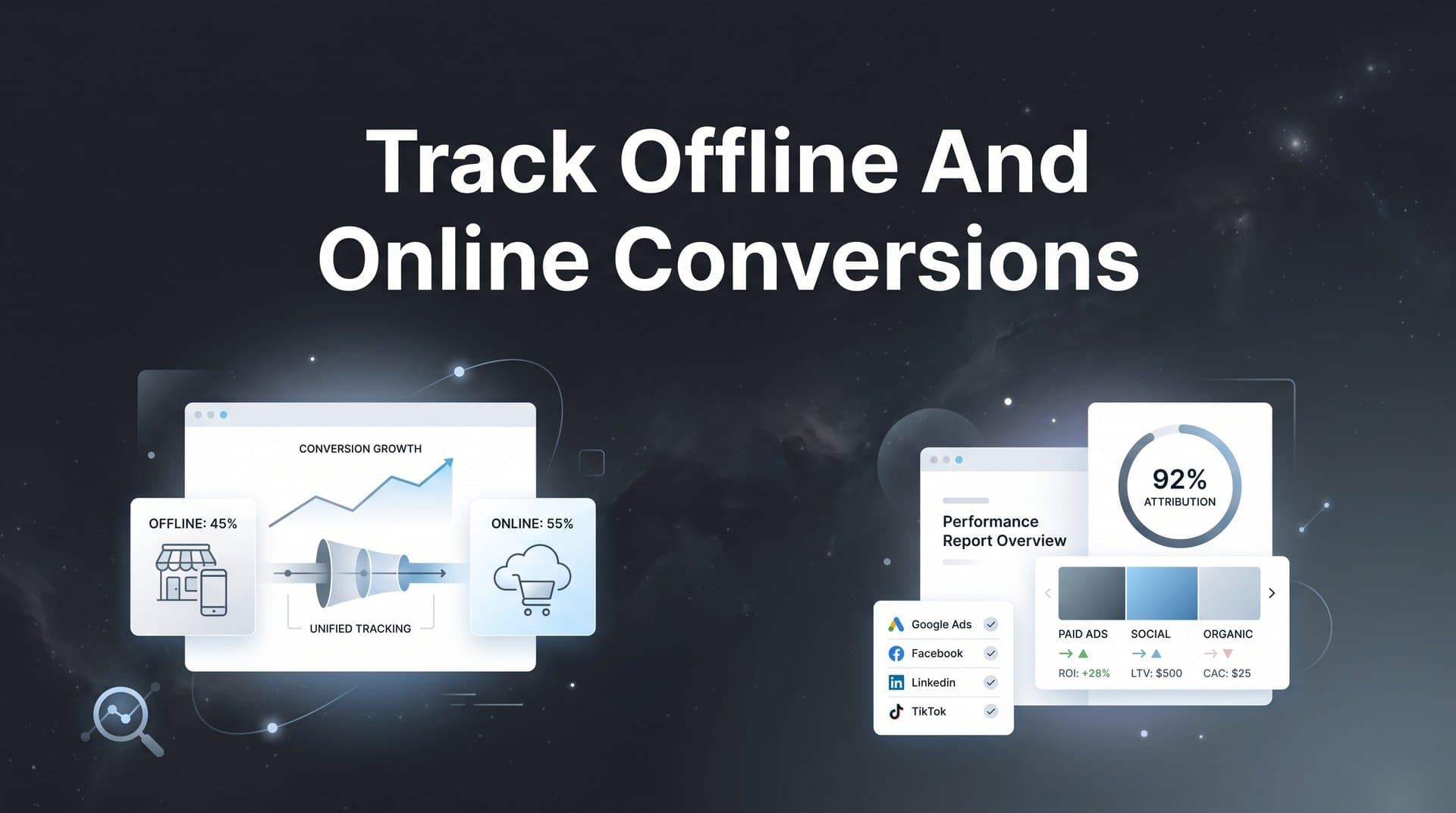
The solution is unified conversion tracking: a single, connected view of every customer interaction from the first ad impression all the way through to a closed deal, whether that deal closes online or offline. This guide walks you through exactly how to bridge the online-offline data divide so that every marketing dollar can be tied to real, measurable revenue.
Why the Gap Between Clicks and Closed Deals Costs You Money
Ad platforms like Meta and Google are powerful optimization engines. But they can only optimize toward the signals you send them. If the only signals they receive are clicks and form submissions, that is exactly what they will chase, regardless of whether those clicks and form submissions ever become paying customers.
Think about what this looks like in practice. A B2B software company runs two campaigns. Campaign A generates a high volume of demo requests. Campaign B generates fewer demo requests, but the leads it drives tend to close at a much higher rate during sales calls. If the only data flowing back to the ad platform is demo request volume, Campaign A looks like the winner. Budget shifts toward it. Campaign B gets cut. And the company quietly loses its most efficient source of revenue without ever understanding why.
This is not a hypothetical edge case. It is one of the most common and costly mistakes in digital advertising, and it happens because the offline conversion, the sales call that closed, never made it back into the attribution picture. Understanding what offline conversions are is the first step toward solving this problem.
The types of offline conversions that fall through the cracks are varied. For service businesses and B2B companies, phone calls are often the highest-intent touchpoint in the entire funnel. In-person consultations, post-demo signups, and deals closed by sales reps represent real revenue that originated from a digital ad but never gets credited to it. For retail and local businesses, point-of-sale transactions are the ultimate conversion event, yet most digital campaigns have no visibility into whether an ad click ever led to an in-store purchase.
When these offline events are invisible, budget decisions get made on incomplete information. The problem of wasted ad budget on untracked conversions is more widespread than most teams realize. The marketers who solve this problem gain a genuine competitive advantage: they know which campaigns actually drive revenue, and they can allocate spend accordingly.
Online Conversion Tracking: Getting the Digital Side Right First
Before you can unify online and offline data, you need a solid foundation on the digital side. And in 2026, that foundation looks different than it did just a few years ago.
Pixel-based tracking, where a small snippet of JavaScript fires in the browser when a user takes an action, used to be the standard approach. It still plays a role, but browser privacy restrictions have significantly reduced its reliability. Safari's Intelligent Tracking Prevention, Firefox's Enhanced Tracking Protection, and the broader industry shift away from third-party cookies mean that a meaningful portion of pixel-fired events simply never get recorded. Understanding the differences between server-side tracking and pixel tracking is essential for building a reliable setup.
Server-side tracking addresses this directly. Instead of relying on the browser to fire events, server-side tracking sends conversion data from your own server to the ad platform. Because it does not depend on browser behavior or cookie availability, it captures events that pixel tracking would miss. For marketers who want accurate data, server-side tracking has shifted from a nice-to-have to an essential component of a reliable tracking setup.
UTM parameters remain critical for understanding traffic sources. Properly tagged URLs ensure that every click from every campaign carries the campaign, source, and medium information needed to attribute downstream conversions accurately. Learning what UTM tracking is and how it helps your marketing is foundational knowledge. Combined with first-party data collection, where you capture and store user data on your own infrastructure rather than relying on third-party identifiers, UTMs give you a durable foundation that holds up even as the privacy landscape continues to evolve.
Beyond the technical setup, choosing the right attribution model shapes how you interpret your data. First-touch attribution gives all credit to the first interaction a user had with your brand. Last-touch attribution gives all credit to the final touchpoint before conversion. Linear attribution distributes credit evenly across all touchpoints. Time-decay models weight recent touchpoints more heavily. Each model tells a different story, and the right choice depends on your sales cycle and business model.
For most businesses running multi-channel campaigns, no single model tells the complete truth. This is why connecting your ad platform data from Meta, Google, TikTok, and others directly to your website analytics and CRM is so important. When these systems talk to each other, online events like form submissions, demo bookings, and purchases can be accurately attributed to the campaigns that drove them, giving you a reliable picture of digital performance before you even layer in offline data.
Bringing Offline Conversions Into the Data Picture
Capturing offline conversion data is fundamentally a matching problem. You need to connect a real-world outcome, a phone call, a closed deal, an in-store purchase, back to the specific digital interaction that started the customer's journey. The good news is that the technical infrastructure to do this exists and is increasingly accessible.
The core mechanism is the click identifier. When someone clicks a Google ad, Google appends a GCLID (Google Click Identifier) to the destination URL. When someone clicks a Meta ad, Meta appends an FBCLID. These identifiers can be captured and stored in your CRM when a prospect fills out a form or takes any other tracked action on your website. When that prospect later converts offline, whether by closing a deal with a sales rep or completing a purchase in person, the click ID stored in their CRM record can be used to match the offline conversion back to the originating campaign. For a deeper dive into this process, see our guide on how to track offline conversions from online ads.
This matching process is the foundation of offline conversion imports, a feature supported natively by both Google Ads and Meta. The challenge is that the manual process of exporting CRM data, formatting it correctly, and uploading it to each ad platform is cumbersome and error-prone. Automation through a dedicated attribution platform makes this process reliable and continuous rather than a periodic manual task.
Call tracking adds another dimension. By assigning unique tracking phone numbers to different campaigns or channels, you can tie phone calls back to the specific ad or campaign that drove them. When a call converts into a sale, that outcome can be matched to the click that initiated the journey, completing the attribution loop for phone call conversions from ads.
Long sales cycles present a particular challenge. In B2B environments, weeks or months may pass between the initial ad click and the eventual closed deal. Proper data pipelines need to preserve the click ID and campaign data throughout that entire window, even as the lead moves through multiple pipeline stages. This requires deliberate CRM configuration: ensuring that the GCLID or FBCLID captured at the point of first contact travels with the prospect record through every stage of the pipeline, from initial inquiry to qualified lead to proposal to closed deal.
Point-of-sale integration takes a similar approach for retail contexts. Transaction data from in-store purchases can be matched to digital campaign interactions using customer identifiers, loyalty program data, or email addresses collected at checkout. The result is a direct line between a digital ad impression and an in-store revenue event.
Unifying Both Worlds: Building a Single Source of Truth
Capturing online and offline data separately is only half the battle. The real value comes from unifying them into a single, coherent view of the customer journey. This is where a dedicated attribution platform changes the game.
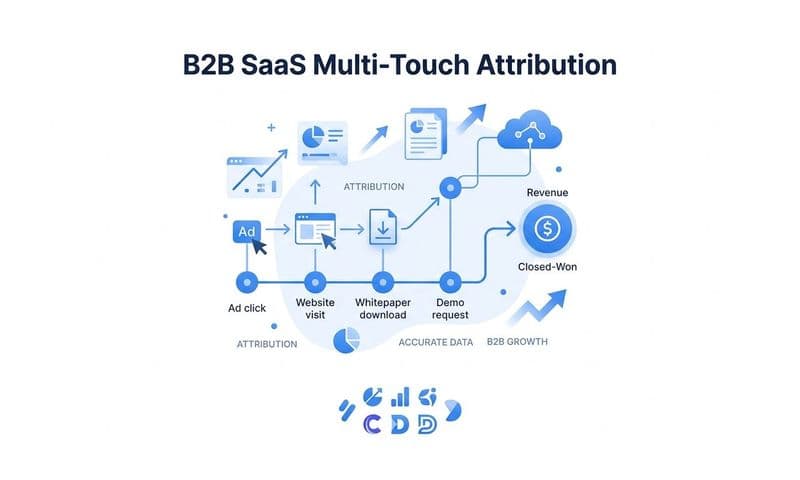
A unified attribution platform connects your ad platforms, your website, and your CRM into one system. Every customer interaction, from the first ad impression through to the final revenue event, is mapped onto a single journey. It does not matter whether the conversion happened on a landing page at 2am or in a sales call three weeks later. Both events are part of the same story, and both are attributed to the campaigns that drove them. The ability to track conversions across multiple touchpoints is what makes this unified view possible.
Conversion syncing is the mechanism that closes the loop. Once offline conversions are captured and matched to their originating digital interactions, that enriched data gets sent back to the ad platforms. Meta and Google receive conversion signals that reflect actual business outcomes, not just form fills or clicks. Their algorithms, which are designed to optimize toward the conversion signals they receive, now have access to higher-quality data. Over time, this improves targeting, reduces wasted spend, and creates a compounding effect where campaigns get progressively smarter.
This unified approach fundamentally changes how marketers make decisions. Instead of comparing cost-per-click or cost-per-lead across channels, you can compare true cost-per-acquisition. Understanding the difference between single-source and multi-touch attribution models helps you interpret this data correctly. You can identify the channels and creative combinations that consistently produce revenue, not just engagement.
The ability to confidently answer "which campaigns are actually driving revenue" is transformative for budget allocation. Rather than spreading spend across channels based on incomplete platform-reported data, marketers can concentrate investment in the campaigns and channels with a proven track record of driving offline outcomes. The result is not just better reporting. It is better performance.
A Step-by-Step Framework for Implementation
Knowing why unified tracking matters is one thing. Building it is another. Here is a practical framework for getting it done.
Step 1: Audit your current tracking setup. Start by mapping where your data currently drops off. For most businesses, the gap appears at one of two places: the handoff between your website and your CRM, or the handoff between digital interactions and in-person or phone-based conversions. Walk through your customer journey from first ad click to closed deal and identify every point where data stops flowing. Understanding where most marketing conversions drop off can help you pinpoint the weak spots. This audit will reveal whether your pixel tracking is firing reliably, whether your UTM parameters are being captured and stored in your CRM, and whether click identifiers like GCLIDs are being preserved through the sales process. If you do not yet have server-side tracking in place, this is the moment to prioritize it. Reliable online data is the foundation everything else builds on.
Step 2: Connect your CRM and offline data sources to your attribution platform. Once your online tracking is solid, the next step is mapping your offline data. Work through each stage of your sales pipeline and define which pipeline events represent meaningful conversion milestones. Stages like "qualified lead," "proposal sent," "demo completed," and "deal closed" should each be configured as trackable events in your attribution system. Ensure that the click IDs and campaign data captured at the point of first contact are stored against each prospect record and travel with them through every pipeline stage. If you use call tracking, connect your call tracking system so that phone-based conversions are included in the same attribution framework. The goal is a complete map of every touchpoint, digital and offline, associated with each customer journey.
Step 3: Activate conversion syncing and let the data drive decisions. With online and offline data flowing into a unified platform, activate conversion syncing to feed verified offline outcomes back to your ad platforms. This step is what closes the feedback loop and enables ad platform algorithms to optimize toward real business outcomes. Once conversion syncing is active, shift your performance evaluation framework. Stop relying on platform-reported metrics as your primary decision-making input. Instead, use your unified attribution data to evaluate true cost-per-acquisition across all channels, identify the campaigns and audiences that consistently drive offline conversions, and use AI-driven recommendations to guide budget reallocation. Reviewing different conversion tracking methods can help you ensure nothing is missed in your setup. The combination of complete data and intelligent analysis is what allows marketers to scale with confidence rather than guesswork.
What Becomes Possible When the Full Picture Comes Into Focus
The practical impact of unified online and offline tracking extends well beyond cleaner reports. It changes the nature of marketing decisions at every level.
For agencies, the ability to show clients exactly which campaigns drove closed deals, not just leads, is a significant differentiator. The Rise Up Marketing case study on Cometly's website illustrates this directly: by gaining visibility into the full customer journey and using AI-driven analysis, the agency was able to build deeper client trust and reduce the time spent on manual optimization. When you can point to a specific campaign and show the client the revenue it generated, including deals that closed offline, the conversation shifts from defending lead volume to demonstrating business impact.
For financial services and other high-value B2B businesses, the ability to see true attribution across long sales cycles enables more confident investment in paid advertising. Q3 Advisors, another case study available on Cometly's website, increased their ad spend confidently after gaining better attribution visibility. When you know which campaigns are producing qualified prospects that actually close, increasing budget becomes a calculated decision rather than a leap of faith. Businesses focused on tracking conversions for lead generation see especially strong results from this approach.
The algorithmic improvement effect is worth emphasizing as well. Every time an offline conversion gets synced back to Meta or Google, the platform's algorithm receives a more accurate signal about which users and behaviors lead to real business outcomes. Over time, this trains the algorithm to find more people like your best customers, not just people who are likely to click or fill out a form. The compounding effect of better conversion signals can meaningfully improve campaign efficiency over weeks and months.
Marketers who track both online and offline conversions also gain something less tangible but equally valuable: confidence. When you know your data is complete and accurate, you can make bold decisions about where to invest. You stop second-guessing whether a campaign is working because you cannot see the full picture. You scale what is working and cut what is not, based on evidence rather than intuition.
The Bottom Line: Complete Data, Confident Decisions
Tracking offline and online conversions together is no longer optional for marketers who want to make genuinely data-driven decisions. The gap between digital clicks and real-world outcomes is where budgets get misallocated and growth opportunities get missed. Closing that gap requires the right technical foundation, including server-side tracking, CRM integration, and proper click ID capture, combined with a unified platform that connects every touchpoint into a single, coherent view.
When you can see the full customer journey from first ad impression through to closed deal, you stop optimizing toward incomplete signals. You start scaling what actually drives revenue. You give ad platform algorithms the conversion data they need to find your best customers. And you make budget decisions with the kind of confidence that only comes from complete, accurate information.
If your current setup leaves offline conversions invisible, the cost is real, even if it is hard to measure right now. Every dollar allocated based on incomplete data is a dollar that could be working harder.
Cometly is built to solve exactly this problem. With server-side tracking, CRM integration, multi-touch attribution, and automated conversion syncing, Cometly gives marketers a complete, accurate view of what is driving results across every channel, online and offline. Get your free demo today and start capturing every touchpoint to maximize your conversions.