
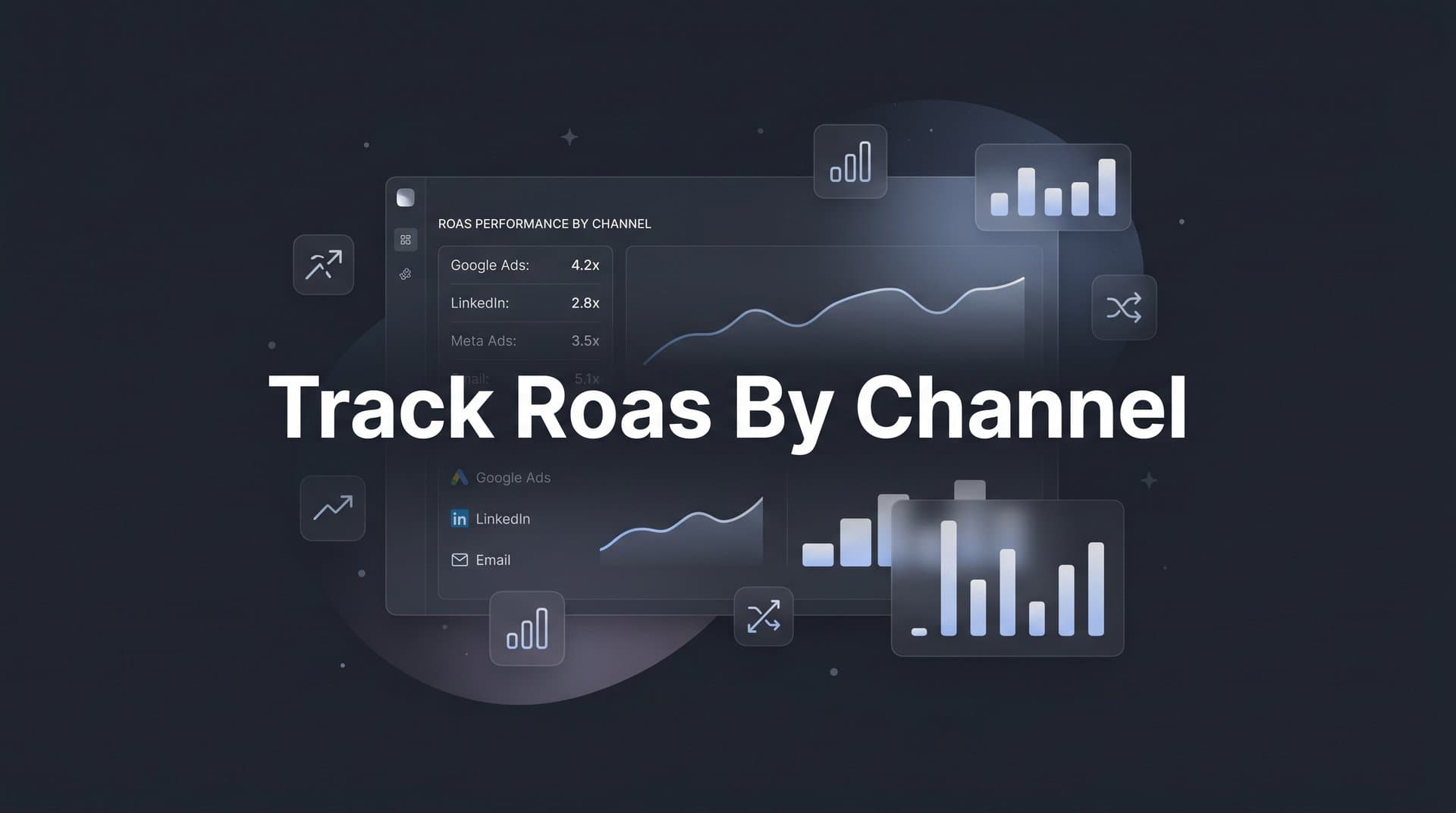
If you are running paid ads across multiple channels and still relying on platform-reported numbers to measure performance, you are likely making budget decisions based on incomplete data. Each ad platform reports its own ROAS in isolation, which means Meta claims credit for a conversion, Google claims credit for the same conversion, and LinkedIn might too. The result is inflated numbers across the board and no clear picture of which channel is actually driving revenue.
Tracking ROAS by channel requires a unified measurement system that connects ad spend from every platform to actual revenue outcomes. Without it, you are essentially flying blind, moving budget based on what each platform wants you to believe rather than what is actually happening in your CRM and billing system.
This guide walks B2B SaaS marketing teams through the exact process of setting up cross-channel ROAS tracking, from defining what counts as revenue to building a reporting view that surfaces the truth about channel performance. Whether you are managing spend across Meta, Google, LinkedIn, or TikTok, the framework here applies to any combination of paid channels.
By the end, you will have a repeatable system for comparing ROAS across channels with confidence, cutting spend on what does not work, and scaling what does. Let's get into it.
Step 1: Define Your ROAS Formula and Revenue Source of Truth
Before you can track ROAS by channel, you need to agree on what ROAS actually means for your business. This sounds obvious, but it is where most B2B SaaS teams run into trouble. In ecommerce, revenue is straightforward: someone buys something and money changes hands. In B2B SaaS, the picture is more complex.
Start by clarifying what revenue metric you will use as the numerator in your ROAS formula. Your options typically include:
Pipeline value: The total value of opportunities created, regardless of whether they have closed. This is useful for measuring channel influence earlier in the funnel, but it can be misleading if your close rates vary significantly by channel.
Closed-won ARR or MRR: The actual recurring revenue from deals that have been signed. This is the most reliable revenue metric because it reflects real business outcomes, not projections.
Customer lifetime value (LTV): A longer-horizon metric that accounts for expansion, churn, and upsell. This is valuable for strategic decisions but harder to use in day-to-day ROAS reporting due to the time lag involved.
For most B2B SaaS teams, closed-won ARR tied to the originating channel is the right starting point. It is concrete, verifiable, and directly connected to business outcomes.
Once you have chosen your revenue metric, establish a single system that owns that number. Your CRM (such as HubSpot or Salesforce) is typically the right place for pipeline and closed-won data. If you use Stripe or another billing platform, that becomes your source of truth for actual collected revenue. The key rule is this: do not use platform-reported conversion values as your revenue input. Ad platforms self-report these numbers, and they are almost always inflated because of overlapping attribution windows and cross-channel double-counting.
Your ROAS formula should be straightforward: Total Revenue Attributed to Channel divided by Total Ad Spend on Channel. Write it down. Share it with your team. Make sure every stakeholder is working from the same definition before you build any reporting. If you want to understand how daily performance factors into this, reviewing ROAS by day can help you spot trends that inform your formula choices.
Success indicator: You have one agreed-upon definition of revenue, one system that owns that number, and a documented ROAS formula that your entire team uses consistently.
Step 2: Set Up Conversion Tracking Across Every Ad Channel
With your revenue definition locked in, the next step is making sure you are capturing conversion data accurately across every channel. This is where many teams have a significant gap, and it is often the root cause of unreliable ROAS numbers.
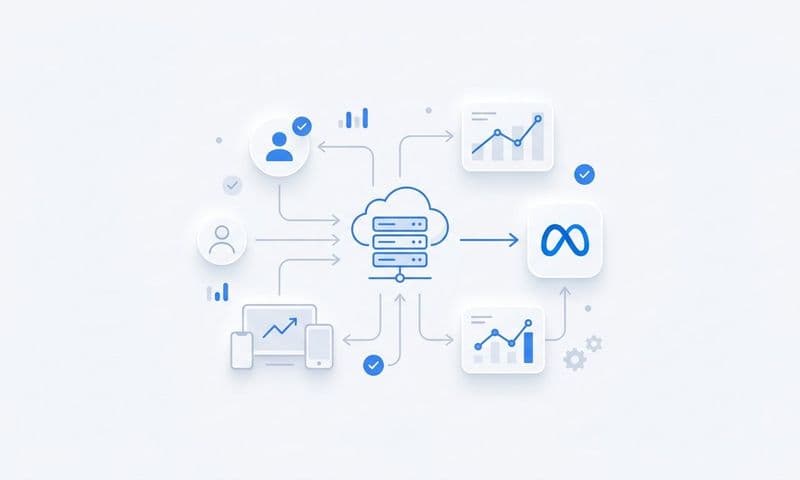
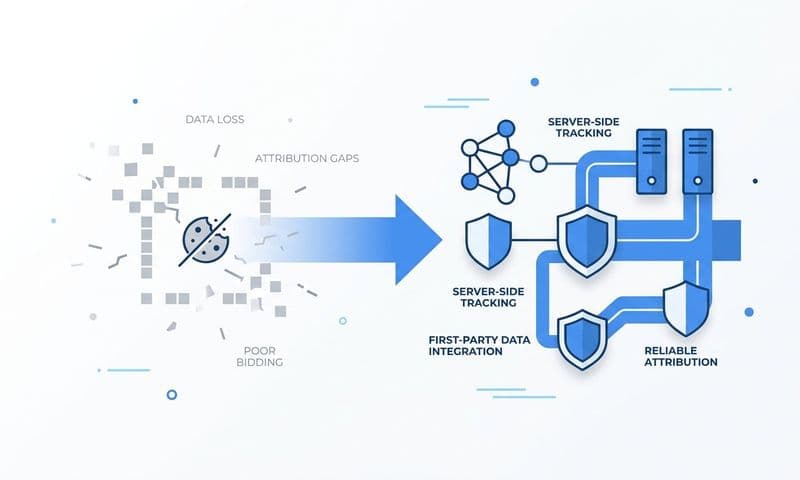
Browser-based pixels are increasingly unreliable. Ad blockers, iOS privacy updates, and third-party cookie restrictions mean that a meaningful portion of conversions never get reported back to the ad platform. The solution is server-side conversion tracking, which sends event data directly from your server to the ad platform rather than depending on a browser pixel to fire correctly.
For Meta, this means implementing the Conversions API (CAPI). For Google, it means using Enhanced Conversions. Both approaches send conversion signals server-side, which improves event match quality and ensures more of your actual conversions are attributed to the right campaigns.
When setting up conversion tracking, think about the full funnel rather than just the top of it. You want to track events at every meaningful stage:
1. Form submissions and demo bookings at the top of the funnel, so you can see which channels are generating initial interest.
2. Trial signups and qualified lead events in the middle of the funnel, which help you distinguish between channels that drive volume and channels that drive quality.
3. Closed-won revenue events at the bottom of the funnel, which are the most important signals for accurate ROAS measurement.
A common pitfall here is sending only top-of-funnel events to ad platforms. If Meta only sees form submissions, it will optimize toward form submitters, not toward people who actually become customers. Sending revenue-level events back to the platform gives the algorithm a much better signal to work with.
You also need to configure event deduplication carefully. When you run both a browser pixel and server-side tracking simultaneously (which is recommended for redundancy), the same conversion can be reported twice. Most platforms have deduplication logic built in, but it requires you to pass a consistent event ID that matches between the browser and server events. Verify this is working correctly before moving forward.
Use the diagnostic tools available in each platform, such as Meta's Events Manager and Google's Tag Assistant, to confirm that events are firing with high match quality scores. Following best practices for tracking conversions accurately ensures your conversion data is less reliable issues are caught early, which flows downstream into more accurate ROAS reporting.
Success indicator: Each ad platform is receiving server-side conversion events with high match quality scores, and you are tracking events across the full funnel from lead to closed-won revenue.
Step 3: Implement UTM Parameters and First-Party Tracking Across All Channels
Server-side conversion tracking tells ad platforms about your conversions. UTM parameters tell your own analytics and CRM which channel, campaign, and ad drove each visitor. Both are essential, and they serve different purposes in your measurement stack.
Build a consistent UTM taxonomy that you apply to every paid campaign across every channel. The standard parameters are:
utm_source: The platform driving the traffic (meta, google, linkedin, tiktok).
utm_medium: The type of traffic (cpc, paid-social, display).
utm_campaign: The campaign name, ideally matching the naming convention in your ad platform.
utm_content: The specific ad or creative variant, useful for creative-level analysis.
utm_term: The keyword for search campaigns or audience segment for social campaigns.
Consistency is everything here. If one team member uses "linkedin" as the source and another uses "LinkedIn," you will end up with split data that makes channel-level analysis unreliable. Document your taxonomy in a shared reference document and enforce it across every campaign build.
Google Ads has auto-tagging, which automatically appends a GCLID parameter to your URLs. This works well within the Google ecosystem, but it does not give you the cross-platform consistency that UTMs provide. Use auto-tagging for Google-native reporting, but also apply UTMs so your CRM and attribution tool can read channel data in a standardized format. Understanding what UTM tracking is and how it helps your marketing will reinforce why this standardization matters so much across channels.
The most important thing you can do with UTM data is capture it at the lead level and pass it through your CRM. When someone fills out a form on your website, the UTM parameters from their session should be stored in hidden form fields and written to the contact record in your CRM. This means that when a deal closes three months later, you can still trace it back to the original channel that drove the first visit.
Set up first-party tracking on your website to capture click data even when cookies are blocked. This typically involves storing UTM and click ID data in your own database rather than relying entirely on third-party cookies. Tools that support first-party data collection give you a more complete picture of channel attribution over time.
Watch out for a common pitfall: UTM parameters getting stripped by redirects or landing page builders. Some page builders rewrite URLs in ways that drop query strings. Test every landing page URL with UTMs attached to confirm the parameters survive the redirect and appear in your analytics tool.
Success indicator: You can open any lead record in your CRM and see the channel, campaign, and ad that drove that contact's first visit to your website.
Step 4: Connect Your Ad Platforms, CRM, and Revenue Data in One Place
At this point, you have accurate conversion tracking and clean UTM data flowing into your CRM. The next step is pulling all of this together into a single view so you can calculate ROAS by channel without manually exporting data from five different places.
This integration layer is where most B2B SaaS marketing teams hit a wall. They have the data, but it lives in silos. Ad spend is in the platform dashboards. Pipeline data is in the CRM. Revenue data is in Stripe or another billing system. Without connecting these sources, calculating true channel ROAS requires hours of manual work every week, and manual joins introduce lag and errors that erode confidence in the numbers.
The solution is to integrate all of your data sources into a single attribution tool that can join them automatically. At minimum, you need to connect:
Ad platform spend data: Pull in actual spend figures from Meta, Google, LinkedIn, TikTok, and any other active channels. This gives you the denominator in your ROAS formula for each channel.
CRM pipeline and revenue data: Connect your CRM to pull in opportunity stages, closed-won deal values, and the contact-level UTM data you captured in Step 3. This links revenue outcomes back to the channel that sourced each contact.
Billing system revenue data: If you use Stripe or a similar billing platform, sync actual collected revenue so you are working with real dollars rather than just deal values. This distinction matters because not all closed-won deals result in immediate payment, and some may churn before they generate meaningful revenue.
When these three data sources are connected, you can see the complete journey: ad click to lead to opportunity to closed-won revenue, all tied back to the channel and campaign that started it. This is the foundation of accurate cross-channel ROAS measurement.
Cometly is built specifically for this kind of integration. It connects your ad platforms, CRM, and Stripe revenue data in real time, giving you a live view of channel ROAS without any manual data pulling. Instead of building this in spreadsheets and spending hours reconciling numbers, you get a single dashboard that reflects the current state of your marketing performance across every channel.
Avoid the temptation to build this in spreadsheets. Manual data joins are not just time-consuming; they introduce errors that compound over time and make it impossible to trust the numbers you are reporting to leadership.
Success indicator: You can see ad spend and attributed revenue for each channel in a single dashboard, updated in real time, without exporting or manually combining any data.
Step 5: Choose the Right Attribution Model for Each Channel Comparison
Here is something that surprises many marketers when they first start tracking ROAS by channel: the same channel can show dramatically different ROAS numbers depending on which attribution model you apply. Understanding this is critical before you make any budget decisions based on your data.
Attribution models determine how credit for a conversion is assigned across the multiple touchpoints in a customer journey. In B2B SaaS, where buyers often interact with your brand across multiple channels over weeks or months before converting, the choice of model has a significant impact on how each channel appears to perform.
Here is how the most common models behave in practice:
Last-click attribution: Gives 100% of the credit to the final touchpoint before conversion. This model systematically favors bottom-of-funnel channels like branded search, where buyers go when they are already ready to purchase. It makes awareness channels like LinkedIn or display look like they are not contributing, when in reality they may have been instrumental in creating demand.
First-touch attribution: Gives 100% of the credit to the first channel that introduced the buyer to your brand. This is useful for understanding which channels are best at generating new demand, but it ignores everything that happened between the first touch and the conversion.
Linear attribution: Distributes credit equally across every touchpoint in the journey. This produces more balanced ROAS numbers across channels and is often a better starting point for B2B SaaS teams than last-click.
Time-decay attribution: Gives more credit to touchpoints that occurred closer to the conversion. This is a reasonable model for shorter sales cycles but can undervalue early-stage channels in longer B2B sales processes.
Data-driven attribution: Uses your actual conversion data to assign credit based on the real influence of each touchpoint. This is the most accurate model when you have sufficient data volume, because it reflects what is actually happening in your customer journeys rather than applying a fixed rule.
For B2B SaaS with long sales cycles, the most meaningful approach is often to run multiple attribution models side by side. Look at how your channel ROAS numbers shift between last-click and linear attribution. Channels that look weak under last-click but strong under linear are likely contributing more to your pipeline than the last-click view suggests.
Pipeline attribution models, which give credit to channels for influencing opportunities at any stage of the funnel, are often more meaningful for B2B SaaS than pure last-click ROAS. They help you see the full contribution of awareness and consideration channels that play a role in moving deals forward even when they are not the final touch.
Success indicator: You understand how your ROAS numbers shift across attribution models, and you can explain those differences clearly to stakeholders rather than presenting a single number as the definitive answer.
Step 6: Build a Channel ROAS Dashboard and Set Benchmarks
With your data connected and your attribution model selected, you are ready to build the reporting view that your team will actually use to make decisions. A good channel ROAS dashboard does not need to be complicated, but it does need to surface the right information in a format that makes action obvious.
At minimum, your dashboard should show the following for every active channel:
Ad spend: Total spend for the selected time period, pulled directly from each platform.
Attributed revenue: Closed-won or pipeline revenue tied to that channel through your attribution model.
ROAS: Calculated automatically as attributed revenue divided by ad spend.
Assisted conversions: The number of conversions where this channel was a touchpoint but not the final touch. This is critical for understanding the full contribution of upper-funnel channels.
Include time-period filters so you can compare ROAS week over week and month over month. Trends matter as much as absolute numbers. A channel with declining ROAS over three consecutive months is a different situation than one with a single bad week.
Once your dashboard is live, set a minimum ROAS threshold for each channel based on your CAC targets and payback period goals. Using a break-even ROAS calculator can help you establish the right floor for each channel before you start making reallocation decisions.
Use blended ROAS as a portfolio-level health metric, but never use it as a substitute for channel-level analysis. A blended ROAS that looks acceptable can mask the fact that one strong channel is carrying several underperformers. Channel-level data is what allows you to see this and act on it.
The goal is to make this dashboard the single source of truth that your team reviews in weekly meetings. When budget decisions are made from a shared dashboard rather than individual platform reports, you eliminate the problem of each channel advocate presenting their own numbers and the conversation becomes data-driven rather than political.
Success indicator: Your team reviews this dashboard in weekly meetings and makes budget decisions from it, rather than pulling individual reports from each ad platform.
Step 7: Act on ROAS Data to Reallocate Budget and Scale What Works
All of the setup work in the previous steps only creates value when it leads to action. Channel ROAS data is most powerful when it drives concrete budget decisions on a regular cadence.
Start by looking for the two most common patterns in your channel data. The first is high-spend channels with below-threshold ROAS. These are your clearest reallocation opportunities. If a channel is consuming a large portion of your budget but consistently delivering ROAS below your target, that spend can likely be deployed more effectively elsewhere.
The second pattern is low-spend channels with strong ROAS. These are often the best scaling opportunities and the ones most frequently overlooked. A channel that is delivering excellent ROAS at modest spend levels may have significant headroom to grow before performance degrades. Test scaling these channels before adding more to the channels that are already at scale.
Beyond budget reallocation, use your conversion data to improve ad platform performance over time. When you send revenue-level events back to Meta via CAPI and to Google via Enhanced Conversions, you are giving those platforms a much richer optimization signal. Instead of optimizing toward anyone who submits a form, the algorithm learns to find users who resemble your actual paying customers. This improvement compounds over time as the platform collects more high-quality signal data.
Set a regular cadence for budget reviews so this process becomes systematic rather than reactive. Weekly reviews work well for tactical adjustments: pausing underperforming ad sets, shifting budget between campaigns, and responding to short-term performance changes. Monthly reviews are better suited for strategic reallocation decisions: moving meaningful budget between channels, testing new channels, or sunsetting channels that have consistently underperformed. Using the right approach to analyzing multi-channel ad performance makes these review cycles far more productive.
AI-driven recommendations can surface patterns in your channel data that are not immediately obvious from looking at raw numbers. Cometly's AI analyzes performance across every channel and flags opportunities and risks so you can act on them before they become significant problems. This is especially useful when you are managing multiple channels simultaneously and cannot manually review every campaign in detail.
One important caution: do not scale a channel based on ROAS alone without checking volume and lead quality. A channel might show excellent ROAS because it is converting a small number of very high-value deals, but it may not have the audience scale to grow meaningfully. Always look at ROAS alongside volume metrics and downstream lead quality indicators before making aggressive scaling decisions.
Success indicator: Budget reallocation decisions are consistently backed by channel ROAS data, your optimization signals to ad platforms have improved, and you can point to specific actions taken that led to measurable improvements in overall marketing ROI.
Putting It All Together
Tracking ROAS by channel is not a one-time setup. It is an ongoing process of connecting your data, choosing the right measurement framework, and acting on what the numbers show. The steps in this guide give you a foundation that most B2B SaaS marketing teams lack: a single source of truth that connects ad spend to actual revenue across every channel.
Here is a quick-reference checklist to keep you on track:
1. Define your revenue source of truth and document your ROAS formula.
2. Set up server-side conversion tracking with CAPI for Meta and Enhanced Conversions for Google.
3. Implement a consistent UTM taxonomy across all paid channels and capture it at the lead level in your CRM.
4. Connect your ad platforms, CRM, and billing data in one attribution tool so you have a real-time view of channel performance.
5. Run multiple attribution models side by side to understand how channel credit shifts and communicate those differences clearly to stakeholders.
6. Build a channel ROAS dashboard with benchmarks and minimum thresholds that your team reviews weekly.
7. Act on the data by reallocating budget toward high-ROAS channels and feeding enriched revenue signals back to ad platforms.
Cometly is built to make every step in this process faster and more accurate. It connects your ad platforms, CRM, and Stripe revenue data in real time, so you always know which channels are delivering results and which are draining your budget. From capturing every touchpoint to surfacing AI-driven recommendations, it gives your team the clarity to scale with confidence.
Ready to see exactly which channels are driving your revenue? Get your free demo today and start making budget decisions backed by real attribution data.