Running Twitter (X) ads without reliable conversion tracking is like spending money blindfolded. You might see clicks and impressions rolling in, but you have no real way to know which campaigns are actually generating leads, purchases, or signups. For digital marketers managing budgets across multiple platforms, this blind spot can lead to wasted spend and missed scaling opportunities.
Tracking Twitter ads conversions gives you the ability to connect every ad dollar to a measurable business outcome, whether that is a completed purchase, a form submission, a newsletter signup, or any other action that matters to your bottom line.
In this guide, you will walk through the complete process of setting up Twitter conversion tracking from scratch. You will learn how to install the Twitter pixel, define meaningful conversion events, verify that data is flowing correctly, and then go beyond native tracking to build a full-picture view of how Twitter fits into your broader marketing mix.
Whether you are running your first Twitter campaign or looking to tighten up an existing setup, these steps will help you move from guesswork to data-driven decisions. Let's get into it.
Step 1: Access the Events Manager in Your Twitter Ads Account
Before you can track a single conversion, you need to make sure you are working inside the right section of the platform. Twitter (now officially rebranded as X) has updated its advertising infrastructure significantly since 2023, and the tracking tools have moved with it.
Start by logging into your Twitter Ads account at ads.twitter.com. From the main navigation, look for the Tools menu in the top navigation bar. Inside that menu, you will find the Events Manager, which is the central hub for all your conversion tracking setup. This replaces what was previously called the "Conversion Tracking" section in older versions of the platform.
If you have been running Twitter ads for a while, you may notice that legacy pixel setups look slightly different from the current Events Manager interface. The underlying pixel technology is similar, but the newer system uses an event-based framework that gives you more flexibility and granularity. If you have a legacy pixel installed, Twitter may prompt you to migrate to the updated system. It is worth doing this sooner rather than later to take advantage of improved reporting and event configuration options.
Before going any further, confirm that your account has the right permissions. You will need either an Admin or Ad Manager role to create and manage conversion events. If you are working inside a client account or an agency setup, check with the account owner to ensure your access level is sufficient. Trying to configure tracking without the right permissions is a common time-waster that is easy to avoid.
Once you are inside the Events Manager, take a moment to familiarize yourself with the layout. You will see options to create new events, view existing ones, and access your pixel code. This is your home base for everything that follows in this guide. For a broader look at how conversion tracking works across platforms, our guide on best practices for tracking conversions accurately is a helpful companion resource.
Step 2: Install the Twitter Base Pixel on Your Website
Think of the base pixel as the foundation of your entire tracking setup. Every conversion event you create later depends on this pixel being present and firing correctly across your site. Get this step right, and everything else becomes much easier.
Inside the Events Manager, click on Add Event Source or navigate to the pixel setup option. Twitter will generate a snippet of JavaScript code, often referred to as the universal website tag or base pixel. This code needs to be placed in the <head> section of every page on your website, not just your landing pages or conversion pages.
A common mistake is placing the pixel only on specific pages. This limits your tracking scope and prevents Twitter from building a complete picture of how visitors move through your site before converting. Site-wide installation ensures the pixel captures behavior across your entire funnel.
You have two main options for installation:
Direct code installation: Copy the pixel code and paste it into the <head> section of your website's HTML template. If you are using a CMS like WordPress, most themes have a dedicated field for header scripts, or you can use a plugin to inject the code site-wide.
Google Tag Manager (GTM): This is the recommended approach for most marketers because it keeps your tracking code organized and makes future updates easier. Inside GTM, create a new tag, select Custom HTML as the tag type, and paste the Twitter pixel code into the HTML field. Set the trigger to All Pages so the pixel fires on every page load. Publish your container to push the changes live. If you are also running Google Ads, you may want to review our guide on Google Ads conversion tracking to streamline your GTM setup across both platforms.
Once the pixel is installed, verify it is working before moving on. There are two reliable ways to do this. First, use your browser's developer tools (right-click on any page, select Inspect, then go to the Network tab) and filter for Twitter-related requests after loading the page. Second, install the Twitter Pixel Helper Chrome extension, which provides a clear, real-time readout of whether the pixel is firing and what data it is sending.
Look for a green status indicator in the Pixel Helper extension. If you see errors or no activity, double-check that the code was pasted correctly, that your GTM container is published, and that no ad blockers are interfering with your test. Use an incognito window or temporarily disable extensions if you are getting inconsistent results during testing.
A successfully firing base pixel will show as Active in your Events Manager within a few hours of installation.
Step 3: Define and Create Your Conversion Events
With the base pixel in place, you are ready to tell Twitter exactly what actions matter to your business. This is where conversion tracking gets specific and where most of the strategic thinking happens.
Twitter's Events Manager supports a range of conversion event types, including site visits, purchases, signups, downloads, content views, add-to-cart actions, and custom events. You can also create events based on URL rules or by adding specific event code snippets to your pages.
To create a new event, click Add Events inside the Events Manager and choose your event type. You will then decide between two tracking methods:
URL-based tracking: This method triggers a conversion when a visitor lands on a specific URL. For example, if your purchase confirmation page lives at yoursite.com/thank-you, you would set a rule like "URL contains /thank-you." This is the simplest approach and works well for straightforward conversion flows where a unique confirmation page exists.
Event code-based tracking: For more granular control, Twitter provides specific event snippets that you place directly on conversion pages or fire through your tag manager. The code looks something like twq('event', 'tw-xxxxx-xxxxx', {}), where the identifier corresponds to your specific event. This method is more flexible and allows you to pass additional parameters like purchase value or order ID, which enriches your reporting data.
Naming your events clearly from the start will save you significant confusion as your account grows. Use descriptive, consistent naming conventions like Purchase - Checkout Complete, Lead - Demo Request, or Signup - Newsletter. Vague names like "Event 1" or "Conversion" become impossible to manage when you are running multiple campaigns across different goals. Implementing UTM tracking alongside your event naming conventions adds another layer of clarity to your campaign data.
Beyond your primary conversion events, consider setting up secondary events to map your full funnel. Events like Add to Cart, Product Page View, or Pricing Page Visit give you visibility into where users are dropping off before they reach your primary conversion. This funnel data is valuable not just for reporting but for building retargeting audiences later.
Once you have created your events, they will appear in the Events Manager with a status indicator. They will initially show as Inactive until they record their first conversion, which is expected. You will validate them in Step 5.
Step 4: Assign Conversion Events to Your Ad Campaigns
Creating conversion events in the Events Manager is only half the equation. For Twitter to actually optimize your ad delivery toward those conversions, you need to connect the events to your campaigns correctly.
When creating or editing a campaign in Twitter Ads Manager, you will be prompted to select a campaign objective. To track and optimize for conversions, you must choose the Conversions objective. This is a critical detail that many advertisers miss. Running a Traffic objective campaign and expecting conversion optimization simply does not work. The Traffic objective optimizes for link clicks, not conversion events, so Twitter's delivery algorithm will not factor your conversion data into how it serves your ads.
Once you have selected the Conversions objective, you will be able to assign a specific conversion event at the campaign or ad group level. Select the event that aligns with your campaign goal, whether that is a purchase, lead form submission, or trial signup. If lead generation is your primary goal, learning how to track sales leads across platforms will help you build a more complete picture of your pipeline.
Next, configure your attribution window. This setting determines how long after an ad interaction Twitter will credit a conversion to that ad. Twitter's default settings are typically a 1-day post-view window and a 30-day post-click window, meaning a conversion will be attributed to your ad if it happens within 1 day of someone viewing it or within 30 days of someone clicking it.
These defaults work well for many businesses, but they are not universal. If your product has a short consideration cycle, like an impulse purchase or a low-cost subscription, a 7-day click window may be more accurate. If you are selling a high-consideration product with a longer sales cycle, a 30-day click window makes more sense. Misaligned attribution windows can inflate your reported conversions (by crediting ads for conversions that would have happened anyway) or deflate them (by cutting off the window before your typical buyer converts).
Take the time to think through your actual buyer journey when setting these windows. The goal is to reflect reality as closely as possible so your optimization decisions are based on accurate data rather than artificially inflated or suppressed numbers.
Step 5: Test and Validate That Conversions Are Tracking Correctly
Never assume your tracking is working. Always verify it. A misconfigured pixel or a broken event rule can silently fail for weeks, leaving you optimizing campaigns based on no data at all.
The most reliable way to test your setup is to simulate the actual conversion journey. Click on your own ad (or use a preview link if you want to avoid spending budget), navigate through your site, and complete the conversion action. Then return to the Events Manager and check whether the event was recorded.
Keep in mind that Twitter's reporting can have a processing delay of up to 24 to 48 hours, so you may not see the event appear instantly. For real-time validation, use the Twitter Pixel Helper Chrome extension while completing the test conversion. The extension will show you exactly which events fired, what parameters were passed, and whether any errors occurred. This is your best tool for catching problems immediately.
In the Events Manager dashboard, look for two things: an Active status on your event and a recent activity timestamp. If the status shows "No recent activity," it usually means one of a few things.
URL rule mismatch: Your event is set to trigger on a URL that does not exactly match your actual confirmation page URL. Double-check for trailing slashes, query strings, or subdomain differences that might prevent the rule from firing.
Tag manager not published: If you installed via GTM, confirm that your container is published and the correct version is live. An unpublished container means no tags are firing.
Ad blocker interference: Browser extensions and ad blockers can prevent pixel fires during testing. Test in a clean browser profile or incognito window with extensions disabled.
Duplicate event firing: If your pixel fires multiple times on the same page load, you may see inflated conversion counts. Check your GTM setup for duplicate tags or conflicting triggers.
Once you have confirmed events are recording correctly, give the setup 24 to 48 hours before evaluating your conversion data in campaign reporting. Using dedicated performance marketing tracking software can help you validate data across all your ad platforms simultaneously, saving significant debugging time.
Step 6: Build a Complete Picture with Cross-Platform Attribution
Here is the reality of relying solely on Twitter's native conversion tracking: it only sees its own touchpoints. When a customer clicks a Twitter ad, browses your site, then later converts after seeing a Google search ad or a retargeted Facebook post, Twitter's pixel may still claim credit for that conversion. So might Google and Meta. This overlap is not a bug in any single platform. It is simply how last-click or single-platform attribution works.
Add to this the ongoing impact of browser privacy restrictions. iOS privacy changes, Safari's Intelligent Tracking Prevention, and Firefox's Enhanced Tracking Protection all limit how effectively client-side pixels can track users across the web. The result is that Twitter's native reporting may undercount or overcount conversions depending on your audience's device and browser behavior.
Server-side tracking addresses much of this data loss. Instead of relying on a browser-based pixel to fire and send data, server-side tracking sends conversion events directly from your server to Twitter's API. This bypasses browser restrictions entirely and provides a more complete and accurate data set, especially for audiences on iOS devices or privacy-focused browsers.
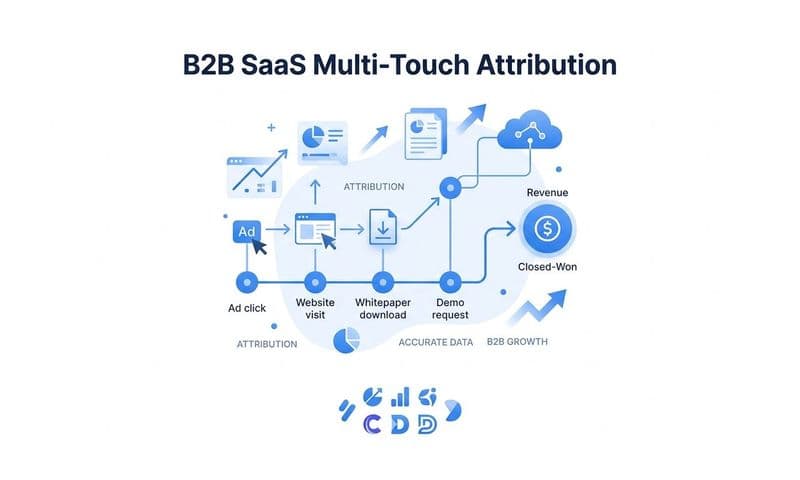
But even with server-side tracking in place, you still face the fundamental limitation of siloed platform reporting. To truly understand how Twitter fits into your marketing mix, you need multi-touch attribution that shows the full customer journey from first touch to final conversion. Choosing the best software for tracking marketing attribution is a critical decision that directly impacts the quality of your cross-channel insights.
This is where a platform like Cometly becomes essential. Cometly connects your Twitter ads data alongside Meta, Google, TikTok, and every other channel you are running, giving you a unified view of how each platform contributes to revenue. Instead of looking at Twitter's reporting in one tab and Google's in another, you see the complete customer journey in one place.
With multi-touch attribution, you can answer questions that native platform reporting cannot. Was Twitter the first touchpoint that introduced a customer to your brand? Did it serve as an assist in the middle of the funnel? Or was it the final click before conversion? Each of these roles has different implications for how much budget Twitter deserves.
Cometly's Conversion Sync capability takes this a step further by feeding enriched, accurate conversion data back to Twitter's algorithm. When Twitter's delivery system receives better conversion signals, it can optimize targeting and ad delivery more effectively, which improves your overall campaign performance over time. It is a compounding advantage: better data in means better results out.
For marketers who want to go deeper, connecting Twitter attribution data to your broader analytics setup also unlocks smarter budget allocation decisions. When you can see that Twitter consistently drives first-touch awareness that eventually converts through paid search, you can justify that Twitter spend with confidence rather than defending it based on last-click numbers alone.
Your Conversion Tracking Checklist and Next Steps
Accurate conversion tracking is not a one-time setup. It is an ongoing discipline that requires regular attention, especially after website changes, new campaign launches, or platform updates that affect how tracking tools behave.
Here is a quick-reference checklist of the six steps covered in this guide:
1. Access the Events Manager: Log into Twitter Ads, navigate to Tools, and open the Events Manager to begin your tracking setup.
2. Install the base pixel site-wide: Generate your pixel code and deploy it across every page of your website, either directly in the <head> section or through Google Tag Manager.
3. Create and configure conversion events: Define your primary and secondary conversion events using URL-based rules or event code snippets, with clear and consistent naming conventions.
4. Assign events to campaigns with proper attribution windows: Use the Conversions objective when running campaigns optimized for actions, and set attribution windows that reflect your actual buyer journey.
5. Test and validate everything is tracking: Simulate a real conversion, use the Twitter Pixel Helper to verify event fires, and check the Events Manager for Active status and recent activity.
6. Layer in cross-platform attribution: Move beyond native reporting by connecting Twitter data with all your other channels to understand the full customer journey and feed better data back to Twitter's algorithm.
Make it a habit to audit your conversion tracking at least once per quarter. Pixel fires can break silently when website code changes, URL structures shift, or tag manager configurations get updated. A brief audit takes far less time than diagnosing weeks of bad data after the fact.
For marketers who want to unify their Twitter ads data with every other channel and see exactly which ads drive revenue, Get your free demo of Cometly today. Connect every touchpoint, capture every conversion, and make budget decisions with the kind of confidence that only comes from accurate, complete attribution data.