YouTube advertising has become a serious channel for B2B SaaS companies looking to build pipeline and drive conversions. But running ads is only half the equation. If you cannot accurately track what those ads are actually doing, you are spending budget without direction.
The challenge most marketing teams face is not getting data. It is getting the right data. Google Ads and YouTube Analytics give you surface-level metrics like views and clicks, but they rarely tell you which campaigns drove a qualified lead, moved a prospect through your funnel, or contributed to a closed deal.
This guide walks you through a practical, step-by-step process for setting up and optimizing YouTube ads tracking, from configuring your conversion events to connecting ad performance to real revenue outcomes. Whether you are a growth marketer running your first YouTube campaign or a seasoned team looking to tighten your attribution, these steps will help you build a tracking foundation that actually supports decision-making.
By the end, you will know how to measure view-through and click-through conversions, connect YouTube ad data to your CRM and pipeline, compare attribution models to understand true channel impact, and use that data to scale what works and cut what does not.
Step 1: Set Up Google Ads Conversion Tracking for YouTube
Before you can track YouTube ads performance in any meaningful way, you need conversion actions defined inside Google Ads. This is the foundation everything else builds on.
Start by identifying the key events that matter to your B2B SaaS business. These typically include form submissions, demo requests, free trial signups, and purchases. Each of these should be its own conversion action in Google Ads so you can evaluate YouTube's contribution to each specific outcome separately.
To deploy tracking, you have two options: install the Google Ads global site tag directly on your website, or use Google Tag Manager to manage the deployment. Google Tag Manager is the more flexible approach for most teams because it lets you update and add tracking without touching your site code every time.
One of the most overlooked settings when you track YouTube ads performance is the conversion window. The default is often 30 days, which works fine for e-commerce but falls short for B2B SaaS where sales cycles can stretch weeks or months. Extend your conversion windows to match your actual sales cycle. If your average deal takes 60 to 90 days from first touch to close, set your windows accordingly so YouTube gets credit for the conversions it influenced.
You also need to understand the difference between two conversion types. Click-through conversions happen when someone clicks your YouTube ad and then converts on your site. View-through conversions happen when someone sees your ad, does not click, but later converts through another channel. For B2B SaaS, view-through conversions are often significant because YouTube typically plays an awareness role rather than a direct response role. Understanding how to optimize Google Ads conversion tracking for these nuances is what separates teams that get clean data from those that do not.
Once your tags are deployed, verify they are firing correctly. Use Google Tag Manager's preview mode or the Google Tag Assistant Chrome extension to confirm that conversion events trigger at the right moments on your site.
Common pitfall: Using the same conversion action for both YouTube and Search campaigns without segmenting them. This makes it impossible to isolate YouTube's contribution to your results. Create separate conversion actions or use campaign-level segmentation in your reporting to keep the data clean.
Success indicator: You can see conversion data flowing into your Google Ads account, segmented by campaign, and the numbers align with what you are seeing in your analytics platform.
Step 2: Configure UTM Parameters for Every YouTube Ad
Google Ads conversion tracking tells you what happened inside the Google ecosystem. UTM parameters tell every other tool what happened, including your analytics platform, your CRM, and any third-party attribution software you use. Both layers are essential if you want to accurately track YouTube ads performance across your full marketing stack.
Build a consistent UTM naming convention and stick to it across your entire team. For YouTube campaigns, a solid baseline looks like this: utm_source=youtube, utm_medium=paid-video, utm_campaign=[your-campaign-name]. Add utm_content to differentiate between ad creative variants so you can see which specific video or thumbnail is driving results. Use utm_term to identify targeting segments if you are running multiple audience strategies within the same campaign.
Apply UTMs at the ad level, not just the campaign level. This granularity is what allows you to trace performance all the way down to individual creatives, which is where the most actionable optimization insights live. A marketing campaign tracking spreadsheet shared across your team is one of the simplest ways to enforce this discipline before campaigns go live.
Use Google's Campaign URL Builder or maintain a shared UTM spreadsheet that the whole team has access to. Consistency is everything here. If one person writes "YouTube" with a capital Y and another writes "youtube" in lowercase, those will appear as two separate sources in case-sensitive analytics tools, and your data will be fragmented before you even start analyzing it.
Before launching any campaign, test your UTM links manually. Click through to your landing page and confirm that the parameters are passing correctly into your analytics platform. This takes five minutes and saves hours of debugging later.
Why UTMs matter beyond Google Ads: When a prospect clicks your YouTube ad and later comes back through a different channel to convert, last-click attribution in Google Ads will give zero credit to YouTube. But if you passed UTM parameters correctly, your attribution platform can see that YouTube was part of the journey. This is the difference between knowing YouTube contributed to a conversion and having no idea it did.
Common pitfall: Inconsistent naming conventions are the silent killer of attribution accuracy. Establish a naming standard, document it, and enforce it. A shared spreadsheet or a naming convention tool integrated into your workflow will save you from the chaos of mismatched data down the line.
Success indicator: When you filter your analytics platform by utm_source=youtube, you see a clean, accurate view of sessions and conversions driven by your YouTube campaigns with no bleed from other sources.
Step 3: Connect YouTube Ad Data to Your CRM and Pipeline
Here is where most B2B SaaS teams hit a wall. Google Ads can tell you that a conversion happened. It cannot tell you whether that lead turned into a qualified opportunity, moved through your pipeline, or eventually became a paying customer. Closing that gap is what separates surface-level tracking from real revenue attribution.
The mechanism is straightforward: pass your UTM parameters through your lead capture forms into your CRM. When a prospect fills out a demo request form, hidden form fields should capture utm_source, utm_medium, utm_campaign, and utm_content alongside their name, email, and company details. That data then lives on the contact or lead record in your CRM.
Most marketing automation platforms and CRMs support hidden fields natively. Platforms like HubSpot, Salesforce, and others can be configured to read UTM parameters from the URL and store them on the form submission. If your current setup does not support this, it is worth prioritizing because without it, you lose the thread between your YouTube ads and what happens after someone converts. Learning how to track leads to revenue through your CRM is the critical step that most teams skip.
Once UTM data is in your CRM, you can map the connection between YouTube touchpoints and pipeline stages. Which campaigns are generating leads that actually become opportunities? Which ad creatives are attracting prospects who progress through the funnel versus those who stall at the lead stage? This is the kind of insight that justifies budget decisions.
This is also where platforms like Cometly become particularly valuable. Cometly connects your ad platform data directly with CRM events, so you can see which YouTube campaigns are generating real pipeline and revenue rather than just clicks and form fills. Instead of toggling between Google Ads reports and your CRM, you get a unified view that ties ad spend to deal value.
Success indicator: You can open a lead record in your CRM and see exactly which YouTube campaign, ad group, and creative drove that contact. When that contact becomes a closed deal, the revenue is traceable back to the original ad touchpoint.
Step 4: Implement Server-Side Tracking to Protect Data Accuracy
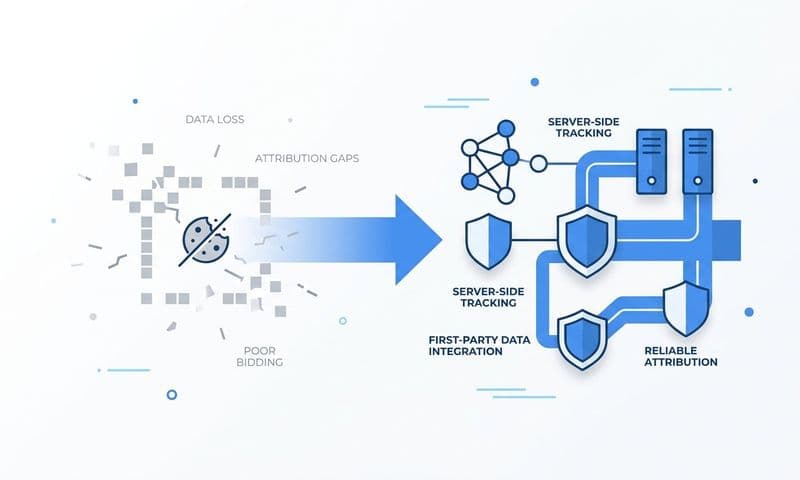
Even with Google Ads conversion tracking and UTMs properly configured, you may be losing a meaningful portion of your conversion data. Browser-based tracking has become increasingly unreliable as ad blockers become more common, browsers restrict third-party cookies, and privacy updates limit what client-side JavaScript can capture.
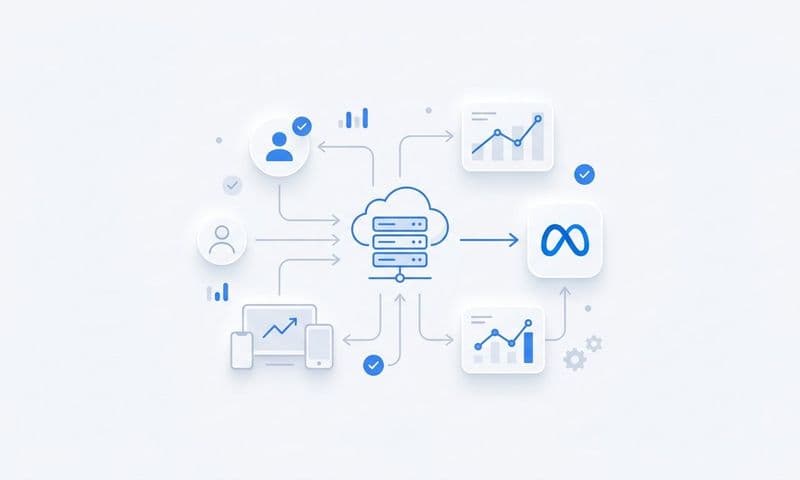
Server-side tracking addresses this by sending conversion data directly from your server to Google, bypassing the browser entirely. Instead of relying on a tag firing in the user's browser, the conversion signal travels from your infrastructure to Google's API. Ad blockers cannot intercept it, and browser privacy settings do not interfere with it. For a deeper look at how this works in practice, the guide on server-side tracking for ads covers the technical setup and business case in detail.
Google's Enhanced Conversions feature is the native starting point for improving match rates on YouTube conversions. It works by capturing hashed first-party data, such as a user's email address or phone number, at the point of conversion and sending that alongside the standard conversion event. Google then uses that data to match the conversion to a Google account, improving attribution accuracy even when cookies are limited.
For B2B SaaS teams, this matters for a specific reason. Your buyers are often researching across multiple devices and sessions before they convert. A prospect might see your YouTube ad on their phone during their commute, then convert on their work laptop three days later. Without first-party data enrichment, that connection is invisible. With it, Google can recognize the same user across sessions and attribute the conversion correctly.
There is also a direct performance benefit. Google's Smart Bidding algorithms rely on conversion signals to optimize YouTube campaigns. Better quality signals mean the algorithm has more accurate data to work with, which leads to improved targeting, better bid decisions, and stronger campaign performance over time. When you feed the system clean, complete data, it performs better on your behalf.
Common pitfall: Teams that skip server-side setup often find that their Google Ads conversion numbers do not match what their CRM shows. The discrepancy is not a mystery. It is the gap between what browser-based tracking captured and what actually happened. Server-side tracking closes that gap.
Success indicator: Your Google Ads conversion data aligns more closely with CRM records, and your match rates in Enhanced Conversions reporting show improvement after implementation.
Step 5: Analyze YouTube Performance Using Multi-Touch Attribution
Last-click attribution is the default in most analytics setups, and it is one of the most misleading ways to evaluate YouTube. Here is why: YouTube typically operates at the top or middle of your funnel. It builds awareness, creates familiarity, and plants the seed that eventually leads a prospect to search for your product, click a Google Search ad, and convert. Under last-click attribution, YouTube gets zero credit for that conversion. The Search ad gets everything.
This is not a data problem. It is a measurement model problem. And it causes marketing teams to systematically undervalue YouTube and underfund it as a channel. The broader challenge of identifying which ads drive actual revenue is exactly what multi-touch attribution is designed to solve.
Multi-touch attribution distributes credit across all the touchpoints in a customer journey, giving YouTube appropriate recognition for its role. To understand how different models tell different stories, it helps to walk through the options.
Last-click attribution: All credit goes to the final touchpoint before conversion. YouTube almost always loses here.
First-touch attribution: All credit goes to the first touchpoint. If YouTube introduced the prospect to your brand, it gets full credit. This can overvalue awareness channels.
Linear attribution: Credit is distributed equally across all touchpoints in the journey. This gives YouTube a fair share without overstating its role.
Data-driven attribution: Machine learning assigns fractional credit based on actual conversion path data. For complex B2B journeys with multiple touchpoints, this is typically the most accurate model available.
Consider a common B2B SaaS customer journey. A prospect sees your YouTube ad during a research phase. A week later, they search for your product by name and click a branded Search ad. A few days after that, they receive a nurture email, click through, and request a demo. Under last-click, email gets all the credit. Under multi-touch, YouTube, Search, and email each receive a portion based on their actual contribution.
Cometly lets you compare attribution models side by side so you can see exactly where YouTube sits in your customer journey across all your campaigns. Instead of guessing whether YouTube is pulling its weight, you can see its assisted conversions and its influence across the full funnel with clear data behind each model.
Success indicator: You can see YouTube's contribution to pipeline under multiple attribution models and make a justified budget decision based on that data rather than defaulting to last-click assumptions.
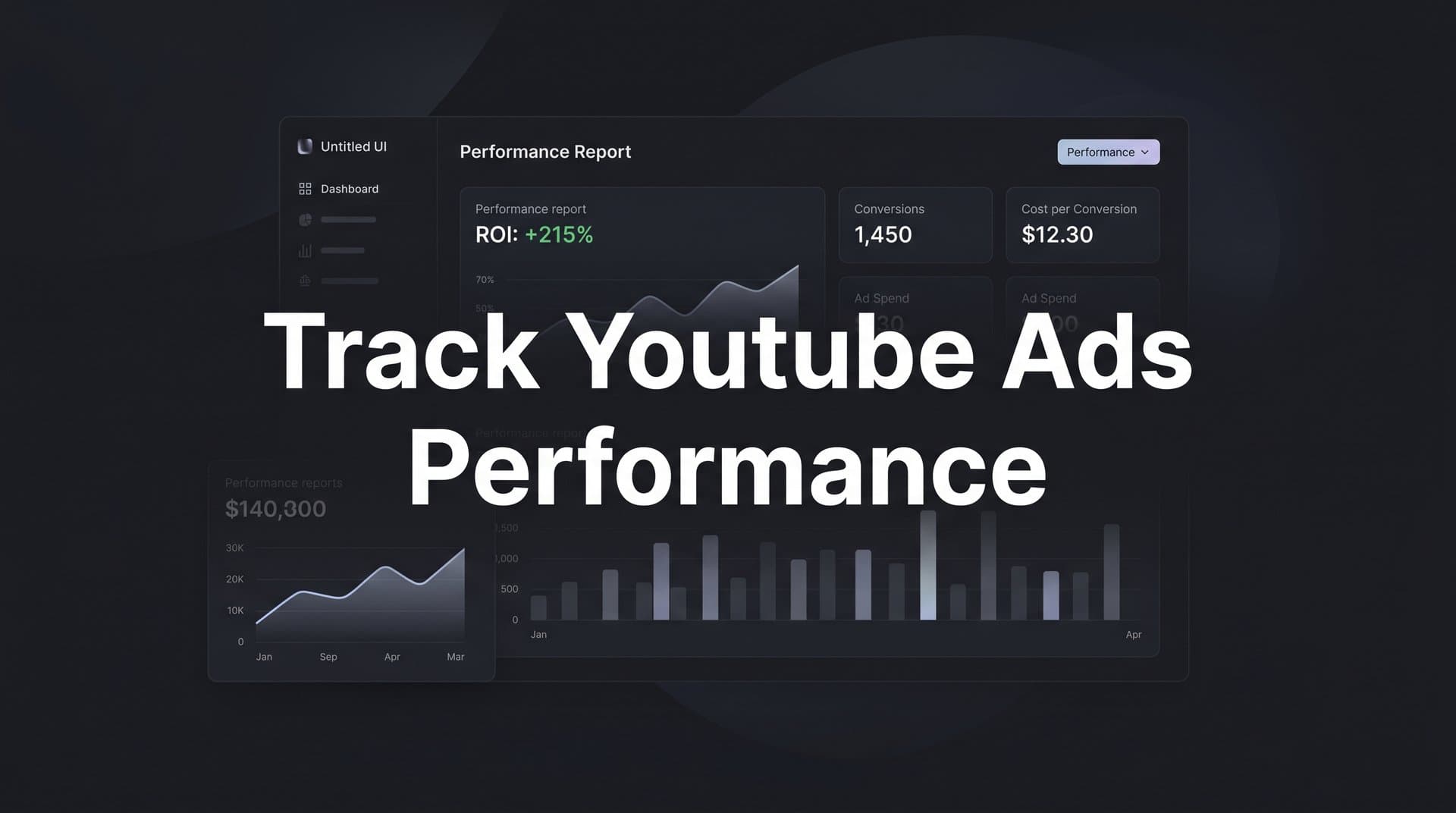
Step 6: Build a YouTube Ads Performance Dashboard
Tracking data only creates value when it is organized into a format that supports regular decision-making. A well-built dashboard is not about displaying every metric available. It is about surfacing the right metrics at the right level of detail for the decisions you need to make.
Start by separating vanity metrics from business metrics. Total views, impressions, and view-through rate tell you about reach and engagement. Cost per qualified lead, pipeline influenced, and revenue attributed tell you about business impact. Both categories have a place in your reporting, but they should not be weighted equally when you are making budget decisions. A solid understanding of paid advertising performance metrics will help you decide which numbers belong in each category.
The core metrics worth tracking for YouTube campaigns include cost per view, view-through rate, click-through rate, cost per conversion, cost per lead, pipeline influenced, and revenue attributed. As your tracking setup matures and CRM data flows in, the pipeline and revenue metrics become the most important signals for evaluating channel performance.
Segment your reporting by campaign, by ad format (skippable in-stream, non-skippable, bumper ads), and by audience targeting. Different formats serve different purposes in the funnel, and different audiences will respond differently to the same creative. Segmented reporting helps you identify what is actually working rather than averaging across everything.
The most powerful dashboards pull YouTube data alongside other paid channels so you can make fair, apples-to-apples comparisons. If LinkedIn is generating leads at a lower cost per qualified lead than YouTube, that is a budget allocation insight. If YouTube is influencing more pipeline than its direct conversion numbers suggest, that is a case for maintaining or increasing investment. Cometly consolidates YouTube ad data with data from Meta, LinkedIn, and other channels into a single attribution view, which makes these cross-channel ad performance comparisons straightforward.
Establish a reporting cadence that works for your team. Weekly performance reviews keep you close to the data and allow for fast creative or bid adjustments. Monthly attribution analysis gives you the longer view on which channels are contributing to pipeline over time.
Common pitfall: Reporting only on Google Ads metrics without connecting them to downstream pipeline and revenue data. This creates a reporting blind spot where campaigns look successful based on conversion volume but the leads they generate never progress through the funnel.
Step 7: Use Performance Data to Optimize and Scale YouTube Campaigns
All of the tracking infrastructure you have built up to this point exists to support one thing: better decisions about where to put your budget and how to improve your campaigns. This step is where the data pays off.
Start with creative performance. When you have conversion data tied to individual ad creatives through UTM parameters and CRM integration, you can identify which videos are generating leads that actually convert to pipeline. Engagement metrics like view-through rate tell you what people watched. Conversion and pipeline data tell you what actually drove business outcomes. Optimize toward the latter.
Use your audience performance data to refine targeting. Which segments are converting at the lowest cost per qualified lead? Which audiences are generating high click volume but low pipeline value? Your attribution data will surface these patterns, and they should directly inform how you allocate budget across targeting groups. Understanding how ad tracking tools help you scale using accurate data is what makes this optimization loop sustainable over time.
There is also a feedback loop worth understanding. When you improve your conversion tracking setup, you send better quality signals to Google's bidding algorithms. Those algorithms use conversion data to optimize who sees your ads and when. Better data in means better targeting out. This is not a one-time improvement. It compounds over time as the algorithm learns from a richer, more accurate signal set.
Multi-touch attribution data is also your strongest tool for justifying YouTube budget increases internally. If your attribution analysis shows that YouTube is influencing a significant portion of your pipeline even without being the last touch before conversion, that is a data-backed case for maintaining or growing the channel. Without attribution, that argument is difficult to make. With it, the numbers speak for themselves. This is the core of proving which ads actually drive revenue to stakeholders who control budget decisions.
Cometly's AI recommendations feature analyzes cross-channel performance and surfaces which YouTube campaigns deserve more budget based on their actual contribution to pipeline and revenue. Instead of relying on gut feel or last-click metrics, you get data-driven guidance on where to scale.
Success indicator: Your YouTube budget decisions are driven by pipeline and revenue data, not just click and view metrics. You can point to specific campaigns and creatives that are contributing to closed revenue and explain why they deserve continued investment.
Putting It All Together: Your YouTube Ads Tracking Checklist
Accurate YouTube ads tracking is not a single tool or a one-time setup. It is a stack of interconnected layers that work together to connect ad spend to business outcomes. Here is a quick audit checklist for each step covered in this guide.
Google Ads Conversion Tracking: Conversion actions created for key events, conversion windows aligned to your sales cycle, view-through and click-through conversions both configured, tags verified with Tag Manager or Tag Assistant.
UTM Parameters: Consistent naming convention documented and shared with the team, UTMs applied at the ad level, parameters tested before launch, data flowing cleanly into your analytics platform.
CRM Integration: Hidden form fields capturing UTM data on every lead capture form, UTM parameters stored on contact and deal records in your CRM, pipeline stages mapped to ad source data.
Server-Side Tracking: Enhanced Conversions configured in Google Ads, first-party data enrichment in place, conversion data discrepancy between Google Ads and CRM reduced.
Multi-Touch Attribution: Attribution models compared across YouTube campaigns, assisted conversions visible in reporting, budget decisions informed by multi-touch data rather than last-click defaults.
Unified Dashboard: Business metrics prioritized alongside engagement metrics, cross-channel view in place, regular reporting cadence established.
Cometly ties all of these layers together for B2B SaaS teams who want a single source of truth for their marketing data. From capturing every ad touchpoint to connecting YouTube performance to pipeline and closed revenue, it is built for the exact tracking challenges this guide addresses.
If you are ready to move from guessing which YouTube campaigns are working to knowing exactly which ones are driving revenue, Get your free demo and see how Cometly can bring your full attribution picture into focus.