
When ad data lives in silos, marketing teams make expensive guesses. A unified conversion reporting platform solves this by pulling data from every ad channel, CRM, and website event into a single view so you can see exactly which campaigns drive revenue, not just clicks.
The challenge is that not every platform is built the same way. Some rely on pixel-based tracking that breaks under iOS restrictions. Others offer beautiful dashboards but lack the attribution depth B2B SaaS teams need to connect ad spend to closed-won revenue.
This list covers the top unified conversion reporting platforms available in 2026. Each tool has been evaluated on attribution accuracy, cross-channel coverage, ease of integration, and how well it supports data-driven decisions for marketing and growth teams. Whether you are running paid search, social ads, or a full multi-channel mix, there is a platform here built for your workflow.
1. Cometly
Best for: B2B SaaS marketing teams that need full-funnel attribution from first click to closed-won revenue.
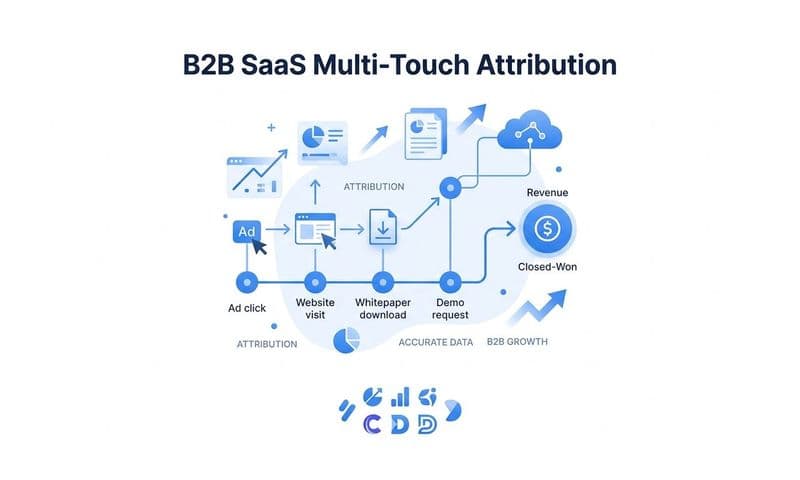
Cometly is a marketing attribution and analytics platform built specifically for B2B SaaS companies, connecting ad platforms, CRM data, and website events to track the complete customer journey in real time.
 9 Best Attribution Platforms for Agencies in 2026
Where This Tool Shines
Most attribution tools stop at the lead. Cometly goes further by tying every touchpoint back to pipeline and revenue, giving growth teams a single source of truth that spans from the first ad impression to a closed deal in the CRM. This is particularly valuable for B2B SaaS companies where sales cycles stretch over weeks or months and involve multiple decision-makers.
The server-side conversion tracking and Conversion API integration make Cometly more resilient than pixel-only solutions. When browsers block cookies or iOS users opt out of tracking, Cometly's server-side approach captures events that would otherwise disappear from your reports. The AI ads manager adds another layer by surfacing actionable recommendations on which ads and channels to scale or cut.
Key Features
Multi-Touch Attribution: Supports multiple attribution models including linear, time-decay, position-based, and data-driven so you can compare how different models represent your funnel.
Server-Side Tracking and Conversion API: Sends conversion events directly from the server to ad platforms, bypassing browser restrictions and improving data accuracy across Meta, Google, and more.
AI Ads Manager: Analyzes cross-channel performance and delivers AI-driven recommendations on which campaigns deserve more budget and which should be paused.
Pipeline and Revenue Attribution: Connects Stripe and CRM data to ad spend so you can see which campaigns generate actual revenue, not just form fills.
Customer Journey Analytics: Provides full touchpoint visibility across the entire buying journey so you can understand the paths that lead to conversion.
70+ Native Integrations: Connects with major ad platforms, CRMs, and marketing tools without requiring custom engineering work.
Best For
Cometly is the strongest fit for B2B SaaS marketing teams, demand gen leaders, and growth-focused agencies that manage paid campaigns across multiple channels and need to tie ad spend directly to pipeline and revenue. It is especially valuable for teams that have outgrown GA4 and native ad platform reporting.
Pricing
Paid plans available. Contact Cometly directly for current pricing details based on your team size and data volume.
2. Northbeam
Best for: Performance marketing teams managing large ad budgets across multiple paid channels.
Northbeam is a multi-touch attribution and media mix modeling platform designed for high-volume advertisers who need both granular channel reporting and macro-level budget planning tools.
 9 Best Unified Conversion Reporting Platforms in 2026
Where This Tool Shines
Northbeam's media mix modeling capability sets it apart from most attribution tools in this category. Rather than just showing which channel got credit for a conversion, it allows marketers to run budget scenario planning and model the expected impact of shifting spend across channels. This is useful for teams that operate at scale and need to make strategic allocation decisions, not just tactical optimizations.
The platform does require a data ingestion period before its models become reliable, so teams should plan for a ramp-up phase after implementation. Once the models are calibrated, the attribution windows and model comparison features give media buyers a solid foundation for decision-making.
Key Features
Media Mix Modeling: Supports budget scenario planning to forecast the impact of reallocating spend across channels before committing to changes.
Multi-Touch Attribution: Covers paid social, paid search, email, and other channels with customizable attribution windows.
Model Comparisons: Lets you view the same conversion data through multiple attribution lenses side by side.
Real-Time Data Ingestion: Pulls fresh data from major ad platforms to keep reporting current.
Best For
Northbeam is best suited for performance marketing teams at DTC brands and high-growth companies managing significant ad spend who want both attribution reporting and media mix modeling in a single platform.
Pricing
Custom pricing based on ad spend volume. Northbeam targets mid-market to enterprise advertisers, so expect pricing to reflect that positioning.
3. Triple Whale
Best for: DTC e-commerce brands on Shopify that want consolidated ad reporting and creative performance data.
Triple Whale is a Shopify-native attribution and analytics platform that consolidates ad performance, creative analytics, and customer data into a single dashboard built around e-commerce metrics.
 9 Best Unified Conversion Reporting Platforms in 2026
Where This Tool Shines
Triple Whale's tight integration with Shopify means setup is fast and the out-of-the-box reporting is immediately relevant for e-commerce teams. The proprietary pixel captures first-party conversion data that supplements what ad platforms report, helping brands understand true ROAS without relying entirely on self-reported platform numbers.
The creative analytics dashboard is a standout feature for teams running high-volume paid social campaigns. It surfaces ad-level performance data so creative teams and media buyers can quickly identify which creatives are driving results and which are fatiguing.
Key Features
Proprietary Pixel: Captures first-party conversion data directly, reducing reliance on ad platform self-reporting.
Creative Analytics Dashboard: Breaks down performance at the individual ad level to support faster creative testing and iteration.
Cohort Analysis and LTV Reporting: Shows customer lifetime value by acquisition source, helping brands understand long-term campaign profitability.
Summary Dashboard: Consolidates all key metrics into a single view for daily performance monitoring.
Best For
Triple Whale is purpose-built for Shopify DTC brands. It is less suited for B2B SaaS companies or businesses running on non-Shopify platforms. If your business is e-commerce-focused and you want fast setup with strong creative reporting, it is a strong option.
Pricing
Starts at approximately $129 per month and scales based on store revenue. A free trial is typically available.
4. HockeyStack
Best for: B2B SaaS revenue and demand gen teams that need account-level attribution without cookies.
HockeyStack is a B2B revenue attribution platform that uses cookieless tracking and account-level journey mapping to show how marketing influences pipeline and closed revenue across long sales cycles.
 9 Best Unified Conversion Reporting Platforms in 2026
Where This Tool Shines
HockeyStack's cookieless tracking model is one of its most differentiating characteristics. As browser restrictions and privacy regulations continue to erode traditional cookie-based attribution, HockeyStack's approach is more durable by design. This matters especially for B2B teams where a single deal can involve dozens of touchpoints across a multi-month sales cycle.
The account-level journey mapping is well-suited for B2B SaaS companies selling to teams rather than individuals. Instead of tracking individual users in isolation, HockeyStack maps interactions at the account level, giving RevOps and demand gen teams a more accurate picture of how marketing contributes to pipeline.
Key Features
Cookieless Tracking: Attributes conversions without relying on third-party cookies, making the platform more resilient to privacy changes.
Account-Level Journey Mapping: Groups touchpoints by account rather than individual user, which reflects how B2B buying actually works.
Pipeline Influence Reporting: Shows how marketing activities contribute to pipeline creation and progression, not just lead volume.
CRM Integrations: Connects natively with Salesforce, HubSpot, and major ad platforms to close the loop between marketing and revenue.
Best For
HockeyStack is a strong fit for mid-market to enterprise B2B SaaS companies with dedicated demand gen or RevOps functions. It is particularly valuable for teams that need to demonstrate marketing's influence on pipeline to leadership.
Pricing
Custom pricing. HockeyStack primarily targets mid-market and enterprise B2B SaaS companies, so pricing reflects that segment.
5. Rockerbox
Best for: Marketing teams that want an independent measurement layer supporting MTA, MMM, and incrementality testing.
Rockerbox is a marketing measurement platform that centralizes raw conversion data across all channels and supports multiple measurement methodologies in a single platform.
 9 Best Unified Conversion Reporting Platforms in 2026
Where This Tool Shines
Rockerbox positions itself as a measurement infrastructure layer rather than just an attribution dashboard. It centralizes conversion data from every channel, normalizes and de-duplicates it, and then distributes clean data back to ad platforms. This approach gives brands more control over their measurement stack and reduces the risk of double-counting conversions across channels.
The support for multiple measurement methods within one platform is genuinely useful for mature marketing teams. Rather than choosing between multi-touch attribution, media mix modeling, or incrementality testing, Rockerbox lets you run all three and triangulate toward more confident decisions.
Key Features
Centralized Conversion Data Hub: Aggregates raw conversion data from every channel into a single, normalized source of truth.
Multi-Method Measurement: Supports MTA, MMM, and incrementality testing within the same platform.
Clean Data Distribution: Sends de-duplicated, normalized conversion data back to ad platforms to improve algorithmic optimization.
Data Normalization and De-Duplication: Removes redundant conversion signals across sources to prevent inflated reporting.
Best For
Rockerbox works well for brands with established marketing programs that want to own their measurement layer independently of any single ad platform. It suits teams with some analytical maturity who want to go beyond standard attribution dashboards.
Pricing
Custom pricing based on business size and data volume. Rockerbox targets mid-market and enterprise brands.
6. Ruler Analytics
Best for: B2B lead generation businesses and agencies that need offline conversion matching and closed-loop revenue attribution.
Ruler Analytics is a closed-loop attribution platform that tracks visitor journeys across sessions and matches offline conversions, including phone calls and form submissions, back to the original marketing source.
 8 Best Attribution Tools with Onboarding Support in 2026
Where This Tool Shines
Ruler Analytics is built for the reality of B2B lead generation, where a visitor might browse your site multiple times, submit a form, speak with a sales rep, and convert weeks later. The platform tracks that full journey and syncs revenue data from your CRM back to the original marketing source so you can see which campaigns actually drive closed business.
The phone call attribution capability is particularly useful for businesses where inbound calls are a significant conversion path. Many attribution tools miss this entirely, leaving a gap in the data that Ruler Analytics fills.
Key Features
Visitor-Level Journey Tracking: Follows individual visitors across multiple sessions to build a complete pre-conversion picture.
Offline Conversion Matching: Syncs CRM data to match revenue back to the original marketing source, even for deals that close offline.
Phone Call and Form Attribution: Tracks both call conversions and form submissions and ties them to the originating campaign.
Revenue Reporting by Source: Surfaces which channels and campaigns generate actual revenue, not just lead volume.
Best For
Ruler Analytics is a strong fit for B2B lead generation companies, professional services firms, and digital agencies managing lead-gen campaigns for clients. It is especially useful when offline conversions are a meaningful part of the revenue picture.
Pricing
Starts at approximately $199 per month and scales based on the number of tracked visitors.
7. Wicked Reports
Best for: Subscription businesses and info-product marketers that need long-window, LTV-based attribution.
Wicked Reports is a long-window attribution platform focused on lifetime value and cohort-based ROAS reporting for businesses where customer value compounds over time.
 9 Best Unified Conversion Reporting Platforms in 2026
Where This Tool Shines
Standard attribution tools measure conversions within short windows, often 7 to 28 days. For subscription businesses and high-ticket offers with longer consideration periods, this approach misrepresents which campaigns actually drive high-value customers. Wicked Reports addresses this by extending attribution windows significantly and reporting ROAS based on customer lifetime value rather than just the initial transaction.
The cohort analysis feature helps marketers identify which acquisition channels produce customers with the highest long-term value, which can fundamentally change how budgets are allocated. A campaign that looks mediocre on a 7-day ROAS basis might look excellent when measured over 90 or 180 days.
Key Features
Extended Attribution Windows: Tracks customer journeys over long periods to capture conversions that happen weeks or months after the first touchpoint.
LTV-Based ROAS Reporting: Measures campaign performance against customer lifetime value rather than just the first purchase.
Cohort Analysis: Identifies which channels and campaigns produce the highest-value customer cohorts over time.
Broad Integrations: Connects with email platforms, ad channels, and CRMs to pull in the full data picture.
Best For
Wicked Reports is best suited for subscription businesses, online course creators, and info-product marketers where customer lifetime value is the primary success metric and sales cycles extend beyond standard attribution windows.
Pricing
Starts at approximately $250 per month and scales based on contact list size.
8. Segment (Twilio)
Best for: Technical teams that need a centralized data infrastructure layer to collect, clean, and route first-party event data.
Segment is a customer data platform that collects first-party event data from web, mobile, and server sources and routes it to 400+ downstream tools, serving as the data infrastructure layer for the modern marketing stack.
Where This Tool Shines
Segment is not an attribution tool in the traditional sense. It is the plumbing that makes other tools work better. By centralizing event collection and standardizing data before it reaches your analytics, ad platforms, and CRM, Segment reduces data inconsistencies that corrupt attribution models downstream. Teams that implement Segment as their data foundation often see immediate improvements in the reliability of their reporting across every connected tool.
The identity resolution and user profile unification capabilities are valuable for B2B SaaS companies that need to connect anonymous web behavior to known users in their CRM. This creates a richer data foundation that attribution tools can use to build more accurate models.
Key Features
Centralized Event Collection: Captures events from web, mobile, and server sources through a single, consistent API.
Data Routing to 400+ Tools: Sends clean event data to ad platforms, analytics tools, CRMs, and data warehouses without custom engineering for each destination.
Identity Resolution: Unifies user profiles across devices and sessions to create a complete behavioral picture.
Developer-Friendly APIs and SDKs: Designed for technical teams that want full control over their data collection implementation.
Best For
Segment is best suited for growth-stage to enterprise companies with engineering resources. It serves as infrastructure rather than a reporting interface, so teams should plan to pair it with a dedicated attribution or analytics tool.
Pricing
Free tier available for up to 1,000 monthly tracked users. Paid plans scale with usage and data volume.
9. Google Analytics 4
Best for: Teams that need a free baseline for cross-channel conversion tracking with deep Google Ads integration.
Google Analytics 4 is Google's event-based analytics platform offering cross-channel conversion tracking, basic multi-touch attribution, and native integration with Google Ads and Search Console.
Where This Tool Shines
GA4's biggest advantage is that it is free and deeply integrated with the Google ecosystem. For teams running significant Google Ads spend, the native integration between GA4 and Google Ads creates a seamless conversion reporting loop that is difficult to replicate with third-party tools at no cost. The event-based data model is also more flexible than its predecessor, allowing teams to track custom events and conversions that reflect their specific funnel.
That said, GA4 has meaningful limitations for B2B SaaS teams. Its attribution modeling is primarily useful within the Google ecosystem and does not connect marketing data to CRM pipeline or revenue in the way dedicated attribution platforms do. It works well as a baseline or supplementary tool, but most growth teams will eventually need something more purpose-built alongside it.
Key Features
Event-Based Data Model: Tracks any user interaction as a custom event, giving teams flexibility in how they define and measure conversions.
Data-Driven Attribution: Uses machine learning to distribute conversion credit across touchpoints for Google Ads campaigns.
Exploration Reports: Supports custom funnel analysis, path exploration, and cohort reports for deeper behavioral insights.
Free Native Integration: Connects directly with Google Ads and Google Search Console at no additional cost.
Best For
GA4 is a strong starting point for any team and an essential baseline for those running Google Ads. It is best used as a foundational layer rather than a primary attribution solution for B2B SaaS companies that need revenue-level reporting.
Pricing
Free for standard use. GA4 360, the enterprise tier with higher data limits and SLA guarantees, is available at custom pricing.
Choosing the Right Platform for Your Team
The right unified conversion reporting platform depends entirely on your business model, your data maturity, and what you actually need to measure.
For B2B SaaS teams that need to connect ad spend directly to pipeline and closed revenue, Cometly is the most purpose-built option on this list. Its combination of server-side tracking, multi-touch attribution, AI-driven recommendations, and Stripe revenue integration addresses the specific challenges that growth teams face when trying to prove marketing ROI to leadership.
If you are a DTC brand on Shopify, Triple Whale offers the fastest path to consolidated ad reporting with strong creative analytics. For high-volume performance marketers who want media mix modeling alongside attribution, Northbeam is worth evaluating. B2B teams with a privacy-first tracking requirement will find HockeyStack's cookieless approach compelling, while agencies managing lead-gen campaigns will appreciate Ruler Analytics' offline conversion matching.
For teams earlier in their data journey, Google Analytics 4 provides a free and capable baseline, especially if Google Ads is your primary paid channel. Segment is the right choice if your challenge is data infrastructure rather than reporting, and it pairs well with any of the dedicated attribution tools on this list.
The platforms that deliver the most value share a common trait: they close the loop between marketing activity and actual revenue. That loop is what separates informed budget decisions from expensive guesses.
If you are ready to move beyond fragmented reporting and see exactly which ads and channels drive revenue for your B2B SaaS company, explore how Cometly handles multi-touch attribution, revenue attribution, and lead tracking in a single connected platform. Get your free demo today and start capturing every touchpoint to maximize your conversions.