Running ads across Meta, Google, TikTok, LinkedIn, and a handful of other platforms simultaneously is now the norm for growth-focused marketing teams. The problem? Each platform reports its own numbers, attribution overlaps everywhere, and you're left trying to piece together which campaigns actually drove revenue. Without a unified view, budget decisions become guesswork.
Choosing the right ad performance analytics platform depends on several factors: how deep you need attribution to go, whether you need cross-channel visibility or just dashboards, AI capabilities, integration support, and what your budget can handle. To build this list, we evaluated each platform on data accuracy, multi-channel support, ease of use, attribution modeling depth, and overall value.
Whether you're trying to solve common marketing attribution challenges or looking to move beyond last-click reporting with multi-touch attribution models, the right platform can make a significant difference in how confidently you allocate spend. Here are the top ad performance analytics platforms worth considering in 2026.
1. Cometly
Best for: Cross-platform attribution, server-side tracking, and feeding better data back to ad algorithms
Cometly is an AI-powered marketing attribution platform that connects your ad platforms, CRM, and website to show exactly which ads are driving leads and revenue.
 10 Best Ad Performance Analytics Platforms in 2026
Where This Tool Shines
What separates Cometly from most analytics platforms is that it doesn't just report on performance. It actively helps improve it. The conversion sync feature sends enriched, conversion-ready events back to Meta, Google, and other ad platforms, giving their algorithms better data to optimize targeting and delivery. That's a meaningful edge that goes beyond dashboards.
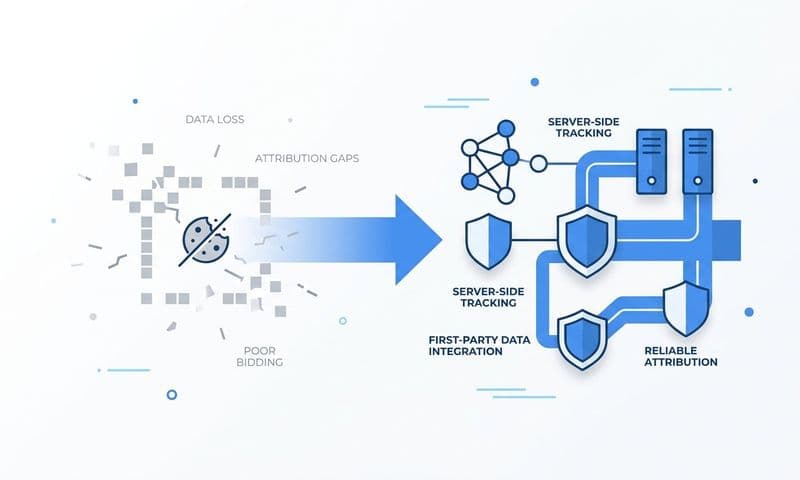
The combination of server-side tracking and multi-touch attribution also addresses one of the biggest headaches in modern ad measurement: data loss from iOS privacy changes and browser restrictions. Cometly captures the full customer journey even when browser-based tracking falls short, so the attribution picture you're working from is actually accurate.
Key Features
Multi-Touch Attribution: Tracks every touchpoint across all ad channels and the full customer journey, from first click to closed deal.
Server-Side Tracking: Collects data at the server level to maintain accuracy despite browser privacy changes and cookie restrictions.
Conversion Sync: Sends enriched conversion events back to Meta, Google, and other platforms to improve ad algorithm performance and targeting.
AI-Powered Recommendations: Identifies top-performing ads and campaigns across every channel, with actionable suggestions for scaling budgets confidently.
AI Chat for Data Analysis: Lets you ask natural-language questions about your campaign data without needing to build custom reports manually.
Best For
Cometly is built for digital marketers, agencies, and growth teams running paid campaigns across multiple platforms who need accurate attribution, not just aggregated reporting. It's particularly valuable for teams that want to close the loop between attribution insights and ad platform optimization.
Pricing
Custom pricing based on ad spend volume. A demo is available on request through the Cometly website.
2. Triple Whale
Best for: DTC ecommerce brands running Shopify stores with heavy Meta and TikTok ad spend
Triple Whale is an ecommerce analytics platform built around Shopify, offering unified ad performance tracking, creative analytics, and customer journey visibility for direct-to-consumer brands.
 7 Best Funnel.io Alternatives for Marketing Data Analytics in 2026
Where This Tool Shines
Triple Whale's native Shopify integration is genuinely tight. Revenue data syncs in real time, which means you're not waiting for platform-reported numbers that may or may not reflect actual orders. For DTC brands where speed and accuracy of revenue attribution matter daily, this is a real advantage.
The creative analytics layer is another strong point. Rather than just tracking clicks and conversions at the campaign level, Triple Whale breaks down performance by individual ad creative, helping teams understand what's resonating visually before spending more budget behind it.
Key Features
Native Shopify Integration: Real-time revenue tracking synced directly from your Shopify store for accurate attribution.
Creative Analytics: Measures individual ad creative performance to inform creative strategy and production decisions.
Influencer and Affiliate Tracking: Tracks performance from influencer campaigns and affiliate partners alongside paid ad channels.
AI Summary Dashboards: Surfaces key performance insights automatically without requiring manual report building.
Best For
DTC ecommerce brands running on Shopify with active paid social campaigns. Less suited for B2B, SaaS, or businesses with complex multi-step sales cycles that extend beyond a typical ecommerce purchase window.
Pricing
Starts around $100/month for smaller stores; pricing scales with revenue and feature tier.
3. Northbeam
Best for: Ecommerce brands that want machine learning-driven attribution and media mix modeling
Northbeam is a machine learning-based attribution and media mix modeling platform designed for ecommerce brands that want to understand incrementality and optimize media spend across channels with statistical rigor.
 9 Best Ad Campaign Attribution Platforms to Track Your Marketing ROI in 2026
Where This Tool Shines
Northbeam takes a more sophisticated approach to attribution than most platforms. Its ML-powered models go beyond rule-based attribution windows to account for how channels interact and influence each other, which is particularly useful for brands running brand awareness and performance campaigns simultaneously.
The media mix modeling capability is increasingly relevant as privacy restrictions make user-level tracking harder. MMM allows brands to measure channel-level effectiveness at an aggregate level, complementing the multi-touch attribution data and giving a more complete picture of where spend is actually working.
Key Features
ML-Powered Multi-Touch Attribution: Machine learning models that go beyond static attribution rules to reflect how channels interact.
Media Mix Modeling: Channel-level budget allocation insights using statistical modeling rather than just user-level tracking.
Creative Analytics: Performance scoring for ad creatives to guide creative strategy decisions.
We compare the leading options in our AI ad performance scoring roundup.
Customizable Attribution Windows: Flexible attribution window and model settings to match your specific sales cycle.
Best For
Mid-to-large ecommerce brands with significant ad spend across multiple channels who need more than a standard attribution dashboard and want to incorporate incrementality thinking into budget decisions.
Pricing
Custom pricing; typically positioned for brands with substantial ad spend rather than early-stage businesses.
4. Hyros
Best for: High-ticket funnels, info products, and businesses with phone-based or extended sales cycles
Hyros is an ad tracking and attribution platform built specifically for businesses where the path from ad click to conversion spans days, weeks, or involves a phone call rather than an immediate online purchase.
 7 Best Northbeam Alternatives for Small Business in 2026
Where This Tool Shines
Most attribution platforms are optimized for short purchase windows. Hyros is designed for the opposite: businesses where someone clicks an ad, enters a funnel, books a call, and converts days or weeks later. The long attribution windows and call tracking integration make it possible to connect ad spend to revenue in these more complex scenarios.
For coaches, consultants, course creators, and high-ticket service businesses, Hyros fills a gap that standard ecommerce-focused tools simply don't address well. The AI-powered optimization recommendations are also calibrated for these types of funnels rather than traditional product purchases.
Key Features
Long Attribution Windows: Tracks conversions across extended sales cycles where standard 7-day or 28-day windows miss the full picture.
Call Tracking Integration: Connects phone-based conversions back to the original ad source for complete funnel attribution.
AI Ad Optimization: Recommendations tailored to high-ticket funnel structures and conversion patterns.
Deep Funnel Tracking: Follows prospects through multi-step funnels including webinars, booking pages, and application flows.
Best For
Info product creators, coaches, consultants, agencies, and high-AOV businesses with phone sales or multi-step application funnels where standard ecommerce attribution models fall short.
Pricing
Starts around $99/month; pricing scales with ad spend volume and feature requirements.
5. Rockerbox
Best for: Brands that need to measure both digital and offline channels in a single attribution view
Rockerbox is a multi-channel attribution platform that blends deterministic multi-touch attribution with media mix modeling, and uniquely extends measurement to offline channels like TV, direct mail, and podcasts.
 10 Best Ad Performance Analytics Platforms in 2026
Where This Tool Shines
Most attribution platforms focus exclusively on digital channels. Rockerbox stands out by bringing offline channel measurement into the same reporting environment. If you're running podcast sponsorships, direct mail, or linear TV alongside your digital campaigns, Rockerbox gives you a way to evaluate all of them together rather than in separate silos.
The combined MTA and MMM approach also reflects how sophisticated marketing measurement teams are thinking about attribution in 2026. Using both methods together provides more confidence in budget decisions than relying on either approach alone.
Key Features
Combined MTA and MMM: Uses both multi-touch attribution and media mix modeling for a more complete measurement picture.
Offline Channel Measurement: Tracks performance from TV, direct mail, podcast, and other non-digital channels alongside digital campaigns.
Deduplicated Cross-Channel Reporting: Removes double-counting across channels so you're seeing true contribution rather than inflated platform-reported numbers.
Incrementality Testing: Built-in tools to run incrementality tests and validate whether channels are actually driving lift.
Best For
Growth-stage and enterprise brands running a mix of digital and offline media who need a unified measurement framework and want to validate channel effectiveness through incrementality testing.
Pricing
Custom pricing based on channels and data volume; best suited for brands with meaningful multi-channel ad budgets.
6. Supermetrics
Best for: Teams that need to pull ad data into spreadsheets, Looker Studio, or data warehouses for custom analysis
Supermetrics is a data connector platform that automates the movement of ad performance data from over 150 sources into the reporting and analytics environments your team already uses.
 10 Best Ad Performance Analytics Platforms in 2026
Where This Tool Shines
Supermetrics isn't an attribution platform. It's a data pipeline tool, and that distinction matters. If your team already has analysts, a BI setup, or strong Google Sheets skills, Supermetrics gives you the raw, connected data to build exactly the reports you need rather than working within a vendor's pre-built dashboard.
The breadth of connectors is a genuine strength. Meta, Google, TikTok, LinkedIn, Bing, Pinterest, Snapchat, and many more are all supported, which makes it practical for teams managing diverse ad channel mixes without needing to manually export data from each platform.
Key Features
150+ Data Source Connectors: Pulls data from virtually every major ad platform and marketing tool into your preferred destination.
Flexible Destinations: Sends data to Looker Studio, Google Sheets, BigQuery, Snowflake, Excel, and more.
Automated Data Refresh: Schedules automatic data pulls so reports stay current without manual intervention.
Data Transformation and Blending: Combines data from multiple sources and applies transformations before it lands in your reporting layer.
Best For
Marketing analysts, data teams, and agencies that want full control over how ad data is structured and reported, and who have the technical setup to make use of raw data feeds.
Pricing
Starts around $39/month per connector; total cost varies depending on the number of data sources and destination platforms used.
7. Whatagraph
Best for: Agencies that need white-labeled, client-ready cross-channel reports delivered automatically
Whatagraph is a cross-channel reporting platform built with agencies in mind, offering visual dashboards, white-labeled report templates, and automated delivery that makes client reporting far less time-consuming.
 10 Best Ad Performance Analytics Platforms in 2026
Where This Tool Shines
If you've ever spent hours manually assembling a client report by pulling data from five different ad platforms, Whatagraph is built to solve that exact problem. The visual drag-and-drop report builder lets you create polished, branded reports quickly, and automated scheduling means they go out to clients without anyone on your team having to remember to send them.
The white-labeling capability is particularly valuable for agencies. Reports can be fully branded with client or agency logos, removing the need for additional design work before sharing performance updates.
Key Features
White-Labeled Report Templates: Fully branded, client-ready templates that can be customized per client or campaign.
Cross-Channel Data Blending: Combines data from multiple ad and marketing platforms in a visual report builder.
Automated Report Scheduling: Sends reports to clients on a set schedule without manual effort from your team.
40+ Native Integrations: Connects to all major ad platforms, social channels, and marketing tools directly.
Best For
Digital marketing agencies managing multiple clients who need to streamline reporting workflows, reduce manual work, and deliver professional-looking performance updates at scale.
Pricing
Starts around $199/month; agency plans are available for teams managing multiple client accounts.
8. Databox
Best for: Teams that want real-time KPI monitoring and goal tracking across ad platforms and marketing tools
Databox is a real-time KPI dashboard platform that connects to ad platforms, CRMs, and marketing tools to give teams an at-a-glance view of performance with goal tracking and automated alerts.
Where This Tool Shines
Databox excels at making performance data visible and accessible to the whole team, not just the analysts. Pre-built dashboard templates for Google Ads, Meta, HubSpot, and dozens of other tools mean you can get a working dashboard live quickly without starting from scratch. The mobile app is a nice touch for teams that want to check numbers on the go.
The benchmark groups feature is genuinely useful: it lets you compare your performance metrics against anonymized data from similar businesses, which provides context that raw numbers alone can't give you.
Key Features
Pre-Built Dashboard Templates: Ready-to-use dashboards for all major ad platforms that can be deployed quickly.
Goal Tracking with Alerts: Set performance targets and receive automated notifications when metrics move off track.
Benchmark Groups: Compare your KPIs against anonymized peer data to understand how your performance stacks up.
Mobile App: Monitor key metrics from anywhere with a dedicated iOS and Android app.
Best For
Marketing teams and small agencies that want centralized performance visibility across tools without heavy technical setup. Also a good fit for teams that need to share live dashboards with stakeholders or leadership.
Pricing
Free plan available with limited connections; paid plans start around $59/month with more data sources and features.
9. Funnel.io
Best for: Enterprise and mid-market teams that need a robust data hub for ad data collection and transformation
Funnel.io is an enterprise-grade marketing data hub that automates the collection, transformation, and delivery of ad performance data from hundreds of sources into BI tools and data warehouses.
Where This Tool Shines
Funnel.io operates at a different scale than most tools on this list. With over 500 data source connectors and deep integrations with enterprise data infrastructure like BigQuery, Snowflake, and Power BI, it's designed for organizations where marketing data needs to flow reliably into a broader analytics ecosystem rather than just a standalone dashboard.
The data governance and team management features reflect its enterprise positioning. For large teams where data quality, access controls, and auditability matter, Funnel.io provides structure that lighter-weight tools don't offer.
Key Features
500+ Data Source Connectors: One of the broadest connector libraries available, covering virtually every ad platform and marketing tool.
Automated Data Mapping: Applies transformation rules automatically so data arrives in your warehouse clean and consistently structured.
Enterprise BI Integrations: Native connections to BigQuery, Snowflake, Power BI, Tableau, and other enterprise data tools.
Data Governance and Team Management: Access controls, audit trails, and team-level permissions suited for larger organizations.
Best For
Enterprise marketing teams and mid-market organizations with dedicated data or analytics functions that need reliable, scalable ad data pipelines feeding into existing BI infrastructure.
Pricing
Custom pricing; typically positioned for enterprise and mid-market teams with significant data volume and infrastructure requirements.
10. Google Analytics 4 (GA4)
Best for: Teams that need a free, foundational analytics layer with native Google Ads integration
Google Analytics 4 is Google's event-based analytics platform offering free, foundational ad performance tracking with native Google Ads integration, conversion modeling, and audience-building capabilities.
Where This Tool Shines
The most obvious strength is the price: GA4 is free, and for teams with primarily Google Ads campaigns, the native integration makes conversion tracking and audience building straightforward to set up. For businesses earlier in their analytics journey, GA4 provides a solid foundation without requiring budget allocation.
The conversion modeling feature is worth noting. As privacy restrictions limit direct user-level tracking, GA4 uses statistical modeling to fill in gaps in conversion data, which helps maintain reporting continuity even when not every conversion can be directly observed. That said, for teams running significant spend across non-Google channels, GA4's cross-platform attribution capabilities are limited compared to dedicated attribution tools.
Key Features
Free to Use: No cost for standard use, with generous data limits for most small to mid-sized businesses.
Event-Based Tracking: Flexible event model that supports custom event tracking for virtually any user action on your site or app.
Native Google Ads Integration: Direct connection with Google Ads for conversion import, audience sharing, and campaign performance data.
Conversion Modeling: Statistical modeling fills attribution gaps caused by privacy restrictions and consent limitations.
Audience Building: Create and publish remarketing audiences directly to Google Ads based on behavioral data.
Best For
Businesses with limited analytics budgets, teams primarily running Google Ads campaigns, or organizations that need a foundational tracking layer to complement a more advanced attribution platform.
Pricing
Free for standard use; GA4 360, the enterprise version, is available for high-volume organizations with more advanced needs and is priced accordingly.
Choosing the Right Platform for Your Ad Stack
No single platform is the right fit for every team. The best choice depends on your business model, the channels you run, how sophisticated your attribution needs are, and what you plan to do with the data once you have it.
Here's a practical breakdown by use case to help you narrow it down:
For cross-platform attribution and feeding better data to ad algorithms: Cometly is the strongest choice. The combination of multi-touch attribution, server-side tracking, and conversion sync creates a loop where better data flows back to ad platforms, improving targeting and campaign performance over time. It's built for marketers who want to understand the full customer journey and act on those insights.
For ecommerce brands on Shopify: Triple Whale and Northbeam are both strong options. Triple Whale is more accessible and better suited for growth-stage DTC brands. Northbeam makes more sense for brands with larger budgets who want ML-driven attribution and media mix modeling.
For data pipelines and custom reporting: Supermetrics works well for teams that want to bring ad data into spreadsheets or Looker Studio. Funnel.io is the better choice for enterprise teams that need a scalable, governed data hub feeding into a full BI stack.
For agency reporting and dashboards: Whatagraph is purpose-built for agencies that need white-labeled, automated client reports. Databox is a better fit for internal teams that want real-time KPI visibility and goal tracking without heavy setup.
For budget-conscious teams starting out: GA4 provides a free foundation, especially if Google Ads is your primary channel. Just know that as your channel mix grows, you'll likely need a dedicated attribution layer alongside it.
The ad performance analytics landscape in 2026 offers more options than ever, but the platforms that deliver the most value are those that go beyond reporting to actively improve your marketing decisions. If you're ready to see exactly which ads are driving revenue and start feeding better data back to your ad platforms, Get your free demo of Cometly and see what accurate attribution actually looks like in practice.