You open Meta Ads Manager, then Google Ads, then your CRM, then your analytics dashboard. Four different numbers. Four different stories about what happened yesterday. If this sounds familiar, you are not alone, and you are definitely not doing something wrong.
This is one of the most common frustrations in modern digital marketing. The numbers never quite agree, and when they do not, you are left guessing which version of reality to trust when it comes time to allocate next month's budget. Do you scale the Meta campaign that looks profitable on its own dashboard? Or do you trust the CRM data showing those leads rarely close?
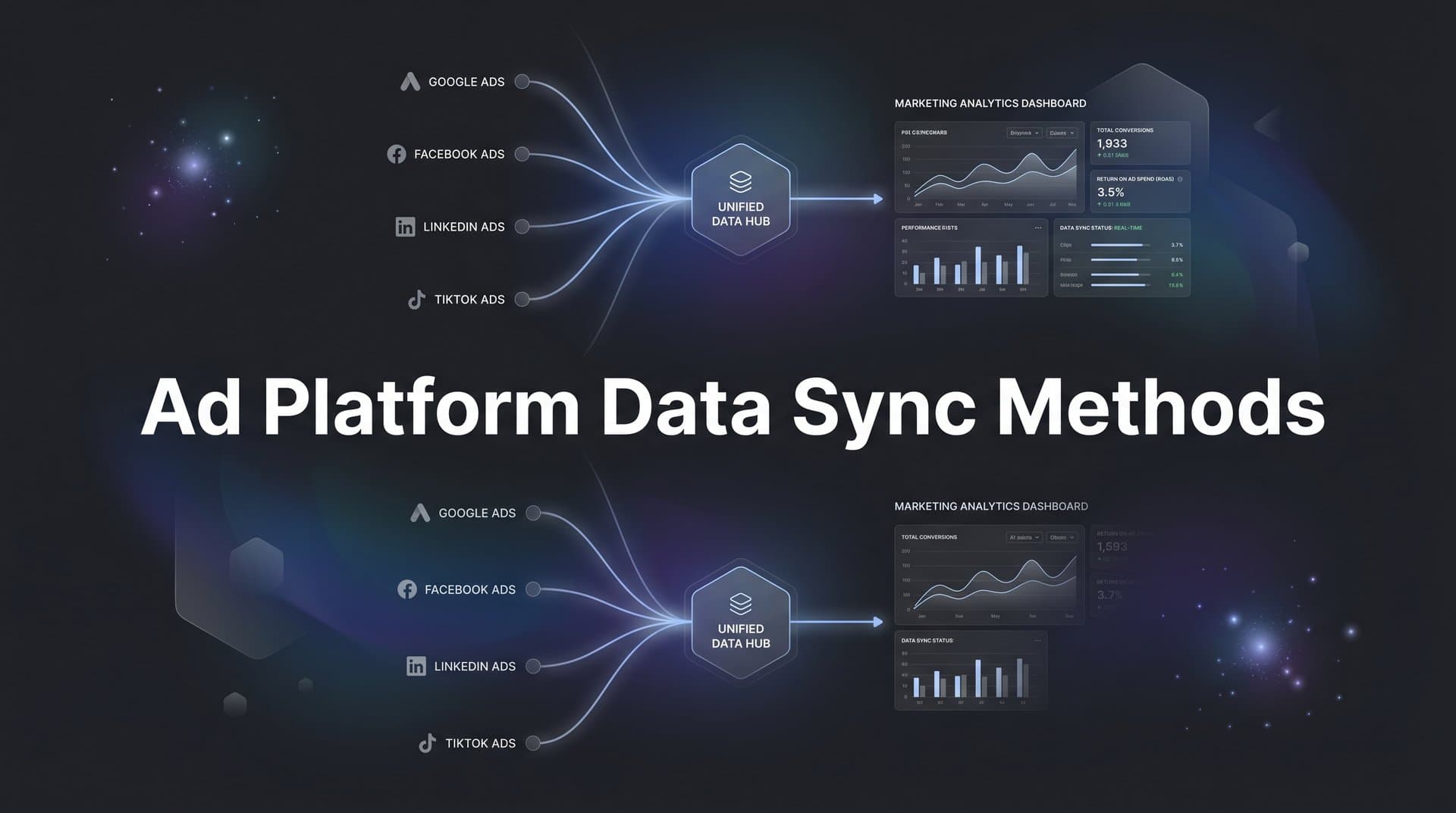
The answer lies in understanding ad platform data sync methods: the mechanisms that move conversion data between your marketing stack and your ad platforms. When these work well, your platforms receive accurate signals, your algorithms optimize toward real outcomes, and your budget decisions are grounded in reality. When they do not work well, you end up flying blind with expensive consequences.
This article breaks down the major ad platform data sync methods, explains how each one works under the hood, and gives you a practical framework for choosing the right approach for your business. Whether you are running ecommerce campaigns or managing a complex B2B funnel, understanding these methods will fundamentally change how you think about your marketing data.
Why Your Ad Platforms and Analytics Never Seem to Agree
Before diving into solutions, it helps to understand why the problem exists in the first place. The root cause is not a bug. It is a feature of how ad platforms were designed.
Every major ad platform, Meta, Google, TikTok, LinkedIn, uses its own attribution model. Meta might credit a conversion to an ad that was viewed seven days ago. Google might claim credit for a click that happened two days ago. Your CRM records the actual closed deal from a sales call that happened last week. All three are describing the same customer. All three are telling a different story. This overlap is sometimes called attribution inflation, and it is baked into the way platforms compete for credit.
Attribution windows make this worse. Meta's default attribution window includes view-through conversions, meaning a user who simply saw your ad (but never clicked) can still be counted as a conversion. Google's Smart Bidding uses its own data models to assign credit. When you stack these platforms on top of each other without a unified tracking layer, double and triple-counting becomes almost inevitable. Learning how to fix attribution discrepancies is essential for any team dealing with this challenge.
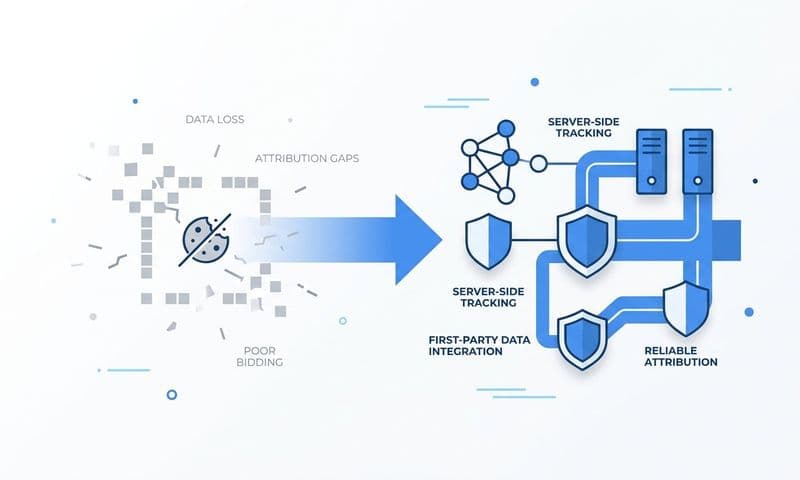
Privacy changes have added another layer of complexity. Apple's App Tracking Transparency framework, introduced with iOS 14.5, significantly reduced the user-level data available to ad platforms. Google has been evolving its approach to third-party cookies in Chrome. These shifts have made client-side, pixel-based tracking far less reliable than it used to be. Events that once fired cleanly are now blocked, delayed, or simply lost when users opt out of tracking or browse with privacy protections enabled.
The practical consequence is a widening gap between what ad platforms report and what actually happened. Marketers who rely solely on platform dashboards often over-invest in channels that look strong on paper but underperform when measured against real revenue. Without a deliberate data sync strategy, budget decisions become guesswork dressed up in dashboards.
This is where ad platform data sync methods come in. They are the infrastructure that bridges the gap between what your platforms think happened and what actually drove revenue.
The Core Ad Platform Data Sync Methods Explained
There are three primary methods for syncing data between your business and your ad platforms. Each has different strengths, limitations, and ideal use cases.
Pixel-Based (Client-Side) Syncing: This is the traditional approach. A small snippet of JavaScript code, a pixel, is placed on your website. When a user takes an action (a purchase, a form submission, a page view), the pixel fires and sends that event data directly from the user's browser to the ad platform. Meta Pixel, Google Tag, and TikTok Pixel all work this way.
The appeal of pixel-based tracking is its simplicity. Drop the code on your site, define your events, and the data starts flowing. For years, this was the default approach for nearly every advertiser. But today, pixel-based tracking faces serious structural limitations. Ad blockers prevent pixels from firing. Safari's Intelligent Tracking Prevention limits cookie lifespans. iOS privacy settings allow users to opt out entirely. The result is that a meaningful portion of your conversions simply never gets reported to your ad platforms through the pixel alone. Exploring dedicated conversion tracking platforms can help you understand the alternatives available.
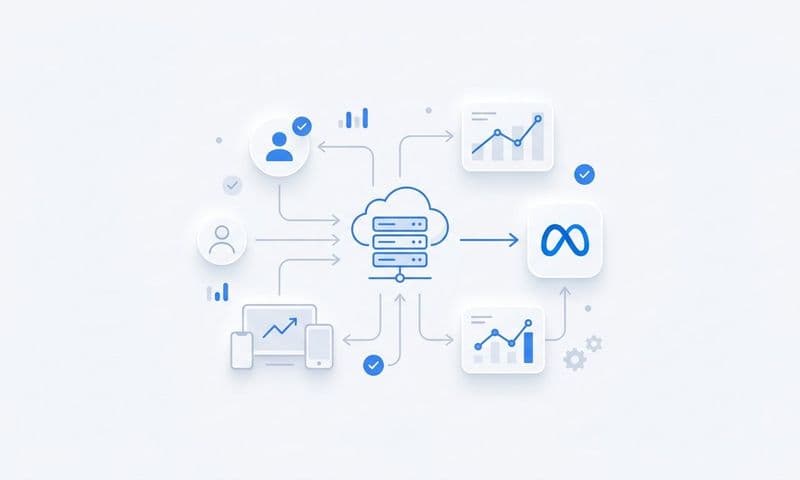
Server-Side Syncing (Conversions API and Similar): This is the modern answer to pixel limitations. Instead of relying on the user's browser to send event data, your server captures the conversion and sends it directly to the ad platform's API. Meta calls this the Conversions API (CAPI). Google has Enhanced Conversions and the Google Ads API. TikTok offers its Events API. LinkedIn has its own Conversions API as well.
Because the data travels from server to server rather than through a browser, it bypasses ad blockers, cookie restrictions, and iOS limitations entirely. The ad platform receives the event regardless of the user's privacy settings or browser behavior. Server-side syncing also allows you to enrich events with first-party data like email addresses, phone numbers, and order values, which dramatically improves the platform's ability to match that event to an actual user in their system.
Offline Conversion Imports and CRM-Based Syncing: Some of your most valuable conversions never happen online. A B2B lead fills out a form, enters a sales pipeline, has multiple calls with your team, and closes three months later. A pixel can capture the form fill, but it has no way of knowing whether that lead ever became a customer.
Offline conversion imports solve this by allowing you to upload CRM or sales data directly to ad platforms. Google Ads supports offline conversion imports natively. Meta allows you to upload offline event sets. By connecting closed-won deals, customer lifetime value data, or in-store purchase records back to the ad click that initiated the journey, you give platforms the signal they actually need to optimize. Instead of optimizing toward form fills, they can optimize toward the leads that actually close.
Each of these methods serves a purpose. The most effective marketing stacks use them in combination rather than treating them as alternatives.
Server-Side Tracking: The New Standard for Data Accuracy
Server-side tracking deserves a closer look because it has become the foundation of accurate ad platform data sync for most modern marketing teams.
Here is how it works in practice. When a user completes a conversion on your site, your server captures that event before any browser-level restrictions can interfere. The server then enriches that event with first-party data you already have: the user's email address, their order value, their customer ID, and any other relevant attributes. That enriched event package is then sent directly to the ad platform's API endpoint.
The enrichment step is where server-side tracking creates a significant advantage over pixels. Pixels can only capture what the browser knows at the moment the event fires. Your server knows much more. It knows whether this was a new customer or a returning one. It knows the actual revenue value of the order, not just that a purchase occurred. It can include hashed personal identifiers that help the ad platform match the event to a real user in their system with far greater accuracy. Understanding how ad tracking tools can help you scale ads using this accurate data is critical for growth-focused teams.
Match rates are a key metric to understand here. When you send a server-side event to Meta or Google, the platform attempts to match that event to a user in its database using the identifiers you provide. Higher match rates mean more of your conversion data actually gets used to train the algorithm. Sending a hashed email address alongside a conversion event gives the platform a much stronger signal than sending an anonymous click ID alone.
There are important implementation considerations to keep in mind. Running server-side tracking alongside your existing pixels (which is common during transition periods) creates the risk of double-counting. If a user converts and both the pixel and the server-side event fire, the platform may record two conversions for a single purchase. Proper event deduplication using unique event IDs prevents this. Every event you send should carry a consistent identifier so the platform can recognize and discard duplicates.
The technical setup for server-side tracking has historically required developer resources, which created a barrier for smaller teams. Platforms like Cometly address this directly by providing server-side tracking infrastructure that connects to your ad platforms without requiring custom engineering work. You get the accuracy benefits of server-side data transfer without needing to build the pipeline from scratch.
How Conversion Sync Feeds Better Data to Ad Algorithms
Understanding server-side tracking is one thing. Understanding why it matters for algorithm performance is what makes it genuinely strategic.
Modern ad platforms do not just display your ads. They actively decide who sees them, when, and at what bid. Meta's Advantage+ campaigns, Google's Smart Bidding, and TikTok's optimization algorithms all rely on conversion signals to learn which users are most likely to convert and what those conversions are worth. The quality of those signals directly determines how well the algorithm performs.
When your conversion data is incomplete, delayed, or inaccurate, the algorithm is working with bad training data. It might optimize toward users who fill out forms but never buy. It might over-bid for traffic from audiences that look similar to your low-value customers. It might under-invest in the segments that actually drive revenue because those conversions never made it back to the platform's data model. Leveraging real-time conversion analytics helps ensure your platforms always have the freshest signals.
Conversion sync changes this dynamic. By sending enriched, verified conversion events back to ad platforms in near real-time, you give their machine learning models higher-quality signals to work with. The algorithm learns what a real customer looks like based on actual purchase data, not just clicks or page views. Over time, this shifts targeting toward higher-intent audiences and reduces wasted spend on traffic that looks engaged but never converts.
The practical impact shows up in campaign performance over time. When ad platforms receive accurate conversion data, they can better identify audiences that resemble your actual buyers. They can adjust bids based on predicted revenue value rather than generic conversion probability. They can suppress spend toward segments that consistently fail to convert downstream, even if those segments show strong engagement metrics on the surface.
Cometly's Conversion Sync feature is built specifically for this purpose. It sends enriched, conversion-ready events back to Meta, Google, and other platforms automatically, so the algorithms are always working from your best available data rather than a degraded, incomplete signal. This is not just about reporting accuracy. It is about giving the ad platform's AI the fuel it needs to find more of your best customers.
Choosing the Right Sync Method for Your Marketing Stack
Not every business needs the same approach. The right combination of ad platform data sync methods depends on your business model, your sales cycle, and the complexity of your marketing stack.
For ecommerce brands with short purchase cycles: Real-time server-side event syncing is typically the highest priority. When a customer adds to cart, initiates checkout, and purchases within a single session, you want that conversion data flowing to your ad platforms immediately. Delays in conversion reporting can cause Smart Bidding or Advantage+ to make suboptimal decisions in the hours and days following a campaign launch. Server-side tracking with enriched purchase data (including order value and product category) gives platforms the signal they need to optimize quickly. Ecommerce teams can benefit from specialized ecommerce data analytics software designed for this exact use case.
For B2B companies with longer sales cycles: CRM-based offline conversion imports become essential. A lead that converts to a qualified opportunity three weeks after clicking an ad, and closes two months after that, cannot be captured by real-time event tracking alone. Connecting your CRM (whether Salesforce, HubSpot, or another platform) to your ad accounts allows you to import closed-won deals and associate them with the original ad interactions. This tells the algorithm which lead sources actually produce revenue, not just which ones generate form fills.
Why a hybrid approach often works best: For most businesses, combining server-side tracking for immediate conversion events with periodic CRM data syncs for downstream revenue attribution gives you both speed and depth. You capture the fast signals that help algorithms optimize in real time, while also feeding in the longer-term revenue data that reflects true business outcomes. Implementing cross-platform attribution ensures that this hybrid data paints a consistent picture across all your channels.
When evaluating tools and platforms for data sync, look for a few key capabilities. Multi-platform support matters because most marketing teams run campaigns across Meta, Google, TikTok, and LinkedIn simultaneously. Deduplication logic is non-negotiable. Match rate transparency helps you understand how much of your conversion data is actually being used by the algorithm. And the ability to connect your CRM and ad accounts without custom engineering work is a practical necessity for teams without dedicated developer resources.
Cometly is built to support this kind of multi-platform, multi-method approach. It connects your ad platforms, CRM, and website into a single tracking layer, giving you the flexibility to sync the right data to the right platform at the right time.
Building a Reliable Data Sync Workflow
Knowing the methods is one thing. Building a workflow that actually works in practice requires a structured approach.
Start with an audit of your current tracking setup. Document every conversion event you are currently tracking, which platforms are receiving those events, and through which method (pixel, server-side, or manual import). Then compare platform-reported conversion numbers against your CRM or order management system. The gap you find represents the data that is currently lost or miscounted.
Once you understand your gaps, implement server-side tracking as your primary data pipeline. Configure your conversion events to fire from the server, include first-party identifiers to maximize match rates, and set up event deduplication using consistent event IDs. If you are running pixels alongside server-side tracking during a transition period, make sure deduplication is active before both are live simultaneously. A solid marketing data analytics software solution can streamline this entire implementation process.
Next, connect your CRM data to your ad platforms. Map your pipeline stages to meaningful conversion events. A qualified opportunity, a closed deal, and a churned customer each tell a different story, and your ad platforms should know the difference. Set up a regular import cadence or, better yet, an automated sync that pushes CRM updates to your ad accounts on a defined schedule.
Finally, set up ongoing monitoring. Data sync is not a one-time configuration. Platforms update their APIs. Conversion events change as your product evolves. Privacy regulations shift. A monthly audit comparing your sync data against actual business outcomes catches drift before it starts distorting your campaign decisions. Building effective data analytics dashboards gives your team a centralized view to monitor sync health across all platforms.
Common pitfalls to avoid: Skipping deduplication when running parallel tracking methods. Failing to map conversion events consistently across platforms, which creates apples-to-oranges comparisons. Treating the initial setup as complete without a plan for ongoing maintenance. Each of these mistakes quietly erodes the accuracy of the data your campaigns depend on.
The Bottom Line on Data Sync
Accurate ad platform data sync is not a technical nicety. It is the foundation of every good campaign decision you make. When your conversion data is fragmented, delayed, or lost to browser restrictions, your ad platforms optimize toward the wrong outcomes, your budget goes to the wrong places, and your results suffer in ways that are hard to diagnose.
The shift toward server-side tracking, enriched conversion sync, and CRM-based offline imports represents the maturation of digital advertising infrastructure. The marketers and teams who invest in getting this right will have a structural advantage: their algorithms will learn faster, their targeting will sharpen more quickly, and their budget decisions will be grounded in what is actually driving revenue rather than what a pixel happened to capture.
This is not a one-time setup. It is an ongoing practice that evolves as your campaigns, platforms, and privacy landscape change. The teams that treat data sync as a living system rather than a checkbox will consistently outperform those who do not.
Ready to get accurate conversion data flowing to every ad platform automatically? Get your free demo of Cometly and see how server-side tracking and conversion sync can transform the quality of data your campaigns run on.