Managing ad spend across Meta, Google, TikTok, LinkedIn, and a growing list of programmatic channels is harder than it looks. The data lives in silos, every platform uses its own attribution model, and by the time you reconcile the numbers, you've already made budget decisions based on incomplete information.
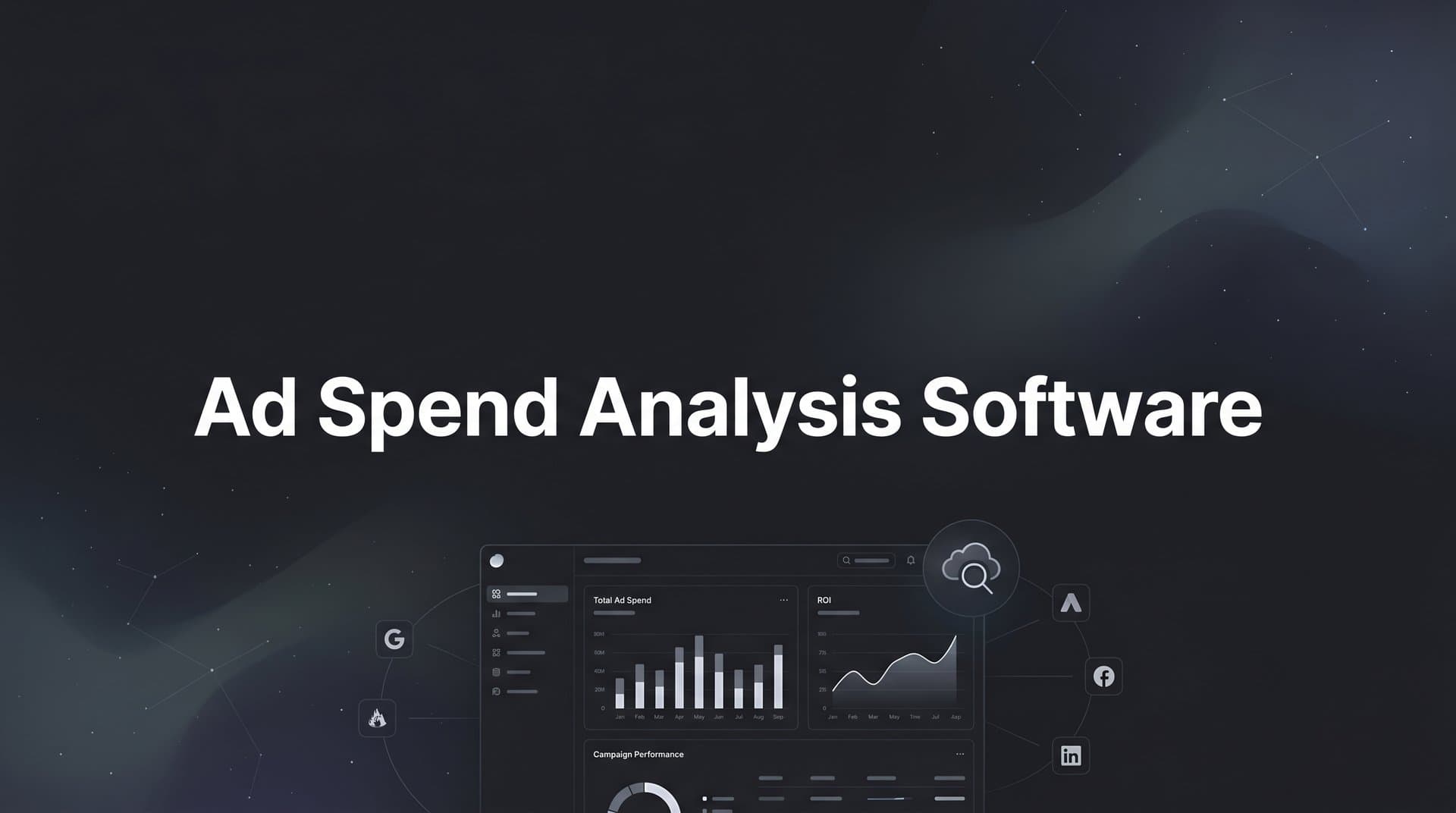
Ad spend analysis software solves this by pulling your cross-channel data into one place, applying consistent attribution logic, and showing you which campaigns are actually driving revenue. The right tool can mean the difference between scaling what works and pouring budget into channels that only look good on paper.
To build this list, we evaluated tools across five criteria: cross-platform tracking depth, attribution accuracy, reporting flexibility, ease of use, and pricing transparency. Whether you're a growth marketer trying to understand your true ROAS or an agency managing dozens of client accounts, there's a tool here that fits. If you want to go deeper on attribution methodology before diving in, check out our guides on marketing attribution and multi-touch attribution models.
Here are the top ad spend analysis tools worth your attention in 2026.
1. Cometly
Best for: Attribution-first marketing teams that need accurate cross-channel revenue tracking.
Cometly is an AI-powered marketing attribution platform that connects your ad platforms, CRM, and website to show exactly which ads and channels drive revenue.
 9 Best Ad Spend Analysis Software to Maximize ROI in 2026
Where This Tool Shines
Most ad platforms will happily take credit for the same conversion. Cometly cuts through that noise by applying consistent multi-touch attribution across every paid channel and tying results back to actual revenue, not just clicks or impressions. That alone makes it a fundamentally different kind of tool than a standard dashboard aggregator.
What sets Cometly apart further is its server-side tracking infrastructure. Because it doesn't rely solely on browser-based pixels, it captures conversion data that iOS privacy changes and cookie restrictions would otherwise lose. The result is a more complete picture of your customer journey, which feeds better signals to both your team and the ad platform algorithms you're trying to optimize.
Key Features
Multi-Touch Attribution: Tracks every paid touchpoint across channels and ties them to actual revenue outcomes, giving you a single source of truth for campaign performance.
Server-Side Tracking: Bypasses browser-level limitations from iOS updates and cookie deprecation to capture conversions that pixel-based tracking misses.
AI-Powered Recommendations: Identifies top-performing ads and campaigns across every channel, then surfaces actionable suggestions for where to scale or pull back spend.
Conversion Sync: Sends enriched, conversion-ready events back to Meta, Google, and other platforms to improve their targeting and optimization algorithms.
AI Chat for Data Analysis: Lets you ask natural-language questions about your ad spend data and get instant answers without building a custom report.
Best For
Cometly is built for digital marketing teams and agencies that run paid campaigns across multiple platforms and need accurate, revenue-tied attribution rather than vanity metrics. It's particularly valuable for teams that have experienced data loss from iOS changes or who suspect their ad platforms are overcounting conversions.
Pricing
Custom pricing based on ad spend volume. A demo is available on request at cometly.com.
2. Triple Whale
Best for: Shopify ecommerce brands tracking ROAS across paid social and search channels.
Triple Whale is an ecommerce analytics platform built natively for Shopify brands that centralizes ad spend tracking and creative performance data.
 7 Best Funnel.io Alternatives for Marketing Data Analytics in 2026
Where This Tool Shines
Triple Whale has carved out a strong niche in the direct-to-consumer space by building deeply around Shopify. If your business runs on Shopify and your primary channels are Meta, Google, and TikTok, the setup is fast and the data flows in quickly. Real-time ROAS reporting means you're not waiting until end-of-day to understand how a campaign is performing.
The creative analytics feature is a genuine differentiator. Instead of just tracking spend and conversions at the campaign level, Triple Whale helps you understand which specific ad creatives are driving results, which is especially useful for brands that test a high volume of creative assets.
Key Features
Shopify-Native Integration: Connects directly to your Shopify store for real-time revenue attribution tied to ad spend across channels.
Creative Analytics: Breaks down performance by individual ad creative to identify what's resonating with your audience and what's burning budget.
Centralized Dashboard: Combines data from Meta, Google, TikTok, and other platforms into a single view with consistent metrics.
First-Party Pixel: Uses pixel-based first-party data collection to improve attribution accuracy beyond what native platform reporting provides.
Best For
Direct-to-consumer Shopify brands with active paid social campaigns who want a fast, visually clean dashboard for monitoring spend efficiency and creative performance. Less suited for non-ecommerce businesses or brands not on Shopify.
Pricing
Plans start around $100/month with tiered pricing based on your store's revenue volume.
3. Northbeam
Best for: Ecommerce brands that need customizable attribution models and media mix modeling.
Northbeam is a machine-learning attribution platform offering granular multi-touch analysis, adjustable lookback windows, and budget allocation modeling for scaling brands.
 9 Best Ad Campaign Attribution Platforms to Track Your Marketing ROI in 2026
Where This Tool Shines
Northbeam gives marketers a level of attribution flexibility that most platforms don't offer. You can adjust your attribution model and lookback window to match your actual sales cycle rather than being locked into a one-size-fits-all approach. For brands with longer consideration periods, this flexibility makes the data far more actionable.
The media mix modeling layer adds a strategic dimension beyond day-to-day reporting. Instead of just telling you what happened, it helps you model how rebalancing your budget across channels would likely affect overall performance.
Key Features
Customizable Attribution Models: Supports multiple multi-touch models with adjustable lookback windows so your attribution logic matches your actual buying cycle.
Media Mix Modeling: Provides budget allocation recommendations based on channel-level contribution to revenue.
Creative-Level Breakdowns: Delivers cross-channel spend analysis down to the individual ad creative for granular optimization.
Incrementality Testing: Helps measure the true incremental impact of campaigns beyond what correlation-based attribution can capture.
Best For
Mid-market to enterprise ecommerce brands with substantial ad budgets across multiple channels who want flexible attribution logic and strategic modeling tools, not just dashboards.
Pricing
Custom pricing. Northbeam is typically positioned for brands with significant monthly ad spend rather than early-stage businesses.
4. Hyros
Best for: High-ticket businesses and info product companies with long, complex sales cycles.
Hyros is an ad tracking and attribution platform built specifically for businesses where the journey from first touch to closed sale spans days, weeks, or even months.
 7 Best Northbeam Alternatives for Small Business in 2026
Where This Tool Shines
Most attribution tools are optimized for ecommerce with short conversion windows. Hyros takes a different approach by extending attribution windows and integrating call tracking, which makes it genuinely useful for businesses that close deals over the phone or through a long nurture sequence. If your sales cycle doesn't fit neatly into a 7-day attribution window, Hyros is worth a close look.
The AI-based optimization layer helps identify which ads are contributing to conversions at each stage of your funnel, not just the last click before purchase. For high-ticket offers where ad spend per conversion is significant, that granularity can meaningfully improve ROI.
Key Features
Long-Window Attribution: Tracks customer journeys across extended timeframes, making it suitable for businesses with longer sales cycles.
Call Tracking Integration: Connects phone-based conversions back to the original ad source, capturing revenue that standard pixel tracking would miss entirely.
AI Ad Optimization: Surfaces recommendations on which ads are driving pipeline at each funnel stage.
Deep Funnel Tracking: Follows users across multiple touchpoints and sessions to build a complete picture of the path to conversion.
Best For
High-ticket service businesses, online education companies, coaching programs, and any brand where phone calls are a significant conversion channel and the sales cycle extends well beyond a standard ecommerce window.
Pricing
Plans start around $99/month with higher-tier options available for larger ad spends and more complex tracking needs.
5. Supermetrics
Best for: Teams that want to pull ad spend data into their own reporting tools and data infrastructure.
Supermetrics is a data aggregation platform that connects over 100 ad platforms and marketing data sources to destinations like Google Sheets, Looker Studio, BigQuery, and data warehouses.
 9 Best Ad Spend Analysis Software to Maximize ROI in 2026
Where This Tool Shines
Supermetrics isn't an attribution platform. It's a data pipeline tool, and it's very good at that specific job. If your team already has a reporting setup in Looker Studio or a BI tool like Tableau, Supermetrics gets your ad spend data there automatically without manual exports or copy-paste workflows.
The breadth of connectors is a real strength. Whether you're pulling from niche ad networks, social platforms, or SEO tools, Supermetrics likely has a connector for it. The automated refresh schedules mean your reports stay current without anyone touching them.
Key Features
100+ Data Source Connectors: Covers all major ad platforms plus a wide range of niche sources, analytics tools, and CRMs.
Automated Data Refresh: Keeps your reports and dashboards updated on custom schedules without manual intervention.
Flexible Destinations: Pushes data to Google Sheets, Looker Studio, BigQuery, Snowflake, Power BI, and more.
Custom Query Builder: Lets you select exactly which metrics and dimensions you want to pull, avoiding bloated datasets.
Best For
Marketing analysts, data teams, and agencies that want to centralize ad spend data in their existing BI or reporting infrastructure rather than adopt a new dashboard tool.
Pricing
Starts around $39/month per connector, with pricing scaling based on the number of data sources and destinations you activate.
6. Whatagraph
Best for: Agencies that need polished, automated client reporting for ad spend performance.
Whatagraph is a cross-channel marketing reporting platform built with agencies in mind, featuring drag-and-drop report building, white-label branding, and automated delivery.
 9 Best Ad Spend Analysis Software to Maximize ROI in 2026
Where This Tool Shines
Building client reports manually is one of the biggest time drains in agency work. Whatagraph addresses this directly with pre-built templates, a visual drag-and-drop builder, and automated scheduling that sends reports to clients on a set cadence. The white-label options mean reports go out under your agency's brand, not Whatagraph's.
The cross-channel data blending feature is particularly useful for agencies managing multi-platform campaigns. Instead of sending clients separate reports for Meta, Google, and TikTok, you can blend that data into a single unified view that tells a coherent story about overall ad spend efficiency.
Key Features
Drag-and-Drop Report Builder: Create custom reports visually using pre-built templates or starting from scratch, without needing technical skills.
White-Label Branding: Deliver reports under your agency's brand with custom logos, colors, and domains.
Automated Scheduling: Set reports to generate and deliver automatically via email on daily, weekly, or monthly cadences.
Cross-Channel Data Blending: Combines spend and performance data from multiple platforms into unified views for cleaner client communication.
Best For
Digital marketing agencies managing multiple client accounts who need to streamline reporting workflows and deliver professional, branded performance reports at scale.
Pricing
Plans start around $199/month with agency-tier options available for teams managing larger client rosters.
7. Rockerbox
Best for: Brands running both digital and offline advertising who need unified attribution.
Rockerbox is a unified attribution platform that brings digital and offline ad channels together, including TV, direct mail, and podcasts alongside standard digital platforms.
 9 Best Ad Spend Analysis Software to Maximize ROI in 2026
Where This Tool Shines
The vast majority of attribution tools focus exclusively on digital channels. Rockerbox stands out by extending attribution to offline media, which matters a lot for brands that invest in TV, podcast sponsorships, or direct mail alongside their digital campaigns. Having all of that in one place removes the guesswork around how offline spend is contributing to overall performance.
The deduplication logic is another strong point. Rather than letting every channel claim credit for the same conversion, Rockerbox applies consistent rules to remove overlap and give you a cleaner read on where conversions are actually originating.
Key Features
Offline Channel Attribution: Tracks TV, direct mail, podcast, and other offline channels alongside digital in a single unified view.
Marketing Mix Modeling: Provides budget allocation insights based on each channel's contribution to conversions over time.
Deduplicated Conversion Tracking: Removes cross-channel overlap so each conversion is counted once and assigned appropriately.
Full Journey Visibility: Maps the complete customer path from first exposure to conversion across both online and offline touchpoints.
Best For
Mid-market and enterprise brands with meaningful offline ad budgets who need a single platform to unify digital and traditional media performance data. A free tier is available for Shopify brands looking to get started.
Pricing
Custom pricing for most plans. A free tier is available for qualifying Shopify brands.
8. Adverity
Best for: Enterprise marketing teams with complex data integration and governance requirements.
Adverity is an enterprise-grade marketing data platform that automates the collection, harmonization, and governance of data from hundreds of sources.
Where This Tool Shines
At the enterprise level, the challenge isn't just pulling data together. It's ensuring that data is clean, consistent, and trustworthy across teams, regions, and business units. Adverity addresses this with automated data harmonization and quality monitoring that flags anomalies before they corrupt your reporting.
The platform's 600+ connectors and pre-built marketing data models mean large teams don't have to build their data infrastructure from scratch. For organizations where data governance and access controls are non-negotiable, Adverity provides the structure that lighter-weight tools simply can't match.
Key Features
600+ Data Connectors: Covers an extensive range of ad platforms, analytics tools, CRMs, and data sources with automated harmonization.
AI-Powered Data Quality Monitoring: Detects anomalies and data quality issues automatically before they affect downstream reporting.
Enterprise Data Governance: Provides access controls, audit trails, and data management features suited to large organizations.
Pre-Built Marketing Data Models: Accelerates time to insight with ready-made data structures designed for marketing analytics use cases.
Best For
Enterprise marketing teams, large agencies, and global brands that need a robust, governed data infrastructure for marketing analytics rather than a standalone attribution or reporting tool.
Pricing
Custom enterprise pricing. A demo is available on request through the Adverity website.
9. Windsor.ai
Best for: Smaller teams and budget-conscious marketers who want multi-touch attribution without enterprise costs.
Windsor.ai is an accessible multi-touch attribution platform with native connectors to BI tools and CRMs, designed for teams that want solid attribution without a large price tag.
Where This Tool Shines
Windsor.ai occupies an important spot in the market: capable attribution at a price point that doesn't require a large budget or a dedicated data team to justify. The native integrations with Google Sheets, BigQuery, and Power BI mean you can get your attribution data flowing into tools your team already uses without complex setup.
The keyword-level attribution for search campaigns is a particularly useful feature for teams running Google Ads, where understanding which specific keywords are driving conversions can have a direct impact on bid strategy and budget allocation.
Key Features
Multi-Touch Attribution Models: Offers several attribution model options so you can choose the approach that best reflects your customer journey.
Native BI and CRM Connectors: Connects directly to Google Sheets, BigQuery, Power BI, and popular CRMs for flexible data destinations.
ROI Tracking Across Channel Types: Covers paid, organic, and offline channels in a single attribution view.
Keyword-Level Attribution: Breaks search campaign attribution down to the keyword level for more precise Google Ads optimization.
Best For
Small to mid-sized marketing teams, startups, and budget-conscious businesses that want meaningful attribution data and BI tool integration without committing to enterprise-level pricing.
Pricing
A free tier is available. Paid plans start around $19/month, making it one of the most accessible options on this list.
Which Tool Is Right for Your Team
The best ad spend analysis software depends on what problem you're actually trying to solve. These tools aren't interchangeable, and picking the right one comes down to your business model, tech stack, and what you need from your data.
If accurate, revenue-tied attribution is your primary goal, especially across multiple paid channels with iOS and cookie tracking challenges in play, Cometly is the strongest choice. Its server-side tracking, multi-touch attribution, and AI-powered recommendations give marketing teams the full picture they need to make confident budget decisions. The conversion sync feature also helps feed better data back to Meta and Google, improving the performance of the very campaigns you're analyzing. You can learn more about how attribution connects to ad performance on the Cometly blog.
For ecommerce brands on Shopify, Triple Whale and Northbeam offer purpose-built solutions with strong creative analytics and flexible modeling respectively. If your business runs on long sales cycles or phone-based conversions, Hyros is specifically designed for that scenario.
Agencies that need efficient, branded client reporting will find Whatagraph saves significant time. Teams that want to route ad spend data into their own BI infrastructure should look at Supermetrics or Windsor.ai, with Windsor being the more budget-friendly path. For brands with meaningful offline ad investments, Rockerbox fills a gap that most digital-only tools can't address. And for enterprise teams with complex data governance needs, Adverity provides the infrastructure to match.
The common thread across all of these tools is that fragmented, platform-reported data leads to poor decisions. Investing in a dedicated ad spend analysis platform is how serious marketing teams move from guessing to knowing.
Ready to see exactly which ads are driving your revenue? Get your free demo of Cometly and start capturing every touchpoint across your paid channels today.