Dropshipping is a high-volume, thin-margin game. You are running paid ads across multiple channels, selling products from multiple suppliers, and managing customer journeys that often start with a single ad click and end weeks later. Without solid tracking in place, you are flying blind on which ads are profitable, which products are worth scaling, and where your revenue is actually coming from.
The challenge is that most dropshippers rely on surface-level metrics like clicks and impressions while missing the data that actually matters: which ad drove the purchase, which channel delivers the best return on ad spend, and which customer segments convert at the highest rate.
The good news is that building a reliable tracking system for dropshipping is not as complex as it sounds when you approach it with the right strategies. This guide breaks down seven proven tracking strategies that help dropshipping businesses connect ad spend to real revenue, eliminate wasted budget, and make confident scaling decisions. Whether you are just getting started or looking to tighten up an existing setup, these strategies will give you a clear path to more accurate, actionable data.
1. Build a First-Party Data Foundation Before Running Ads
The Challenge It Solves
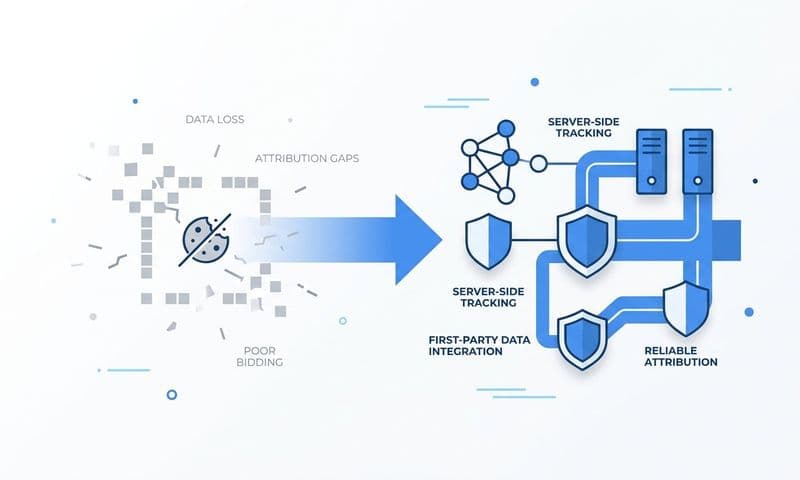
Browser-based pixels are increasingly unreliable. Ad blockers, iOS privacy changes, and evolving browser restrictions degrade the quality of conversion data that your ad platforms receive. If your tracking depends entirely on client-side pixels, you are likely missing a significant portion of purchase events. That means your campaigns are optimizing on incomplete data, and your reported ROAS is probably inflated.
The Strategy Explained
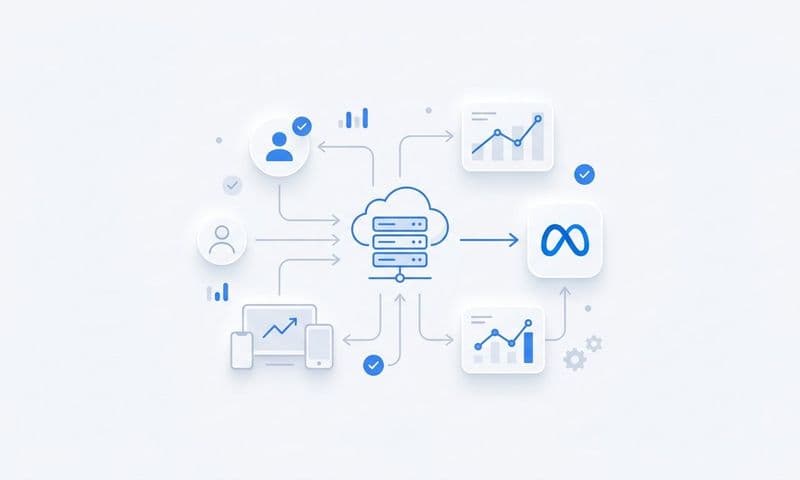
Server-side tracking sends conversion events directly from your server to ad platforms, bypassing the browser entirely. Paired with Conversion APIs like Meta CAPI and Google Enhanced Conversions, this approach creates a direct, reliable data pipeline between your store and your ad platforms.
Think of it like this: browser pixels are like shouting across a crowded room and hoping someone hears you. Server-side tracking is a direct phone call. The signal is clean, complete, and consistent regardless of what is happening on the user's browser.
Both Meta and Google document server-side event tracking as a best practice for advertisers who want accurate conversion measurement. Setting this up before you scale ad spend ensures that every optimization decision your campaigns make is based on real purchase data.
Implementation Steps
1. Set up Meta Conversions API through your e-commerce platform's native integration or a direct server-side connection. Verify that purchase events are firing correctly in Events Manager.
2. Enable Google Enhanced Conversions in your Google Ads account and configure server-side event sending so purchase data reaches Google without relying solely on the gtag browser tag.
3. Use event deduplication to ensure the same conversion is not counted twice when both browser and server-side events fire for the same purchase.
Pro Tips
Prioritize purchase and add-to-cart events first, as these carry the highest optimization value for ad platform algorithms. Once those are stable, layer in checkout initiated and view content events to give platforms a richer signal across the full funnel. Platforms like Cometly are built to handle server-side event tracking and Conversion API integration natively, making this setup significantly faster for growing dropshipping teams.
2. Use UTM Parameters to Track Every Traffic Source
The Challenge It Solves
Without UTM parameters, your analytics platform cannot tell the difference between a visitor who came from a paid Facebook ad and one who clicked an organic Instagram post. Traffic gets lumped into vague buckets like "social" or "direct," making it impossible to attribute purchases to specific campaigns, ad sets, or creatives. You end up guessing which channels are working instead of knowing.
The Strategy Explained
UTM parameters are tags you append to your URLs that tell your analytics platform exactly where a visitor came from. A well-structured UTM includes the source (the platform), the medium (the channel type), the campaign name, the ad set or audience, and the specific creative or ad.
The key word here is consistency. A UTM naming convention only works if everyone on your team uses the same structure every time. If one person labels a campaign "summer_sale" and another labels it "Summer-Sale-2026," your data splits into two rows and you lose the ability to aggregate performance accurately.
Applied consistently across Meta, Google, TikTok, and any other paid channel, UTMs become the connective tissue between your ad platforms and your analytics data. Every purchase traced back to a specific UTM is a data point that tells you exactly which campaign, audience, and creative earned that revenue.
Implementation Steps
1. Define a standard UTM naming convention for your business. Decide on lowercase formatting, separator characters (underscores or hyphens), and a consistent structure for campaign names, ad set labels, and creative identifiers.
2. Build a UTM builder template in a shared spreadsheet so every team member generates URLs from the same structure. Avoid manually typing UTMs, as typos break attribution.
3. Audit your existing campaigns and replace any inconsistently tagged URLs. Verify that UTM data is flowing correctly into your analytics platform by checking source and medium reports after running a test click.
Pro Tips
Use dynamic UTM parameters where ad platforms support them. Meta and Google both allow you to automatically populate campaign ID, ad set name, and ad name into your UTM strings, eliminating manual tagging errors and keeping your attribution data precise at scale.
3. Implement Multi-Touch Attribution to See the Full Customer Journey
The Challenge It Solves
Last-click attribution gives all the credit to the final touchpoint before a purchase. In dropshipping, where a customer might see a TikTok ad, click a Google retargeting ad three days later, and then convert through a direct visit, last-click attribution tells you Google and direct drove the sale while completely ignoring TikTok. You cut TikTok spend, and conversions drop. Sound familiar?
The Strategy Explained
Multi-touch attribution distributes credit across every touchpoint in the customer journey. Instead of a single channel taking all the credit, you get a realistic picture of how paid social, paid search, organic, and direct channels work together to move a customer from awareness to purchase.
This matters enormously for dropshipping businesses that run both top-of-funnel awareness campaigns and bottom-of-funnel retargeting. If you only measure last-click, your awareness campaigns look like they contribute nothing. Multi-touch attribution reveals their true role in warming up audiences that eventually convert.
Marketing measurement professionals widely recognize multi-touch attribution as a more complete measurement framework compared to single-touch models. For businesses running cross-channel paid campaigns, it is the difference between understanding your funnel and misreading it.
Implementation Steps
1. Choose an attribution model that fits your business. Linear attribution distributes credit equally across all touchpoints. Time-decay models give more credit to touchpoints closer to conversion. Position-based models weight the first and last touch more heavily. Start with linear if you are new to multi-touch.
2. Ensure your tracking captures all touchpoints, not just paid clicks. Organic sessions, email clicks, and direct visits should all be part of the journey map. This requires consistent UTM tagging and a centralized analytics platform.
3. Compare attribution model outputs side by side to understand how credit shifts across channels. Use this comparison to inform budget allocation rather than making decisions based on a single model view.
Pro Tips
Do not abandon last-click entirely. Use it as one lens alongside multi-touch to understand both which channel closes deals and which channels initiate and nurture the journey. Cometly's attribution platform lets you compare multiple models simultaneously so you can make decisions with full context rather than a single, incomplete view.
4. Track Revenue Back to the Ad Level, Not Just the Campaign Level
The Challenge It Solves
Campaign-level reporting tells you that a campaign generated revenue. Ad-level reporting tells you which specific creative drove that revenue. The difference is critical. In a typical dropshipping campaign, a small number of ads generate the majority of purchases while the rest consume budget with minimal return. Without ad-level revenue attribution, you cannot identify which assets to scale and which to cut.
The Strategy Explained
Ad-level revenue tracking connects purchase value directly to the individual ad, audience, and creative combination that drove it. This requires passing revenue data back to your analytics platform in a way that maps to specific ad identifiers, not just campaign-level aggregates.
Think of it like managing a product catalog. You would never look at total store revenue and call it a day. You drill into which products are selling, which have the best margins, and which are sitting idle. Ad-level attribution applies the same logic to your creative assets. Your ads are your products in the advertising ecosystem, and you need to know which ones are profitable.
When you can see that one ad creative is generating purchases at a cost per acquisition that makes sense for your margins while another is spending twice as much for the same result, the scaling decision becomes obvious.
Implementation Steps
1. Ensure your purchase events include order value data. Every conversion event sent to your analytics platform and ad platforms should carry the actual revenue amount, not just a static conversion value.
2. Structure your UTM parameters to include ad-level identifiers. Use dynamic parameters to automatically capture ad ID or ad name so revenue data maps to specific creatives in your analytics reports.
3. Build a reporting view that shows revenue, ad spend, and ROAS at the individual ad level. Sort by ROAS descending to immediately identify your top performers and lowest performers.
Pro Tips
Look beyond ROAS alone. An ad with a high ROAS on a low-margin product may be less valuable than an ad with a moderate ROAS on a high-margin product. Layer in product margin data where possible to understand true profitability at the ad level, not just revenue efficiency. Tools designed for boosting ROAS on paid ad campaigns can help surface these insights automatically.
5. Monitor Abandoned Cart Data as a Conversion Signal
The Challenge It Solves
Most visitors who add a product to their cart do not complete the purchase. That gap between add-to-cart and purchase represents real revenue that your business is close to capturing but losing at the final stage. Without tracking abandoned cart events, you have no visibility into where your funnel is leaking or which audiences are showing high purchase intent but not converting.
The Strategy Explained
Abandoned cart tracking captures the event when a user adds items to their cart but does not complete checkout. This data serves two purposes. First, it reveals funnel drop-off patterns so you can diagnose whether the problem is pricing, shipping costs, checkout friction, or something else. Second, it creates a high-intent audience segment that you can retarget with precision.
Users who abandon a cart have already demonstrated interest and purchase intent. They are not cold traffic. Retargeting them with a specific ad, whether that is a reminder, a limited-time offer, or a social proof message, is far more efficient than running broad awareness campaigns to new audiences.
Abandoned cart data also feeds back into your ad platform algorithms. When you send these events as custom conversion signals via Conversion API, you give platforms a richer picture of your funnel, which improves their ability to find similar high-intent users in prospecting campaigns.
Implementation Steps
1. Set up an abandoned cart event that fires when a user adds to cart and then exits without completing checkout. This can be configured through your e-commerce platform's event tracking or via server-side event setup.
2. Send abandoned cart events to Meta and Google as custom events so you can build retargeting audiences based on this signal. Ensure the event includes product identifiers so you can serve dynamic product ads to these users.
3. Create a dedicated retargeting campaign targeting abandoned cart audiences with a short attribution window, typically one to three days, to capture users while purchase intent is still high.
Pro Tips
Segment your abandoned cart audiences by cart value where possible. A user who abandoned a high-value cart is worth a more aggressive retargeting investment than someone who left with a single low-cost item. Tailoring your retargeting spend to cart value improves the efficiency of your recovery campaigns.
6. Analyze Cross-Channel Ad Performance in One Dashboard
The Challenge It Solves
Most dropshipping businesses run ads on at least two or three platforms simultaneously. Meta for social prospecting and retargeting. Google for search intent capture. TikTok for top-of-funnel awareness. Each platform has its own dashboard, its own attribution model, and its own way of reporting results. Comparing performance across platforms by switching between siloed dashboards is slow, error-prone, and almost always leads to double-counting revenue.
The Strategy Explained
Centralizing your ad performance data into a single analytics view eliminates the friction of cross-platform comparison and gives you an accurate, deduplicated picture of how each channel contributes to revenue.
When all your channel data lives in one place, patterns become visible that you would never catch by looking at individual platform dashboards. You might discover that Meta drives a high volume of first-touch interactions while Google captures the conversion, making both channels essential even though Google looks like the top performer in last-click reporting. Or you might find that TikTok delivers a lower CPA than Meta for a specific product category, a signal that would be buried if you were comparing numbers across separate tabs.
A unified dashboard also accelerates decision-making. Instead of spending time aggregating data, you spend time acting on it. The best cross-platform analytics tools eliminate attribution chaos by normalizing data from every channel into a single consistent view.
Implementation Steps
1. Connect all your ad platforms to a centralized analytics tool that pulls spend, impressions, clicks, and conversion data into a single view. Ensure the tool normalizes attribution windows across platforms so you are comparing apples to apples.
2. Build a standard reporting view that shows ROAS, CPA, and revenue by channel side by side. Include a blended ROAS metric that accounts for total spend across all channels against total attributed revenue.
3. Set up weekly performance reviews using this unified view. Look for channels where spend is increasing but ROAS is declining, as this is typically the first signal that a campaign needs creative refresh or audience adjustment.
Pro Tips
Cometly is built specifically for this use case. It connects Meta, Google, TikTok, and other channels into a single attribution dashboard so you can compare performance across platforms with consistent attribution logic, without the manual aggregation work that typically consumes hours of analyst time each week.
7. Use AI-Driven Insights to Scale What Works and Cut What Does Not
The Challenge It Solves
As your dropshipping operation scales, the volume of data grows faster than your ability to manually review it. Dozens of active ads across multiple campaigns and channels generate more performance signals than any team can efficiently process by hand. The result is that high-performing ads get missed, underperforming ads continue burning budget, and scaling decisions lag behind the data.
The Strategy Explained
AI-driven analysis surfaces performance patterns across your ad data faster than manual review allows. Instead of scrolling through rows of campaign data to find your best performers, AI identifies which ad and audience combinations are generating the strongest results and flags which ones are declining before they drain significant budget.
There is a second layer to this strategy that is equally important: feeding enriched first-party conversion data back to ad platform algorithms. Meta and Google both document that higher-quality conversion signals improve their machine learning targeting. When you send clean, server-side purchase events with accurate revenue data back to these platforms, their algorithms get better at finding users who are likely to buy, not just users who are likely to click.
This creates a compounding feedback loop. Better data in means better targeting out, which means more efficient spend, which generates more high-quality conversion data to feed back in. Exploring the best AI tools for digital marketing can help you identify which platforms are best positioned to power this feedback loop.
Implementation Steps
1. Ensure your conversion event data is complete and accurate before relying on AI optimization. AI recommendations are only as good as the data they analyze. Incomplete or inaccurate conversion data produces unreliable recommendations.
2. Use an AI-driven analytics platform to identify top-performing ads and audiences across your campaigns. Look for patterns in creative format, audience segment, and offer type among your highest ROAS ads.
3. Send enriched conversion events back to Meta and Google via Conversion API with full revenue and product data included. Enable Advantage+ or Smart Bidding features on these platforms and let the enriched data improve algorithmic targeting over time.
Pro Tips
Do not scale based on AI recommendations alone without validating against your margin data. An ad that AI flags as a top performer based on ROAS may still be unprofitable if the product margin is thin. Use AI to surface candidates for scaling, then apply a human profitability check before increasing budget.
Putting It All Together: Your Dropshipping Tracking Roadmap
Effective tracking for dropshipping is not about collecting more data. It is about collecting the right data and connecting it to the decisions that drive profit.
Start by locking down your first-party data foundation with server-side tracking and Conversion API setup. Then layer in UTM parameters and a consistent naming convention so every traffic source is properly identified. From there, move to multi-touch attribution so you understand the full customer journey, not just the last click.
As your tracking matures, push deeper into ad-level revenue attribution, abandoned cart signals, and cross-channel performance analysis. Finally, use AI-driven insights to accelerate the feedback loop between your data and your ad spend decisions.
Each strategy in this guide builds on the previous one. A strong first-party data foundation makes your UTMs more reliable. Reliable UTMs make multi-touch attribution more accurate. Accurate attribution makes ad-level revenue tracking actionable. And actionable ad-level data is what AI tools need to surface the insights that actually move the needle.
Cometly is built to help marketers do exactly this. It connects your ad platforms, website, and revenue data into a single source of truth so you can see which ads and channels are actually driving purchases and scale with confidence.
Ready to move beyond guesswork and build a tracking system that actually supports growth? Get your free demo today and start capturing every touchpoint to maximize your conversions.