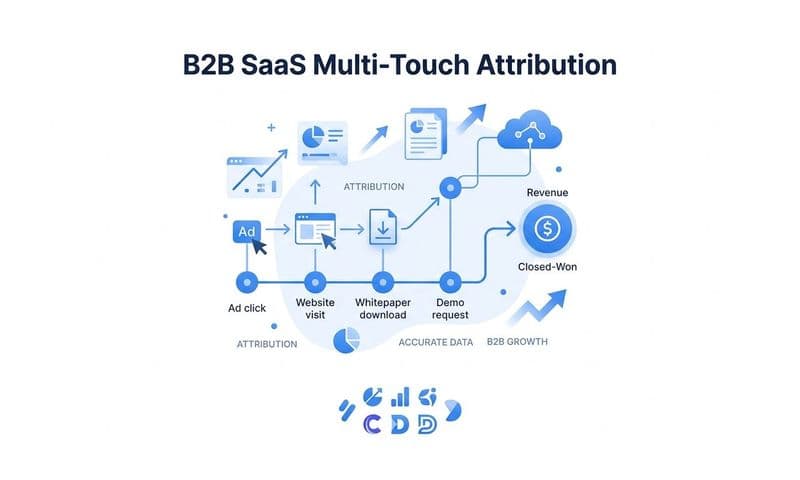

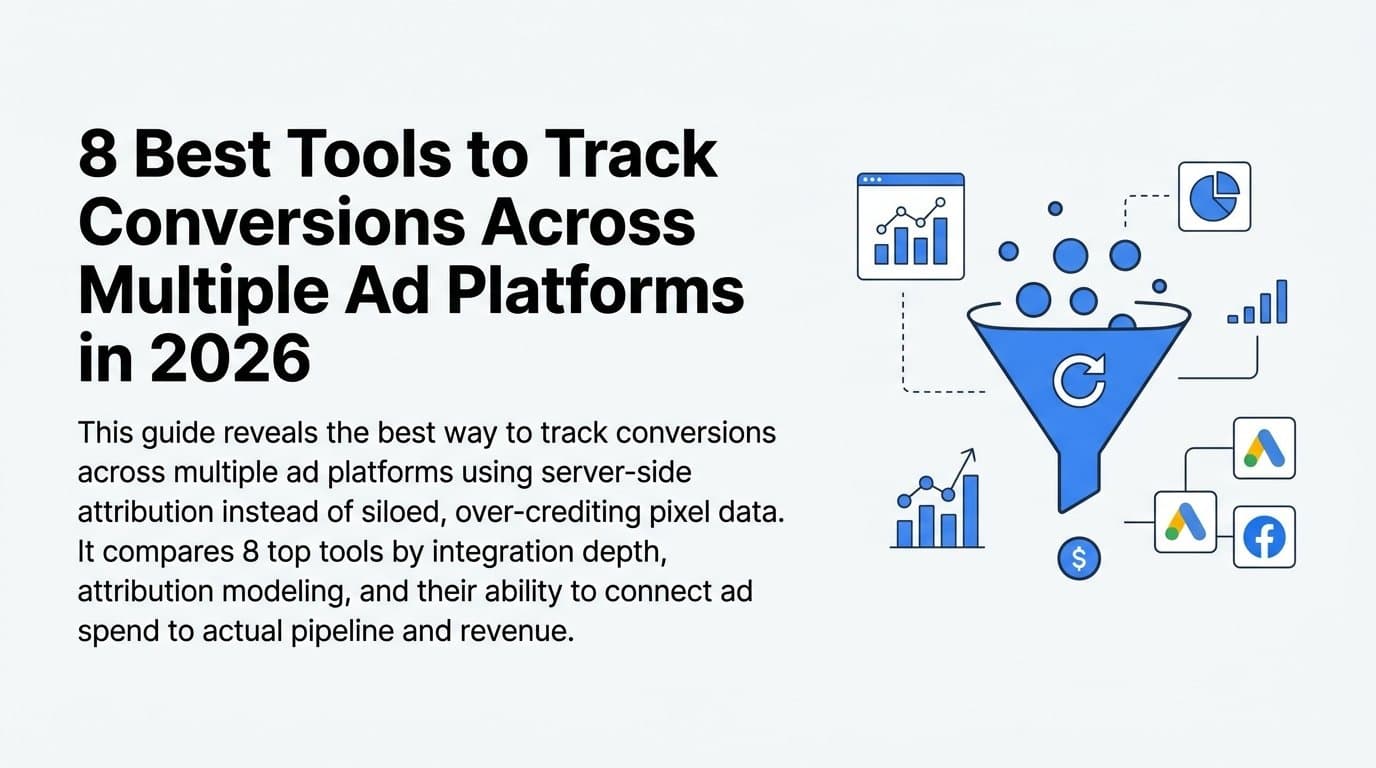
The best way to track conversions across multiple ad platforms is to use a server-side attribution tool that unifies data from Meta, Google, LinkedIn, TikTok and your CRM into one source of truth, rather than relying on each platform's own pixel-based reporting. Native pixels tend to over-credit their own platform, which is why two ad accounts can each claim the same conversion. This list compares tools by how they connect ad spend to actual pipeline and revenue, not just clicks, based on integration depth, attribution modeling, and server-side tracking capability.
1. Cometly
Cometly is a marketing attribution and analytics platform built specifically for B2B SaaS companies that need to connect ad spend to closed-won revenue, not just leads or clicks. It links your ad platforms, CRM, and Stripe billing data into a single view of the customer journey, from the first ad click through to signed contracts and recurring revenue.
 8 Best Tools to Track Conversions Across Multiple Ad Platforms in 2026
What sets Cometly apart from most cross-platform trackers is its combination of server-side conversion tracking (via Meta and Google Conversion API) with CRM and Stripe integration. Instead of stopping at "lead generated," Cometly follows that lead through your pipeline to see whether it actually turned into revenue, and which ad, campaign, and channel deserve credit. The AI ads manager also flags which campaigns are driving pipeline so teams can reallocate spend without waiting on a weekly reporting cycle.
- Server-side conversion tracking with Meta and Google Conversion API integration
- Multi-touch attribution across the full customer journey
- Stripe integration ties ad spend directly to revenue, not just conversion volume
- AI ads manager surfaces high-performing campaigns across channels
- 70+ native integrations with CRMs and ad platforms
The tradeoff is that Cometly is built with B2B SaaS and subscription revenue models in mind, so ecommerce brands tracking one-time purchases may find better fit elsewhere. Pricing is based on tracked sessions and feature tier; current plans are listed on the website.
Best for: B2B SaaS companies that need to trace ad spend all the way to pipeline and closed-won revenue.
2. Triple Whale
Triple Whale is an analytics dashboard built for ecommerce brands running high volumes of ad spend across Meta, Google, TikTok, and Pinterest. It blends spend and revenue data into a single blended ROAS view, which is useful for teams that want a fast daily read on what is working without building a custom data warehouse.
 8 Best Tools to Track Conversions Across Multiple Ad Platforms in 2026
The platform offers a first-party pixel option to improve tracking accuracy as browser cookie restrictions and privacy changes have chipped away at native platform pixel accuracy. Creative-level reporting lets teams see which specific ad creative, not just which campaign, is driving conversions.
Triple Whale is purpose-built for direct-to-consumer ecommerce. It does not offer the CRM and subscription-revenue depth that B2B SaaS companies need to connect ad spend to pipeline stages or closed-won deals. Pricing is tiered based on tracked ad spend, and costs can climb quickly for high-volume advertisers.
Best for: Ecommerce brands wanting a blended ROAS view across major ad platforms.
3. Northbeam
Northbeam uses probabilistic, data-driven attribution to assign conversion credit across touchpoints rather than defaulting to last-click. This matters for advertisers running multi-platform campaigns where a customer might see a TikTok ad, click a Google search ad, then convert from a retargeting email.
 8 Best Tools to Track Conversions Across Multiple Ad Platforms in 2026
Northbeam's cohort and incrementality testing features let teams validate whether a channel is actually driving new demand versus simply capturing conversions that would have happened anyway. Cross-channel dashboards cover the major ecommerce ad platforms and are built for teams that already have a strong grasp of attribution concepts.
The platform is priced and positioned for larger advertisers with significant monthly spend; it is not aimed at early-stage teams testing their first few campaigns. Pricing is custom and quoted based on account size.
Best for: High-spend ecommerce and DTC teams that want probabilistic attribution with incrementality testing.
4. Hyros
Hyros is built around server-side, cookieless tracking, positioning it as a direct response to the accuracy losses caused by Apple's App Tracking Transparency policy and broader browser cookie restrictions since 2021. It is one of the few tools on this list that tracks call and email conversions alongside ad clicks, which matters for businesses that close deals over the phone rather than purely online.
 8 Best Tools to Track Conversions Across Multiple Ad Platforms in 2026
Hyros integrates with Meta, Google, and YouTube and provides campaign-level reporting detailed enough to spot which ad is driving phone leads versus form fills. This makes it a strong fit for course creators, coaches, and service businesses running high ad volume with a sales-call component.
Hyros is less suited to companies whose revenue events live primarily in a CRM pipeline with multiple deal stages, since its strength is call and click tracking rather than deep CRM stage attribution. Pricing details are available on request through the website.
Best for: Advertisers who close a meaningful share of deals through calls and need those conversions tied back to ad clicks.
5. Wicked Reports
Wicked Reports connects ad platform data with email marketing and CRM systems to report revenue and customer lifetime value by channel, not just conversion counts. This is useful for businesses where the first sale is small but repeat purchases or upsells make up most of the lifetime value.
 8 Best Tools to Track Conversions Across Multiple Ad Platforms in 2026
The multi-touch attribution model spreads credit across the touchpoints that led to a sale, and the platform's channel-level revenue reporting helps teams justify spend on channels that look weak on a last-click basis but perform well over a customer's full lifecycle.
Wicked Reports fits mid-market ecommerce and info-product businesses more naturally than enterprise B2B SaaS, since its CRM integrations are lighter than platforms built specifically around sales pipelines. Current pricing is listed on the website.
Best for: Businesses that want revenue and lifetime value attributed by channel, not just first conversion.
6. Rockerbox
Rockerbox is a server-side, cookieless attribution platform built for mid-market and enterprise advertisers managing complex, multi-platform ad spend. Its standout feature is the ability to run linear, time-decay, and data-driven attribution models side by side, so teams can compare how credit shifts depending on the model rather than committing to one view.
 8 Best Tools to Track Conversions Across Multiple Ad Platforms in 2026
This flexibility is valuable for larger marketing teams that need to defend attribution methodology to finance or leadership, since they can show how conclusions hold up (or don't) across multiple models. Cross-channel reporting covers the major ad platforms advertisers typically run.
Rockerbox's enterprise focus means implementation and onboarding take longer than lighter-weight tools, and pricing is customized rather than self-serve. It is generally not the right fit for small teams wanting a quick setup.
Best for: Enterprise teams that want to compare multiple attribution models before trusting one.
7. Segment
Segment is a customer data platform, not an attribution tool by itself. It collects events from ads, websites, and product usage into a single pipeline and routes that data wherever it's needed: a data warehouse, a BI tool, or an attribution layer built on top.
 9 Best SaaS Touchpoint Tracking Software Tools in 2026
Its strength is flexibility. Developer and API tooling is strong, and data routing can flow to virtually any downstream destination, which makes Segment attractive to data teams that want full control over how conversion data is modeled rather than accepting a vendor's built-in logic.
The tradeoff is that Segment requires a separate attribution layer to actually answer "which ad drove this conversion." Teams need engineering resources to build and maintain that logic, which is a meaningfully different investment than buying an attribution tool that works out of the box. A free tier is available; paid plans scale with monthly tracked users.
Best for: Data teams that want to build custom attribution logic on top of a unified event pipeline.
8. Google Analytics 4
Google Analytics 4 is Google's free web analytics platform, with native Google Ads conversion tracking and a data-driven attribution model applied by default. For teams running most of their budget through Google Ads, this native integration provides reasonably accurate conversion tracking without extra setup cost.
 What marketing analytics metrics should b2b saas companies track?
Where GA4 falls short for cross-platform tracking is everything outside Google's ecosystem. Meta, LinkedIn, and TikTok conversions typically need manual UTM tagging and cross-domain configuration to show up accurately, and even then, GA4 will generally under- or over-credit certain channels depending on its session and attribution logic. UTM parameters alone are not the same as attribution, they only tell GA4 where traffic came from, not how much credit that source deserves relative to other touchpoints.
GA4 is free for most standard reporting needs, with Google Analytics 360 available for enterprise-scale data volumes and support.
Best for: Teams that want free, native tracking for Google Ads and are willing to accept weaker accuracy on other platforms.
Matching the Tool to Your Funnel
If your business sells through a sales pipeline and needs to see which ad dollars actually turned into signed contracts, Cometly is the clearest starting point: it is the only tool on this list that ties server-side conversion tracking directly to CRM stages and Stripe revenue. Ecommerce brands running high ad volume across Meta, Google, and TikTok are better served by Triple Whale for day-to-day blended ROAS or Northbeam if they want probabilistic modeling and incrementality testing on top.
Teams with sales-assisted funnels, where calls or email follow-ups close the deal, should look at Hyros or Wicked Reports, since both were built to connect those offline touchpoints back to the ad click that started the journey. Data teams that want full control over their attribution logic, and have the engineering resources to build it, can use Segment as the collection layer and build attribution on top.
Whichever path fits your funnel, the underlying principle stays the same: native platform reporting alone will overstate its own contribution, and any serious cross-platform view needs server-side tracking connected to real revenue data. Ready to elevate your marketing game with precision and confidence? Discover how Cometly's AI-driven recommendations can transform your ad strategy. Get your free demo today and start capturing every touchpoint to maximize your conversions.