Affiliate marketing can be one of the most profitable channels in your digital strategy, but only if you can accurately measure what is working. Without reliable conversion tracking for affiliate marketing, you are essentially flying blind, spending budget on partners and campaigns without knowing which ones actually drive revenue.
The challenge grows when you factor in cross-device browsing, cookie restrictions, and the complexity of multi-touch customer journeys. A click on an affiliate link might lead to a purchase days later through a completely different channel, and if your tracking cannot connect those dots, you will misattribute revenue and make poor optimization decisions.
This guide walks you through the exact steps to build a conversion tracking system for your affiliate marketing efforts. You will learn how to define the right conversion events, implement tracking technology, validate your data, and use attribution insights to scale the partnerships that genuinely move the needle. Whether you are managing a handful of affiliate partners or running a large-scale program across multiple networks, these steps will give you a clear, reliable framework for measuring affiliate-driven results.
Step 1: Define Your Conversion Events and KPIs
Before you place a single tracking pixel or configure a postback URL, you need to get crystal clear on what you are actually measuring. This sounds obvious, but it is the step most affiliate programs skip, and it creates confusion down the line.
Start by identifying what counts as a meaningful conversion for your specific program. For an e-commerce business, that is likely a completed purchase. For a SaaS company, it might be a free trial sign-up or a paid subscription activation. For a lead generation business, it could be a form submission or a booked call. The point is that "conversion" means something different depending on your business model, and your tracking needs to reflect that.
Do not stop at macro-conversions. Map out your micro-conversions as well. These are the smaller actions that signal intent before someone reaches the final goal: adding a product to cart, signing up for an email list, viewing a pricing page, or starting a checkout flow. Tracking micro-conversions gives you a full-funnel view and helps you understand where affiliates are contributing even when they do not directly drive the final sale.
Once your conversion events are defined, assign specific KPIs to each one. Useful metrics for affiliate programs include:
Cost per acquisition (CPA): How much you spend on affiliate commissions to generate one conversion. This is your profitability anchor.
Earnings per click (EPC): The average revenue generated per click sent by an affiliate. This helps you compare partners fairly regardless of traffic volume.
Conversion rate by affiliate: The percentage of clicks from each partner that result in a conversion. Low conversion rates can signal audience mismatch or landing page problems.
Revenue per affiliate: Total revenue attributed to each partner over a given period. This is your headline performance number for commission negotiations and program investment decisions.
One more critical step here is aligning your conversion definitions with your CRM and sales pipeline. If your sales cycle is long or involves offline touchpoints, you need a way to capture delayed conversions and tie them back to their original affiliate source. This is especially important for B2B affiliate programs where a click today might lead to a closed deal weeks later, which is why choosing the right marketing attribution tools for B2B matters so much.
The most common pitfall at this stage is tracking only last-click conversions. This approach gives all the credit to the final affiliate that touched a customer before purchase, completely ignoring the partners that introduced the customer to your brand earlier in the journey. You will address this more deeply in Step 5, but keep it in mind as you define what you want to measure.
Step 2: Choose Your Tracking Method and Technology Stack
With your conversion events defined, the next decision is how you will actually capture that data. Your choice of tracking method will determine how accurate, reliable, and scalable your entire system is.
There are four main tracking approaches used in affiliate marketing today:
Cookie-based tracking: The traditional method. When a user clicks an affiliate link, a cookie is dropped in their browser containing the affiliate ID. When they convert, the cookie is read and the conversion is attributed. It is simple to implement but increasingly unreliable due to browser restrictions.
Pixel-based tracking: A JavaScript snippet fires on your confirmation or thank-you page and sends conversion data back to your affiliate platform. This works well but can be blocked by ad blockers and browser privacy settings.
Server-side postback URLs (S2S tracking): When a conversion happens, your server sends a direct HTTP request to the affiliate network's server, passing the conversion data. No browser involvement means no cookie restrictions, no ad blockers, and no data loss from iOS privacy changes. This is increasingly the gold standard.
UTM parameters and unique affiliate IDs: These do not replace the methods above but complement them. By appending UTM parameters and unique sub-IDs to affiliate links, you can track performance at the campaign, creative, and placement level inside your analytics platform. Understanding what UTM tracking is and how it helps is essential for getting granular affiliate insights.
Here is why the technology choice matters more than ever right now. Safari's Intelligent Tracking Prevention, Firefox's Enhanced Tracking Protection, and Apple's App Tracking Transparency framework have collectively gutted the reliability of cookie-based affiliate tracking. A cookie that used to persist for 30 days might now expire in 24 hours or be blocked entirely. If your affiliate program still relies purely on first-party cookies or browser pixels, you are likely undercounting conversions and undervaluing your partners.
Server-side tracking bypasses these limitations entirely because the conversion signal travels from your server to the affiliate network's server. The browser never enters the equation. Major affiliate networks have supported server-to-server postback URLs for years, and if you are not using them, you are leaving accuracy on the table.
Your technology stack should cover three layers. First, click tracking: capturing every affiliate click with a unique click ID and storing it against the user session. Second, conversion capture: recording the conversion event with its associated value, order ID, and affiliate ID. Third, data unification: bringing all of this together in a single place where you can analyze performance across affiliates, channels, and attribution models. Selecting the right conversion tracking platforms is critical to covering all three layers effectively.
Evaluate whether your affiliate network's built-in tracking is sufficient or whether you need a dedicated attribution platform. Many networks offer basic tracking, but if you are running campaigns across multiple networks and ad channels simultaneously, a unified attribution tool becomes essential for getting the complete picture.
Step 3: Implement Tracking Codes and Server-Side Events
Now it is time to get into the actual implementation. This step requires coordination between your marketing team, your development team, and your affiliate platform. Getting it right here prevents hours of debugging later.
If you are using pixel-based tracking as part of your setup, start by placing your conversion pixel or JavaScript snippet on the confirmation page that loads after a successful conversion. For e-commerce, this is typically the order confirmation page. For lead generation, it is the thank-you page after a form submission. The pixel should fire only once per conversion, and it should pass key data points: the affiliate ID, the transaction or order ID, and the conversion value.
For server-side postback tracking, the process works differently. When a conversion happens on your platform, your server fires an HTTP GET or POST request to the affiliate network's postback URL. This URL includes dynamic parameters that pass the conversion data back to the network. A typical postback URL looks something like this: your affiliate network provides a base URL, and you append your transaction ID, payout amount, and the click ID that was stored when the user first clicked the affiliate link.
To make this work, you need to capture and store the affiliate click ID when the user first arrives on your site. This is usually done by reading the click ID from the URL parameter when someone lands on your site via an affiliate link, then storing it in a first-party cookie or your server-side session. When a conversion fires, you retrieve that stored click ID and include it in the postback request.
Here is the configuration checklist for a clean implementation:
1. Confirm that your affiliate platform generates a unique click ID for every affiliate link click and passes it as a URL parameter.
2. Add server-side logic to capture that click ID when a user lands on your site and store it in a first-party cookie or database record tied to the session.
3. When a conversion event fires, retrieve the stored click ID and send a postback request to your affiliate network with the click ID, order ID, and conversion value.
4. Integrate this flow with your e-commerce platform or CRM so that every order or lead record is tagged with its affiliate source at the moment of conversion. Following best practices for tracking conversions accurately at this stage will save you significant headaches later.
Critical tip: Always include a unique transaction or order ID in every conversion event. This is your primary defense against duplicate conversion counting. If a postback fires twice for the same transaction, your affiliate platform should deduplicate based on the order ID. Without it, you risk paying double commissions and inflating your reported conversion numbers.
If you are using a tag management system like Google Tag Manager, configure your conversion tags carefully. Use triggers that fire only on the confirmation page and only when the page contains a valid order ID. Test in preview mode before publishing to production.
Step 4: Validate and Test Your Tracking Setup
A tracking setup that has never been tested is a tracking setup you cannot trust. Before you go live with any affiliate partner, run a complete validation process. This is not optional.
Start by running test conversions through each affiliate link type in your program. Click the affiliate link, complete the conversion flow, and then check whether the conversion data appears correctly in your affiliate platform, your analytics dashboard, and your CRM. Do this for every distinct link format and every conversion event type you defined in Step 1.
Use browser developer tools to verify that your conversion pixel or JavaScript tag fires on the correct page. Open the Network tab in Chrome DevTools, complete a test conversion, and look for the outbound request to your affiliate platform or tracking tool. Confirm that the request includes the correct affiliate ID, order ID, and conversion value as parameters.
If you are using a tag management system, use the preview and debug mode to verify tag firing rules before publishing. This lets you walk through the conversion flow and see exactly which tags fire on which pages without affecting your live data. Knowing how to track marketing campaigns end-to-end ensures your validation process covers every critical checkpoint.
For server-side postback tracking, check your server logs to confirm that the outbound postback request fires at the right moment and returns a successful response code from the affiliate network. A failed postback will not generate an error visible to the end user, so you need to monitor the server-side logs directly.
Cross-reference your data across systems. If your test conversion shows up in your affiliate platform but not in your CRM, you have an integration gap. If it appears in your analytics tool but with the wrong affiliate ID, you have a parameter passing issue. Matching data across all three systems is your success indicator.
Common issues to check for during validation:
Duplicate conversions: The same transaction appearing multiple times. Usually caused by a pixel firing on a page that reloads, or a postback triggering more than once per order. Fix with order ID deduplication logic.
Missing parameters: The affiliate ID or click ID is not being passed through the conversion event. Often caused by redirect chains that strip query string parameters. Audit every redirect in your affiliate link flow.
Cross-domain tracking gaps: If your checkout process moves users across different domains or subdomains, the affiliate click ID stored in a cookie on one domain may not be accessible on another. Address this with server-side session storage rather than browser cookies.
Redirect chains stripping data: Long redirect chains between the affiliate link and your landing page can drop UTM parameters and click IDs. Minimize redirects and test the full link path before launch.
Step 5: Connect Attribution Models to See the Full Customer Journey
Your tracking is live and validated. Now comes the part that changes how you think about affiliate performance entirely: attribution modeling.
Most affiliate programs default to last-click attribution. The affiliate that was last touched before a conversion gets 100 percent of the credit. It is simple, easy to implement, and deeply misleading.
Think about how customers actually behave. Someone reads a product review on an affiliate blog, clicks through, browses your site, leaves, sees a retargeting ad, returns, and then converts after clicking a coupon affiliate link. Under last-click attribution, the coupon site gets all the credit. The review blog that introduced the customer gets nothing. Over time, this causes you to over-invest in bottom-funnel affiliates and starve the upper-funnel partners who are actually generating demand.
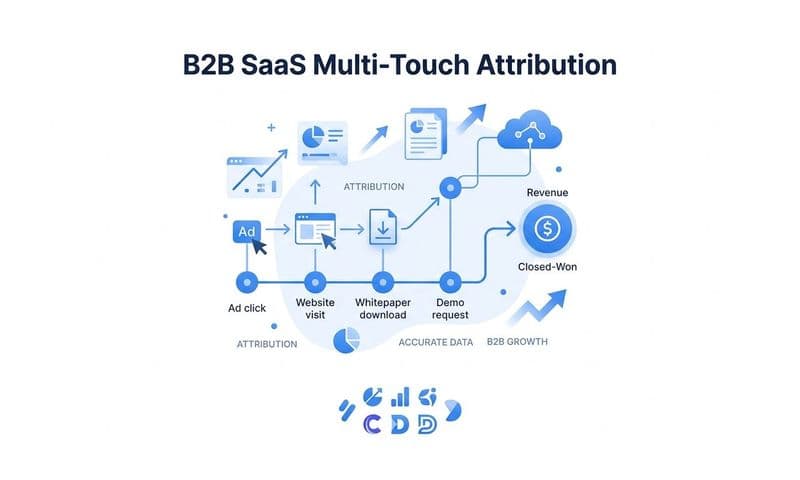
Multi-touch attribution distributes credit across all the touchpoints in a customer's journey, giving you a more accurate picture of how affiliates contribute at different stages. Exploring the best attribution modeling for marketing will help you select the right approach for your program. The main models to understand are:
Linear attribution: Equal credit is distributed across every touchpoint in the journey. Simple and fair, but it does not account for the fact that some touchpoints are more influential than others.
Time-decay attribution: Touchpoints closer to the conversion receive more credit. This model acknowledges that recency matters while still recognizing earlier influences.
Position-based attribution: The first and last touchpoints each receive a larger share of credit, with the remainder split among middle touchpoints. This model rewards both discovery and closing.
To use any of these models effectively, you need to connect your affiliate data with your paid advertising data, your organic data, and your CRM. Only then can you see the complete customer journey and understand where affiliates fit within it. A robust marketing attribution platform with revenue tracking makes this cross-channel connection possible.
This is where a unified attribution platform becomes essential. Cometly connects your ad platforms, CRM, and website data to track the entire customer journey in real time. You can compare attribution models side by side, see exactly how affiliates interact with other channels, and understand which partners are driving new customer acquisition versus simply capturing existing intent. Cometly's conversion sync also feeds enriched conversion data back to ad platforms like Meta and Google, helping their algorithms optimize toward higher-quality traffic rather than surface-level clicks.
When you can see the full journey, you make better decisions. You stop penalizing content affiliates for not closing deals and start recognizing their role in building awareness. You identify which affiliate and channel combinations produce the highest lifetime value customers. And you allocate commissions and budget based on actual contribution rather than last-touch luck.
Step 6: Analyze Performance and Optimize Your Affiliate Program
Tracking without analysis is just data collection. The goal is to turn your conversion data into decisions that improve your program's performance over time.
Start by building a reporting dashboard that gives you a clear view of performance across all your affiliate partners. Your dashboard should surface conversion volume, revenue, cost per acquisition, and return on ad spend by partner. This gives you a quick read on which affiliates are generating profitable results and which ones are consuming budget without delivering returns. Learning how to evaluate marketing performance metrics will sharpen your ability to interpret this data effectively.
Dig deeper into your top performers. When an affiliate is driving strong results, investigate why. Is it a specific campaign or creative they are running? A particular landing page combination? A specific audience segment? Understanding the mechanics behind top performance lets you replicate it with other partners and scale what is working.
For underperforming affiliates, resist the urge to simply cut them. Diagnose the issue first. An affiliate sending high click volume with low conversion rates might be attracting the wrong audience, or your landing page might not be resonating with their traffic. An affiliate with strong conversion rates but low volume might need better promotional support or higher commission incentives to prioritize your offer.
Use AI-powered recommendations to accelerate your optimization decisions. Rather than manually sorting through performance data across dozens of partners, AI can surface the highest-performing affiliates and campaigns, flag anomalies, and suggest where to reallocate budget for maximum impact. Understanding the impact of artificial intelligence on marketing strategies helps you appreciate how these tools can transform your affiliate program management.
Set up automated alerts for performance anomalies. A sudden drop in conversions from a top affiliate could indicate broken tracking, a landing page issue, or a change in their promotional strategy. A suspicious spike in conversions could indicate affiliate fraud, particularly click injection or fake lead submissions. Alerts let you catch these issues early before they distort your data or inflate your commission payouts.
Review your affiliate program performance on a regular cadence. Weekly check-ins on conversion volume and CPA, monthly deep dives on partner performance and attribution data, and quarterly reviews of your overall program structure and commission model will keep your program optimized as it scales.
Your Conversion Tracking Checklist: Putting It All Together
Setting up conversion tracking for affiliate marketing is not a one-time task. It is an ongoing system that requires regular attention, validation, and refinement. Use this checklist as your quick reference guide as you build and maintain your program.
Step 1: Define conversions and KPIs. Document your macro and micro-conversions, assign KPIs to each, and align definitions with your CRM and sales pipeline.
Step 2: Choose your tracking stack. Prioritize server-side postback tracking for reliability, supplement with UTM parameters and unique affiliate IDs, and ensure your tech stack covers click tracking, conversion capture, and data unification.
Step 3: Implement tracking codes and postbacks. Place conversion pixels on confirmation pages, configure server-side postback URLs, integrate with your e-commerce platform or CRM, and include unique order IDs in every conversion event.
Step 4: Validate your setup. Run test conversions, verify data in all connected systems, check for duplicates and missing parameters, and confirm cross-domain tracking works correctly.
Step 5: Apply multi-touch attribution. Move beyond last-click, connect affiliate data with all other channel data, and use attribution models that reflect how your customers actually make decisions.
Step 6: Analyze and optimize continuously. Build performance dashboards, diagnose underperformers, scale top partners, and use AI-powered insights to guide budget allocation.
Revisit your attribution models at least quarterly as your affiliate program grows. What works for a small program with five partners looks very different from what you need when you are managing fifty. Your tracking system should evolve alongside your program.
If you want to simplify the entire process, Cometly brings server-side tracking, multi-touch attribution, and AI-driven insights together in one platform. It connects every touchpoint from ad click to CRM event, gives you a complete view of the customer journey, and feeds enriched conversion data back to your ad platforms to improve targeting and ROI. Get your free demo today and start capturing every touchpoint to maximize your conversions.