You're spending thousands on ads every month. Traffic is flowing. Leads are coming in. But here's the uncomfortable question: which campaigns are actually driving revenue?
Without proper conversion tracking, you're making budget decisions based on surface-level metrics that don't reflect reality. You might be scaling campaigns that look good in the ad dashboard but never convert to paying customers. Or worse, you're cutting budget from channels that drive your most valuable conversions simply because you can't see their full impact.
The truth is, most marketers are flying blind. They track ad clicks and form submissions, but they have no idea which touchpoints actually lead to closed deals. They're optimizing for vanity metrics while their best-performing campaigns go unrecognized.
This guide walks through exactly how to set up conversion tracking that captures the complete customer journey, from first ad impression to final purchase. You'll learn how to connect your ad platforms, website, and CRM into one unified system that shows which marketing efforts truly drive revenue.
By the end, you'll have a working tracking infrastructure that reveals what's actually working, enabling you to make confident optimization decisions backed by accurate data. No more guessing. No more wasted budget on campaigns that don't convert.
Step 1: Define Your Conversion Events and Goals
Before installing a single tracking pixel, you need to know exactly what you're measuring. This sounds obvious, but many marketers rush into implementation without clearly defining what counts as a conversion for their business.
Start by identifying your macro-conversions: the primary actions that directly generate revenue. For e-commerce, that's completed purchases. For SaaS companies, it might be trial signups that convert to paid subscriptions. For B2B businesses, it's often demo bookings or qualified sales opportunities.
Map Your Complete Conversion Funnel: Don't stop at the final conversion. Identify every meaningful action a prospect takes on their path to becoming a customer. These micro-conversions serve as leading indicators and help you understand where your funnel breaks down. A comprehensive conversion funnel tracking guide can help you visualize this entire journey.
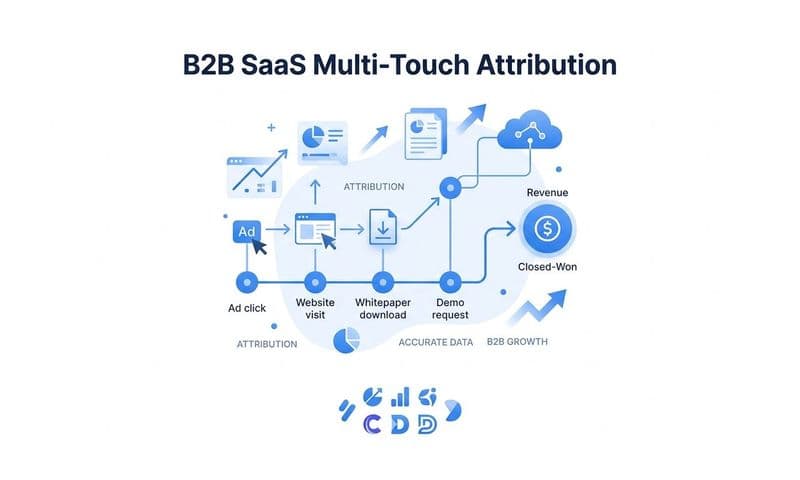
For example, your funnel might look like this: ad click → landing page view → email signup → content download → demo request → qualified opportunity → closed deal. Each of these stages represents a conversion event worth tracking.
Assign Monetary Values to Each Event: This is where most marketers get lazy, but it's critical for calculating true return on ad spend. If 20% of demo requests become customers worth $5,000, then each demo request has an expected value of $1,000. Assign these values in your tracking setup so you can measure actual ROI, not just conversion counts.
Think about the difference this makes: Campaign A generates 100 form submissions worth $50 each. Campaign B generates 20 demo requests worth $1,000 each. Looking at conversion volume alone, Campaign A seems better. But Campaign B drives four times the revenue.
The Common Mistake: Tracking only final conversions while ignoring the journey signals. This creates blind spots in your optimization strategy. You can't improve what you can't measure, and you can't measure a customer journey you're not tracking.
Consider a prospect who clicks your Facebook ad, reads three blog posts over two weeks, then converts through a Google search. If you only track the final conversion, Google gets all the credit while Facebook's role in starting the journey goes unrecognized. You might cut Facebook budget based on incomplete data, eliminating a crucial top-of-funnel driver. Understanding attribution tracking methods helps you avoid this common pitfall.
Take 30 minutes right now to document every conversion event that matters to your business. Write down what each event represents, where it happens in your funnel, and its expected monetary value. This foundation determines everything that follows.
Step 2: Implement Base Tracking Code Across Your Website
Now that you know what to track, it's time to install the infrastructure that captures these events. This means implementing tracking pixels from each advertising platform you use, setting up a tag management system, and configuring server-side tracking for reliable data collection.
Install Platform-Specific Pixels: Each ad platform provides a tracking pixel that monitors visitor behavior and conversions. For Meta (Facebook and Instagram), install the Meta Pixel. For Google Ads, implement the Google tag. TikTok, LinkedIn, and other platforms have their own tracking codes.
The basic process is similar across platforms: copy the pixel code from your ad account, paste it into your website's header section, and configure which events to track. Most platforms offer guided setup wizards that walk you through installation step by step. For detailed instructions on Google's platform, check out this guide on Google Ads conversion tracking.
Set Up Google Tag Manager for Centralized Control: Rather than manually editing your website code every time you need to add or modify a tracking tag, use Google Tag Manager as your central hub. This free tool lets you manage all your tracking codes from one interface without touching your site's code directly.
Install the GTM container code once on your website, then add and configure all your tracking pixels through the GTM dashboard. When you need to update tracking parameters or add new conversion events, you make changes in GTM and publish them instantly, no developer required.
Configure Server-Side Tracking for Accuracy: Here's where most marketers stop, but they shouldn't. Browser-based pixel tracking has become increasingly unreliable due to iOS privacy restrictions, ad blockers, and cookie limitations. Many marketers report 20-40% of their conversions going untracked because pixels can't fire properly.
Server-side tracking solves this by sending conversion data directly from your server to ad platforms, bypassing browser restrictions entirely. Instead of relying on a pixel that might get blocked, your server communicates conversion events through secure API connections that can't be intercepted. Our server-side tracking implementation guide walks through the technical setup in detail.
Setting up server-side tracking requires more technical implementation, but the data accuracy improvement makes it essential for serious marketers. Most modern attribution platforms handle this automatically, creating the server-side connections for you.
Verify Everything Works: Don't assume your tracking is functioning correctly. Use platform debugging tools to confirm data is flowing properly. Meta offers the Pixel Helper browser extension. Google has Tag Assistant. Install these tools and test conversion events by completing actions on your site while watching the debugger confirm each event fires correctly.
Check that event parameters are being captured accurately. If you're tracking purchase value, make sure the actual dollar amount appears in your test conversions. If you're tracking form submissions, verify that the correct form ID is being passed. Small configuration errors here create major data problems downstream.
Create a test account or use incognito browsing to simulate the customer journey without affecting your real conversion data. Click through your ads, navigate your website, and complete each conversion action while monitoring the tracking tools to ensure every event registers properly.
Step 3: Connect Your CRM and Revenue Data
Pixel tracking captures website behavior, but it misses a critical piece of the puzzle: what happens after someone leaves your site. For many businesses, especially B2B companies and high-consideration purchases, the real conversion happens offline, sometimes weeks or months after the initial ad click.
This is where CRM integration becomes essential. Your CRM contains the truth about which leads actually became customers and how much revenue they generated. Without connecting this data to your ad tracking, you're optimizing based on form fills and demo requests, not actual revenue.
Why Pixel-Only Tracking Falls Short: Imagine a prospect clicks your LinkedIn ad, fills out a contact form, then goes through a 60-day sales cycle before becoming a $50,000 customer. Your ad platform sees a $0 conversion because it only tracked the form submission. You have no idea this campaign drove a massive deal.
Meanwhile, another prospect clicks a Google ad and immediately purchases a $50 product. Your ad platform celebrates this instant conversion. Based on pixel data alone, Google looks like your best channel. But LinkedIn is driving deals worth 1,000 times more. This is why offline conversion tracking is essential for accurate attribution.
Integrate Your CRM for Complete Attribution: Connect your CRM system (HubSpot, Salesforce, Pipedrive, or whatever you use) to your tracking infrastructure. This allows you to match ad clicks and website sessions to actual customer records, following the complete journey from first touchpoint to closed-won deal.
Most modern attribution platforms offer native CRM integrations that sync automatically. When a lead converts to a customer in your CRM, that revenue data flows back to your attribution system and gets matched to the marketing touchpoints that influenced the sale.
Track the Full Lead-to-Customer Journey: With CRM integration in place, you can finally see which campaigns drive qualified leads versus which generate tire-kickers. You can identify which channels have the highest lead-to-customer conversion rates and the longest sales cycles.
This insight transforms your optimization strategy. Instead of pausing campaigns that generate fewer leads, you might discover they generate higher-quality leads that close at twice the rate. Instead of scaling campaigns with high form submission volume, you might find those leads rarely convert to revenue.
Success Indicator: You know your CRM integration is working correctly when you can view a closed-won deal in your CRM, then trace it back through your attribution platform to see every marketing touchpoint that influenced the sale. You should see the original ad campaign, the landing page they visited, subsequent website sessions, content they engaged with, and the final conversion event—all connected to actual revenue.
If you can't draw this complete picture, your tracking has gaps that are costing you optimization opportunities.
Step 4: Configure Attribution Settings for Accurate Credit
Now that you're capturing conversion data from both pixels and your CRM, you need to decide how to distribute credit across the multiple touchpoints in a customer's journey. This is where attribution models come into play, and choosing the wrong model can completely distort your understanding of what's working.
Understand Attribution Windows: An attribution window defines how long after an ad interaction you'll credit that ad for a conversion. Most platforms default to a 7-day click and 1-day view window, meaning conversions that happen within 7 days of clicking an ad get attributed to that ad, as do conversions within 1 day of viewing it.
These default windows often don't match real customer behavior. If your typical sales cycle is 30 days, a 7-day window means you're missing most of your conversions. If you're selling impulse purchases, a 30-day window might over-credit campaigns by including conversions that would have happened anyway.
Set attribution windows that align with your actual customer journey. B2B companies with long sales cycles might use 90-day or even 180-day windows. E-commerce businesses selling commodity products might use shorter 3-day windows. Look at your historical data to see how long it typically takes prospects to convert after their first interaction.
Compare Attribution Models: First-touch attribution gives all credit to the initial touchpoint that started the customer journey. Last-touch attribution credits only the final interaction before conversion. Multi-touch attribution distributes credit across all touchpoints based on various weighting schemes. For a deeper dive into these approaches, explore our attribution marketing tracking complete guide.
Each model tells a different story. First-touch attribution helps you understand which channels are best at generating awareness and starting relationships. Last-touch shows which channels are most effective at closing deals. Multi-touch reveals the complete journey and how different channels work together.
The mistake is picking one model and treating it as absolute truth. Use multiple attribution views to understand your funnel from different angles. You might discover that Facebook drives initial awareness, Google captures high-intent searches, and email nurtures prospects to conversion. Each channel plays a role, and multi-touch attribution shows how they work together.
Set Up Proper UTM Parameters: UTM parameters are the tags you add to your campaign URLs to track where traffic comes from. Without consistent UTM tagging, your attribution data becomes a mess of "direct" traffic and unidentified sources.
Create a standardized UTM naming convention and stick to it religiously. Use utm_source for the platform (facebook, google, linkedin), utm_medium for the channel type (cpc, email, social), utm_campaign for the specific campaign name, and utm_content for ad variations.
The key is consistency. If you sometimes use "Facebook" and sometimes use "facebook" or "fb," your analytics will treat these as separate sources, fragmenting your data. Document your naming conventions and make sure everyone on your team follows them exactly.
Why Multi-Touch Attribution Matters: Real customer journeys rarely follow a straight line. A prospect might see your Facebook ad, ignore it, then search for your brand on Google three days later, visit your website twice over the next week, receive a promotional email, and finally convert through a retargeting ad.
Last-touch attribution would credit only the retargeting ad. First-touch would credit only Facebook. Both perspectives miss the reality that all these touchpoints worked together to drive the conversion. Multi-touch attribution acknowledges this complexity and helps you optimize the entire journey, not just individual channels. Understanding cross-device conversion tracking methods is also critical since customers often switch between devices throughout their journey.
Step 5: Set Up Conversion Sync to Feed Better Data Back to Ad Platforms
Most marketers think of conversion tracking as one-directional: data flows from ad platforms to your analytics. But there's a powerful second direction that dramatically improves campaign performance: sending enriched conversion data back to the ad platforms themselves.
This process, called conversion sync or offline conversion tracking, teaches ad platform algorithms which clicks and impressions lead to valuable outcomes. The more accurate data you feed back, the better these algorithms become at finding similar high-value prospects.
How Conversion Sync Improves Ad Performance: When you only rely on pixel tracking, ad platforms optimize based on incomplete data. They might see that someone filled out a form, but they don't know if that lead became a customer or generated revenue. They're essentially optimizing in the dark.
By syncing back your actual conversion data, including revenue values and customer lifetime metrics, you give ad platforms the information they need to find more of your best customers. Facebook's algorithm can identify patterns in users who become high-value customers versus those who just fill out forms. Google can optimize for conversions that actually drive revenue, not just clicks. Learn more about accurate Facebook conversion tracking to maximize this feedback loop.
Think of it like training a hunting dog. If you reward the dog every time it brings back anything, it'll bring back sticks and trash. But if you only reward it for bringing back actual game, it learns to focus on valuable targets. Conversion sync trains ad algorithms to focus on valuable conversions.
Configure Offline Conversion Imports: Most major ad platforms support offline conversion tracking through API connections. For Meta, you'll set up offline events through Events Manager. For Google Ads, you'll configure offline conversion imports using customer email addresses or phone numbers as match keys.
The technical setup involves mapping your CRM data fields to the format each platform expects, then creating automated workflows that sync conversion data regularly. When a lead converts to a customer in your CRM, that event gets packaged and sent back to the ad platform that originated the click. Our conversion API setup guide provides step-by-step instructions for this process.
The match rates aren't perfect due to privacy restrictions and data hashing requirements, but even matching 50-70% of your conversions provides dramatically better signal to ad algorithms than pixel-only tracking that might miss 40% of conversions entirely.
Enable Server-Side Event Tracking: Beyond offline conversion imports, server-side event tracking provides real-time conversion data directly from your server to ad platforms. This creates a more reliable data stream than browser pixels, which can be blocked or fail to fire.
Server-side tracking captures conversion events as they happen on your server, then transmits them through secure API connections to Meta, Google, and other platforms. This ensures ad platforms receive conversion signals even when browser tracking fails, giving their algorithms more complete data for optimization.
Modern attribution platforms handle this automatically, maintaining server-side connections to all major ad platforms and syncing conversion events in real time without requiring manual configuration.
Verify Data Is Flowing Correctly: After setting up conversion sync, check each platform's diagnostics to confirm data is being received. Meta's Events Manager shows offline event activity and match rates. Google Ads displays offline conversion imports in the conversions section.
Look for discrepancies between what you're sending and what platforms are receiving. Low match rates might indicate issues with your identifier hashing or data formatting. Missing conversions could mean your sync workflow isn't triggering properly or your API credentials need updating.
Run test conversions and verify they appear in both your attribution system and the destination ad platforms. The goal is a closed loop where conversion data flows from ad click through your website and CRM, then back to ad platforms to improve future targeting.
Step 6: Test, Validate, and Troubleshoot Your Tracking Setup
You've implemented tracking codes, connected your CRM, configured attribution settings, and set up conversion sync. But none of that matters if your tracking isn't actually working correctly. This final step is about systematic validation to ensure your data is accurate and reliable.
Run Test Conversions Through Each Funnel Path: Don't just test one happy path. Simulate different customer journeys to verify tracking works across all scenarios. Click through various ad campaigns, use different devices, and complete conversions through different methods.
Test on desktop and mobile. Test in different browsers. Test with ad blockers enabled to see how server-side tracking handles blocked pixels. Test conversions that happen immediately versus those that occur days after the initial click. Each scenario might reveal tracking gaps you need to address.
Use test accounts or clearly marked test data so you can identify these conversions in your analytics without contaminating real performance metrics. Many platforms offer test modes specifically for validation purposes.
Compare Platform-Reported Conversions Against Actual Data: Your ad platforms will report certain conversion numbers. Your analytics will show different numbers. Your CRM will have yet another count. These discrepancies are normal to some extent, but large gaps indicate tracking problems.
Pull conversion data from each source for the same time period and compare. If Meta reports 100 conversions but your CRM only shows 60 new leads from Meta traffic, investigate the 40% gap. Are conversions being attributed to the wrong source? Is tracking failing for certain user paths? Our guide on fixing conversion tracking gaps addresses these common discrepancies.
Some variance is expected due to attribution window differences and how platforms define conversions, but the numbers should be reasonably close. If one platform shows dramatically different results than your source of truth (usually your CRM or order management system), your tracking has issues.
Common Tracking Issues to Watch For: Duplicate events are a frequent problem where the same conversion gets counted multiple times because both pixel and server-side tracking fire, or multiple pixels capture the same event. Configure deduplication rules to ensure each conversion is counted only once.
Missing parameters happen when conversion events fire but don't include critical information like order value, product IDs, or user identifiers. Check that all required data fields are being captured and passed correctly through your tracking infrastructure. Following best practices for tracking conversions accurately helps prevent these issues from the start.
Delayed attribution occurs when there's a lag between when a conversion happens and when it appears in your reporting. This is particularly common with server-side tracking and CRM integrations. Understand these delays so you don't make optimization decisions based on incomplete recent data.
Create a Weekly Audit Checklist: Tracking isn't set-it-and-forget-it. Things break. Platforms update their requirements. Websites change. Establish a regular audit process to catch issues before they corrupt weeks of data.
Your weekly checklist should include: verify test conversions are tracking correctly, compare platform conversion counts to CRM data, check for unusual spikes or drops in conversion volume, review error logs in your tag manager, confirm CRM sync is running on schedule, and spot-check recent conversions to ensure proper attribution.
Assign someone on your team to own this audit process. The 30 minutes per week you invest in validation will save you from making costly optimization decisions based on broken tracking data.
Your Conversion Tracking Checklist: What to Do Next
You now have the complete framework for setting up conversion tracking that captures the full customer journey and drives smarter marketing decisions. Here's your quick-reference checklist to ensure nothing gets missed:
Foundation: Document all conversion events (macro and micro), assign monetary values to each event, and map your complete conversion funnel from first touch to final sale.
Implementation: Install platform pixels through Google Tag Manager, configure server-side tracking for reliable data collection, and verify tracking with platform debugging tools.
Integration: Connect your CRM to track the complete lead-to-customer journey, match ad clicks to actual revenue, and verify closed deals are properly attributed to source campaigns.
Configuration: Set attribution windows that match your sales cycle, compare multiple attribution models to understand different perspectives, and establish consistent UTM naming conventions.
Optimization: Enable conversion sync to feed enriched data back to ad platforms, configure offline conversion imports for Meta and Google, and monitor match rates to ensure data is flowing correctly.
Maintenance: Run weekly tracking audits, compare platform data against your CRM, and test conversions regularly to catch issues early.
Remember that proper conversion tracking isn't a one-time setup. Your funnel evolves, platforms update their tracking requirements, and new marketing channels emerge. Treat tracking as an ongoing practice that requires regular attention and validation.
The marketers who win aren't necessarily the ones with the biggest budgets or the most creative ads. They're the ones who have accurate data about what's actually working and use that data to make confident optimization decisions.
With the tracking infrastructure you've built following this guide, you're no longer flying blind. You can see which campaigns drive real revenue, which channels work together in the customer journey, and where to invest your next dollar for maximum return.
Of course, implementing all of this manually takes significant time and technical expertise. Modern attribution platforms like Cometly automate much of this process, connecting your ad platforms, CRM, and website tracking in one unified view. The AI-powered system captures every touchpoint, enriches conversion data, and syncs it back to ad platforms to improve targeting, all while providing clear recommendations on where to scale your budget.
Ready to elevate your marketing game with precision and confidence? Discover how Cometly's AI-driven recommendations can transform your ad strategy. Get your free demo today and start capturing every touchpoint to maximize your conversions.