If you are running paid ads for a small business, you already know the frustration: you spend money across multiple channels, leads trickle in, and you have no reliable way to know which campaigns actually drove them. Platform dashboards each claim credit, numbers rarely agree, and decisions end up being based on gut feel rather than data.
Conversion tracking software solves this. It connects your marketing activity to real outcomes, whether that is a form submission, a phone call, a product purchase, or closed revenue. The challenge for small businesses is finding a tool that is accurate enough to trust, affordable enough to justify, and simple enough to actually use without a dedicated data team.
This list covers the top conversion tracking tools available in 2026, evaluated on ease of setup, attribution depth, pricing, and fit for small business budgets and team sizes. Whether you run a B2B SaaS product, an e-commerce store, or a local service business, there is a tool here that matches your workflow.
1. Cometly
Best for: B2B SaaS companies that need to connect ad spend directly to pipeline and closed revenue.
Cometly is a marketing attribution and analytics platform built specifically for B2B SaaS companies, combining server-side tracking with multi-touch attribution and AI-powered recommendations.
 9 Best Attribution Platforms for Agencies in 2026
Where This Tool Shines
Most small B2B SaaS teams face the same problem: their ads run across Meta, Google, LinkedIn, and TikTok simultaneously, but each platform reports conversions independently. The numbers contradict each other, and there is no reliable way to know which channel actually drove a deal. Cometly replaces that chaos with a single source of truth.
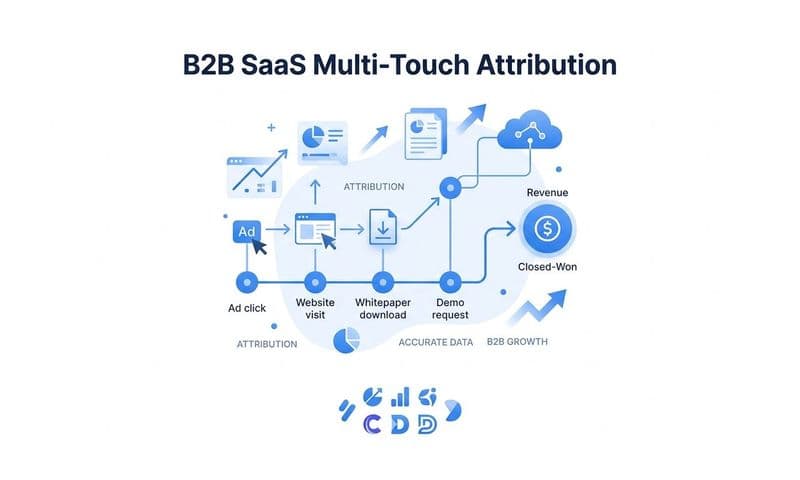
What makes Cometly particularly strong is its ability to track the full customer journey from first ad click all the way to closed-won revenue. By integrating with Stripe and your CRM, it connects marketing touchpoints directly to pipeline and revenue data. That level of attribution depth is rare in tools designed for smaller teams, and it changes how you make budget decisions.
Key Features
Server-Side Conversion API Tracking: Cometly uses server-side Conversion API integration to send conversion data directly from your server, bypassing browser-level blocking and iOS privacy restrictions for more accurate, privacy-resilient measurement.
Multi-Touch Attribution: Track every touchpoint across Meta, Google, LinkedIn, TikTok, and more, with multiple attribution models so you can see how credit is distributed across the full customer journey.
AI Ads Manager: Cometly's AI identifies which campaigns and creatives are performing and surfaces specific recommendations for where to scale or cut spend, reducing the time spent manually analyzing dashboards.
Pipeline and Revenue Attribution: Native integrations with Stripe and major CRMs connect your ad data directly to revenue, so you can see which campaigns drive actual closed deals, not just clicks or form fills.
Customer Journey Analytics: Visualize every touchpoint a lead interacted with before converting, giving you a clear picture of which channels assist versus close.
70+ Native Integrations: Connect your ad platforms, CRM, website analytics, and payment processors without custom development work.
Best For
Cometly is the right fit for B2B SaaS companies and growth-focused marketing teams running paid ads across multiple channels who need attribution that goes beyond click-level data. It is especially valuable if you are already using a CRM and Stripe, and you want to tie ad performance directly to revenue without building a custom data pipeline.
Pricing
Cometly offers paid plans with pricing based on usage and features. Contact Cometly directly for current pricing details, or explore the platform through a demo.
2. Google Analytics 4
Best for: Small businesses primarily in the Google ecosystem that need free, foundational conversion tracking.
Google Analytics 4 is Google's free web analytics platform with built-in conversion event tracking and deep native integration with Google Ads and Search Console.
 11 Best Marketing Analytics Tools to Track and Optimize Campaign Performance in 2026
Where This Tool Shines
For small businesses just getting started with conversion tracking, GA4 is often the logical first step. It is free, widely supported, and connects directly to Google Ads so you can see which campaigns are driving conversions without any additional cost. The event-based tracking model gives you flexibility to define what counts as a conversion for your specific business.
That said, GA4 works best for businesses whose primary ad channel is Google. Cross-channel attribution is limited compared to dedicated attribution platforms, and the learning curve is steeper than its predecessor. It is a strong foundation, but most growing businesses eventually need to layer additional tools on top of it.
Key Features
Event-Based Conversion Tracking: Track any user action as a conversion event, from form submissions to purchases to video completions, without being locked into predefined conversion types.
Native Google Ads Integration: Import conversion events directly into Google Ads for campaign-level reporting and Smart Bidding optimization.
Funnel Exploration and Path Analysis: Visualize the steps users take before converting and identify where they drop off in your funnel.
Audience Building for Remarketing: Create audiences based on conversion behavior and sync them to Google Ads for targeted remarketing campaigns.
Best For
GA4 is ideal for small businesses running primarily Google Ads who need free, reliable conversion tracking without a complex setup. It is also a strong complement to any paid attribution platform, providing a free data layer that integrates with most tools in the market.
Pricing
GA4 is completely free. Google Analytics 360, the enterprise version with higher data limits and additional features, is a paid product designed for large organizations.
3. Meta Pixel + Conversions API
Best for: Businesses running Facebook and Instagram ads that need accurate, privacy-resilient conversion measurement.
Meta Pixel + Conversions API is Meta's combined browser-and-server tracking solution for measuring conversions from Facebook and Instagram campaigns.
 9 Best Conversion Tracking Software for Small Business in 2026
Where This Tool Shines
If you are running Meta ads, the Pixel alone is no longer sufficient. iOS privacy updates and browser-level ad blocking have significantly degraded the reliability of browser-based tracking. The Conversions API (CAPI) addresses this by sending conversion signals directly from your server to Meta, improving data quality and helping the ad platform optimize more effectively.
The combination of Pixel and CAPI gives Meta the best possible signal for its algorithm, which directly impacts how well your campaigns optimize. For small businesses running Facebook or Instagram ads, setting up CAPI through a partner integration like Shopify or HubSpot is now considered a baseline best practice rather than an advanced tactic.
Key Features
Browser-Based Pixel Tracking: Captures standard web conversion events like page views, add-to-cart, and purchases directly from the browser.
Server-Side Conversions API: Sends conversion events from your server to Meta, bypassing browser restrictions and improving signal reliability for ad optimization.
Event Deduplication: Prevents double-counting conversions that are captured by both the Pixel and CAPI simultaneously.
Partner Integrations: Connect CAPI through Shopify, WooCommerce, HubSpot, and other platforms without custom development for faster, lower-risk implementation.
Best For
Any small business actively running Facebook or Instagram ads should implement both the Pixel and CAPI. This is not a standalone attribution solution, but it is an essential tracking layer for Meta campaigns that pairs well with a dedicated attribution platform like Cometly.
Pricing
Free to implement. You only need an active Meta Ads account to get started.
4. Hotjar
Best for: Small businesses that want to understand why visitors are not converting on specific pages.
Hotjar is a behavioral analytics tool that uses heatmaps, session recordings, and on-site surveys to reveal friction points in your conversion funnel.
 9 Best Tracking Tools for Digital Marketing in 2026
Where This Tool Shines
Hotjar answers a different question than most conversion tracking tools. While attribution platforms tell you where your conversions are coming from, Hotjar tells you why users are not converting. If you are driving traffic to a landing page but seeing low conversion rates, Hotjar helps you diagnose the problem by showing you exactly how real users interact with that page.
For small businesses with limited development resources, this kind of qualitative insight is particularly valuable. You can identify confusing form flows, distracting page elements, or drop-off points in your checkout without running expensive A/B tests or relying on developer support.
Key Features
Heatmaps: Visualize where users click, scroll, and hover on any page, revealing which elements attract attention and which are being ignored.
Session Recordings: Watch anonymized recordings of real user sessions to see exactly where visitors hesitate, rage-click, or abandon your pages.
Conversion Funnel Analysis: Define multi-step funnels and see where users drop off between steps, helping you prioritize which pages to optimize first.
On-Site Surveys: Collect direct feedback from visitors at key moments, such as when they are about to leave or after they complete a purchase.
Best For
Hotjar is best for small businesses that are already driving meaningful traffic and want to improve on-site conversion rates. It works well alongside an attribution platform rather than as a replacement. If you know where your traffic is coming from but your conversion rates are low, Hotjar helps you understand what to fix.
Pricing
Hotjar offers a free plan with limited data. Paid plans start at approximately $32 per month, scaling with session volume and additional features.
5. Segment
Best for: SaaS companies and tech-forward small businesses that want a centralized first-party data layer feeding every tool in their stack.
Segment is a customer data platform (CDP) that collects first-party event data once and routes it to over 300 downstream integrations including analytics tools, CRMs, and ad platforms.
 9 Best Conversion Tracking Alternatives to Pixels in 2026
Where This Tool Shines
Segment solves a problem that grows more painful as your tool stack expands: every new analytics or marketing tool requires its own tracking implementation. Segment eliminates that by acting as a single collection point. You instrument your tracking once, and Segment routes the data to every destination you need, from Google Analytics to your CRM to your ad platforms.
This is particularly valuable for SaaS companies where product events, web events, and marketing events all need to flow into the same places consistently. The tradeoff is that Segment requires more technical setup than most tools on this list, making it better suited for teams with some developer resources available.
Key Features
Single Data Collection Layer: Instrument tracking once across web, mobile, and server-side sources, then route that data to 300+ downstream tools without duplicate implementations.
First-Party Event Tracking: Collect user behavior data directly from your own properties, giving you ownership and control over your conversion data.
Identity Resolution: Unify customer profiles across devices and touchpoints to create a complete view of each user's journey.
Audience Builder: Create behavioral segments and sync them directly to ad platforms and CRMs for targeted campaigns and automated workflows.
Best For
Segment is ideal for SaaS companies and tech-savvy small businesses that want clean, consistent data flowing across their entire stack. It is not a conversion tracking tool on its own, but it makes every other tracking tool in your stack more reliable and easier to maintain.
Pricing
Segment offers a free plan for up to 1,000 monthly tracked users. Paid plans scale with usage volume and advanced features.
6. Triple Whale
Best for: Shopify-based e-commerce brands running multi-channel paid advertising that need platform-independent attribution.
Triple Whale is an attribution and analytics platform built specifically for Shopify e-commerce brands, using its own first-party pixel to measure conversions independently of what Meta and Google report.
 9 Best Conversion Tracking Software for Small Business in 2026
Where This Tool Shines
If you run a Shopify store and advertise on Meta and Google simultaneously, you have almost certainly experienced the problem where both platforms claim more revenue than you actually generated. Triple Whale solves this with its own independent pixel that tracks conversions without relying on platform-reported data, giving you a blended view of actual performance across channels.
The creative analytics feature is particularly useful for e-commerce brands managing large ad libraries. Rather than manually pulling performance data from each platform, Triple Whale surfaces which specific creatives are driving the most revenue, helping you make faster decisions about what to scale and what to cut.
Key Features
First-Party Pixel: Triple Whale's own tracking pixel captures conversion data independently of Meta and Google, giving you a neutral source of truth for attribution.
Blended ROAS Dashboard: Consolidates paid channel performance into a single view showing true blended return on ad spend across all channels.
Creative Analytics: Identifies which ad creatives are driving the most revenue, helping creative and media buying teams align on what to prioritize.
Cohort Analysis and LTV Reporting: Understand customer lifetime value and purchasing patterns to inform longer-term channel investment decisions.
Best For
Triple Whale is purpose-built for Shopify e-commerce brands running paid ads across multiple channels. It is not designed for B2B SaaS or service businesses. If your business model is DTC e-commerce and your store runs on Shopify, it is one of the strongest purpose-built options available.
Pricing
Paid plans start at approximately $129 per month, with pricing that scales based on store revenue and feature requirements.
7. Northbeam
Best for: Scaling e-commerce and DTC brands that need machine learning-powered, platform-independent attribution.
Northbeam is a machine learning-powered attribution platform that measures revenue contribution across channels independently of what any individual ad platform reports.
Where This Tool Shines
Northbeam is built for brands that have outgrown simpler attribution tools and need more sophisticated modeling. Its machine learning attribution models are built independently of platform-reported data, which means you get a more objective view of how each channel is actually contributing to revenue rather than relying on last-click or self-reported platform numbers.
The media mix modeling capability sets Northbeam apart from most tools on this list. Rather than just attributing individual conversions to individual clicks, it models the overall contribution of each channel to your revenue, which is particularly useful when you are making large-scale budget allocation decisions across channels with different measurement approaches.
Key Features
Machine Learning Attribution: Attribution models built using ML, independent of platform-reported data, providing a more objective view of channel contribution to revenue.
Media Mix Modeling: Understand how each channel contributes to overall revenue at a macro level, supporting strategic budget allocation decisions.
Real-Time Spend and Revenue Dashboards: Monitor all paid channel performance in a single dashboard updated in real time.
Custom Attribution Windows and Model Comparisons: Configure attribution windows and compare different models side by side to understand how your analysis changes based on methodology.
Best For
Northbeam is best suited for higher-growth e-commerce and DTC brands with meaningful ad spend that need sophisticated, platform-independent measurement. It is typically positioned above entry-level tools in terms of both capability and cost, making it a better fit for scaling brands than early-stage small businesses.
Pricing
Custom pricing based on ad spend. Northbeam is typically positioned at higher-growth brands rather than early-stage businesses with limited budgets.
8. HubSpot Marketing Hub
Best for: B2B service businesses and SaaS companies already using HubSpot CRM that want conversion tracking tied directly to pipeline.
HubSpot Marketing Hub is a CRM-native marketing platform that tracks conversions from forms, landing pages, and campaigns directly through the HubSpot sales pipeline.
Where This Tool Shines
HubSpot's biggest advantage is that it eliminates the gap between marketing data and CRM data. When a lead fills out a form, HubSpot creates a contact record, logs the source, and tracks every subsequent interaction that contact has with your marketing content. By the time a deal closes, you have a complete history of every touchpoint that influenced that conversion, all within a single platform.
For small B2B teams that are already using HubSpot as their CRM, this is a significant advantage. You do not need to build integrations between your marketing analytics and your sales data because they live in the same system. The limitation is that HubSpot's attribution reporting is primarily CRM-centric rather than ad-attribution-focused, so it works best when combined with a dedicated ad attribution tool for paid channel analysis.
Key Features
Form and Landing Page Conversion Tracking: Tracks every form submission and ties it directly to a CRM contact record with full source attribution.
Campaign Attribution Reporting: Links marketing activity to pipeline value, showing which campaigns are contributing to open and closed deals.
Email and Ad Performance Tracking: Monitor email engagement and ad performance within the same platform as your CRM and contact data.
Contact Timeline: View every marketing touchpoint a lead had before converting, from first page visit to final form submission, in a single contact record.
Best For
HubSpot Marketing Hub is the right choice for B2B service businesses and SaaS companies already invested in the HubSpot ecosystem. If your primary conversion events are form fills and inbound leads rather than e-commerce purchases, and you want attribution tied directly to pipeline without a separate analytics tool, HubSpot delivers that out of the box.
Pricing
HubSpot offers a free CRM with limited marketing tools. Marketing Hub Starter begins at approximately $20 per month, with Professional and Enterprise tiers offering more advanced attribution and reporting capabilities.
9. CallRail
Best for: Local service businesses and any company where inbound phone calls are a primary conversion event.
CallRail is a call tracking and analytics platform that uses dynamic number insertion to attribute inbound phone calls to the exact marketing source, campaign, or keyword that generated them.
Where This Tool Shines
For many small businesses, especially in local services, home improvement, legal, and similar industries, the phone call is the conversion. Standard web analytics tools track clicks and form fills, but they cannot tell you which Google Ads keyword or Facebook campaign drove someone to pick up the phone and call. CallRail closes that gap.
Dynamic number insertion (DNI) works by displaying a unique phone number to each visitor based on how they arrived at your site. When that visitor calls, CallRail matches the call back to the specific source, campaign, or keyword, giving you the same level of attribution for phone calls that you would normally only have for digital conversions. For businesses where calls represent a significant portion of their lead volume, this visibility can meaningfully change how they allocate their ad budget.
Key Features
Dynamic Number Insertion: Automatically displays unique tracking numbers to visitors based on their traffic source, enabling source-level attribution for every inbound call.
Call Recording and Transcription: Record and transcribe calls for lead quality analysis, helping you understand not just how many calls you receive but how many are actually qualified leads.
Form Tracking: Capture both call and web form conversions in a single view, giving you a complete picture of all lead activity regardless of how the prospect contacted you.
CRM and Ad Platform Integrations: Connect call data to Google Ads, Meta, and major CRMs so that phone call conversions flow into your broader attribution and reporting setup.
Best For
CallRail is essential for any small business where phone calls are a meaningful conversion channel. Local service businesses, agencies managing local clients, and any company running Google Ads to drive phone inquiries will find it particularly valuable. It pairs well with GA4 or a dedicated attribution platform to give you complete coverage across all conversion types.
Pricing
Plans start at approximately $45 per month, with pricing that scales based on call volume, number of tracking numbers, and additional features like transcription and form tracking.
Which Tool Is Right for Your Business
The right conversion tracking tool depends almost entirely on your business model and what you define as a conversion. There is no single tool that fits every situation, but there are clear patterns that make the decision straightforward.
If you run a B2B SaaS company and need to connect ad spend to actual pipeline and closed revenue, Cometly is the strongest purpose-built option on this list. Its combination of server-side tracking, multi-touch attribution, and AI-powered recommendations gives you the depth of insight that platform dashboards simply cannot provide, especially when you are running ads across multiple channels simultaneously.
For Shopify-based e-commerce brands, Triple Whale or Northbeam will serve you better, with Triple Whale being more accessible for earlier-stage brands and Northbeam offering more sophisticated modeling for scaling operations.
If phone calls are your primary conversion event, CallRail is non-negotiable. And if you are already running HubSpot as your CRM, Marketing Hub's native attribution reporting is a natural complement to whatever ad attribution tool you choose.
For most small businesses, the practical answer is to layer tools: start with GA4 and the Meta Pixel as your free foundation, then add a dedicated attribution platform that matches your business model and conversion type. Free tools give you a baseline, but purpose-built attribution software gives you the accuracy and depth you need to make confident budget decisions.
If you are a B2B SaaS company ready to move beyond platform dashboards and connect your marketing spend directly to revenue, Get your free demo of Cometly and see how every touchpoint from first click to closed deal can be tracked in one place.