
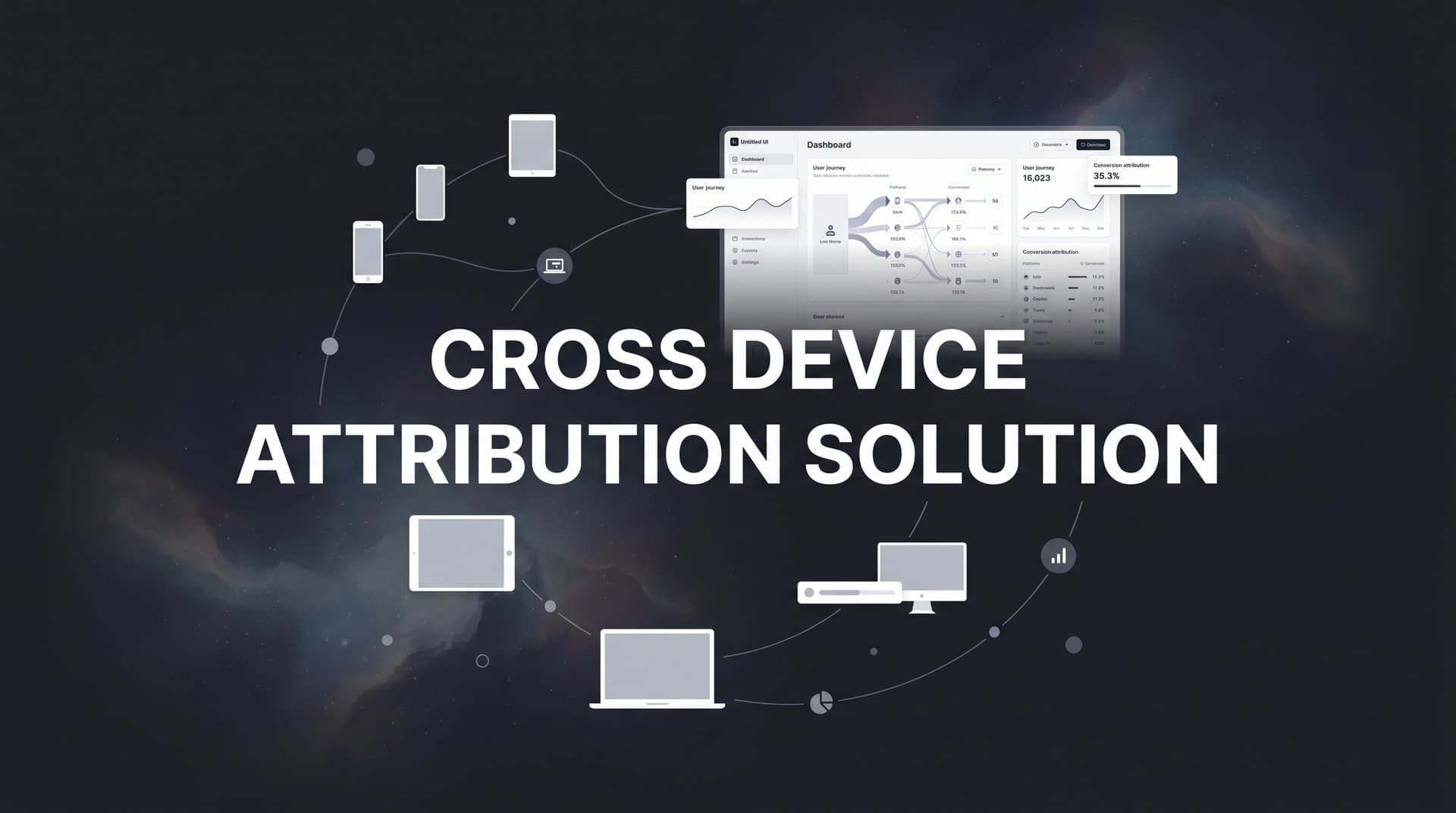
Modern customers rarely convert on a single device. They might discover your brand on their phone during a commute, research on a tablet at home, and finally purchase from a desktop at work. Without cross device attribution, you're left guessing which touchpoints actually drove that conversion.
The right solution connects these fragmented journeys, revealing which ads and channels deserve credit for revenue. We evaluated leading platforms based on tracking accuracy, integration capabilities, ease of implementation, and pricing transparency.
Here are the top cross device attribution solutions to help you finally see the complete customer journey.
1. Cometly
Best for: Marketers running paid campaigns who need AI-powered optimization and accurate server-side tracking
Cometly is an AI-powered marketing attribution platform that tracks the complete customer journey across devices and connects ad platforms, CRM, and website data in real time.
 9 Best Cross Device Attribution Solutions for Accurate Marketing Measurement in 2026
Where This Tool Shines
Cometly solves the tracking accuracy problem that emerged after iOS 14.5 privacy changes disrupted traditional pixel-based measurement. Its server-side tracking approach captures conversion data that browser-based solutions miss, giving you a complete view of cross-device journeys.
The platform's AI layer analyzes your attribution data and delivers specific optimization recommendations for ad spend allocation. Instead of just showing you what happened, it tells you what to do next.
Key Features
Server-Side Tracking: Overcomes iOS and browser limitations by capturing conversion data directly from your server, not just browser pixels.
Multi-Touch Attribution: Tracks every marketing touchpoint across devices and channels, from first ad click to final conversion.
AI-Powered Optimization: Analyzes campaign performance and provides specific recommendations for budget allocation and scaling decisions.
Conversion Sync: Feeds enriched, conversion-ready events back to Meta, Google, and other ad platforms to improve their targeting algorithms.
Real-Time Analytics Dashboard: Visualizes cross-device customer journeys as they happen, showing exactly how users move between touchpoints.
Best For
Digital marketers and agencies managing significant ad budgets across multiple platforms who need accurate attribution data despite privacy restrictions. Particularly valuable for businesses where customers typically interact across several devices before converting.
Pricing
Custom pricing based on ad spend and business needs. Contact their team for a quote tailored to your marketing volume.
2. Segment
Best for: Enterprise teams needing extensive data infrastructure and integration capabilities
Segment is a customer data platform that unifies user data across touchpoints and enables identity resolution for cross-device attribution.
 8 Best Attribution-Focused Platforms vs Segment: Which Approach Fits Your Marketing Stack in 2026
Where This Tool Shines
Segment functions as the data plumbing layer for your entire marketing stack. It collects customer data from every source, resolves identities across devices, then routes that unified data to your analytics tools, ad platforms, and CRM.
The platform's strength lies in its massive integration ecosystem. With 400+ pre-built connections, you can pipe customer data to virtually any marketing or analytics tool without custom development work.
Key Features
Identity Resolution: Connects anonymous device data with known user profiles to track cross-device journeys accurately.
400+ Pre-Built Integrations: Send unified customer data to your entire marketing stack without writing code.
Real-Time Data Streaming: Process and route customer events as they happen, enabling immediate personalization and attribution.
Privacy Controls: Built-in consent management and data governance tools to maintain compliance across jurisdictions.
Computed Traits and Audiences: Create sophisticated user segments based on cross-device behavior patterns for targeted campaigns.
Best For
Enterprise marketing teams with complex data infrastructure needs who want a centralized customer data platform. Ideal when you're using many different marketing tools and need them all working from the same unified customer view.
Pricing
Free tier available for startups. Team plan starts at $120/month, with enterprise pricing based on data volume and features needed.
3. AppsFlyer
Best for: Mobile-first businesses tracking app and web conversions across devices
AppsFlyer is a mobile measurement partner offering People-Based Attribution that connects mobile app and web touchpoints across devices.
 9 Best Cross Device Attribution Solutions for Accurate Marketing Measurement in 2026
Where This Tool Shines
AppsFlyer built its reputation in mobile app attribution and has expanded to handle web-to-app and app-to-web journeys seamlessly. The platform excels at connecting user behavior across mobile apps, mobile web, and desktop web into unified customer journeys.
Their People-Based Attribution uses both deterministic matching (when users log in) and probabilistic matching (based on device signals) to maintain attribution accuracy even as privacy restrictions tighten. The platform also includes robust fraud protection to filter out fake installs and clicks.
Key Features
People-Based Attribution: Connects user journeys across mobile apps, mobile web, and desktop using advanced identity matching.
SKAdNetwork Support: Provides iOS measurement that works within Apple's privacy framework, essential for iOS app marketing.
Web-to-App and App-to-Web Attribution: Tracks users who discover your brand on web and convert in-app, or vice versa.
Fraud Protection Suite: Detects and blocks fraudulent installs, clicks, and in-app events to protect ad spend.
Incrementality Measurement: Tests whether your marketing actually drives new conversions or just captures users who would have converted anyway.
Best For
Mobile app marketers and mobile-first businesses where the customer journey frequently crosses between app and web experiences. Particularly strong for gaming, fintech, and ecommerce apps with significant marketing budgets.
Pricing
Free tier available for early-stage startups. Paid plans use conversion-based pricing that scales with your attribution volume.
4. Adjust
Best for: Mobile marketers needing unified app and web measurement with fraud prevention
Adjust is a mobile measurement and analytics platform with unified app and web attribution capabilities.
 9 Best Attribution Software with API Access in 2026
Where This Tool Shines
Adjust provides enterprise-grade mobile measurement with a focus on data quality and fraud prevention. The platform handles both app and web attribution through a single SDK, making implementation simpler than managing separate tracking systems.
Their probabilistic cross-device matching works well for anonymous users, while deterministic matching kicks in when users log in. The platform also offers raw data export, giving technical teams full access to granular event data for custom analysis.
Key Features
Unified Mobile and Web Measurement: Track app installs, in-app events, and web conversions through a single platform.
Cross-Device Attribution: Uses probabilistic matching to connect anonymous sessions across devices before login events.
Fraud Prevention Suite: Filters out invalid traffic, click spam, and SDK spoofing to ensure clean attribution data.
Audience Builder: Create retargeting segments based on cross-device behavior for more effective remarketing campaigns.
Raw Data Export: Access complete event-level data for custom reporting and analysis in your own data warehouse.
Best For
Mobile app marketers who need reliable attribution data and want to protect ad budgets from fraud. Works well for subscription apps, mobile games, and any business where accurate install and in-app event tracking is critical.
Pricing
Custom pricing based on the number of attributed installs per month. Contact their sales team for a quote based on your app's scale.
5. Rockerbox
Best for: DTC brands combining multi-touch attribution with media mix modeling
Rockerbox is a marketing measurement platform for DTC brands that combines multi-touch attribution with media mix modeling.
 8 Best Warehouse Attribution Solutions for E-commerce in 2026
Where This Tool Shines
Rockerbox takes a hybrid approach to measurement, combining granular multi-touch attribution with top-down media mix modeling. This dual methodology helps DTC brands understand both individual customer journeys and overall channel effectiveness.
The platform's journey visualization makes it easy to see how customers move across devices and channels before converting. You can spot patterns like "customers who see a Facebook ad, then search on Google, then convert on desktop" and optimize accordingly.
Key Features
Cross-Device Identity Resolution: Connects user touchpoints across devices to build complete customer journey maps.
Multi-Touch Attribution Models: Apply different attribution models (first-touch, last-touch, linear, time-decay) to compare channel performance.
Media Mix Modeling Integration: Combines bottom-up attribution with top-down statistical modeling for comprehensive measurement.
Journey Visualization: See visual maps of common conversion paths across devices and channels.
Incrementality Testing: Run holdout tests to measure the true incremental impact of your marketing channels.
Best For
Direct-to-consumer ecommerce brands with diversified marketing mixes who want both granular attribution data and strategic channel planning insights. Particularly valuable for brands spending across paid social, paid search, display, and offline channels.
Pricing
Custom pricing based on business size and attribution volume. Pricing typically scales with monthly revenue or ad spend.
6. Triple Whale
Best for: Shopify brands needing first-party tracking with creative performance insights
Triple Whale is an ecommerce analytics platform with first-party pixel tracking for cross-device attribution, built primarily for Shopify brands.
 7 Best Funnel.io Alternatives for Marketing Data Analytics in 2026
Where This Tool Shines
Triple Whale built its platform specifically for Shopify merchants, with deep native integration that makes setup remarkably fast. Their first-party pixel captures conversion data that third-party pixels miss, improving attribution accuracy in the post-iOS 14.5 world.
The platform combines attribution with creative analytics, showing you not just which channels work but which specific ads and creative variations drive results. This makes it easier to scale winning creative across channels.
Key Features
First-Party Pixel: Captures cross-device conversion data through server-side tracking that bypasses browser limitations.
Creative Analytics: Track performance at the individual ad and creative level across all your marketing channels.
Customer Journey Mapping: Visualize how customers interact across devices before making a purchase.
Shopify Deep Integration: Automatically syncs order data, customer information, and product catalog from your Shopify store.
Blended ROAS Calculations: Combines platform-reported data with attributed conversions to calculate more accurate return on ad spend.
Best For
Shopify ecommerce brands running paid advertising on Facebook, Instagram, TikTok, and Google who want simple setup and clear creative performance insights. Works especially well for brands testing lots of creative variations.
Pricing
Growth plan starts at $129/month, with higher tiers available based on order volume and advanced features needed.
7. Northbeam
Best for: Ecommerce brands using machine learning for attribution and spend optimization
Northbeam is a machine learning attribution platform for ecommerce brands that provides cross-platform measurement and spend optimization.
 9 Best Enterprise Attribution Software Solutions Compared for 2026
Where This Tool Shines
Northbeam applies machine learning models to attribution, going beyond simple rule-based models to predict the true impact of each touchpoint. The platform learns from your historical conversion data to assign credit more accurately than static attribution models.
Their real-time budget optimization feature analyzes current performance across channels and suggests specific budget shifts to maximize overall ROAS. Instead of waiting for weekly reports, you get daily recommendations on where to increase or decrease spend.
Key Features
Machine Learning Attribution: Uses ML models trained on your data to assign conversion credit more accurately than rule-based models.
Cross-Device User Stitching: Connects user sessions across devices using both deterministic and probabilistic matching techniques.
Real-Time Budget Optimization: Provides daily recommendations for shifting budgets between channels based on current performance.
Creative Performance Analysis: Tracks which ad creatives drive conversions across the full customer journey, not just last-click.
Cohort-Based Reporting: Analyze customer lifetime value and repeat purchase patterns by acquisition channel and device.
Best For
Growth-stage ecommerce brands with substantial ad budgets who want sophisticated attribution modeling and algorithmic optimization recommendations. Best suited for brands spending six figures or more monthly on paid advertising.
Pricing
Custom pricing based on monthly ad spend. The platform typically makes sense for brands spending at least $100,000 per month on paid marketing.
8. Branch
Best for: App marketers needing deep linking with cross-device attribution
Branch is a mobile linking platform with cross-device attribution capabilities for app and web experiences.
Where This Tool Shines
Branch specializes in deep linking technology that creates seamless experiences when users click links across different devices and platforms. When someone clicks a link on mobile web and gets directed to your app, Branch tracks that entire journey and attributes the conversion correctly.
Their deferred deep linking is particularly powerful. It works even when users don't have your app installed yet, remembering the original link context through the app install process and delivering users to the right content after installation.
Key Features
Deep Linking with Attribution: Create links that work across platforms while tracking the complete user journey from click to conversion.
Cross-Platform User Matching: Connect user sessions across mobile web, mobile app, and desktop web for unified attribution.
Web-to-App Journey Tracking: Track users who discover your brand on web and eventually convert in your mobile app.
Deferred Deep Linking: Preserve link context through app installs, delivering new users to the right content after installation.
Fraud Detection: Identify and block fraudulent clicks and installs to protect your attribution data quality.
Best For
Mobile app businesses where user acquisition happens across web and app touchpoints. Particularly valuable for apps with content sharing features, referral programs, or marketing campaigns that drive users from web to app.
Pricing
Free tier available for basic deep linking and attribution. Paid plans based on monthly active users, with enterprise pricing for high-volume apps.
9. Ruler Analytics
Best for: B2B companies tracking leads to closed revenue with multi-touch attribution
Ruler Analytics is a marketing attribution platform focused on B2B and lead generation with closed-loop revenue tracking.
Where This Tool Shines
Ruler Analytics solves the B2B attribution problem by connecting marketing touchpoints all the way to closed revenue, not just leads. The platform tracks which marketing channels generate leads, then integrates with your CRM to see which leads actually close into customers and how much revenue they generate.
This closed-loop approach is critical for B2B where the gap between initial touchpoint and revenue can span weeks or months. You finally see which channels drive not just form fills, but actual paying customers.
Key Features
Closed-Loop Attribution: Connects marketing touchpoints to leads, then tracks those leads through to closed deals and revenue in your CRM.
Call Tracking Integration: Attributes phone call conversions to the marketing touchpoints that generated them across devices.
Form and Chat Tracking: Captures lead generation from website forms and live chat, connecting them to the full customer journey.
CRM Integrations: Syncs with Salesforce, HubSpot, and other CRMs to pull revenue data back into attribution reporting.
Multi-Touch Attribution Models: Apply different attribution models to understand which touchpoints contribute most to revenue, not just leads.
Best For
B2B companies and lead generation businesses where the sales cycle extends beyond initial conversion. Essential for businesses where understanding revenue attribution (not just lead attribution) drives marketing decisions.
Pricing
Plans start at $199/month for basic attribution features, with higher tiers adding call tracking, advanced integrations, and increased data limits.
Making the Right Choice
Choosing the right cross device attribution solution depends on your business model and marketing channels.
For marketers running paid campaigns across multiple ad platforms who need AI-powered optimization and accurate server-side tracking, Cometly offers the most complete solution. The platform's ability to overcome iOS tracking limitations while feeding enriched data back to ad platforms makes it particularly valuable in today's privacy-restricted environment.
Mobile-first businesses should consider AppsFlyer or Adjust for their specialized app-to-web capabilities and fraud protection. Both platforms excel at connecting mobile app events with web conversions, though AppsFlyer tends to have stronger gaming and ecommerce integrations while Adjust offers more granular raw data access.
Enterprise teams with complex data infrastructure needs may benefit from Segment's extensive ecosystem. If you're using dozens of marketing tools and need them all working from unified customer data, Segment's integration library and identity resolution capabilities are hard to beat.
DTC and ecommerce brands have strong options in Rockerbox, Triple Whale, and Northbeam, each with different strengths. Rockerbox combines attribution with media mix modeling for strategic planning. Triple Whale offers the fastest Shopify setup with excellent creative analytics. Northbeam brings sophisticated machine learning to attribution and budget optimization, though it requires substantial ad spend to justify the investment.
B2B companies focused on lead generation should evaluate Ruler Analytics for its closed-loop revenue attribution. The ability to track marketing touchpoints all the way to closed deals and revenue changes how you evaluate channel performance.
Start by identifying your primary conversion paths and the devices your customers use most frequently. If you're primarily B2C with significant mobile traffic, prioritize platforms with strong mobile measurement. If you're B2B with longer sales cycles, focus on solutions that connect to your CRM and track revenue, not just leads.
Consider your technical resources too. Platforms like Segment require more technical implementation, while tools like Triple Whale offer simpler setup for Shopify merchants. Match the platform's complexity to your team's capabilities.
Ready to elevate your marketing game with precision and confidence? Discover how Cometly's AI-driven recommendations can transform your ad strategy. Get your free demo today and start capturing every touchpoint to maximize your conversions.