
Most B2B SaaS marketing teams know which channels generate traffic. Far fewer know which channels generate revenue. That gap is where budget gets wasted, campaigns get misread, and growth stalls.
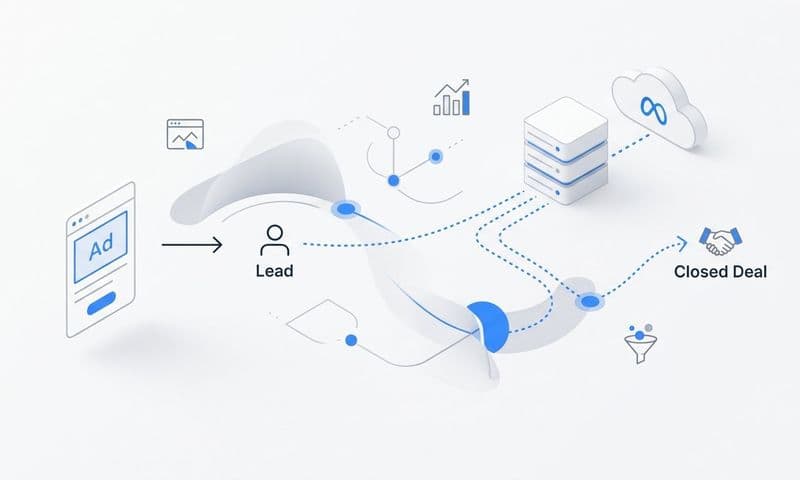
Funnel attribution tracking closes that gap by connecting every touchpoint across your marketing funnel to actual pipeline and closed-won revenue. Instead of guessing which ad drove a conversion or which campaign influenced a deal, you get a clear, data-backed picture of what is actually working.
This guide walks you through how to set up funnel attribution tracking from scratch. You will learn how to define your funnel stages, map your conversion events, connect your data sources, choose the right attribution model, and use the insights to make smarter spending decisions.
Think of it like building a GPS for your marketing. Right now, many teams are navigating with a paper map and a best guess. Attribution tracking gives you turn-by-turn directions, showing exactly which roads lead to revenue and which ones loop back to nowhere.
Whether you are a marketing leader trying to prove ROI or a growth team trying to scale what works, this process gives you the foundation to do both. B2B SaaS sales cycles are long, involve multiple stakeholders, and rarely convert from a single touchpoint. That complexity is exactly why surface-level metrics like clicks and leads are so misleading without the full picture.
By the end of this guide, you will have a functioning attribution system that tracks every stage of your funnel, from first ad click to closed deal, so you can stop relying on incomplete data and start making decisions with confidence.
Step 1: Define Your Funnel Stages and Conversion Events
Before you can track anything, you need to agree on what you are actually tracking. This sounds obvious, but it is where most attribution setups quietly fall apart. Vague or inconsistent funnel definitions produce unreliable data, and unreliable data leads to bad decisions.
Start by mapping your funnel into four distinct stages: Awareness, Consideration, Evaluation, and Decision. Each stage represents a meaningful shift in buyer intent, and each one needs a specific, trackable conversion event assigned to it.
Awareness: The prospect encounters your brand for the first time. The conversion event here is typically an ad click, an organic visit, or a content view. You are measuring reach and initial engagement.
Consideration: The prospect is actively learning about your solution. Conversion events include content downloads, newsletter signups, or returning website visits. They are evaluating whether your product solves their problem.
Evaluation: The prospect is comparing options and moving toward a decision. Conversion events here include demo requests, free trial signups, and pricing page visits. This is where intent becomes visible.
Decision: The prospect converts to a paying customer. The conversion event is a closed-won deal in your CRM, often tied to a revenue event in your billing system.
Once you have defined these stages, align them directly with your CRM pipeline stages. If your CRM uses different terminology, create a mapping document so everyone is speaking the same language. Attribution data is only useful if the people interpreting it agree on what each stage means.
Document which teams own each stage. Marketing typically owns Awareness and Consideration. Sales owns Decision. Evaluation is often shared. This ownership clarity matters because full funnel attribution data will surface insights that affect both teams, and misaligned interpretations lead to internal friction rather than action.
A practical tip: hold a brief alignment session with your marketing and sales leads before you finalize stage definitions. Getting buy-in upfront prevents debates later when the data shows something unexpected.
Success indicator: Every funnel stage has a named conversion event that can be tracked as a discrete data point. If you cannot name the event, the stage is not ready to be tracked.
Step 2: Audit and Connect Your Data Sources
Once your funnel stages are defined, the next step is understanding where your touchpoint data actually lives, and making sure it all flows into one place.
Start with a simple audit. List every platform that generates data about how prospects interact with your brand. This typically includes your paid ad platforms (Meta, Google Ads, LinkedIn, TikTok), your CRM, your website, your email marketing tool, and any product analytics platforms you use. Write them all down.
Then identify the gaps. Which of these platforms are currently siloed? Where are touchpoints going untracked? Common blind spots include LinkedIn ad data that never connects to CRM records, email clicks that are not tied to pipeline stages, and website form submissions that are tracked in one tool but not another.
The goal is to connect all of these sources to a single attribution platform so you have one unified view of the customer journey. Without this, you are stitching together spreadsheets and making guesses about which data belongs to which lead.
Here is where server-side tracking becomes critical. Browser-based pixel tracking has become significantly less reliable due to ad blockers, browser privacy updates, and iOS privacy changes. Server-side tracking via Conversion APIs, such as Meta CAPI and Google Enhanced Conversions, sends event data directly from your server to the ad platform, bypassing browser limitations entirely.
This matters for two reasons. First, it improves data accuracy by capturing events that pixels miss. Second, it gives you first-party data that is durable as third-party cookies continue to be deprecated across major browsers. First-party data collected directly from user interactions on your owned properties is now the most reliable foundation for attribution.
When selecting an attribution platform, look for one that offers broad native integrations so you are not spending weeks on custom data wiring. Cometly, for example, offers 70+ native integrations covering ad platforms, CRMs, and billing systems, which significantly reduces the technical lift of connecting your stack.
Success indicator: All major touchpoint sources are connected and sending data to one centralized location. You can see data from your ad platforms, CRM, and website in a single dashboard without manual exports.
Step 3: Implement Event Tracking Across Every Funnel Stage
With your data sources connected, it is time to implement the actual event tracking that captures what prospects are doing at each stage of your funnel.
Start at the top of the funnel. Track ad impressions, clicks, and landing page visits. These events establish the first touchpoint record for each prospect and tell you which channels are generating initial awareness. Make sure UTM parameters are properly configured on all ad URLs so traffic sources are correctly attributed from the very first click.
Move to mid-funnel events next. These are the actions that signal genuine interest: form submissions, demo bookings, free trial signups, and content downloads. Each of these should fire a distinct event with a consistent naming convention. Consistency matters because it makes analysis cleaner and prevents confusion when multiple team members are reviewing the data.
Bottom-of-funnel events require the closest attention. Track sales qualified leads (SQLs) as they are designated in your CRM, opportunities as they are created, and closed-won deals as they are marked. These events are what connect your marketing activity to actual revenue, which is the whole point of funnel attribution tracking.
Once your events are firing, pass conversion data back to your ad platforms using enhanced conversions and Conversion API integrations. This creates a feedback loop where the ad platform's algorithm learns which types of users are most likely to convert, improving targeting and bidding efficiency over time. Better conversion signals generally lead to better ad performance, which is a meaningful compounding benefit.
One critical technical step that many teams overlook: implement event deduplication. When you are running both pixel tracking and server-side tracking simultaneously, the same conversion event can be reported twice, once by the pixel and once by the server. Deduplication logic uses unique event IDs to ensure each conversion is counted exactly once, keeping your data clean and preventing inflated conversion counts that distort your analysis.
A common pitfall to avoid: tracking only top-of-funnel clicks without connecting them to downstream revenue. This creates a misleading picture where high-traffic channels look like top performers, even if they rarely produce deals. Every event you track should ultimately connect to the pipeline and revenue events at the bottom of your funnel.
Success indicator: Events are firing correctly at each stage and appearing in your attribution tracking setup with accurate timestamps and source data. You can trace a single lead's activity from their first ad click through to their most recent funnel event.
Step 4: Choose and Configure Your Attribution Model
Your data is flowing. Now you need to decide how to assign credit for conversions across all the touchpoints in a prospect's journey. This is where attribution model selection comes in, and it is a decision worth thinking through carefully.
Here is a quick breakdown of the core models and what each one is designed to tell you.
First-touch attribution: All credit goes to the first touchpoint in the journey. This is useful for understanding which channels generate initial awareness and bring new prospects into your funnel. It tends to favor top-of-funnel channels like organic search and brand campaigns.
Last-touch attribution: All credit goes to the final touchpoint before conversion. This highlights what closes deals, but it ignores everything that happened earlier in the journey. It tends to overvalue bottom-of-funnel channels and retargeting campaigns.
Linear attribution: Credit is distributed equally across every touchpoint in the journey. This is simple and fair but does not account for the fact that some touchpoints are more influential than others.
Time-decay attribution: More credit is assigned to touchpoints that occurred closer to the conversion. This model reflects the reality that recent interactions often have more influence on a buying decision, but it can undervalue the awareness channels that started the journey.
Data-driven attribution: An algorithmic model that assigns credit based on actual patterns in your conversion data. It uses machine learning to determine which touchpoints are statistically most influential. This is generally the most accurate model, but it requires sufficient data-driven attribution volume to produce reliable outputs.
For B2B SaaS with long sales cycles and multiple stakeholders, multi-touch attribution models typically provide the most accurate picture. A prospect who downloads a whitepaper in January, attends a webinar in March, and books a demo in April has been influenced by all three touchpoints. Crediting only the last one misrepresents what actually drove the deal.
Once you have selected a model, configure it consistently in your attribution platform and apply it across all campaigns. Inconsistent model application makes campaign comparisons meaningless.
A useful practice: run multiple models side by side. Looking at the same campaign through first-touch and multi-touch lenses simultaneously gives you a more nuanced understanding of how different channels contribute at different stages of the funnel.
Success indicator: Your attribution model is configured and applied consistently, and your team has agreed on how to interpret the data it produces. Everyone is working from the same analytical framework.
Step 5: Map the Full Customer Journey from Ad Click to Revenue
This is where funnel attribution tracking delivers its most powerful insight: the complete, end-to-end view of how a prospect moves from their first interaction with your brand to becoming a paying customer.
Use your attribution platform to trace the full path for individual deals. Look at which channels appeared first, which touchpoints occurred in the middle of the journey, and what the final interaction was before conversion. Over time, patterns will emerge across multiple journeys that tell you something meaningful about how your best customers find and evaluate you.
Pay attention to which channels and campaigns appear most frequently in journeys that actually convert to revenue. There is often a significant difference between the channels that generate the most leads and the channels that generate the most revenue. High lead volume from a channel that rarely closes is a signal to investigate, not celebrate.
Look for structural patterns in multi-touch journeys. Which touchpoints tend to appear early in high-value deals? Which ones show up consistently right before a demo is booked? These patterns give you a framework for designing better campaign sequences and nurture flows.
To get the most complete picture, connect your billing system, such as Stripe, to your attribution data. This ties ad spend directly to actual revenue rather than just pipeline value. Pipeline is useful, but revenue is what matters. When you can see that a specific campaign contributed to closed deals worth a measurable amount of revenue, budget decisions become much easier to justify and defend.
Analyze time-to-conversion at each funnel stage. How long does it typically take a prospect to move from a demo request to a closed deal? Which channels produce prospects that move faster through the funnel? Understanding SaaS revenue attribution by channel helps you forecast more accurately and identify where leads are stalling.
A common pitfall: stopping your analysis at lead volume. Many marketing teams measure success by how many leads a campaign generated, without ever tracing those leads to closed revenue. This creates a distorted view where campaigns that look productive at the top of the funnel are actually underperforming where it counts most.
Success indicator: You can view a complete, end-to-end customer journey for any deal in your CRM, showing every marketing touchpoint that contributed from first click to closed-won.
Step 6: Analyze Attribution Data and Optimize Spend
Attribution data is only valuable if you act on it. This step is about turning your funnel attribution tracking insights into concrete decisions about where to invest your marketing budget.
Start by reframing how you evaluate channel performance. Instead of measuring success by leads generated or clicks driven, compare channels by pipeline generated and revenue closed. These are the metrics that reflect actual business impact, and they often tell a very different story than top-of-funnel volume metrics.
Identify your high-performing campaigns: the ones that consistently appear in revenue-generating customer journeys. These deserve more budget. If a specific LinkedIn campaign or Google search campaign keeps showing up in the journeys of your best customers, that is a signal to scale it, not just maintain it.
Identify your underperforming campaigns with equal rigor. Some campaigns generate significant lead volume but rarely appear in journeys that convert to revenue. These are candidates for reduction or pause. Without attribution data, these campaigns can look successful based on cross-channel attribution metrics while quietly draining budget that could be working harder elsewhere.
Use AI-driven recommendations to surface insights you might miss in manual analysis. Platforms like Cometly apply AI to identify high-performing ads and campaigns across every channel, helping you prioritize where to scale with confidence. The AI analyzes patterns across your entire dataset, which often reveals opportunities that are not obvious when reviewing campaign dashboards channel by channel.
Close the loop with your ad platforms by feeding enriched conversion data back to Meta, Google, and LinkedIn. When these platforms receive high-quality conversion signals that include downstream revenue events, their targeting and bidding algorithms improve. This creates a compounding effect where better data leads to better ad performance over time.
Establish a regular review cadence to keep your optimization process disciplined. Weekly reviews are appropriate for campaign-level decisions like pausing underperformers or adjusting bids. Monthly reviews work well for channel strategy and budget reallocation. Quarterly reviews should include a reassessment of your attribution model for ad campaigns to ensure it still reflects how your buyers actually behave.
Success indicator: Budget allocation decisions are consistently backed by revenue attribution data, not assumptions or last-click metrics. Your team can articulate why each dollar is being spent where it is.
Your Funnel Attribution Tracking Checklist
You have covered a lot of ground. Here is a concise checklist to confirm your attribution setup is complete and functioning before you move into ongoing optimization.
Funnel stages defined and aligned with CRM pipeline: Each stage has a clear definition, a named conversion event, and consistent terminology across your marketing and sales teams.
All data sources connected to a single attribution platform: Ad platforms, CRM, website, and billing system are all sending data to one centralized location with no major gaps.
Events tracked at every funnel stage including revenue events: Top-of-funnel, mid-funnel, and bottom-of-funnel events are all firing correctly, with deduplication logic in place to keep counts accurate.
Attribution model selected and configured: Your chosen model is applied consistently across all campaigns, and your team agrees on how to interpret the outputs.
Full customer journey mapped from ad click to closed deal: You can trace the complete path of any deal in your CRM and identify the marketing touchpoints that contributed to it.
Spend optimization process established based on revenue attribution data: You have a regular review cadence and a clear process for reallocating budget based on what the data shows.
Cometly is built to make all six of these steps executable in one place. It connects your ad platforms, CRM, and website, tracks every touchpoint across your funnel, supports multi-touch attribution, integrates with Stripe for revenue-level reporting, and uses AI to surface optimization recommendations across every channel. If you are starting your attribution setup or rebuilding one that is not working, it is the platform designed specifically for this workflow.
Funnel attribution tracking is not a one-time project. It is an ongoing practice that compounds in value as your data set grows and your team gets better at acting on what it reveals. The teams that consistently use attribution data to guide decisions tend to outperform those relying on surface-level metrics, not because they have more budget, but because they allocate it more intelligently.
Start with a clean data foundation, align your team on definitions and models, and build from there. The clarity you gain will change how you think about every campaign you run.
Ready to put this into practice? Get your free demo and see how Cometly helps you capture every touchpoint, connect ad spend to revenue, and make smarter decisions with AI-driven attribution built for B2B SaaS teams.