You're running paid search, LinkedIn ads, content, email nurture, and maybe a podcast sponsorship. Leads are coming in. The CRM looks healthy. But when your CFO asks which marketing investment is actually driving revenue, you find yourself staring at five different dashboards that each tell a different story.
This is the moment holistic marketing measurement either saves you or exposes you. And for most B2B SaaS marketing teams, it's the latter.
The problem isn't a lack of data. You have more data than ever. The problem is that your data lives in silos, each channel reporting its own version of success, and none of them are talking to each other. Google Ads says it drove 200 conversions. Meta says it drove 180. LinkedIn claims another 90. But your CRM shows 40 closed deals for the quarter. Something doesn't add up.
Holistic marketing measurement is the practice of connecting every customer touchpoint, across every channel, to real revenue outcomes. It replaces fragmented, channel-by-channel reporting with a unified view of how marketing actually drives pipeline and closed-won deals. Instead of asking "how did this channel perform in isolation?", you start asking "how did this touchpoint contribute to revenue within the full context of the customer journey?"
This article breaks down why siloed measurement fails modern B2B buyers, what holistic measurement really means in practice, and how to build a framework that gives you the single source of truth your team and your CFO need to make confident decisions.
Why Channel-by-Channel Measurement Leaves You Flying Blind
Here's the uncomfortable truth about siloed measurement: every ad platform is incentivized to show you its best performance. Each platform uses its own attribution window, its own conversion logic, and its own definition of what counts as a success. The result is a world where your reported conversions consistently exceed your actual revenue, sometimes by a factor of three, four, or five.
This is called attribution overlap, and it's one of the most common and costly problems in B2B marketing. When Google Ads, Meta, and LinkedIn all claim credit for the same closed deal, your reported ROI looks great on paper. But when you try to use that data to make budget decisions, you're working with numbers that don't reflect reality. Understanding the core attribution challenges in marketing analytics is the first step toward fixing this problem.
The deeper issue is how modern B2B buyers actually behave. A typical SaaS buyer doesn't click one ad and immediately request a demo. They might see a LinkedIn post, read a blog article, click a Google search ad two weeks later, get retargeted on Meta, attend a webinar, and then finally book a demo after receiving a nurture email. That's six touchpoints across four channels over several weeks, and every single one of them played a role in the conversion.
When you measure each channel independently, you miss this story entirely. You see fragments instead of a journey. And because most channel-level reporting defaults to last-touch attribution, the credit almost always flows to the final interaction before conversion, typically a branded search click or a direct visit. This creates a dangerous illusion where bottom-of-funnel channels look like revenue drivers while top-of-funnel channels that actually initiate and nurture the journey appear to contribute nothing.
The budget decisions that follow are predictably misaligned. Teams cut investment in awareness channels like content and social because they don't show direct conversions. They pour more money into branded search and retargeting because those channels "perform." In reality, they're harvesting demand that earlier touchpoints created, and slowly starving the pipeline of the awareness that feeds it.
Siloed measurement doesn't just give you bad data. It gives you confidently wrong data, which is far more dangerous.
What Holistic Marketing Measurement Actually Means
Holistic marketing measurement isn't a single tool or a specific report. It's a philosophy and a system. At its core, it means tracking every customer touchpoint across every channel and connecting those touchpoints to real revenue outcomes, not just clicks, impressions, or form fills.
Think of it like this: traditional measurement gives you a highlight reel from each player on the team, but no game film. Holistic measurement gives you the full game film, so you can see exactly how each player contributed to the final score, including the assists, the screens, and the defensive plays that never show up in the box score.
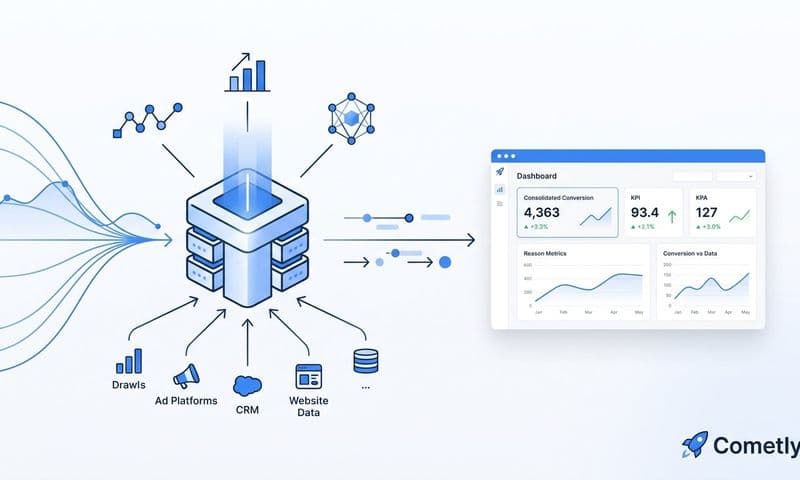
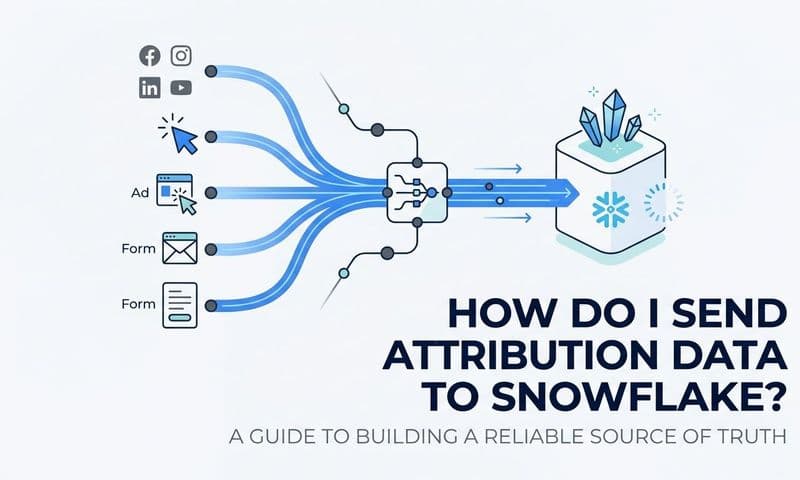
To make this work, you need to unify data from multiple sources into a single place. That means your ad platforms, your website analytics, your CRM, and your revenue or billing data all need to feed into one attribution system. When these data sources are connected, every conversion event exists in context rather than in isolation. You can see not just that a deal closed, but the full sequence of marketing interactions that preceded it. A purpose-built marketing analytics solution is what makes this kind of unified visibility possible.
This is fundamentally different from traditional reporting. Traditional reporting asks: "How did Facebook Ads perform this month?" Holistic measurement asks: "Across all the touchpoints in our closed-won deals, which channels and campaigns consistently appeared in the journey, and at which stages?" These are completely different questions, and they lead to completely different decisions.
One important clarification: holistic measurement is not about giving credit to every channel equally. It's about understanding the actual contribution of each touchpoint within the context of the full journey. Some touchpoints create awareness. Some build consideration. Some drive conversion. A holistic system helps you see which is which, so you can invest accordingly.
For B2B SaaS specifically, this matters more than in almost any other business model. Sales cycles can run weeks or months. Deal values vary significantly. A lead from a small startup and a lead from an enterprise company might look identical in your ad platform, but they represent vastly different revenue outcomes. Holistic measurement lets you connect marketing activity not just to lead volume, but to pipeline quality, deal size, and actual closed revenue. This is precisely what marketing effectiveness measurement is designed to capture.
The end goal is a single source of truth: one place where your team can see how marketing is performing across the entire funnel, from first impression to closed deal, without needing to reconcile conflicting reports from five different platforms.
The Core Components That Make Holistic Measurement Work
Building a holistic measurement system requires getting several technical and strategic components right. Each one addresses a specific gap in how most marketing teams currently track performance.
Multi-Touch Attribution Models: This is the foundation. Instead of assigning 100% of the credit to a single touchpoint, multi-touch attribution distributes credit across all the interactions in a customer journey. This gives you a much more accurate picture of how different channels and campaigns work together to drive conversions. There are several model types, each with different strengths, and we'll cover how to choose between them in the next section.
Server-Side Tracking and Conversion API Integration: Browser-based tracking via pixels has become increasingly unreliable. Ad blockers, browser privacy restrictions, and mobile operating system changes have created significant gaps in pixel-based data collection. Server-side tracking solves this by sending conversion data directly from your server to ad platforms, bypassing the browser entirely. Meta's Conversion API (CAPI) and Google's Enhanced Conversions are the industry-standard implementations of this approach. When you implement server-side tracking, you capture conversion events that pixel-based tracking would miss entirely, improving the accuracy and completeness of your attribution data.
First-Party Data Infrastructure: As third-party cookies continue to be phased out across major browsers, first-party data collected directly from user interactions on your own properties becomes the most reliable foundation for attribution. This means capturing and storing data from your website, app, and product interactions in a way that you own and control. First-party data is more accurate, more durable, and more useful for both measurement and ad platform optimization than any third-party data source. Setting up a proper data lake for marketing attribution is one of the most effective ways to build this infrastructure.
Pipeline and Revenue Attribution: This is where holistic measurement separates itself from traditional marketing analytics. Most attribution systems stop at the lead or opportunity stage. Revenue attribution closes the loop by connecting marketing touchpoints all the way to pipeline stages, closed-won deals, and actual revenue in your CRM. For B2B SaaS, this is critical. It lets you answer not just "which channels generate leads?" but "which channels generate leads that actually close, and at what deal value?" These are very different questions with very different answers.
Centralized Data Integration: All of these components only work if your data flows into a single system where it can be analyzed together. That means integrating your ad platforms, website analytics, CRM, and billing data into one attribution platform. Without this integration, you're still working with fragments even if each individual piece of data is accurate.
When these components work together, you get something most marketing teams have never had: a complete, accurate, revenue-connected view of how marketing is actually performing.
How to Build a Holistic Measurement Framework for B2B SaaS
Knowing what holistic measurement is and actually building it into your operations are two different things. Here's a practical approach to getting started.
Step 1: Map your customer journey stages. Before you can measure the journey, you need to define it. Start by identifying every touchpoint where a prospect interacts with your brand, from the first ad impression or organic search click all the way through to the sales call and closed deal. This includes paid channels, organic content, email sequences, product trials, and direct sales interactions. Don't just map the happy path. Map the full range of journeys your customers actually take, because they're rarely linear.
Step 2: Define the conversion events that matter at each stage. Holistic measurement requires tracking meaningful events throughout the funnel, not just the final conversion. For most B2B SaaS companies, this means tracking events like: first-touch ad click or organic visit, content downloads or webinar registrations, form submissions, demo requests or trial signups, sales qualified lead (SQL) creation in the CRM, opportunity creation, and closed-won revenue. Each of these events represents a stage in the journey and gives you a more complete picture of how marketing is contributing to revenue over time. Learning how to track marketing campaigns across all these stages is foundational to getting this right.
Step 3: Implement server-side tracking for your key conversion events. Once you know which events matter, make sure they're being captured accurately. For high-value conversion events like demo requests and trial signups, implement server-side tracking to ensure you're not losing data to browser restrictions or ad blockers. Connect your Conversion API integrations with Meta and Google so that enriched, first-party event data flows back to those platforms for optimization.
Step 4: Integrate your data sources into a centralized attribution platform. Connect your ad platforms, website analytics, CRM, and revenue data into one place. This is where a purpose-built attribution platform becomes valuable. The goal is to eliminate the manual work of reconciling data across systems and create a single dashboard where you can see the full customer journey and its connection to revenue. Evaluating the best software for tracking marketing attribution will help you identify the right fit for your team's needs.
Step 5: Establish a regular measurement cadence. Holistic measurement isn't a one-time setup. Build a rhythm of reviewing your attribution data weekly for campaign optimization and monthly for budget allocation decisions. Bring this data into your regular marketing and sales alignment meetings so that both teams are working from the same picture of pipeline health and revenue contribution.
The setup takes real effort, but the payoff is significant. When your measurement system is working correctly, you stop guessing and start knowing which marketing investments are driving growth.
Choosing the Right Attribution Model for Your Measurement Goals
One of the most common questions in holistic marketing measurement is: which attribution model should I use? The honest answer is that there isn't one right model. Different models answer different strategic questions, and the best approach is to use multiple models together rather than committing to a single one.
First-Touch Attribution gives 100% of the credit to the first interaction a prospect had with your brand. This model is useful for understanding what's creating awareness and bringing new prospects into your funnel. If you're trying to evaluate the effectiveness of top-of-funnel campaigns, first-touch attribution gives you a clear signal.
Last-Touch Attribution gives 100% of the credit to the final interaction before conversion. This model tells you what's closing deals. It's useful for evaluating bottom-of-funnel campaigns and understanding which channels are most effective at converting warm prospects. The problem is that it ignores everything that came before, which in B2B SaaS can mean ignoring months of meaningful marketing activity.
Linear Attribution distributes credit equally across all touchpoints in the journey. This model provides a more balanced view and is particularly useful for B2B SaaS with longer sales cycles, where multiple touchpoints genuinely contribute to the outcome. It's not perfect, but it avoids the extreme distortions of single-touch models.
Time-Decay Attribution gives more credit to touchpoints that occurred closer to the conversion event. The logic is that interactions closer to the decision point had more influence. This model works well when you want to balance the contributions of the full journey while still emphasizing the interactions that drove the final decision.
Data-Driven Attribution uses machine learning to distribute credit based on actual conversion patterns in your data. Rather than applying a fixed rule, it analyzes which combinations of touchpoints correlate with conversions and assigns credit accordingly. This is the most sophisticated model, but it requires sufficient data volume to produce reliable results.
For most B2B SaaS teams, the most practical approach is to compare multiple models side by side. When you look at how credit shifts between first-touch, linear, and data-driven models, you get a much richer picture of how your marketing is actually working. Reviewing the top attribution and measurement tools available today can help you find a platform that supports this kind of multi-model comparison. You might discover that a channel that looks weak in last-touch attribution actually appears consistently in first-touch and linear views, suggesting it's creating awareness that other channels convert. That kind of insight is only visible when you're comparing models rather than relying on one.
Turning Measurement Data Into Smarter Marketing Decisions
All the measurement infrastructure in the world is only valuable if it changes how you make decisions. Here's how unified attribution data translates into concrete marketing improvements.
Budget allocation based on revenue contribution, not lead volume: Once you can see which channels and campaigns consistently appear in the journeys of closed-won deals, you can shift budget toward what actually drives revenue rather than what generates the most top-of-funnel activity. This often reveals surprising insights. Channels that look expensive on a cost-per-lead basis frequently look much more efficient when evaluated on a cost-per-closed-deal basis, and vice versa.
Campaign optimization across the full funnel: With holistic measurement, you can identify not just which campaigns drive conversions, but which ones drive high-quality pipeline. If a particular ad campaign consistently attracts prospects with shorter sales cycles or higher deal values, that's a signal worth acting on. Applying data analysis in marketing at this level lets you scale what works and pause what doesn't, with confidence that your data is telling you the real story.
AI-powered pattern recognition: Modern attribution platforms use machine learning to surface patterns that are difficult to spot through manual analysis. For example, AI can identify which combinations of ad creative types, channels, and content pieces correlate with higher deal values or faster sales cycles. These insights go beyond what any analyst could find by hand, especially as your data volume grows. The power of AI marketing analytics is particularly evident when applied to multi-touch journey data at scale.
Improving ad platform performance through data feedback loops: Here's a powerful and often overlooked benefit of holistic measurement. When you send enriched, first-party conversion data back to ad platforms like Meta and Google through Conversion API integrations, you're giving those platforms' optimization algorithms much better signals to work with. Instead of optimizing toward form fills, they can optimize toward the conversion events that actually predict revenue. Over time, this creates a compounding feedback loop where better measurement directly improves ad targeting and efficiency.
This is one of the most concrete ways that investing in measurement infrastructure pays for itself. Better data in means better performance out, across every channel where you're running paid campaigns.
Measurement as a Growth Lever, Not a Reporting Exercise
Let's bring this together. The shift from siloed channel reporting to holistic marketing measurement isn't just a technical upgrade. It's a fundamental change in how your marketing team operates and how it contributes to business growth.
When you have a unified, revenue-connected measurement system, you stop defending channel performance with metrics that don't connect to business outcomes. You start having different conversations with your CFO, your sales team, and your leadership. Instead of "our CPL went down this quarter," you're saying "marketing influenced 60% of closed-won pipeline, and here's which campaigns contributed most." That's a completely different level of strategic credibility.
Holistic measurement also creates tighter alignment between marketing and sales. When both teams are looking at the same data, from first touch to closed deal, they can collaborate on where the funnel is leaking, which leads are converting fastest, and what marketing activity is most predictive of revenue. That alignment is one of the most powerful growth levers available to a B2B SaaS company.
The teams that grow predictably aren't the ones with the biggest budgets. They're the ones that know what's working, why it's working, and how to do more of it. That knowledge comes from measurement.
Cometly is built specifically for this. It connects your ad platforms, CRM, website, and revenue data into a single attribution platform so you can see exactly which touchpoints drive pipeline and closed-won deals. With multi-touch attribution, server-side tracking, Conversion API integrations, and AI-powered insights, Cometly gives B2B SaaS marketing teams the single source of truth they need to make confident, data-driven decisions.
Holistic marketing measurement isn't a luxury for large teams with big analytics budgets. It's the foundational capability that separates marketing teams that grow predictably from those that guess. Every touchpoint matters. Every conversion event tells part of the story. And when you can see the whole story, you can finally answer the question your CFO is asking.
Ready to connect every touchpoint from first ad click to closed-won revenue? Get your free demo and see how Cometly gives your team the attribution clarity it needs to scale with confidence.