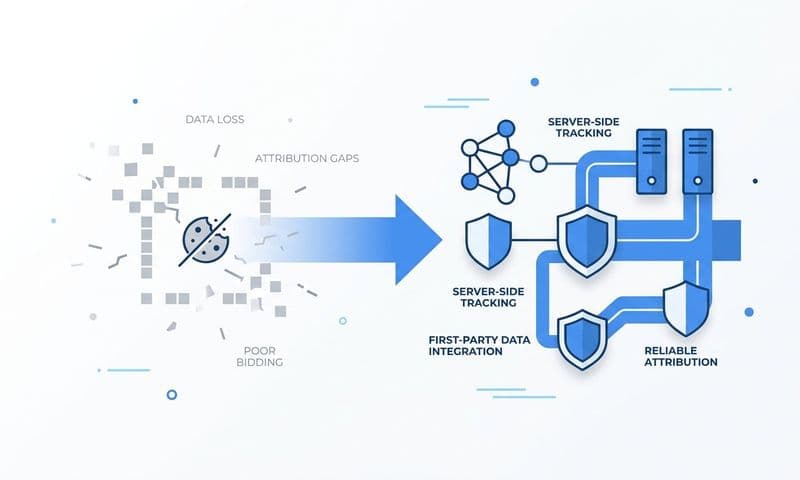
Browser-based tracking is losing reliability fast. Ad blockers, iOS privacy updates, and the ongoing deprecation of third-party cookies have created significant gaps between the conversions your ads drive and the conversions your ad platforms actually see. The result is misattributed spend, inflated CPAs, and ad algorithms optimizing on incomplete data.
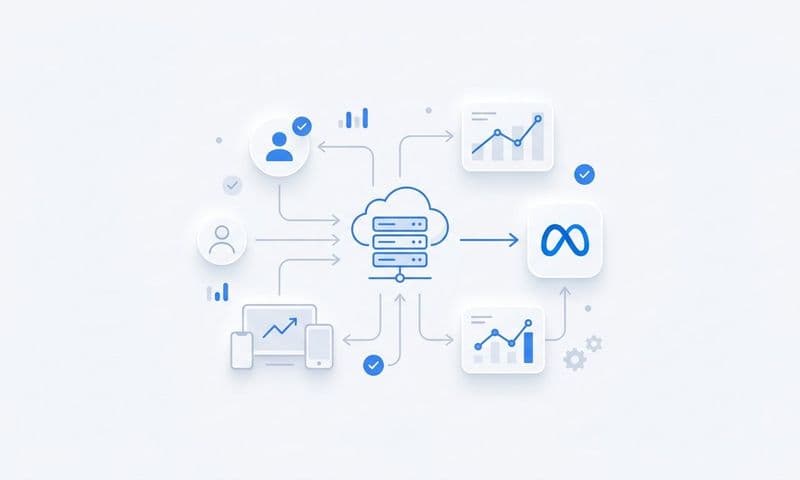
The Conversions API (CAPI) solves this by sending conversion data directly from your server to ad platforms like Meta and Google, bypassing the browser entirely. For B2B SaaS companies running paid campaigns, this is no longer optional.
When your ad platform's AI is fed incomplete conversion data, it makes poor optimization decisions. You end up wasting budget on audiences and creatives that look like they are underperforming, when they are actually driving results that just are not being tracked. The signal is broken, so the algorithm is flying blind.
This guide walks you through exactly how to implement CAPI, from understanding what you need before you start, to verifying that your events are firing correctly and your attribution is accurate. Whether you are setting up Meta's Conversion API, Google's Enhanced Conversions, or using a platform like Cometly to manage server-side tracking across multiple ad channels, this guide gives you a clear, sequential path from setup to optimization.
By the end, you will have a working CAPI implementation that sends enriched, first-party conversion data back to your ad platforms, improving match quality, reducing data loss, and giving your campaigns the signal they need to perform.
Step 1: Audit Your Current Tracking Setup Before Touching Anything
Before you write a single line of code or touch any platform settings, you need a clear picture of what you are working with. Jumping straight into implementation without this audit is one of the most common reasons CAPI setups end up with duplicate events, mismatched data, and attribution problems that are harder to fix than the original issue.
Start by mapping your existing pixel and tag setup across every ad platform you run. Document which Meta Pixel events are firing, which Google Ads conversion actions are configured, and whether you are using a tag manager like Google Tag Manager to manage them. Note the exact event names you are using on each platform.
Next, identify where data loss is actually occurring. Pull your form submission numbers from your CRM and compare them against the conversion events your ad platforms are reporting. If your CRM shows significantly more leads than your ad platforms are crediting, you have a tracking gap worth quantifying before you start.
For B2B funnels specifically, list every conversion event that matters across your full funnel. This typically includes form submissions, demo requests, trial signups, MQL status updates, SQL conversions, and closed-won revenue. Each of these is a candidate for server-side tracking, not just the top-of-funnel events your pixel is probably already capturing.
Document your complete tech stack at this stage. Note your CRM (HubSpot, Salesforce, or similar), your ad platforms, your website framework, your tag manager configuration, and any existing data layer setup. This documentation will save you significant time when you get to the configuration steps.
Finally, check your current Event Match Quality (EMQ) score in Meta Events Manager. This score, which runs from 1 to 10, measures how well the customer data in your pixel events matches actual Meta user profiles. Record this number as your baseline. After you implement CAPI with enriched customer data parameters, you should see this score improve, and that improvement is one of the clearest indicators that your implementation is working.
Common pitfall: Skipping this audit almost always leads to duplicate event firing or mismatched event names. When your browser pixel fires a "Lead" event and your server fires a "lead_submitted" event for the same conversion, ad platforms treat them as separate events. That corrupts your attribution data in ways that are difficult to untangle later.
Step 2: Choose Your CAPI Implementation Method
There is no single right way to implement CAPI, and the method you choose should reflect your team's technical resources, the number of ad platforms you run, and the complexity of your conversion funnel. Understanding your options clearly before committing to one will save you from rebuilding your setup later.
Direct API Integration: This means your engineering team builds a direct connection between your server and each ad platform's API. You have maximum control over exactly what data is sent, when, and how. The tradeoff is that it requires developer resources to build, test, and maintain. For each additional ad platform you run, you are adding another integration to manage. If your engineering team has bandwidth and you want full ownership of the implementation, this is a viable path.
Tag Manager Gateways: Meta offers a self-hosted Conversions API Gateway that reduces the engineering dependency for Meta specifically. It runs on your infrastructure and handles the server-to-API connection without requiring you to build the integration from scratch. This works reasonably well for simpler setups, but it only covers Meta, and it has limitations when your B2B funnel involves complex offline conversion events or multi-platform attribution.
Dedicated Attribution Platforms: Platforms like Cometly handle server-side tracking across Meta, Google, and other ad channels simultaneously through native integrations. Instead of building and maintaining separate API connections for each platform, you connect your ad accounts and data sources once, and the platform manages the server-side event delivery automatically. For B2B SaaS teams that run campaigns across multiple channels and need cross-channel attribution alongside CAPI, this approach removes significant technical overhead.
The right choice comes down to a few practical questions. How many ad platforms are you actively running? If you are managing Meta and Google simultaneously, building and maintaining two separate API integrations adds up quickly. Does your team have dedicated engineering bandwidth for this, or is it competing with product development? How complex is your B2B funnel, and do you need offline conversion data from your CRM flowing back to ad platforms automatically?
For most B2B SaaS marketing teams without a dedicated data engineering function, a platform approach is typically faster to implement, easier to maintain, and more capable of handling the full complexity of a B2B attribution setup. The goal is getting accurate data flowing reliably, not building infrastructure for its own sake.
Step 3: Configure Your Server-Side Events and Data Parameters
This is where the technical precision of your CAPI implementation is determined. Getting your event configuration right at this stage is what separates a CAPI setup that genuinely improves attribution from one that creates more confusion than it solves.
Start by defining the exact events you want to send via CAPI. For a typical B2B SaaS funnel, this means lead events (form submissions, demo requests, contact inquiries), trial start events, subscription or purchase events, and any custom funnel events that represent meaningful progression toward revenue. Be deliberate here. Not every page view or micro-interaction needs to be a server-side event. Focus on the conversions that your ad platforms should be optimizing toward.
Map each of your event names to the standard event types that each ad platform recognizes. Meta has a defined list of standard events (Lead, Purchase, Subscribe, CompleteRegistration, and others) that their optimization algorithms are built around. Using standard event names where possible ensures compatibility with platform optimization features. If you need custom events for B2B-specific funnel stages, document them clearly and make sure they are consistently named across platforms.
Customer information parameters are what make CAPI genuinely powerful for attribution. Include as many of the following as you can with each server-side event: hashed email address, hashed phone number, first name, last name, and an external ID that corresponds to the user's record in your CRM. These parameters are what allow ad platforms to match your server-side conversion events to actual users, which directly drives your Event Match Quality score.
PII hashing is not optional. All personally identifiable information must be hashed using SHA-256 before being sent to ad platforms. Email addresses, phone numbers, and names all need to be hashed client-side or server-side before transmission. This is a hard requirement from both Meta and Google, and it is also the right practice for handling customer data responsibly.
Set up event deduplication carefully. When you run both a browser pixel and server-side CAPI simultaneously (which is the recommended approach for redundancy), the same conversion will generate two events: one from the browser and one from your server. Without deduplication, ad platforms count both as separate conversions, which inflates your reported numbers. Use matching event IDs across your browser pixel and server events so platforms can identify and discard the duplicate. Meta uses the event_id parameter for this purpose.
For B2B funnels specifically, include value parameters where you can. If you know that a demo request from a certain company size or industry is worth more than others, passing a value with that event allows ad platforms to optimize toward higher-value leads rather than just raw conversion volume. This is a meaningful upgrade from optimizing purely on lead count.
Alignment tip: Your server-side event names must match your browser pixel event names exactly. If your pixel fires "Lead" and your server fires "lead", ad platforms may treat these as different events, creating separate event streams that complicate your attribution reporting.
Step 4: Connect Your CRM and First-Party Data Sources
Website events are just the beginning. The real power of CAPI for B2B SaaS companies comes when you connect your CRM and revenue data, enabling ad platforms to see what happens after a lead fills out a form.
Most B2B sales cycles involve multiple touchpoints over days or weeks between the initial ad click and a closed deal. A browser pixel captures the form submission and stops there. With CRM integration, you can send pipeline stage updates, MQL-to-SQL conversions, and closed-won events back to ad platforms as server-side events, each tied to the original ad click that started the journey. Understanding how to capture every customer touchpoint is essential for closing this attribution gap.
Connect your CRM, whether that is HubSpot, Salesforce, or another platform, so that revenue events trigger server-side events automatically. When a deal moves to closed-won in your CRM, that event should flow back to your ad platforms with the customer's hashed contact information so the platform can attribute that revenue to the campaign that generated the original lead.
Cometly integrates with Stripe and CRM platforms to close this loop automatically. When a subscription starts in Stripe or a deal closes in your CRM, that revenue data flows back to your ad platforms alongside the original ad attribution data. This means your ad platform is no longer optimizing based on form fills. It is optimizing based on the leads that actually convert to paying customers, which is a fundamentally different and more accurate signal.
This CRM connection also significantly improves your Event Match Quality score. When you send a closed-won event with a hashed email address from your CRM, the match rate between that event and the ad platform's user profile is typically much higher than a website event where you only have partial data. Better match quality means better attribution, which means the ad platform can more accurately credit the right campaigns and audiences for driving revenue.
The practical outcome of this step is that your ad platform's lookalike audiences and optimization algorithms are built on customers who actually paid, not just leads who showed initial interest. For B2B SaaS companies with long sales cycles, this distinction has a direct impact on campaign performance and budget efficiency.
Step 5: Test and Verify Your CAPI Events Are Firing Correctly
Do not skip this step or rush through it. A CAPI implementation that is not verified properly can silently report incorrect data, and you will not know until you have already made budget decisions based on inaccurate attribution.
For Meta, use the Test Events tool in Meta Events Manager. This tool allows you to trigger test events and confirm in real time that your server is sending them correctly with the right parameters. Look at each event carefully: check that the event name matches your pixel event name, that customer data parameters are present and hashed, and that your event ID is included for deduplication.
For Google Enhanced Conversions, use Google Tag Assistant and the conversion diagnostics section in Google Ads to verify that enhanced conversion data is being received. Google's diagnostics will flag missing parameters or configuration issues that could reduce match quality.
After your initial verification, check your Event Match Quality score in Meta Events Manager. Before CAPI implementation, many B2B companies see EMQ scores in the lower range because browser pixel events often lack complete customer data. After connecting CRM data and sending enriched server-side events, you should see this score improve. Aim for a score of 6 or higher as a baseline indicator of a healthy implementation.
Run a complete end-to-end test. Trigger an actual conversion event on your site (using a test lead or internal submission), then verify that it appears in the ad platform's event log within a few minutes. Confirm that both the browser pixel event and the server-side event are present, and that they are being deduplicated correctly rather than counted twice.
Common issues to watch for: Events firing with missing customer data parameters (which reduces EMQ), event names that do not match between pixel and server (which creates separate event streams), and PII that is being sent unhashed (which is both a platform violation and a data handling problem). Also watch for events that fire correctly in testing but fail silently in production due to server errors or API authentication issues.
Give your implementation at least 48 to 72 hours of clean, consistent data flow before moving to the optimization phase. This gives you enough data to confirm stability and catch any intermittent issues that might not appear in initial testing. Understanding how tracking pixels work alongside server-side events will help you diagnose discrepancies during this window.
Step 6: Validate Attribution Accuracy Across Your Full Funnel
Getting events to fire is one thing. Confirming that the attribution data is actually accurate is a separate, equally important step that many teams skip. This is what separates teams that implement CAPI from teams that actually benefit from it.
Start by comparing your server-side reported conversions against your CRM records for the same time period. If your CAPI setup is reporting 80 demo requests and your CRM shows 85, that small discrepancy is worth investigating. If the gap is larger, you likely have events that are not firing for certain traffic sources or funnel paths. Trace those gaps back to specific stages or sources.
Use Cometly's attribution dashboard to see how CAPI-reported conversions map to actual pipeline and revenue across all your ad channels in one view. Rather than reconciling data manually across Meta Events Manager, Google Ads, and your CRM separately, you get a single source of truth that shows which campaigns are driving leads, which of those leads are progressing through your pipeline, and which are converting to revenue.
Check for attribution model consistency. Ad platforms use different attribution windows and models by default. Meta may be using a 7-day click attribution window while Google uses last-click. Understanding which model each platform is applying, and aligning that with how you measure ROI internally, prevents you from drawing incorrect conclusions when comparing performance across channels. Learning how to use multi-touch attribution models can give you a more complete picture of campaign influence.
Cross-channel attribution deserves specific attention. When you run campaigns on both Meta and Google, the same conversion will often be claimed by both platforms. This is normal, but it needs to be understood rather than ignored. A platform like Cometly applies a consistent attribution model across channels so you can see the full picture without double-counting revenue in your overall ROI calculations.
Identify any remaining gaps where conversions are still being missed. Common culprits include traffic from channels that are not yet connected to your CAPI setup, funnel paths that bypass your standard conversion tracking (such as direct phone calls or offline meetings), or CRM data that is not syncing reliably. Each gap you identify and close at this stage improves the quality of the signal you send to your ad platforms in the next step.
Step 7: Optimize Ad Campaigns Using Your Improved Conversion Signal
With verified, accurate conversion data flowing through your CAPI setup, you are now in a position to actually use that data to improve campaign performance. This is where the investment in proper implementation pays off.
The first optimization move is shifting your campaign goals from surface-level events to high-intent conversions that are now reliably tracked. If you were previously optimizing toward page views or early funnel events because deeper funnel conversions were inconsistently tracked, you can now move your optimization targets to demo requests, trial signups, or even pipeline-stage events from your CRM. Ad platform algorithms are significantly more effective when they are optimizing toward events that represent genuine purchase intent.
Use Cometly's AI-powered recommendations to identify which campaigns, ad sets, and creatives are driving the highest-quality leads based on your full-funnel data. Rather than looking at cost-per-lead in isolation, you can now see which campaigns are generating leads that actually convert to customers. That distinction often reveals that your highest-volume campaigns are not your highest-ROI campaigns, which changes how you allocate budget. Applying analytics to improve campaign performance becomes far more effective when your underlying conversion data is accurate.
Re-evaluate your audience targeting with fresh eyes. Your ad platforms now have richer conversion data to build lookalike audiences from. If you previously built lookalikes from a pixel-only audience that was missing a significant portion of your actual converters, rebuilding those audiences from a more complete conversion dataset will typically improve their quality and performance.
Set up ongoing monitoring so you are alerted if event volume drops significantly. A sudden drop in server-side event volume often signals a tracking break, such as a website deployment that removed a tracking script, an API authentication failure, or a CRM sync issue. Catching these quickly prevents extended periods of degraded data quality that would otherwise corrupt your optimization signals.
The goal is a continuous feedback loop: better data flowing into your ad platforms leads to better algorithmic optimization, which leads to lower CPAs and higher ROI on your ad spend. CAPI implementation is not a one-time project. It is the foundation for a more reliable, more accurate marketing measurement system that compounds in value over time as your ad platforms learn from better data.
Putting It All Together
Implementing CAPI is one of the highest-leverage technical investments a B2B SaaS marketing team can make in the current privacy-first environment. The steps in this guide give you a clear path from auditing your existing setup to feeding ad platforms the enriched, server-side conversion data they need to optimize effectively.
The teams that implement CAPI correctly are not just recovering lost attribution data. They are giving their ad platform AI a better signal, building more accurate lookalike audiences, and making budget decisions based on what is actually driving revenue rather than what a browser pixel happened to capture.
Each step builds on the previous one: a thorough audit prevents configuration errors, the right implementation method matches your team's resources, precise event configuration drives match quality, CRM integration closes the attribution loop, and rigorous testing ensures the data you are sending is actually accurate before you optimize against it.
If you want to skip the manual setup and get server-side tracking running across Meta, Google, and other ad channels without building and maintaining your own API integrations, Cometly handles this natively. It connects your ad platforms, CRM, and website to track every touchpoint in real time, sends enriched conversion events back to ad platforms automatically, and surfaces AI-driven insights on which campaigns are driving pipeline and revenue.
The result is accurate attribution, better-performing campaigns, and a clear view of your marketing ROI from first ad click to closed-won deal. Get your free demo today and start capturing every touchpoint to maximize your conversions.