
Missing conversions in analytics is one of the most frustrating problems a B2B SaaS marketing team can face. You run campaigns, leads come in, deals close, and yet your analytics dashboard shows gaps, underreported events, or attribution that simply does not add up.
The result is a distorted picture of what is actually driving revenue. That distortion leads to poor budget decisions, wasted ad spend, and a growing sense that you cannot trust your own data.
This guide walks you through exactly how to identify, diagnose, and fix missing conversions in your analytics setup. Whether you are dealing with broken pixel tracking, browser privacy restrictions, or disconnected CRM data, each step is designed to be actionable and specific.
This matters especially for B2B SaaS companies where the sales cycle is long and multi-touch. A single missed event can skew your entire attribution model and cause you to scale the wrong channels. The steps here apply across major ad platforms including Meta, Google, and LinkedIn, and they address both client-side and server-side tracking gaps.
By the end, you will have a reliable conversion tracking system that captures every touchpoint from the first ad click through to closed-won revenue, and you will know how to validate it so you can actually trust what you see.
Step 1: Audit Your Current Tracking Setup
Before you can fix anything, you need to know exactly what you are working with. Most teams are surprised to discover their tracking setup is messier than they assumed, with duplicate tags firing on some pages, missing scripts on others, and conversion events that were set up once and never verified again.
Start by pulling together a complete inventory of every tracking touchpoint across your website and landing pages. This includes client-side pixels from Meta, Google, and LinkedIn, any server-side event integrations, your tag management system configuration, and any CRM-level tracking that captures lead sources.
Use your browser's developer tools to inspect which scripts are loading on key pages. Open the Network tab, filter by your tracking domains, and confirm each pixel fires when expected. If you use Google Tag Manager, the Preview and Debug mode will show you exactly which tags trigger on each page load and user action.
For Meta, open Events Manager and review the event activity for each pixel. You will see which events are firing, how frequently, and whether the platform is flagging any issues. Google's Tag Assistant serves a similar purpose for Google Ads and GA4 conversion events. A thorough Google Analytics audit at this stage will surface configuration errors that are easy to miss during routine checks.
As you audit, document the following for each conversion event you care about: the event name, where it fires, which platform receives it, whether it is client-side or server-side, and whether it is currently active. Key events for most B2B SaaS companies include form submissions, trial signups, demo requests, and any onboarding milestones you treat as conversion signals.
Pay close attention to pages with complex behavior, such as multi-step signup flows, single-page application routing, or third-party form tools. These are common places where tracking scripts fail silently.
Success indicator: You have a complete written inventory of every tracking touchpoint and can point to specific gaps where events are missing, duplicated, or unverified.
Step 2: Diagnose Why Conversions Are Being Dropped
Once you know what is missing, the next question is why. Missing conversions in analytics rarely come from a single cause. More often, there are several overlapping issues that compound each other.
The most common culprits fall into a few clear categories.
Ad blockers and browser privacy restrictions: A significant portion of your audience uses ad blockers or browsers with enhanced tracking protection. These tools block client-side pixels entirely, meaning conversions from those users never reach your ad platform or analytics tool.
Cookie consent management platforms: If your site uses a consent banner and a user declines cookies, tracking scripts may be prevented from loading at all. This is legally appropriate in many regions, but it creates a systematic blind spot in your data that is easy to overlook.
Redirect chains breaking UTM parameters: When a user clicks an ad and passes through one or more redirects before landing on your site, UTM parameters can be stripped in the process. The conversion still happens, but it appears to come from no source, inflating your direct traffic and hiding the actual campaign that drove it.
Single-page application rendering issues: Many modern SaaS marketing sites and apps are built on frameworks like React or Vue. These applications do not trigger standard page load events on navigation, which means your analytics tool may not register key steps in a funnel unless you have specifically configured virtual pageview tracking. Understanding event tracking in Google Analytics is essential for diagnosing these gaps in dynamic applications.
Attribution window mismatch: This one is often overlooked. Ad platforms default to short attribution windows, commonly seven days for clicks and one day for views. B2B SaaS sales cycles routinely run 30 to 90 days or longer. A lead who clicks your ad in week one and converts in week six will not be credited to that campaign under default settings, making it appear as though the campaign produced no results.
Use platform diagnostic tools to surface specific issues. Meta's Events Manager shows event match quality and flags events that are firing incorrectly. Google Tag Assistant highlights tag misfires and configuration errors. Compare your CRM's total lead count against what your ad platforms report over the same time window. The gap between those two numbers is your starting point for understanding the scale of the problem.
Success indicator: You can name the specific reason or reasons your conversions are being lost, and you have a rough sense of how many conversions each cause accounts for.
Step 3: Implement Server-Side Tracking to Capture Blocked Events
Client-side pixels have a fundamental limitation: they rely on the user's browser to execute and transmit the tracking event. When a browser blocks that script, the event is gone. Server-side tracking solves this by moving the event transmission off the browser entirely and sending conversion data directly from your server to the ad platform's API.
This approach bypasses ad blockers, browser privacy restrictions, and cookie consent issues because the signal never passes through the user's browser at all. It is now considered a best practice for any team that needs accurate conversion measurement.
The two most important server-side integrations for most B2B SaaS companies are the Meta Conversions API and Google Enhanced Conversions.
Meta Conversions API (CAPI): CAPI allows you to send conversion events directly from your server to Meta. You define the event, attach relevant user data, and send it via Meta's API. This data supplements or replaces what the browser pixel would have sent, giving Meta a more complete picture of your conversions.
When setting up CAPI, map your key conversion events explicitly. For most B2B SaaS companies, this means lead form submissions, trial activations, and demo bookings at a minimum. If you have onboarding milestones that correlate with retention or expansion, those are worth including as well.
Google Enhanced Conversions: Google's equivalent allows you to send hashed first-party data alongside your conversion events. This improves the accuracy of conversion measurement, particularly for users who are logged into Google accounts, and helps recover conversions that would otherwise be lost to cookie restrictions. Teams dealing specifically with Google Analytics missing conversions will find that Enhanced Conversions is one of the most effective tools for closing that gap.
One critical configuration detail: event deduplication. When you run both a client-side pixel and a server-side event for the same conversion, both may fire. Without deduplication, the same conversion gets counted twice, inflating your numbers. Most platforms use an event ID parameter to match and deduplicate events. Set a unique event ID for each conversion and pass it through both the browser pixel and the server-side event so the platform knows they represent the same action.
To improve match quality on Meta, include as much first-party data as you can with each server-side event. Hashed email addresses and phone numbers significantly increase the likelihood that Meta can match the event to a real user profile. Higher match quality means better optimization signal for your campaigns.
Success indicator: Server-side events are appearing in your ad platform's event manager with high match quality scores, and you have confirmed that deduplication is working correctly by checking that event counts do not double when both pixel and server-side events fire.
Step 4: Fix UTM Parameter and Attribution Chain Breakdowns
Even with solid server-side tracking in place, your attribution is only as good as the data you pass through it. UTM parameters are the foundation of campaign attribution, and they break more often than most teams realize.
Start by auditing every paid ad link across your active campaigns. Each link should include consistent utm_source, utm_medium, utm_campaign, and utm_content parameters. If any links are missing parameters, or if your naming conventions are inconsistent across platforms and campaigns, your attribution data will be fragmented and unreliable.
Next, identify where parameters are being stripped. Common culprits include redirect chains where one URL passes through an intermediate domain before reaching your landing page, app store links that do not preserve query strings, and certain email platforms that rewrite links during click tracking. Run your ad URLs through a redirect checker to see exactly what happens at each step and whether parameters survive the full journey.
Implement a consistent UTM naming convention and document it somewhere your entire team can reference. Decide on standard values for each parameter, such as "google" versus "google-ads" for utm_source, and enforce that convention across every campaign, channel, and team member. Inconsistency here is one of the most common causes of attribution challenges in marketing analytics that teams struggle to diagnose months after the fact.
For multi-step funnels, verify that UTM parameters persist through each step. If a user clicks an ad, lands on your homepage, and then navigates to a signup page, does the original UTM data carry through? Many analytics tools handle this automatically, but single-page applications and custom signup flows sometimes break the chain. Test this explicitly by clicking a UTM-tagged link and following the full conversion path while monitoring your analytics in real time.
For B2B SaaS companies with longer sales cycles, the most important thing you can do is ensure your CRM captures the original lead source at the moment of conversion. If a lead converts in week one but does not become a closed-won deal until week eight, you need the CRM to retain that original attribution data throughout the entire journey. Without it, your revenue attribution will be incomplete no matter how good your ad platform tracking is.
Success indicator: You can trace a specific lead from the original ad click through to their current CRM status without any gaps in source data, and your UTM naming is consistent across all active campaigns.
Step 5: Connect Your CRM and Revenue Data to Ad Attribution
Most teams track conversions at the top of the funnel and stop there. They measure lead form submissions and trial signups, optimize toward those events, and assume the rest will follow. For B2B SaaS, this approach is a significant problem.
A lead is not revenue. A trial signup is not a paying customer. If you optimize your campaigns toward top-of-funnel events without connecting them to downstream revenue, you risk scaling channels that generate volume but not value.
The fix is to integrate your CRM with your analytics platform so that pipeline stages and revenue events are tied back to the original marketing source. This means mapping CRM events, such as qualified lead, opportunity created, and closed-won, back to the ad campaigns that influenced them.
Most CRMs can export this data via webhooks or native integrations. Platforms like Cometly are built specifically to make this connection, pulling CRM data and ad platform data into a single view so you can see which campaigns are actually driving pipeline and revenue, not just leads.
Once your CRM data is connected, use a multi-touch attribution model rather than relying on last-click alone. Last-click attribution systematically undervalues the channels that create awareness and generate initial interest, which are often the most important touchpoints in a long B2B sales cycle. Multi-touch models, whether linear, time decay, or data-driven, distribute credit across all the touchpoints that contributed to a conversion, giving you a more accurate picture of channel performance.
You should also sync offline conversion data back to Meta and Google. Both platforms support offline conversion imports that allow you to send CRM pipeline and revenue events back to the ad platform. This teaches their optimization algorithms to target users who are likely to become paying customers, not just users who fill out forms. Over time, this improves campaign performance by aligning the platform's optimization signal with your actual business outcome.
Success indicator: Your analytics platform shows pipeline and revenue data attributed to specific campaigns, not just lead volume, and you can compare cost-per-opportunity and cost-per-revenue across channels.
Step 6: Validate Your Tracking with a Test Conversion Audit
Implementation without validation is guesswork. Before you trust your tracking setup, you need to verify that every event fires correctly, reaches every connected platform, and is recorded accurately.
Run test conversions through each key event type. Submit a test form, trigger a trial signup, and book a demo using a test account. As you do this, watch the event activity in real time across your analytics tool, your ad platform's event manager, and your CRM. Each event should appear in all three places with the correct parameters and timestamps.
After running test events, do a broader comparison across a 30-day historical window. Pull your total conversion counts from your analytics platform, your ad platforms, and your CRM for the same time period. These numbers will not match exactly, and they should not, because each platform counts differently. But large discrepancies, such as your CRM showing twice as many leads as your ad platforms report, indicate a gap that needs investigation. Reviewing your marketing analytics metrics side by side across platforms is the most reliable way to surface these inconsistencies.
In Meta Events Manager, review the Event Match Quality score for each of your server-side events. A high score means Meta can reliably match your events to real user profiles, which directly improves ad optimization. If your score is low, check whether you are passing hashed email addresses and phone numbers with each event, as these are the most impactful signals for improving match quality.
Set up conversion monitoring alerts so your team is notified immediately if a tracking event stops firing. Website updates, tag manager changes, and third-party script conflicts can all break tracking silently. Without monitoring, you may not discover a broken event until you are reviewing a full month of corrupted data.
Finally, document your validated setup as a baseline. Record which events are active, what parameters they pass, and what counts you expect to see. This baseline becomes your reference point for future audits and makes it much easier to spot when something changes.
Success indicator: Conversion counts are consistent across all platforms within an acceptable variance range, test events appear correctly in every connected system, and you have monitoring in place to catch future breakdowns quickly.
Step 7: Use a Unified Attribution Platform to Maintain Accuracy Over Time
The steps above will fix your current tracking gaps. But tracking breaks regularly. Platform APIs change, websites get updated, new ad channels get added, and consent requirements evolve. A point-in-time fix is not enough if you want accurate attribution over the long term.
This is where a dedicated attribution platform becomes essential. Rather than manually reconciling data across your ad platforms, analytics tool, and CRM, a unified attribution platform pulls all of that data into a single source of truth and keeps it synchronized in real time. Understanding how a dedicated attribution platform compares to Google Analytics alone makes clear why consolidation matters for teams managing multiple channels.
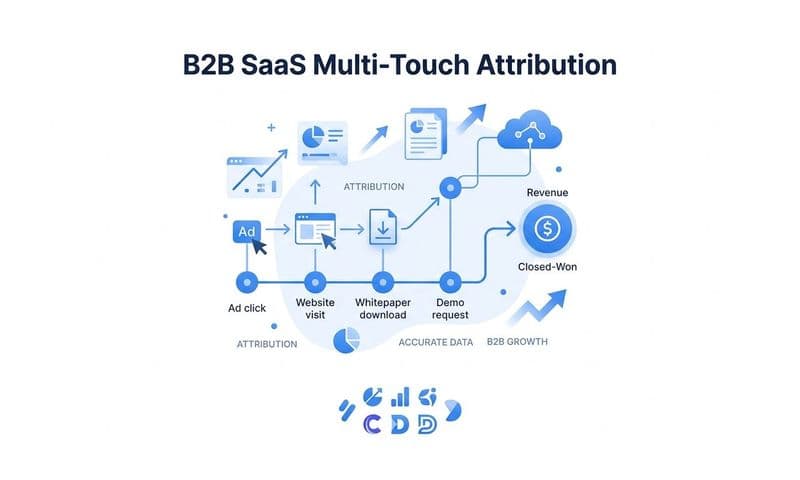
Cometly is built specifically for this use case in B2B SaaS. It connects your ad platforms, CRM, and website to track the entire customer journey from first ad click to closed-won revenue. Instead of logging into Meta, Google, LinkedIn, and your CRM separately and trying to piece together a coherent picture, you get a single dashboard that shows accurate attribution across every channel.
Beyond consolidation, Cometly's AI-driven insights help you identify which campaigns are actually driving pipeline and revenue, not just which ones are generating the most reported conversions. This distinction matters enormously in B2B SaaS, where a campaign can look strong on surface metrics while contributing little to actual revenue. The power of AI marketing analytics is precisely this ability to separate surface-level performance from actual business impact.
Cometly also feeds enriched conversion data back to Meta, Google, and other ad platforms. By sending high-quality, first-party conversion signals back to these platforms, you improve their optimization algorithms and get better results from the same ad spend. The platforms learn to find more users who look like your actual customers, not just users who look like people who fill out forms.
Perhaps most importantly, a unified platform surfaces conversion gaps automatically. Instead of waiting for a quarterly audit to discover that a key event stopped firing, you get visibility into your tracking health on an ongoing basis. Your team can act before bad data compounds into bad decisions.
Success indicator: Your team has a single dashboard showing accurate attribution from first ad click to closed-won revenue, with no manual reconciliation required and automatic alerts when tracking gaps appear.
Putting It All Together
Fixing missing conversions in analytics is not a one-time task. It requires a systematic approach that covers your tracking infrastructure, attribution chain, CRM integration, and ongoing validation. Each step in this guide builds on the previous one, and skipping steps will leave gaps that compound over time.
Start with the audit in Step 1 to understand your current gaps. Work through the diagnostic and implementation steps to close them. Then use a unified attribution platform to keep your data accurate as your stack evolves.
When your conversion tracking is solid, every campaign decision becomes sharper. You stop guessing which channels work and start scaling with confidence. For B2B SaaS teams managing long sales cycles and multi-touch funnels, this accuracy is the difference between growing efficiently and burning budget on channels that look good on the surface but do not drive revenue.
Use this checklist to confirm your setup is complete before moving on:
Tracking audit complete: Full inventory of all pixels, tags, and server-side events documented.
Root causes identified: Specific reasons for conversion loss named and quantified.
Server-side tracking live: Meta CAPI and Google Enhanced Conversions active with deduplication configured.
UTM parameters consistent: Naming conventions enforced and parameter persistence verified through full funnel.
CRM revenue data connected: Pipeline and closed-won events attributed back to original campaign sources.
Test conversions validated: All key events verified end-to-end across every connected platform.
Unified attribution platform in place: Single source of truth for attribution with ongoing monitoring active.
With these steps complete, your analytics will reflect reality, and your marketing decisions will reflect that clarity. Ready to stop guessing and start scaling with data you can actually trust? Get your free demo and see how Cometly connects every touchpoint from first click to closed-won revenue in a single, accurate view.