Running ads across Meta, Google, TikTok, LinkedIn, and Pinterest sounds like a smart diversification strategy until you try to figure out what's actually working. Each platform reports its own version of the truth, attribution windows overlap, and by the time you've toggled between five different dashboards, you've lost the thread entirely.
The solution is a dedicated multi platform ad analytics tool that pulls everything into one place and gives you a clear, unified picture of performance. But not all tools solve the same problem. Some focus on attribution accuracy, others on reporting and visualization, and some combine both.
The tools below were selected based on cross-platform coverage, attribution methodology, ease of setup, reporting depth, and overall value. Whether you're managing a lean DTC brand or a multi-channel agency portfolio, there's a fit here for you. If you want to understand how attribution and analytics work together, Cometly's attribution feature page and analytics feature page are worth exploring alongside this list.
1. Cometly
Best for: Marketers who need AI-powered, cross-platform attribution with accurate conversion data
Cometly is an AI-powered marketing attribution platform that tracks the full customer journey across ad platforms, your CRM, and your website to show exactly which ads drive revenue.
 9 Best Multi Platform Ad Analytics Tools in 2026
Where This Tool Shines
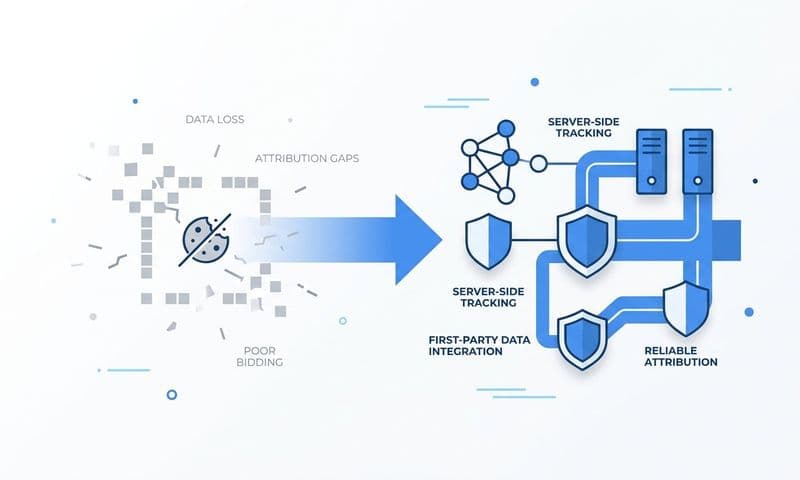
Cometly's biggest differentiator is how it handles modern tracking challenges. Server-side tracking means your data doesn't disappear when a user has an ad blocker or when iOS privacy restrictions kick in. That alone puts it ahead of tools that still rely entirely on browser-based pixels.
The Conversion Sync feature is particularly valuable: it sends enriched, conversion-ready events back to Meta, Google, and other ad platforms, feeding their algorithms better data and improving targeting over time. This creates a feedback loop that makes your ad spend work harder across every channel.
Key Features
AI-Powered Multi-Touch Attribution: Tracks every touchpoint across all ad channels and attributes revenue across the full customer journey, not just the last click.
Server-Side Tracking: Captures conversion data accurately even with privacy restrictions, browser limitations, and iOS changes that break traditional pixel tracking.
Conversion Sync: Sends enriched conversion events back to Meta, Google, and other platforms to improve ad algorithm performance and targeting quality.
AI Ads Manager: Surfaces optimization recommendations so you know which campaigns to scale, pause, or reallocate budget toward.
AI Chat: Lets you query your marketing data in plain language, making it easy to get answers without building complex reports manually.
Best For
Cometly is built for digital marketers, growth teams, and agencies running paid campaigns across multiple channels who need accurate attribution data, not just aggregated metrics. It's especially strong for teams where understanding true revenue impact per ad is a daily priority.
Pricing
Custom pricing based on ad spend. A demo is available on request, which is the best way to see how it maps to your specific channel mix and attribution needs.
2. Triple Whale
Best for: Ecommerce brands on Shopify that want attribution and creative analytics in one place
Triple Whale is an ecommerce-focused analytics platform combining attribution, creative performance tracking, and a unified paid media dashboard.
 7 Best Funnel.io Alternatives for Marketing Data Analytics in 2026
Where This Tool Shines
Triple Whale's native Shopify integration is genuinely tight. Revenue data flows in real time, and the summary dashboard gives you a single view of ad performance across Meta, Google, TikTok, and more without needing to stitch data together manually.
The creative analytics layer is a standout for teams running high-volume ad testing. You can quickly identify which creatives are driving results across platforms, which saves significant time during weekly performance reviews.
Key Features
Native Shopify Integration: Real-time revenue tracking that connects directly to your store without manual data syncing.
First-Party Pixel Attribution: Captures conversion data independently of platform-reported numbers for a more accurate view.
Creative Analytics: Identifies top-performing ad creatives across channels so you can double down on what's working.
Summary Dashboard: Blends data from Meta, Google, TikTok, and other platforms into a single performance view.
Customer Journey Mapping: Visualizes the path customers take before converting across multiple touchpoints.
Best For
DTC ecommerce brands on Shopify, particularly those running multi-channel paid media with a strong emphasis on creative testing and optimization. Less suited for SaaS or service businesses without a transactional ecommerce model.
Pricing
Starts around $100/month with pricing that scales based on revenue and the features you need.
3. Northbeam
Best for: Data-driven ecommerce teams that need both granular attribution and strategic media planning
Northbeam is an advanced attribution and media mix modeling platform built for teams that want deep measurement capabilities alongside strategic budget allocation insights.
 9 Best Cross Platform Attribution Software Tools in 2026
Where This Tool Shines
Northbeam goes further than most attribution tools by pairing multi-touch attribution with media mix modeling. That combination lets you understand both which specific ads drove conversions and how your overall channel mix is performing at a strategic level.
The incrementality testing capability is a meaningful addition for teams that want to move beyond correlation and understand true causal lift from their campaigns.
Key Features
Multi-Touch Attribution: Customizable lookback windows give you control over how credit is assigned across the conversion path.
Media Mix Modeling: Strategic-level analysis that helps inform budget allocation decisions across channels.
Creative Analytics: Tracks creative performance across platforms to surface what's resonating with audiences.
Cross-Channel Path Analysis: Shows how customers move across different channels before converting.
Incrementality Testing: Measures true lift from campaigns to validate whether ad spend is generating incremental revenue.
Best For
Mid-market and enterprise ecommerce teams with significant ad budgets who need both tactical attribution and strategic measurement. The depth of the platform rewards teams with dedicated analysts or data-savvy marketers.
Pricing
Custom pricing, generally positioned for mid-market and enterprise budgets. Best to request a demo to get accurate numbers for your scale.
4. Hyros
Best for: High-spend advertisers with long sales cycles, call-based conversions, or complex funnels
Hyros is an AI-powered ad tracking platform designed for advertisers with long-funnel sales processes where traditional last-click attribution misses most of the story.
 7 Best Northbeam Alternatives for Small Business in 2026
Where This Tool Shines
Hyros is built for businesses where conversions happen over days or weeks and often involve multiple touchpoints including phone calls. The call tracking integration is a genuine differentiator for info product businesses, coaching programs, and high-ticket sales operations where a significant portion of revenue closes over the phone.
Its AI optimization layer feeds data back to ad platforms to improve targeting, similar in concept to what Cometly does with Conversion Sync, though Hyros is more narrowly optimized for specific business models.
Key Features
Long-Funnel Attribution: Tracks conversions across extended sales cycles with multiple touchpoints over time.
Call Tracking Integration: Attributes phone-based conversions back to the original ad source.
AI Optimization Layer: Sends conversion data back to ad platforms to improve algorithmic targeting.
Print Tracking: Attributes conversions from direct mail campaigns for omnichannel advertisers.
Custom Attribution Models: Configurable models for businesses with non-standard conversion paths.
Best For
High-spend advertisers in info products, coaching, agency services, and other businesses with long sales cycles where phone calls are part of the conversion process. Not the best fit for simple ecommerce or short-cycle SaaS.
Pricing
Starts around $199/month with higher tiers for larger ad spends. Pricing scales with volume.
5. Supermetrics
Best for: Analysts and marketers who want to pull ad data into their own reporting tools and data warehouses
Supermetrics is a data pipeline tool that extracts ad performance data from over 100 platforms and delivers it to spreadsheets, BI tools, and data warehouses for custom analysis.
 9 Best Multi Platform Ad Analytics Tools in 2026
Where This Tool Shines
Supermetrics doesn't try to be an analytics platform. It's a data mover, and it does that job extremely well. If your team already has a preferred reporting environment like Looker Studio, Google Sheets, or a data warehouse, Supermetrics gets your ad data there reliably and on a schedule.
The breadth of connectors is hard to match. Virtually every ad platform, CRM, and marketing tool has a connector, which makes it a strong choice for teams with complex, multi-source reporting needs.
Key Features
100+ Data Source Connectors: Covers all major ad platforms plus CRMs, SEO tools, and more.
Flexible Destinations: Sends data to Google Sheets, Looker Studio, Excel, BigQuery, Snowflake, and Redshift.
Automated Refresh Scheduling: Keeps reports up to date without manual data pulls.
Custom Query Builder: Lets you define exactly which metrics and dimensions you want to pull.
Data Warehousing Support: Connects directly to major cloud data warehouses for enterprise-scale reporting.
Best For
Marketing analysts, data teams, and agencies that want to own their reporting layer and work with ad data in their preferred tools. Requires some comfort with data tools; not ideal for teams looking for a ready-made attribution solution.
Pricing
Starts around $39/month per connector with pricing that varies by destination and data volume. Costs can add up quickly when connecting multiple sources.
6. Funnel.io
Best for: Enterprise marketing teams and agencies managing large volumes of data from many sources
Funnel.io is an enterprise-grade marketing data hub that automates collection, transformation, and delivery of ad and marketing data from hundreds of sources to any reporting destination.
 8 Best GDPR Compliant Attribution Software Tools in 2026
Where This Tool Shines
Funnel.io goes beyond simple data extraction by handling data transformation and normalization at scale. Currency conversion, metric mapping, and data governance features make it practical for large teams where data consistency across regions and channels is a real operational challenge.
The 500+ connector library is among the most comprehensive available, covering not just ad platforms but also CRMs, offline data sources, and custom integrations.
Key Features
500+ Data Connectors: Covers ad platforms, CRMs, offline sources, and custom data inputs.
No-Code Data Transformation: Mapping rules and transformation logic without requiring engineering resources.
Automated Normalization: Handles currency conversion and metric standardization across sources automatically.
BI Tool and Warehouse Destinations: Delivers clean data to Looker, Tableau, BigQuery, Snowflake, and more.
Governance Features: Role-based access controls and data management tools for large teams and agencies.
Best For
Mid-market to enterprise marketing teams and large agencies that need a reliable, governed data pipeline rather than a standalone analytics tool. Best suited for organizations with dedicated data or analytics resources.
Pricing
Custom pricing based on data volume and team size. Positioned for mid-market and enterprise budgets.
7. Whatagraph
Best for: Agencies that need polished, client-ready cross-platform reports fast
Whatagraph is a cross-platform reporting tool built specifically for agencies that need to create visually compelling, multi-source reports for clients without spending hours in spreadsheets.
 9 Best Tools to Fix Inconsistent Data Between Marketing Tools in 2026
Where This Tool Shines
Whatagraph's strength is in presentation-ready reporting. The pre-built templates for major ad platforms look professional out of the box, and the white-label functionality lets agencies deliver reports under their own brand without any additional design work.
Automated report scheduling means clients receive performance updates on a set cadence without any manual effort from the account team, which adds up to real time savings at scale.
Key Features
Pre-Built Report Templates: Ready-to-use templates for Meta, Google, TikTok, LinkedIn, and other major platforms.
Multi-Source Data Blending: Combines data from multiple ad platforms and channels into a single report view.
White-Label Reporting: Custom branding lets agencies deliver reports under their own identity.
Automated Scheduling: Reports are generated and delivered to clients automatically on a defined schedule.
Drag-and-Drop Builder: Flexible report customization without needing technical skills.
Best For
Digital marketing agencies managing multiple client accounts across several ad platforms. Particularly useful for teams where client reporting is a significant time commitment each week or month.
Pricing
Starts around $199/month with pricing that scales based on the number of data sources and users.
8. Rockerbox
Best for: DTC and ecommerce brands that want unified measurement combining attribution, incrementality, and media mix modeling
Rockerbox is a unified marketing measurement platform that brings together multi-touch attribution, incrementality testing, and media mix modeling for a complete picture of marketing impact.
Where This Tool Shines
Rockerbox stands out for its commitment to deduplication. Rather than letting every platform claim credit for the same conversion, Rockerbox applies a deduplicated attribution model that gives you a more honest view of what's actually driving revenue across digital and offline channels.
The new customer versus returning customer attribution split is a useful lens for growth-focused brands where acquiring net-new customers is a distinct strategic priority from retention revenue.
Key Features
Deduplicated Multi-Touch Attribution: Prevents double-counting across channels and platforms for more accurate revenue attribution.
Incrementality Testing: Measures true lift from campaigns to separate genuine impact from coincidental correlation.
Media Mix Modeling: Supports strategic budget allocation decisions at the channel level.
New vs. Returning Customer Attribution: Segments attribution by customer type to align with acquisition and retention goals separately.
Ecommerce Platform Integrations: Connects with major ecommerce platforms for seamless revenue data ingestion.
Best For
DTC and ecommerce brands that want measurement depth beyond standard last-click or even standard multi-touch attribution. A good fit for teams that are ready to invest in incrementality testing as part of their measurement strategy.
Pricing
Custom pricing with a free tier available for smaller brands to get started.
9. Google Analytics 4
Best for: Teams that need baseline cross-platform analytics at no cost
Google Analytics 4 is Google's free, event-based analytics platform offering cross-device tracking, conversion modeling, and BigQuery integration for teams that need a solid analytics foundation without a platform budget.
Where This Tool Shines
GA4's biggest advantage is the price: free for most teams. The event-based data model is flexible enough to track nearly any user behavior, and the native BigQuery export opens up advanced analysis for teams with SQL skills or a data analyst on staff.
The integration with Google Ads and Search Console makes it a natural fit for teams running Google-centric campaigns. That said, its cross-platform attribution capabilities are limited compared to dedicated tools, and it doesn't natively pull in data from Meta, TikTok, or other paid channels in a meaningful way.
Key Features
Free Cross-Platform Analytics: Web and app tracking at no cost for standard usage volumes.
Event-Based Data Model: Flexible tracking structure that supports custom events for virtually any user action.
Cross-Device Tracking: Connects user behavior across devices using Google's identity graph and conversion modeling.
BigQuery Export: Native integration for raw data export and advanced SQL-based analysis.
Google Ads and Search Console Integration: Connects performance data across Google's ecosystem for a joined view.
Best For
Teams at any stage that need a free analytics baseline, particularly those heavily invested in Google Ads. It works well as a complementary tool alongside a dedicated attribution platform rather than as a standalone multi-platform solution.
Pricing
Free for standard use. GA4 360, the enterprise version, starts at approximately $50,000 per year.
Which Tool Is Right for You
The best multi platform ad analytics tool depends on what problem you're actually trying to solve. Attribution accuracy, reporting automation, and strategic measurement are different needs, and different tools serve them better.
Best for ecommerce brands: Cometly and Triple Whale are the strongest options for DTC and ecommerce teams. Cometly's server-side tracking and AI-powered attribution give you reliable data even in a privacy-restricted environment, while Triple Whale's Shopify integration and creative analytics make it a natural fit for high-volume ad testing teams. Northbeam and Rockerbox are worth considering for brands that need incrementality testing or media mix modeling alongside attribution.
Best for agencies: Whatagraph handles client reporting with minimal friction and looks great out of the box. Supermetrics and Funnel.io are better fits for agencies that want to build custom reporting pipelines into their own BI tools or data warehouses. For agencies that also want to deliver attribution insights to clients, Cometly's multi-touch attribution and AI recommendations add real depth to the conversation.
Best for SaaS and longer-cycle businesses: Cometly's full customer journey tracking makes it well-suited for SaaS teams where the path from first ad click to paid conversion spans days or weeks. Hyros is worth evaluating if phone-based conversions are part of your sales process.
Best free option: Google Analytics 4 is the clear answer if budget is the primary constraint. It provides a solid analytics foundation, especially for Google Ads users, though it works best when paired with a dedicated attribution platform for cross-channel visibility.
The right starting point for most growth-focused marketing teams is accurate attribution. Without knowing which ads are actually driving revenue, every other optimization decision is built on shaky ground. Get your free demo of Cometly and see how AI-powered, cross-platform attribution can give you the clarity to scale your campaigns with confidence.