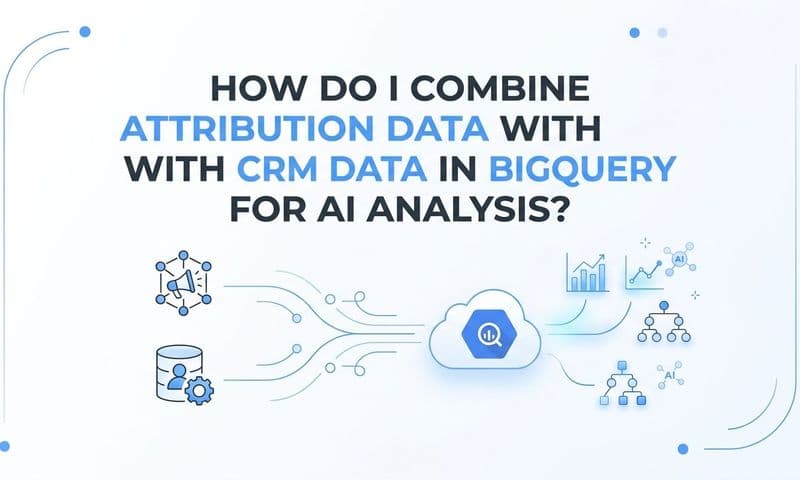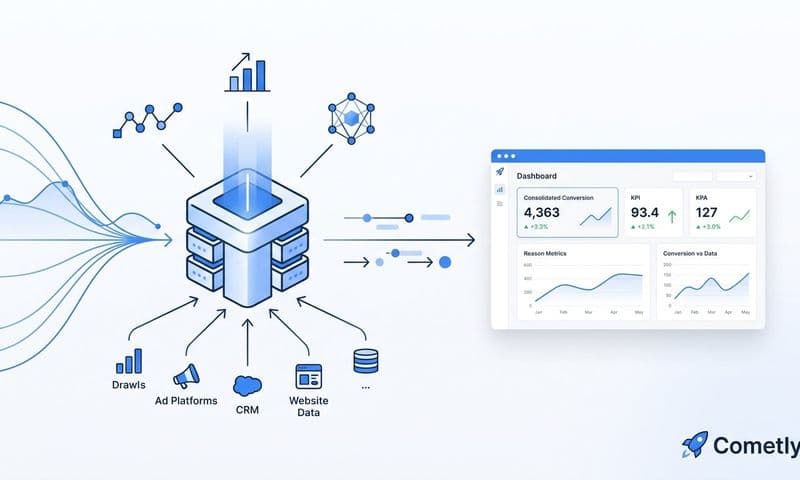

Managing marketing campaigns across multiple platforms creates a fragmented data nightmare. Your Meta ads tell one story, Google Analytics tells another, and your CRM has its own version of the truth. Cross-platform analytics solutions unify these disparate data streams, giving you a single source of truth for understanding which channels actually drive revenue.
This guide covers the top solutions for marketers who need accurate, actionable insights across their entire marketing stack—from attribution-focused platforms to comprehensive business intelligence tools.
1. Cometly
Best for: Marketing teams tracking ad performance and revenue attribution across multiple platforms
Cometly is a marketing attribution platform that connects ad platforms, CRM, and website to track the entire customer journey and show which ads drive actual revenue.
 9 Best Cross-Platform Analytics Solutions for Marketing Teams in 2026
Where This Tool Shines
Cometly addresses one of the biggest challenges in modern marketing: knowing which campaigns actually generate revenue. By capturing every touchpoint from initial ad click through CRM events, it provides a complete view of the customer journey that most analytics platforms miss.
The platform's AI-powered recommendations analyze performance across all channels to identify high-performing ads and suggest budget optimizations. This goes beyond basic reporting to give you actionable guidance on where to scale and where to cut spending.
Key Features
AI Ads Manager: Automatically identifies top-performing campaigns and provides scaling recommendations based on actual revenue data.
Server-Side Tracking: Bypasses browser-based tracking limitations to capture accurate data even with iOS privacy restrictions and ad blockers.
Multi-Touch Attribution: Compares different attribution models to understand how each touchpoint contributes to conversions across the entire journey.
Conversion Sync: Feeds enriched conversion data back to Meta, Google, and other ad platforms to improve their AI targeting and optimization.
Real-Time Analytics Dashboard: Monitors campaign performance as it happens with customizable views for different team members and stakeholders.
Best For
Digital marketing teams and agencies running paid advertising across multiple platforms who need to prove ROI and optimize budget allocation. Particularly valuable for businesses struggling with attribution accuracy due to iOS tracking limitations or complex customer journeys spanning multiple touchpoints.
Pricing
Custom pricing based on ad spend with demo available. Designed for businesses actively investing in paid advertising who need enterprise-grade attribution capabilities.
2. Google Analytics 4
Best for: Businesses needing free, comprehensive web and app analytics with Google ecosystem integration
Google Analytics 4 is a free web and app analytics platform with event-based tracking and machine learning insights.
 11 Best Conversion Optimization Tools to Boost Your ROI in 2026
Where This Tool Shines
GA4 represents Google's complete reimagining of web analytics for a privacy-first world. The event-based data model offers far more flexibility than the old session-based approach, letting you track virtually any user interaction without rigid category constraints.
The machine learning capabilities automatically surface insights you might miss, like emerging trends in user behavior or predicted revenue from specific segments. For businesses already using Google Ads, the native integration provides seamless campaign tracking without additional setup.
Key Features
Event-Based Data Model: Track any user interaction as an event without being limited to predefined categories like pageviews or sessions.
Cross-Device Tracking: Follow users across web and app properties when they're signed in, providing a unified view of the customer journey.
Predictive Metrics: Machine learning automatically calculates purchase probability and churn probability for user segments.
BigQuery Integration: Export raw event data to BigQuery for advanced analysis and custom reporting beyond the standard interface.
Privacy Controls: Built-in features for GDPR and CCPA compliance with cookieless measurement options.
Best For
Small to mid-sized businesses needing robust analytics without budget constraints, or enterprises using Google's marketing stack. Ideal for teams with technical resources who can leverage the advanced customization options and BigQuery integration for deeper analysis.
Pricing
Free for standard implementation with generous data limits. GA4 360 for enterprise needs starts around $50,000 annually with higher data limits and SLA guarantees.
3. Mixpanel
Best for: Product teams analyzing user behavior, funnel conversion, and feature adoption
Mixpanel is a product analytics platform focused on user behavior tracking, funnel analysis, and retention metrics.
 9 Best Cross-Platform Analytics Solutions for Marketing Teams in 2026
Where This Tool Shines
Mixpanel excels at answering the question: what do users actually do inside your product? The platform makes it incredibly easy to build funnels showing where users drop off, create cohorts based on behavior patterns, and measure how different features impact retention.
The self-serve interface lets non-technical team members explore data and build reports without waiting on analysts. This democratization of data access speeds up decision-making and helps product teams iterate faster based on real usage patterns.
Key Features
Interactive Funnels: Build conversion funnels in seconds and drill down to see exactly where and why users drop off at each step.
Cohort Analysis: Group users by behavior or properties and track how different cohorts perform over time for retention analysis.
User Segmentation: Create dynamic user segments based on any combination of actions and properties for targeted analysis.
A/B Testing Integration: Connect experiment platforms to measure how tests impact key product metrics and user behavior.
Real-Time Data: See user actions as they happen without delays, enabling immediate response to issues or opportunities.
Best For
SaaS companies and mobile apps focused on improving product engagement and reducing churn. Particularly valuable for product managers and growth teams who need to quickly test hypotheses about user behavior without relying on data teams.
Pricing
Free tier supports up to 20 million events per month. Growth plan starts at $20 monthly with additional features like group analytics and advanced filtering.
4. Amplitude
Best for: Product-led growth companies requiring advanced behavioral analytics and experimentation
Amplitude is a behavioral analytics platform for product teams with powerful cohort analysis and experimentation tools.
 9 Best Cross-Platform Analytics Solutions for Marketing Teams in 2026
Where This Tool Shines
Amplitude goes deeper on behavioral analysis than most competitors, with sophisticated tools for understanding not just what users do, but the patterns and sequences that lead to desired outcomes. The platform's journey mapping capabilities reveal the most common paths users take through your product.
The built-in experimentation platform eliminates the need for separate A/B testing tools, letting you run experiments and measure results in the same interface where you analyze user behavior. This integration accelerates the iteration cycle for product teams.
Key Features
Behavioral Cohorts: Create sophisticated user segments based on sequences of actions, not just individual events or properties.
Customer Journey Mapping: Visualize the most common paths users take through your product to identify optimization opportunities.
Built-In Experimentation: Run A/B tests directly in Amplitude and automatically measure impact on key metrics without external tools.
Predictive Analytics: Machine learning models predict which users are likely to convert or churn based on behavioral patterns.
Data Governance: Enterprise-grade controls for data quality, access management, and taxonomy enforcement across teams.
Best For
Fast-growing SaaS and mobile companies with dedicated product analytics teams. Best suited for organizations prioritizing product-led growth strategies where understanding user behavior drives business decisions.
Pricing
Free tier includes up to 10 million events monthly. Plus plan starts at $49 per month with expanded limits and additional features for growing teams.
5. Segment
Best for: Companies building unified customer data infrastructure across dozens of tools
Segment is a customer data platform that collects, cleans, and routes data to hundreds of downstream tools.
 7 Google Analytics Alternatives That Actually Track Attribution Accurately
Where This Tool Shines
Segment solves the infrastructure problem that plagues growing companies: how to send consistent, clean data to every tool in your stack without implementing tracking separately for each one. You instrument tracking once using Segment's API, then route that data to any of 400+ destinations.
The identity resolution capabilities are particularly valuable for understanding cross-device user journeys. Segment automatically stitches together anonymous and known user activity, creating unified customer profiles that flow to all your downstream tools.
Key Features
Single API Integration: Implement tracking once and route data to any destination without additional code changes or deployments.
400+ Pre-Built Integrations: Connect to analytics, marketing, CRM, and data warehouse tools with pre-configured integrations requiring minimal setup.
Identity Resolution: Automatically merge user profiles across devices and sessions to create unified customer views.
Data Governance: Enforce tracking standards, manage user permissions, and ensure compliance with privacy regulations from a central interface.
Real-Time Audiences: Build dynamic user segments based on any combination of traits and behaviors, then sync them to marketing tools.
Best For
Mid-market to enterprise companies using multiple analytics and marketing tools who want to centralize data collection and ensure consistency. Especially valuable for technical teams building custom data pipelines and needing flexible routing capabilities.
Pricing
Free tier supports up to 1,000 unique visitors monthly. Team plan starts at $120 per month with higher limits and additional destinations.
6. Triple Whale
Best for: Shopify e-commerce brands tracking profit, attribution, and creative performance
Triple Whale is an e-commerce analytics platform built specifically for Shopify stores with profit tracking and creative analytics.
 11 Best Paid Advertising Analytics Tools to Maximize Your Ad ROI in 2026
Where This Tool Shines
Triple Whale understands e-commerce businesses need more than revenue metrics—they need profit tracking that accounts for cost of goods sold, shipping, and returns. The platform automatically pulls this data from Shopify to show true profitability by channel, campaign, and product.
The creative analytics features help DTC brands understand which ad creatives actually drive purchases, not just clicks. This bridges the gap between creative teams and performance marketers, showing which messaging and visuals resonate with customers who convert.
Key Features
Pixel-Based Attribution: First-party tracking pixel captures customer journeys across channels with better accuracy than platform-reported data.
Profit Tracking: Automatically calculates profit margins by incorporating COGS, shipping costs, and returns for accurate channel ROI.
Creative Analytics: Track performance of individual ad creatives across platforms to identify top performers and creative fatigue.
Customer LTV Tracking: Monitor lifetime value metrics and cohort analysis to understand long-term customer profitability.
Shopify Native Integration: Deep integration with Shopify pulls product, order, and customer data automatically without complex setup.
Best For
Direct-to-consumer Shopify brands running paid advertising who need accurate attribution and profit tracking. Particularly valuable for brands with multiple SKUs where understanding product-level profitability drives inventory and marketing decisions.
Pricing
Starts at $129 monthly for stores generating under $1 million in annual revenue, with tiered pricing scaling based on store size.
7. Northbeam
Best for: DTC brands requiring sophisticated attribution modeling and incrementality testing
Northbeam is an attribution and media mix modeling platform for DTC brands with machine learning-powered insights.
 9 Best Ad Tracking Analytics Tools to Maximize Your ROAS in 2026
Where This Tool Shines
Northbeam applies machine learning to attribution in ways that go beyond simple last-click or multi-touch models. The platform uses media mix modeling techniques traditionally reserved for enterprise brands, making them accessible to fast-growing DTC companies.
The incrementality testing capabilities help answer the critical question: which marketing channels are actually driving new customers versus just claiming credit for conversions that would have happened anyway? This distinction becomes crucial as brands scale and need to separate truly effective channels from vanity metrics.
Key Features
Machine Learning Attribution: Advanced models analyze patterns across millions of data points to assign credit more accurately than rule-based approaches.
Media Mix Modeling: Statistical modeling shows the true incremental impact of each channel on overall business performance.
Incrementality Testing: Built-in experimentation framework measures which channels drive new customers versus claiming existing demand.
Creative Performance: Track individual ad creative performance across platforms with automatic categorization and fatigue detection.
Budget Optimization: AI-powered recommendations suggest cross-channel budget reallocation based on incremental return on ad spend.
Best For
Established DTC brands spending $50,000+ monthly on paid advertising who need sophisticated attribution beyond platform-reported metrics. Best suited for companies where marketing attribution complexity justifies the investment in advanced modeling.
Pricing
Custom pricing typically starts around $1,000 monthly, scaling based on ad spend volume and feature requirements.
8. Heap
Best for: Product teams wanting automatic event capture without manual tracking implementation
Heap is a digital insights platform with automatic event capture that eliminates manual tracking implementation.
Where This Tool Shines
Heap's autocapture technology automatically tracks every user interaction on your website or app without requiring developers to instrument specific events. This means you can retroactively analyze user behavior even if you didn't explicitly track those actions when they occurred.
The session replay feature adds crucial context to quantitative data by letting you watch recordings of actual user sessions. This combination of automatic quantitative tracking and qualitative session replays helps teams understand not just what users do, but why they behave certain ways.
Key Features
Automatic Event Capture: Tracks all user interactions automatically without manual event instrumentation or code changes.
Retroactive Analytics: Analyze historical data for events you didn't explicitly track when they occurred, eliminating the "I wish we had tracked that" problem.
Session Replay: Watch recordings of actual user sessions to understand context behind behavioral patterns and drop-offs.
Funnel Analysis: Build conversion funnels using any combination of automatically captured events to identify optimization opportunities.
Data Science Integration: Export raw event data to SQL databases or data science tools for advanced custom analysis.
Best For
Product teams at early-stage companies who want analytics without slowing down development for tracking implementation. Also valuable for teams that frequently need to answer unexpected questions about past user behavior.
Pricing
Free tier includes up to 10,000 sessions monthly. Growth pricing varies based on session volume and required features.
9. Looker (Google Cloud)
Best for: Enterprises building custom business intelligence with semantic data modeling
Looker is an enterprise business intelligence platform with semantic modeling and embedded analytics capabilities.
Where This Tool Shines
Looker takes a fundamentally different approach to business intelligence by defining data logic in a semantic modeling layer called LookML. This ensures everyone across the organization uses consistent definitions for metrics like "active user" or "qualified lead," eliminating the confusion that plagues most BI implementations.
The embedded analytics capabilities let you build customer-facing dashboards and reports directly into your product. This transforms Looker from an internal tool into a revenue-generating feature that can differentiate your product in the market.
Key Features
LookML Semantic Layer: Define business logic and metric calculations once in code, ensuring consistent definitions across all reports and users.
Embedded Analytics: White-label dashboards and reports can be embedded directly into your product for customer-facing analytics.
Custom Dashboard Building: Flexible interface lets business users create custom reports without writing SQL or waiting on data teams.
Multi-Cloud Connectivity: Connect to data sources across AWS, Azure, Google Cloud, and on-premise databases from a single interface.
Governed Data Access: Granular permissions control what data different users can access while maintaining a single source of truth.
Best For
Large enterprises with complex data infrastructure requiring centralized business intelligence and governance. Also valuable for SaaS companies building analytics features into their products for customers.
Pricing
Custom enterprise pricing typically starts at $3,000-$5,000 monthly minimum, scaling based on user count and data volume.
Making the Right Choice
Choosing the right cross-platform analytics solution depends on your primary use case and organizational priorities.
For marketing teams focused on ad attribution and understanding which campaigns drive actual revenue, Cometly offers the most direct path to actionable insights with its AI-powered recommendations and server-side tracking that captures data other platforms miss. The platform's conversion sync feature also improves ad platform targeting by feeding better data back to Meta and Google.
E-commerce brands running on Shopify should seriously consider Triple Whale or Northbeam, which are purpose-built for DTC challenges like profit tracking and creative analytics. Product teams prioritizing user behavior analysis will find Mixpanel or Amplitude provide the depth needed for understanding feature adoption and retention patterns.
If you're building data infrastructure to support multiple downstream tools, Segment's customer data platform approach centralizes tracking and ensures consistency across your entire stack. Enterprises requiring sophisticated business intelligence with embedded analytics capabilities will benefit from Looker's semantic modeling and governance features.
Start by identifying your biggest analytics gap. Is it attribution accuracy across paid channels? Understanding user behavior within your product? Unifying data across disparate tools? The answer to that question should guide your platform selection.
Ready to elevate your marketing game with precision and confidence? Discover how Cometly's AI-driven recommendations can transform your ad strategy—Get your free demo today and start capturing every touchpoint to maximize your conversions.