Inbound marketing is powerful, but it runs on its own timeline. Content compounds over months, SEO takes time to build authority, and organic demand generation requires patience that revenue targets rarely allow. Meanwhile, your pipeline goals are due this quarter, not next year.
This is the tension every B2B SaaS growth team knows well. And it is exactly why a well-executed outbound marketing strategy remains one of the most reliable ways to generate predictable pipeline on your schedule, not the algorithm's.
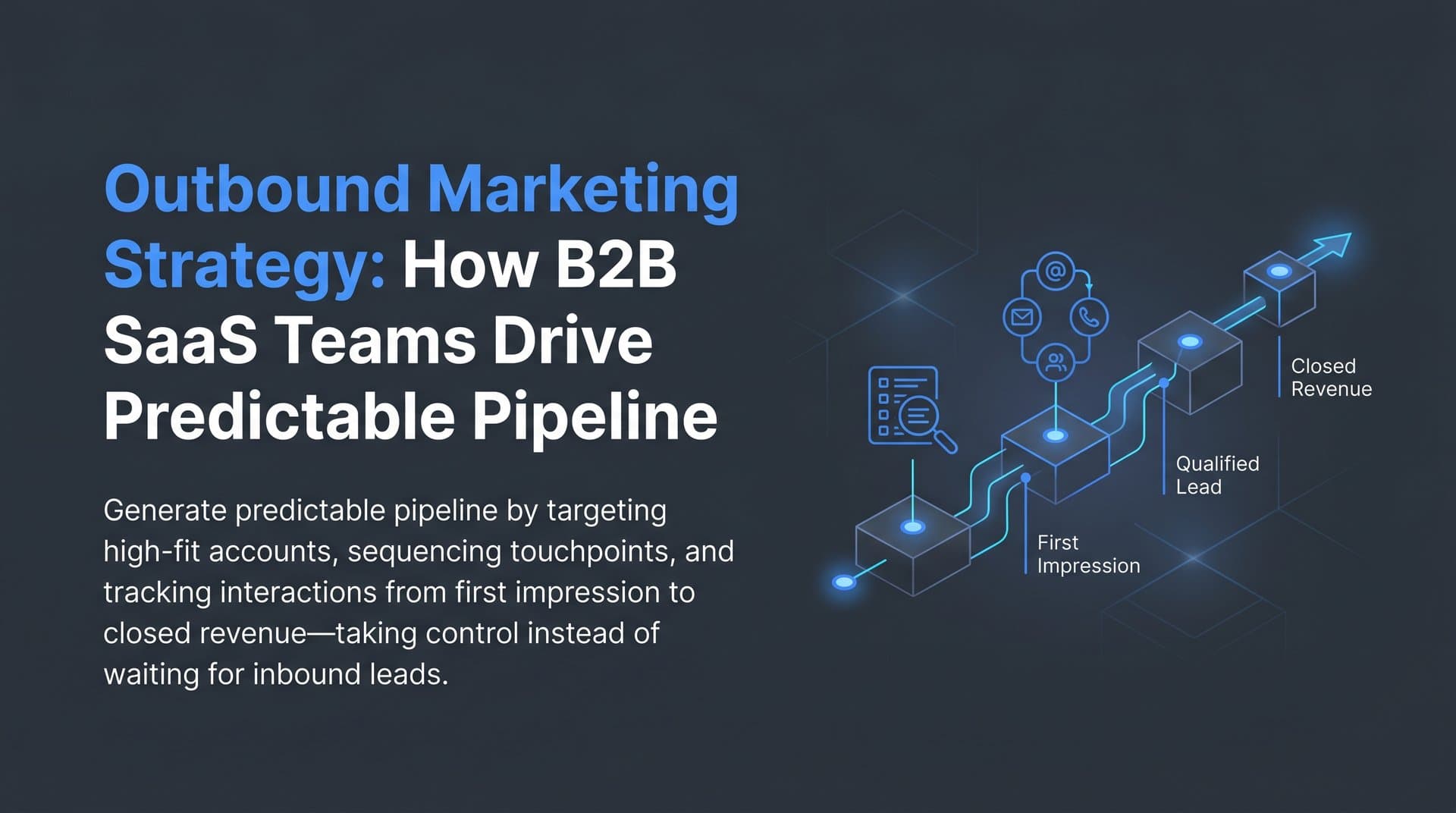
Outbound puts your message directly in front of high-fit prospects before they go looking. You define the audience, choose the channels, control the timing, and measure the results. Done right, it is not a spray-and-pray volume game. It is a precision motion that targets the right accounts, sequences the right touchpoints, and tracks every interaction from first impression to closed-won revenue.
The difference between outbound that builds pipeline and outbound that burns budget comes down to two things: targeting discipline and measurement infrastructure. This guide covers both. Whether you are running paid ads on LinkedIn, cold email sequences, or a full multi-channel outbound program, the principles here will help you build a strategy that is accountable, scalable, and tied directly to revenue.
Why Outbound Still Drives Pipeline for B2B SaaS
There is a common misconception that outbound is a relic of an older sales era, something that modern SaaS companies have moved past in favor of content and community. The reality is quite different. Outbound remains a core growth lever for B2B SaaS teams precisely because it gives them something inbound cannot: control.
With inbound, you are dependent on prospect-initiated behavior. Someone has to search for a solution, find your content, and decide to engage. That process is valuable, but it is also passive. Outbound flips the dynamic. You identify the accounts that match your ideal customer profile, select the channels where they spend attention, and deliver your message on your timeline.
Modern outbound is also far more channel-diverse than it was even a few years ago. Paid advertising on LinkedIn and Google, cold email sequences, direct mail, LinkedIn social selling, and SDR outreach all qualify as outbound. These channels often work best in combination, where a prospect sees a LinkedIn ad, receives a personalized email, and then encounters a retargeting ad before converting. The channels reinforce each other, and the cumulative effect is greater than any single touchpoint alone.
For B2B SaaS specifically, outbound has a unique advantage: it shortens the feedback loop on ideal customer profile fit. When you push a message to a defined segment and track conversion signals, you learn quickly whether that segment responds. If a particular firmographic profile converts at a higher rate, you know to concentrate resources there. If a specific pain point resonates in your messaging, you can double down. Inbound gives you this feedback too, but it takes much longer to accumulate meaningful signal.
The challenge most B2B SaaS teams face is not generating outbound activity. It is connecting that activity to downstream revenue. Sending emails and running ads is straightforward. Knowing which combination of outbound touchpoints actually produced a closed deal is where visibility breaks down. That measurement gap is what separates outbound programs that scale from those that stall.
The Core Components of an Outbound Marketing Strategy
A well-structured outbound marketing strategy is built on three foundations: knowing exactly who you are targeting, choosing the right channels to reach them, and crafting a message that speaks to a specific problem at a specific moment. Miss any one of these, and the entire program underperforms.
ICP Definition and Audience Segmentation
Outbound only works when your targeting is precise. A loosely defined audience means you are spending budget on prospects who will never convert, and diluting the signal you need to optimize. Your ideal customer profile should go beyond basic demographics and incorporate three types of signals.
Firmographic signals: Company size, industry, revenue range, and growth stage. These tell you whether a company is the right fit at an organizational level.
Technographic signals: The tools and platforms a company already uses. If your product integrates with or competes against specific technologies, companies using those tools are often higher-fit prospects.
Behavioral signals: Intent data from third-party providers, website visit patterns, or engagement with competitor content. Behavioral signals indicate that a prospect is actively researching solutions in your category, which makes data-driven outbound timing far more effective.
Channel Selection and Sequencing
Once you know who you are targeting, the next question is where to reach them and in what order. LinkedIn is commonly used for B2B SaaS outbound because of its professional targeting capabilities: you can reach specific job titles at specific company types with paid ads or direct outreach. Google Ads captures demand from prospects already searching for solutions. Cold email and SDR sequences work well for high-value enterprise accounts where a personalized, human touch matters.
Channel sequencing is about creating a logical progression of touchpoints. A prospect might first encounter a LinkedIn ad that creates awareness, then receive a cold email that introduces a specific use case, then see a retargeting ad that reinforces the value proposition. Each touchpoint builds on the last, and the sequence is designed to move the prospect from unaware to interested to ready to engage.
Messaging and Offer Architecture
The most common outbound mistake is leading with a generic pitch. Effective outbound messaging speaks to a specific pain point that your target segment experiences at a specific stage of awareness. A prospect who has never heard of your product needs a different message than one who has already visited your pricing page.
Your offer architecture should match the stage. Top-of-funnel outbound might offer a piece of educational content or a benchmark report. Mid-funnel outbound might offer a demo or a free trial. The offer should lower the barrier to the next step, not ask for a commitment the prospect is not ready to make.
Building a Multi-Touch Outbound Funnel That Converts
Outbound rarely converts on first contact. This is especially true in B2B SaaS, where buying decisions involve multiple stakeholders, longer evaluation cycles, and higher stakes than a typical consumer purchase. A single cold email or one LinkedIn ad impression is almost never enough to drive a qualified opportunity. What converts is a sequence of well-timed, well-placed touchpoints that collectively build familiarity, credibility, and intent.
A multi-touch outbound funnel layers paid ad impressions, retargeting, and direct outreach so that prospects encounter your brand across multiple surfaces before a conversion event. Think of it as building a presence in the prospect's awareness over time, rather than making a single ask and hoping for a yes.
How Touchpoint Sequencing Works in Practice
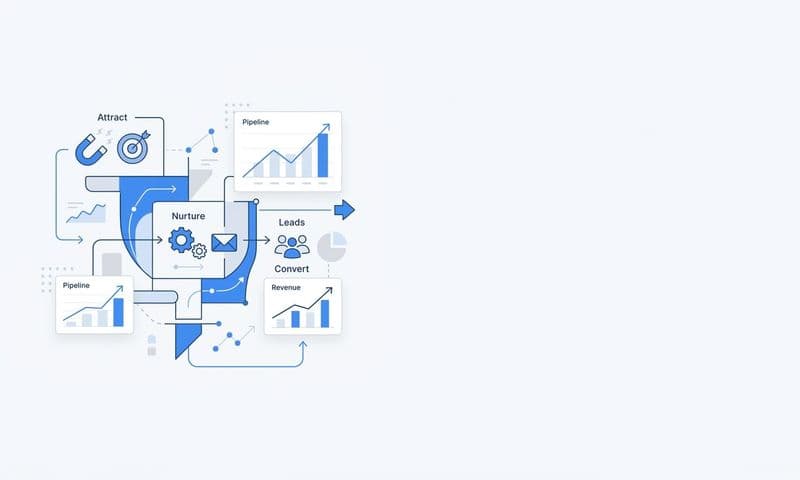
A typical outbound funnel for a B2B SaaS company might look like this: a prospect in your target ICP sees a LinkedIn Sponsored Content ad that introduces your product's core value proposition. A few days later, they receive a personalized cold email from an SDR referencing a pain point relevant to their industry. If they visit your website but do not convert, a retargeting ad follows them across platforms with a more specific offer, like a demo or a free trial. At each stage, the message is calibrated to the level of awareness the prospect has developed.
Understanding which combination of touchpoints precedes a conversion is not just interesting data. It is the foundation of smart budget allocation. If you discover that prospects who see a LinkedIn ad before receiving a cold email convert at a significantly higher rate than those who receive the email alone, that insight tells you exactly where to invest. A multi-touch marketing attribution platform makes this kind of analysis possible at scale.
Where Most Teams Lose Visibility
Connecting outbound touchpoints to downstream pipeline is where most B2B SaaS teams struggle. The problem is structural: ad platform data lives in one place, email outreach data lives in another, CRM opportunity data lives somewhere else, and revenue data is in yet another system. Without a unified view, you cannot trace the path from first outbound interaction to closed deal.
This fragmentation leads to a common failure mode: teams optimize for the metrics they can see, like click-through rate on ads or open rate on emails, rather than the metrics that actually matter, like lead-to-opportunity conversion rate and attributed revenue. The result is outbound activity that looks busy but does not produce measurable pipeline growth.
Solving this requires tracking every interaction from the first ad click through to CRM opportunity creation and beyond. That kind of end-to-end visibility is what transforms outbound from a cost center into a predictable revenue driver.
Measuring Outbound Performance: Metrics That Actually Matter
Impressions are easy to generate. Clicks are relatively easy to buy. But neither of those metrics tells you whether your outbound marketing strategy is actually producing pipeline. The metrics that matter are further down the funnel, and they require more infrastructure to track, but they are the only numbers that justify or challenge your outbound investment.
The Metrics Worth Tracking
Cost per lead (CPL): How much you are spending in outbound channels to generate each lead. CPL is a useful efficiency metric, but it needs to be paired with lead quality data. A low CPL means nothing if the leads do not convert to opportunities.
Lead-to-opportunity rate: The percentage of outbound-generated leads that become qualified sales opportunities. This metric reveals whether your targeting and messaging are attracting the right prospects, not just any prospects.
Opportunity-to-close rate: How many outbound-sourced opportunities result in closed-won revenue. This metric connects your outbound program to actual business outcomes.
Attributed revenue by channel: The total revenue that can be traced back to specific outbound channels or campaigns. This is the metric that allows you to compare the ROI of LinkedIn ads versus cold email versus retargeting and calculate marketing ROI accurately across every channel.
Attribution Models and Why They Matter
Attribution models determine how credit is assigned across the outbound touchpoints that preceded a conversion. The model you choose affects how you interpret performance data and where you decide to invest.
First-touch attribution gives full credit to the first outbound interaction a prospect had with your brand. This model tends to favor top-of-funnel channels like paid ads and is useful for understanding what creates initial awareness.
Last-click attribution gives full credit to the final touchpoint before conversion. This model often overvalues bottom-of-funnel channels like branded search or retargeting ads, and undervalues the earlier outbound touches that built the relationship.
Linear attribution distributes credit equally across all touchpoints in the journey. This approach acknowledges the multi-touch reality of B2B outbound but does not account for the fact that some touchpoints are more influential than others.
Data-driven attribution uses algorithmic weighting based on actual conversion patterns in your data. It is the most accurate model for mature outbound programs with sufficient conversion volume, and it tends to surface insights that simpler models miss entirely. Understanding the full range of marketing attribution models helps teams choose the right approach for their stage of growth.
Funnel Stage Conversion Rates
Beyond attribution, tracking conversion rate at each funnel stage reveals exactly where your outbound program is breaking down. Is the ad generating clicks but the landing page failing to convert? Are leads being generated but not qualifying as opportunities? Is there a drop-off at the sales handoff? Each of these is a different problem requiring a different fix, and you cannot identify them without stage-by-stage measurement.
How Attribution Closes the Gap Between Ad Spend and Revenue
Running outbound without proper attribution is like driving without a speedometer. You are moving, but you have no reliable way to know how fast, how efficiently, or whether you are heading in the right direction. For B2B SaaS teams with real pipeline targets, that kind of ambiguity is not acceptable.
The core attribution challenge in outbound is connecting ad spend on LinkedIn or Google to the deals that actually close, often weeks or months later, through a sales process that involves multiple stakeholders and touchpoints. Without that connection, you cannot prove ROI, you cannot identify which channels are producing your best customers, and you cannot make confident decisions about where to scale. A well-defined marketing attribution strategy is what bridges that gap between activity and revenue.
Why Browser-Based Tracking Is Not Enough
Traditional pixel-based tracking has real limitations in today's privacy landscape. Ad blockers prevent pixels from firing. iOS privacy changes restrict cross-app tracking. Browser cookie restrictions limit the ability to track users across sessions and devices. The result is that a meaningful portion of your outbound conversion events go unrecorded when you rely solely on browser-based tracking.
Server-side tracking via Conversion APIs addresses this directly. Meta's Conversion API and Google's Enhanced Conversions send event data from your server rather than the user's browser, bypassing the limitations that degrade pixel-based tracking. This means your ad platforms receive more complete conversion data, which improves their ability to optimize campaigns and find more high-fit prospects through algorithmic targeting.
Connecting Ad Data, CRM, and Revenue in One View
The most powerful attribution setup for B2B SaaS outbound connects three data sources: ad platform data, CRM data, and revenue data. Ad platform data tells you what campaigns and creatives drove clicks and form fills. CRM data tells you which of those leads became opportunities and progressed through the pipeline. Revenue data, from a platform like Stripe, tells you which opportunities closed and at what value.
When these three sources are unified, you can trace a closed-won deal back to the specific outbound campaign, ad creative, and touchpoint sequence that initiated the journey. That is the level of visibility that transforms outbound from a budget line item into a measurable revenue driver. Teams navigating B2B SaaS marketing attribution for the first time often find this unified view to be the single biggest unlock in their outbound program.
Cometly is built specifically for this use case. It connects ad platform data, CRM events, and revenue data into a single attribution view, so B2B SaaS teams can see exactly which outbound channels and campaigns are driving pipeline and closed-won revenue. With over 70 native integrations and server-side conversion tracking built in, it captures the touchpoints that browser-based tracking misses and gives growth teams the complete picture they need to make confident decisions.
Scaling Outbound With Confidence: From Testing to Optimization
Scaling outbound is not simply a matter of increasing budget. Teams that scale too fast without a feedback loop end up amplifying what does not work just as readily as what does. The right approach is to treat outbound as an iterative system: test at small scale, measure conversion signals at each funnel stage, then increase investment in what converts.
Building the Testing Feedback Loop
Start with a defined segment of your ICP and a limited set of channels. Run enough volume to generate meaningful signal, but not so much that a failed test is expensive. Measure conversion rates at each stage: ad click to landing page, landing page to lead, lead to opportunity. Identify where the funnel is strongest and where it breaks down.
Then iterate on the weakest stage before scaling. If your ads are generating clicks but your landing page is not converting, fixing the landing page will have a greater impact than increasing your ad budget. If your leads are converting to opportunities but your CPL is too high, refining your audience targeting will improve efficiency more than any creative change. Tracking these patterns is far easier with dedicated marketing campaign tracking built into your measurement stack.
Using AI to Surface Performance Patterns
As your outbound program generates more data, AI-driven insights can accelerate the optimization process. Rather than manually reviewing campaign performance across dozens of ad sets and sequences, AI can surface which outbound campaigns are producing high-quality leads versus low-quality volume, and flag where budget is being wasted before the spend becomes significant.
Cometly's AI-driven recommendations do exactly this: they analyze performance patterns across campaigns and channels, identify which combinations are driving the highest-quality pipeline, and provide actionable guidance on where to shift budget. For growth teams managing outbound across multiple channels simultaneously, this kind of automated insight layer is the difference between reactive optimization and proactive scaling.
Feeding Better Data Back to Ad Platforms
One of the most underutilized scaling levers in outbound is sending enriched conversion data back to your ad platforms. When Meta or Google receives accurate, detailed conversion events including downstream signals like opportunity creation or closed-won revenue, their algorithms get better signals to find more prospects who match your highest-value customers.
This creates a compounding effect: better data improves algorithmic targeting, which improves lead quality, which generates better conversion data to feed back into the system. Over time, your ad platforms become increasingly efficient at finding high-fit prospects within your ICP, and your cost per qualified lead decreases as a result.
Putting It All Together
An effective outbound marketing strategy is not about sending more emails or running more ads. It is about precision: the right audience, the right channels, the right message, and the measurement infrastructure to know what is working at every stage of the funnel.
The teams that win with outbound are not the ones with the biggest budgets. They are the ones who can trace a closed deal back to the first outbound touchpoint, understand which channel combinations produce their best customers, and scale investment with confidence because they have the data to back every decision.
That level of precision requires attribution that goes beyond last-click metrics and browser-based pixels. It requires a unified view of ad spend, pipeline, and revenue, with the accuracy that only server-side tracking and Conversion API integrations can provide.
Cometly gives B2B SaaS teams exactly that. From capturing every outbound touchpoint to connecting ad data with CRM events and closed-won revenue, it is the attribution layer that makes outbound measurable, accountable, and scalable. If you are ready to stop guessing which outbound channels are driving pipeline and start knowing, Get your free demo today and see how Cometly connects your outbound ad spend to the revenue that actually matters.