
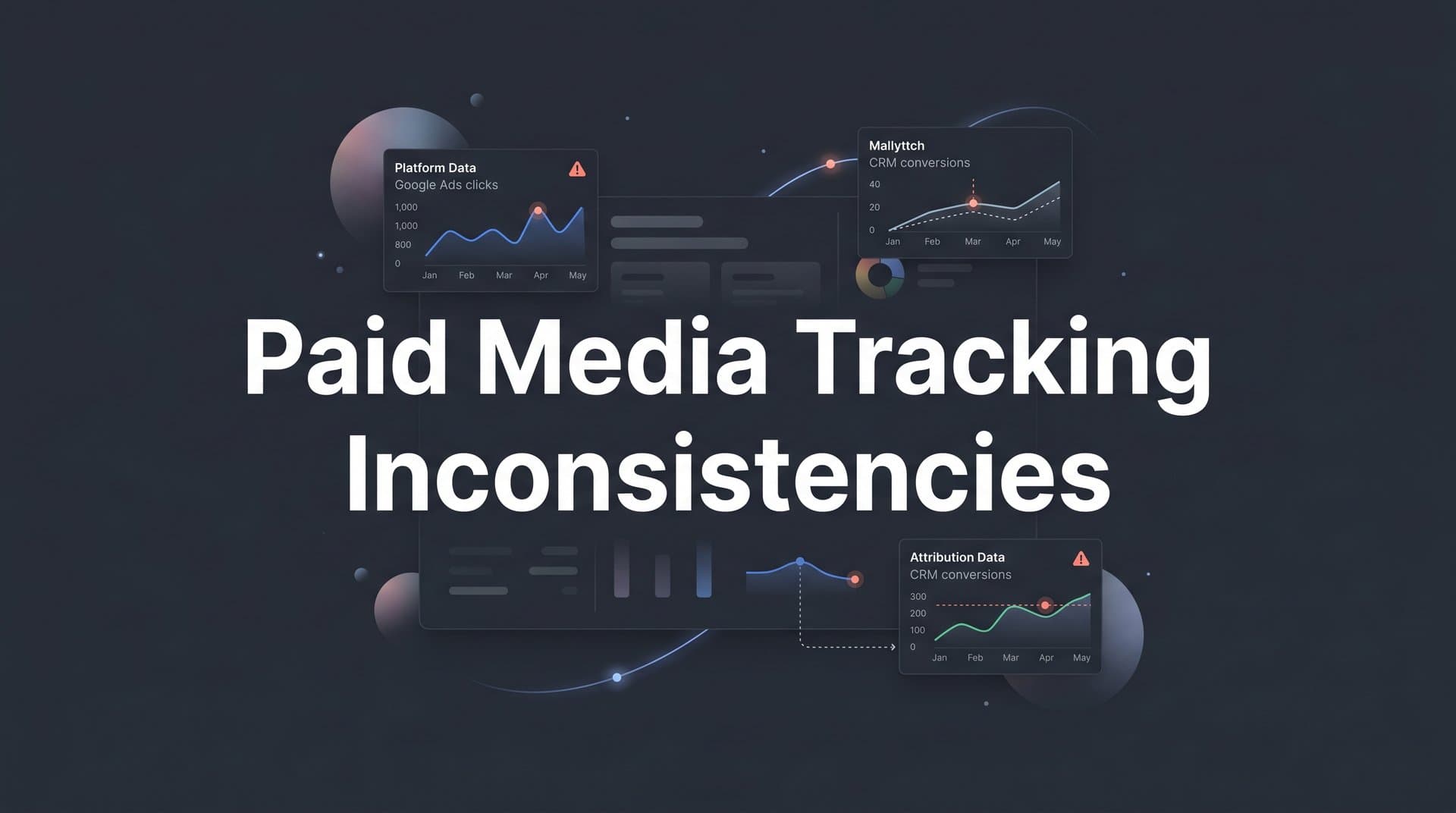
You open your Facebook Ads dashboard. Then your Google Ads dashboard. Then your CRM report. Three different numbers stare back at you for the same campaign, the same time period, and the same conversion goal. Which one is right? If you've been in B2B SaaS marketing for any length of time, this moment is painfully familiar.
The frustration is real, but the real problem runs deeper than a numbers mismatch. Paid media tracking inconsistencies quietly distort every decision your growth team makes, from which channels get budget to how your bidding algorithms learn to find customers. When your data foundation is cracked, everything built on top of it is unstable.
The good news is that this is not a platform glitch you have to live with. It is a data infrastructure problem with clear, solvable causes. By the time you finish this article, you will understand exactly why these gaps exist, what they are costing your team, and how to build a tracking setup that actually gives you reliable numbers you can act on.
Why Your Ad Platforms and CRM Are Telling Different Stories
The first thing to understand is that Meta, Google, and LinkedIn were not built to agree with each other. Each platform has its own attribution logic, its own default conversion windows, and its own definition of what counts as a conversion. When they all run concurrent campaigns and a user converts, each platform claims credit. This is not a bug. It is how they are designed to report.
Meta historically defaults to a seven-day click and one-day view attribution window. Google Ads typically uses a thirty-day click window. LinkedIn has its own variation. When a prospect sees a LinkedIn ad on Monday, clicks a Google ad on Thursday, and converts on Friday after seeing a Facebook retargeting ad, all three platforms may count that as their conversion. Your total reported conversions across platforms can easily be two or three times higher than the number of actual leads in your CRM.
Your CRM operates on an entirely different clock. A lead captured via a form fill on Monday might not be entered or synced in the CRM until Wednesday, depending on how your sales team processes inbound leads or how your integrations are configured. That timestamp mismatch makes cross-referencing ad platform data with CRM data nearly impossible without a unified tracking layer sitting in between. You end up comparing apples to oranges across systems that were never designed to speak the same language.
Then there is the last-click bias baked into most native platform reporting. When a channel gets credit only if it is the final touchpoint before conversion, every channel that assisted the journey gets zero. In a typical B2B SaaS buying cycle, a prospect might discover your product through a LinkedIn awareness campaign, research it via a Google search ad, and then convert weeks later through a branded search or direct visit. The LinkedIn campaign that started the whole journey looks like it produced nothing.
This creates a systematic misreading of which channels actually matter. Top-of-funnel and mid-funnel paid channels appear to underperform not because they are failing, but because last-click attribution is structurally blind to the role they play. Growth teams end up making channel investment decisions based on a distorted picture of the customer journey.
The result is a reporting environment where every stakeholder is looking at a different version of reality. Marketing sees one story. Sales sees another. Leadership sees a third. Without a unified attribution layer, there is no way to reconcile these views, and every strategic conversation starts from a position of uncertainty.
The Technical Causes Behind Tracking Gaps
Understanding why tracking breaks down technically is essential to fixing it. The issues are not random. They follow predictable patterns rooted in how browser-based tracking was built and how the digital environment has changed around it.
Browser-based pixel limitations: The traditional tracking pixel relies on JavaScript firing in a user's browser to record a conversion event. But ad blockers prevent many pixels from loading at all. Apple's Intelligent Tracking Prevention (ITP) in Safari restricts how long cookies can persist, shortening the attribution window and breaking the link between a click and a later conversion. Apple's App Tracking Transparency (ATT) framework further limits cross-app tracking on iOS devices. The combined effect is that browser-based tracking alone captures only a portion of actual conversion activity. When a pixel fires inconsistently, platforms fill the gaps with modeled data rather than measured data, and modeled data introduces its own layer of uncertainty.
UTM parameter stripping: UTM parameters are the query strings appended to URLs that tell your analytics platform where a visitor came from. They are fragile by nature. When a user clicks an ad that redirects through multiple URLs, passes through an in-app browser, or shares a link via certain email clients, the UTM parameters can be stripped entirely. When that happens, the session arrives in your analytics platform tagged as direct or none, which artificially inflates your direct traffic numbers and makes paid channels look less effective than they actually are. For B2B SaaS companies running campaigns across LinkedIn, Google, and Meta simultaneously, UTM parameter stripping can create meaningful blind spots in source attribution.
Event deduplication failures: Many teams implement both a client-side pixel and a server-side Conversion API to improve tracking coverage. This is the right instinct, but it introduces a new problem if not handled correctly. When both the pixel and the server-side event fire for the same user action without a shared event ID to tell the platform they represent the same conversion, the platform counts it twice. One real conversion becomes two reported conversions. Your cost-per-acquisition looks artificially low, your ROAS looks artificially high, and your bidding algorithm starts training on inflated signals. The fix is straightforward but often overlooked: a consistent, unique event ID must be passed through both the pixel and the Conversion API so the platform can deduplicate them accurately.
Each of these technical issues compounds the attribution conflicts described in the previous section. The result is a tracking environment where the data you see is not a reflection of what actually happened, but a partial, distorted version shaped by browser limitations, broken parameter chains, and misconfigured event tracking.
What Tracking Inconsistencies Actually Cost Your Growth Team
Tracking inconsistencies are easy to dismiss as a reporting annoyance. They are not. They translate directly into wasted budget, degraded algorithm performance, and internal credibility problems that slow down decision-making.
Budget misallocation: When a channel that is genuinely driving pipeline appears to underperform because its conversions are not being attributed correctly, teams cut spend on it. Meanwhile, a channel that captures last-touch credit looks like a star performer and receives more budget. Over time, this pattern systematically shifts investment away from channels that initiate and nurture demand toward channels that simply happen to be present at the moment of conversion. For B2B SaaS companies where customer acquisition costs are high and buying cycles are long, these misallocations compound into significant waste.
Degraded bidding algorithm performance: Meta's Smart+ campaigns, Google's Performance Max, and LinkedIn's automated bidding strategies all rely on conversion signals to train their machine learning models. When those signals are incomplete because pixels are being blocked, or inaccurate because of deduplication failures, the algorithm optimizes toward the wrong outcomes. It learns from bad data and gets better at finding the wrong audience. Over time, cost per qualified lead increases not because the channel is less effective, but because the algorithm has been trained on corrupted signals. Fixing the data quality going into these platforms is one of the highest-leverage improvements a growth team can make.
Internal reporting credibility: When the marketing team presents campaign results that do not match what the sales team sees in the CRM, trust erodes quickly. Leadership starts questioning whether the marketing data is reliable at all. Strategic decisions around scaling campaigns, entering new channels, or justifying headcount get delayed because no one can agree on what the numbers actually mean. This is a real organizational cost that compounds over time, and it starts with fragmented, inconsistent tracking infrastructure.
The through-line across all three of these costs is the same: decisions made on bad data produce bad outcomes, and the worse your tracking, the more confidently you can be wrong. Fixing paid media tracking inconsistencies is not a technical housekeeping task. It is a growth lever.
How Server-Side Tracking and First-Party Data Close the Gap
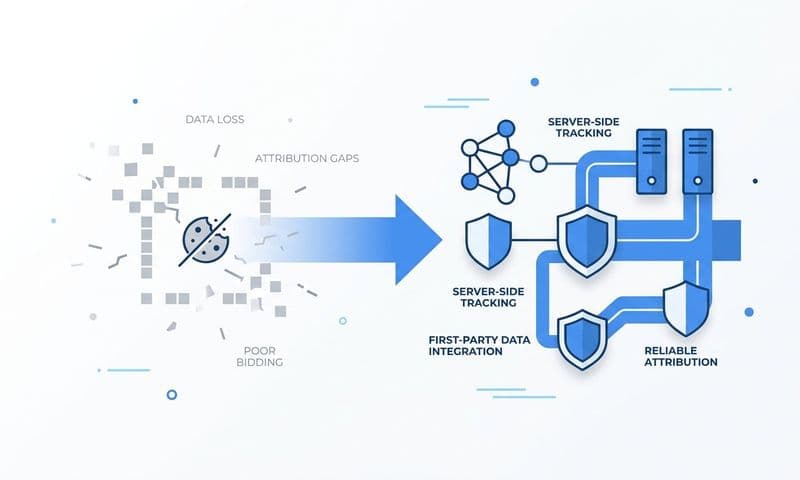
The shift from browser-dependent tracking to server-side, first-party data infrastructure is the most important technical evolution in paid media measurement. It directly addresses the root causes of tracking gaps without requiring you to choose between coverage and accuracy.
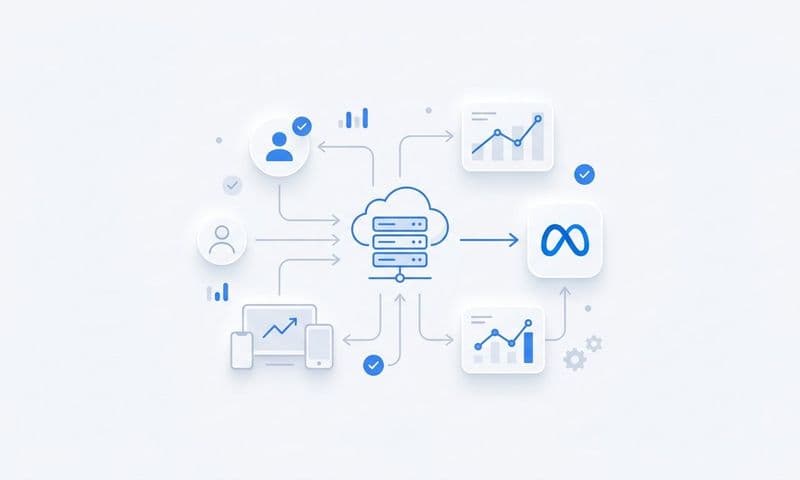
Server-side Conversion APIs: Meta's Conversion API (CAPI) and Google's Enhanced Conversions send event data directly from your server to the ad platform, bypassing the browser entirely. There are no ad blockers to interfere, no ITP restrictions to shorten cookie windows, and no in-app browser stripping to break the attribution chain. When a conversion happens, your server fires the event directly to Meta or Google with the full context needed to attribute it correctly. This approach captures conversions that pixel-based tracking misses, providing a more complete and accurate signal to both your reporting and the platform's bidding algorithm.
The practical impact is significant. Teams that implement server-side tracking alongside their existing pixel typically see their reported conversion volumes increase as previously invisible conversions are captured. More importantly, the data quality improves because it is based on actual server-level events rather than browser-based approximations supplemented by platform modeling.
First-party data enrichment: Server-side tracking becomes even more powerful when combined with first-party data enrichment. By tying ad click data to CRM identifiers like email addresses, user IDs, or account identifiers, you create a persistent thread that follows a prospect from their first ad impression through to a closed deal. This thread survives device switches, browser changes, and the long gaps that characterize B2B buying cycles. A prospect who clicks a LinkedIn ad in January, goes dark for six weeks, and then converts through a Google branded search in March can be attributed back to that original LinkedIn touchpoint because the first-party identifier connects the journey.
Proper event deduplication: As mentioned earlier, running both a pixel and a server-side API is best practice, but it requires proper deduplication to avoid inflating conversion counts. The solution is to generate a unique event ID at the moment of conversion and pass that same ID through both the pixel and the server-side event. The ad platform uses this shared ID to recognize that both events represent the same conversion and counts it only once. This restores accuracy to your cost-per-acquisition and return on ad spend calculations, giving you numbers you can actually use to make budget decisions.
Together, these three components, server-side event capture, first-party data enrichment, and proper deduplication, form the technical foundation of reliable paid media tracking. They are not optional optimizations. In a world of increasing browser restrictions and privacy changes, they are the baseline for accurate measurement.
Building a Single Source of Truth Across All Paid Channels
Fixing the technical tracking layer is necessary, but it is not sufficient on its own. Even with perfect server-side tracking, you can still end up with five different dashboards showing five different versions of performance if there is no unified attribution layer normalizing the data above the platform level.
A unified attribution layer: A single attribution layer that sits above Meta, Google, LinkedIn, and any other paid channels you run normalizes data using consistent attribution models and consistent conversion windows. Instead of Meta reporting with its seven-day click window and Google reporting with its thirty-day window, you apply a single model across all channels and compare them on equal terms. This does not mean the platform-native data disappears. It means you have one reliable view of cross-channel performance that is not distorted by each platform's self-interested reporting logic.
This unified view is where growth teams can finally answer the question that matters most: which channels and campaigns are actually driving revenue, not just which ones are claiming credit for it.
Connecting ad spend to pipeline and revenue: Most ad platforms can track to a lead or a form fill. They have no visibility into what happens after that. A lead that becomes a closed-won deal worth significant annual recurring revenue looks identical to a lead that churns in thirty days if all you are measuring is the form fill. Connecting your ad spend data directly to pipeline stages and revenue outcomes in your CRM changes the entire measurement frame. Instead of optimizing for lead volume, you can optimize for the campaigns and channels that produce opportunities that actually close, and at the contract values that matter to your business.
This is a fundamental shift for B2B SaaS growth teams. It moves the conversation from marketing metrics to revenue metrics, which is the conversation that actually matters to leadership and investors.
Multi-touch attribution models: Multi-touch attribution distributes credit across all the touchpoints in a customer journey rather than awarding it entirely to the first or last interaction. Linear models give equal credit to every touchpoint. Time-decay models give more credit to touchpoints closer to conversion. Position-based models weight the first and last touch more heavily while still crediting the middle. No model is perfect, but any multi-touch model is more accurate than last-click attribution for B2B SaaS, where buying cycles involve multiple stakeholders and dozens of interactions over weeks or months.
The goal is not to find the one true attribution model. The goal is to stop making budget decisions based on a model that is structurally wrong for your buying cycle and replace it with one that reflects the full complexity of how your customers actually make decisions.
From Data Chaos to Confident Ad Decisions
Paid media tracking inconsistencies are not a mystery to live with. They are the predictable result of fragmented, browser-dependent, platform-siloed data infrastructure. And they have a clear, three-layer solution.
First, fix the event capture layer. Implement server-side tracking via Conversion APIs, enrich events with first-party identifiers, and ensure proper deduplication so every conversion is counted exactly once. This is the foundation everything else depends on.
Second, build a unified attribution layer. Stop reading performance from five different platform dashboards with five different attribution logics. Apply consistent models and windows across all channels so you can compare them honestly.
Third, connect ad performance to revenue. Stop optimizing for lead volume and start measuring which campaigns produce pipeline that closes. This is the insight that transforms marketing from a cost center into a growth driver.
This is exactly the framework Cometly is built to execute. Cometly captures every touchpoint from the first ad click through to closed-won revenue, connecting your ad platforms, CRM, and website into a single, real-time view of the customer journey. It sends enriched, server-side conversion data back to Meta and Google to improve algorithmic targeting and bidding accuracy. And it uses AI-driven recommendations to surface which ads and campaigns are performing across every channel, so you can scale with confidence rather than guesswork.
For B2B SaaS growth teams tired of reconciling conflicting dashboards and making budget decisions on incomplete data, Cometly provides the single source of truth that makes confident, revenue-connected ad decisions possible.
Paid media tracking inconsistencies are not inevitable. They are solvable. The question is whether you fix them before they cost you another quarter of misallocated budget. Get your free demo and see how Cometly resolves your specific tracking gaps, from first ad impression to closed-won revenue.