
You're spending real budget on LinkedIn, Meta, and other paid social channels. Deals are closing. Pipeline is growing. But when someone asks which campaigns actually drove that revenue, the honest answer is: you're not entirely sure. Your ad platforms show one number, your CRM shows another, and Google Analytics tells a third story entirely.
This is the central frustration of paid social attribution tracking for B2B SaaS teams. It's not a minor reporting inconvenience. It's a strategic blind spot that quietly distorts every budget decision you make.
The challenge runs deeper than just picking the right attribution model. B2B buying cycles are long, often spanning weeks or months. A prospect might see a LinkedIn ad in January, click a retargeting ad in February, read a blog post in March, and finally request a demo in April. Which touchpoint gets credit? The answer shapes where you invest next quarter.
Paid social attribution tracking is the discipline of connecting those dots: from the first ad impression to the last closed deal. When it works well, it transforms your marketing from a cost center into a measurable growth engine. When it breaks down, you're flying blind with a significant budget at stake.
This article walks through why paid social attribution is genuinely difficult to get right, how the core tracking mechanics work, which attribution models fit B2B contexts, and how to build a system that connects ad spend to pipeline and revenue rather than just leads. Whether you're trying to justify your LinkedIn budget or scale what's working on Meta, understanding attribution is the foundation everything else rests on.
Why Paid Social Attribution Is Harder Than It Looks
At first glance, attribution seems straightforward. Someone clicks your ad, fills out a form, and becomes a lead. Credit goes to the ad. Done. But that mental model breaks down almost immediately when you look at how B2B buyers actually behave.
A typical B2B SaaS deal involves multiple stakeholders, multiple research sessions, and multiple channels over an extended period. A champion might discover your product through a LinkedIn sponsored post, then return via organic search a week later, then forward your pricing page to a decision-maker who finds you through a branded Google ad. Which paid social touchpoint drove that deal? All of them contributed. None of them alone tells the full story.
This is why single-session, single-device attribution thinking fails in B2B contexts. The buying cycle doesn't fit neatly into a 7-day or even 30-day attribution window. By the time a deal closes, the original paid social touchpoint may have fallen outside the platform's attribution window entirely, making it look like that campaign generated zero revenue.
Platform-native attribution makes this worse in a specific way. LinkedIn Campaign Manager and Meta Ads Manager both apply their own attribution logic, often using view-through credit windows that assign conversion credit even when a user never clicked the ad. A prospect who saw your LinkedIn ad but converted through a completely different channel might still show up as a conversion in Campaign Manager. This inflates reported results and creates a persistent trust gap between marketing and revenue teams.
The problem compounds when you compare platform numbers to CRM data. Your ad platform might report 40 conversions in a given month. Your CRM shows 22 new leads from paid social. Finance sees 8 opportunities sourced from social campaigns. All three numbers are technically "correct" within their own logic, but they tell completely different stories. Without a shared attribution framework, these discrepancies erode confidence in the data and often lead to gut-feel budget decisions rather than data-driven ones. Understanding how to fix attribution discrepancies is one of the most valuable skills a B2B marketing team can develop.
Then there's the signal loss problem. Apple's App Tracking Transparency framework, introduced with iOS 14, significantly reduced the effectiveness of pixel-based tracking for paid social, particularly on Meta. When users opt out of tracking, the Meta pixel can no longer reliably capture conversion events, meaning a portion of your actual conversions simply disappear from your reporting. Safari and Firefox's third-party cookie restrictions create similar gaps. Ad blockers add another layer of data loss on top.
The result is a systematic undercount of paid social conversions in pixel-based reporting, combined with an overcount in platform-native attribution. You end up simultaneously under-measuring and over-crediting the same channel, which makes reliable optimization nearly impossible without a more robust tracking architecture.
How Paid Social Attribution Tracking Actually Works
Understanding the mechanics helps you build a system that holds up under real-world conditions. Paid social attribution tracking relies on three interconnected layers: click-level data capture, conversion event tracking, and identity stitching across the funnel.
The first layer starts the moment someone clicks your ad. Platforms like Meta and LinkedIn append click identifiers to the destination URL. Meta uses the fbclid parameter; LinkedIn uses li_fat_id. These identifiers, combined with UTM parameters you define (source, medium, campaign, content, term), create a data fingerprint that tells you exactly which ad drove that click. When the user lands on your website, this data gets stored, typically in a first-party cookie or your server-side data layer.
The second layer captures what happens after the click. When a user completes a meaningful action, such as filling out a demo request form, starting a free trial, or reaching a specific page, that event needs to be recorded and tied back to the original click data. Traditionally this happened through browser-based pixels, but pixel reliability has degraded significantly due to privacy changes. This is where server-side tracking and Conversion APIs become essential.
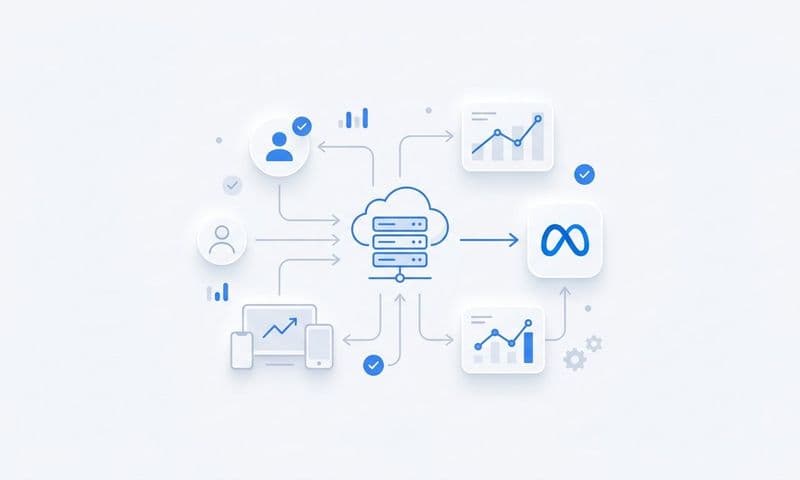
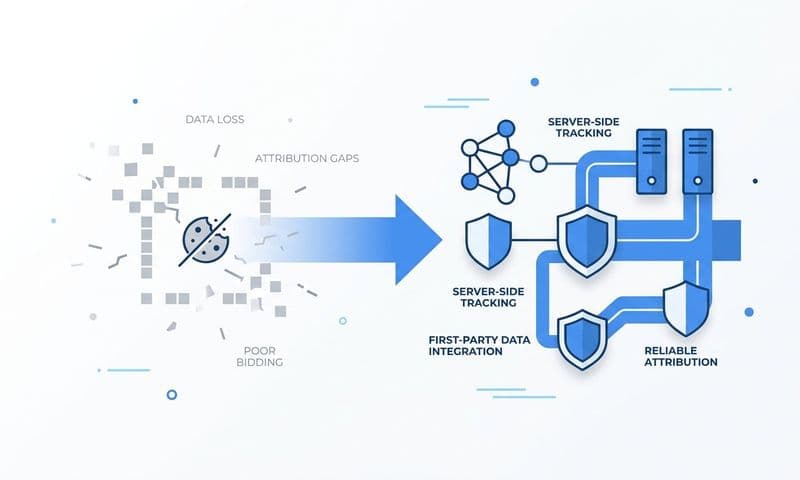
Meta's Conversion API (CAPI) and LinkedIn's CAPI send conversion event data directly from your server to the ad platform, bypassing the browser entirely. Because this data flows server-to-server, it's not affected by ad blockers, iOS privacy restrictions, or cookie limitations. When implemented alongside browser-side pixels with proper deduplication, server-side tracking meaningfully recovers signal that would otherwise be lost. The result is more complete conversion data flowing back to the platforms, which also improves their algorithmic optimization.
The third layer is where B2B attribution gets particularly interesting: identity stitching. An anonymous ad click becomes a named lead when someone fills out a form. That named lead becomes a CRM contact when they're entered into your pipeline. That contact becomes a closed deal when the opportunity moves to won. Attribution tracking needs to persist across all of these state changes, connecting the original ad click data to the final revenue outcome.
This is why first-party data enrichment matters so much in B2B contexts. When your attribution platform can match an ad click identifier to a CRM contact record, it can follow that lead all the way through the funnel. You stop measuring paid social performance in terms of cost-per-lead and start measuring it in terms of cost-per-pipeline and cost-per-revenue. That shift changes the entire conversation about what "good" paid social performance looks like.
Attribution Models and Which One Fits Paid Social
Once you have reliable tracking in place, you still need to decide how to distribute credit across multiple touchpoints. This is where attribution models come in, and the choice matters more than most teams realize.
Single-touch models are the simplest to implement. First-touch attribution gives all credit to the first interaction a prospect had with your brand, regardless of what happened after. Last-click attribution gives all credit to the final touchpoint before conversion. Both are easy to understand and easy to explain to stakeholders, which is part of why they remain common.
But for paid social in B2B contexts, single-touch models are genuinely misleading. First-touch attribution tends to over-credit awareness campaigns and top-of-funnel paid social ads while ignoring the nurture and retargeting campaigns that moved the prospect toward conversion. Last-click attribution does the opposite: it rewards the final touchpoint, often a branded search or direct visit, while erasing the role paid social played in creating awareness and intent earlier in the cycle.
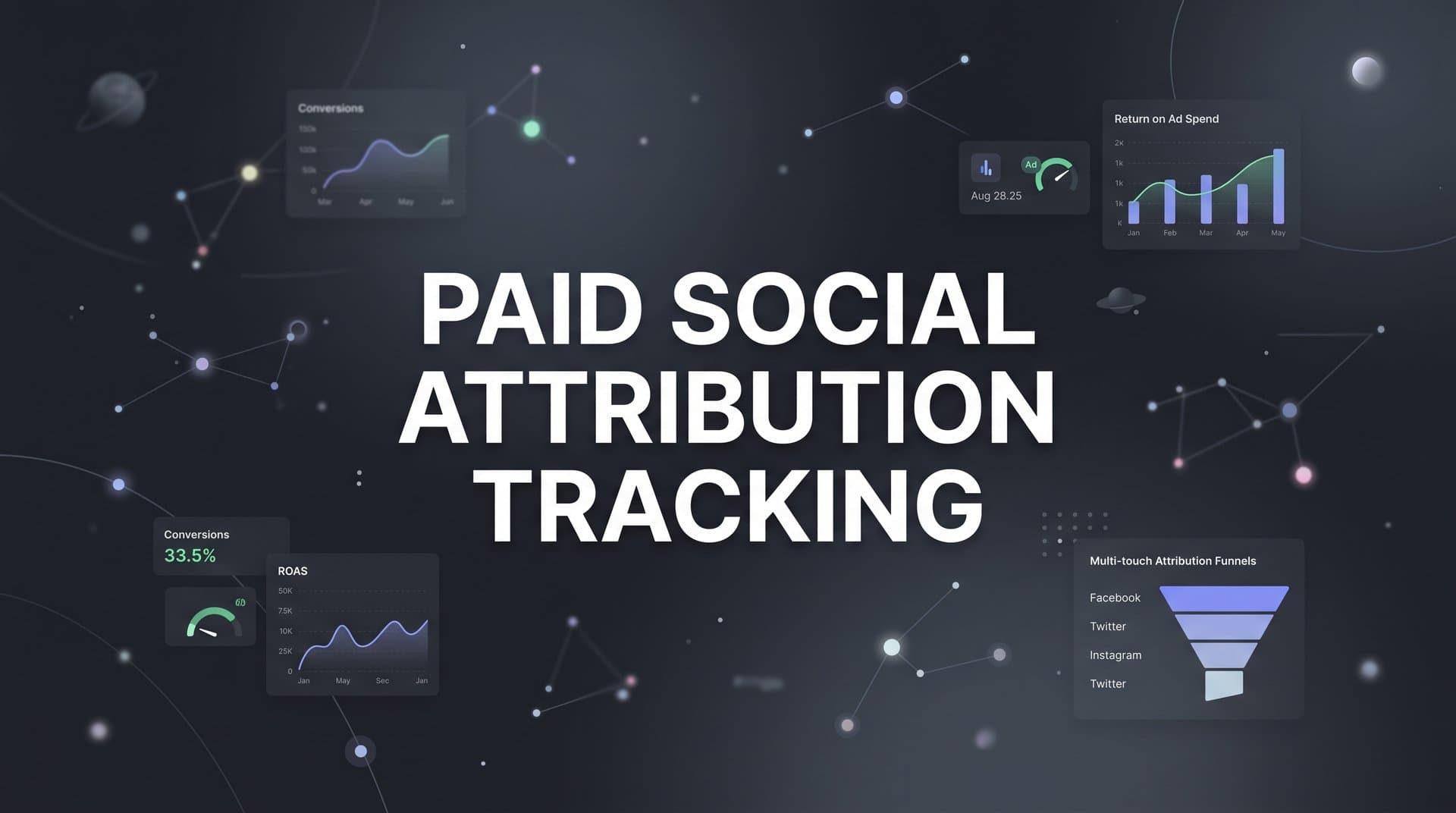
Multi-touch attribution models distribute credit across all touchpoints in the conversion path, which is a more honest representation of how B2B buying actually works. Linear attribution splits credit evenly across every touchpoint. Time-decay attribution gives more credit to touchpoints closer to the conversion event. Position-based (U-shaped) attribution gives the most credit to the first and last touchpoints, with the remainder distributed across the middle.
For most B2B SaaS companies, a position-based or data-driven model tends to reflect reality most accurately. Position-based models acknowledge that both the initial discovery moment and the final conversion trigger matter, which aligns well with how paid social functions: often as an awareness driver at the top and a retargeting mechanism closer to conversion.
Data-driven attribution takes a different approach entirely. Instead of applying a fixed formula, it uses algorithmic modeling to analyze actual conversion paths and assign fractional credit based on which touchpoints statistically correlate with conversion. It's the most accurate model available, but it requires a meaningful volume of conversion data to produce reliable results. If your conversion volume is relatively low, a data-driven model may not have enough signal to work with and a position-based model is often the better practical choice.
The key principle across all of this: choose a model that reflects your actual buying cycle, apply it consistently, and use it to compare campaigns against each other rather than treating the absolute numbers as ground truth. Attribution is a lens, not a ledger.
Connecting Paid Social to Pipeline and Revenue, Not Just Leads
Here's where most paid social attribution tracking stops short. Teams set up UTM parameters, configure their pixels, and start reporting on cost-per-lead by campaign. That's a start, but it answers the wrong question.
Revenue teams don't care about leads. They care about pipeline. They care about closed revenue. A paid social campaign that generates 50 leads at a low cost-per-lead might look great in a marketing dashboard and terrible in a revenue review if those leads never convert to opportunities. Conversely, a campaign with a higher cost-per-lead might be driving your highest-value accounts. You can't know without tracking attribution all the way to revenue.
This requires connecting your attribution data to your CRM. When a lead created from a paid social click moves through pipeline stages, that progression needs to be tied back to the original campaign data. When an opportunity closes, the revenue value of that deal should flow back into your attribution reporting. This is what pipeline attribution means in practice: not just knowing which campaigns generated leads, but knowing which campaigns generated revenue-generating pipeline.
Integrating a revenue data source like Stripe adds another dimension. When subscription revenue is connected to attribution data, you can calculate true return on ad spend at the campaign level. You can see not just which campaigns drove closed deals, but which campaigns drove customers with the highest lifetime value. That insight changes how you think about bid strategies, audience targeting, and creative investment.
Pipeline attribution also reveals a critical distinction between audience quality and lead volume. Some paid social audiences generate high lead volume from people who are curious but not ready to buy. Other audiences generate fewer but more qualified leads who move through the funnel quickly. Without revenue-level attribution, you can't see this difference. With it, you can shift budget toward the audiences and creatives that attract actual buyers rather than optimizing for a metric that doesn't predict revenue. This is the foundation of effective paid media analytics for B2B teams.
This is the difference between marketing reporting and marketing intelligence. Reporting tells you what happened. Intelligence tells you what to do next.
Common Tracking Failures and How to Prevent Them
Even well-designed attribution systems break down in predictable ways. Knowing where failures typically occur makes them much easier to prevent.
Broken UTM Parameters: UTM parameters are the foundation of paid social attribution, but they're fragile. Redirect chains between your ad destination URL and your final landing page can strip query strings entirely. Some landing page builders don't pass UTM parameters through to confirmation or thank-you pages. Inconsistent naming conventions across campaigns mean data ends up fragmented across dozens of variations of the same source or medium, making aggregation unreliable. A documented UTM taxonomy applied consistently across every campaign is non-negotiable for clean attribution data.
Conversion Deduplication Failures: When you run both pixel-based tracking and server-side Conversion API tracking simultaneously, the same conversion event can be counted twice. A form submission might fire the browser pixel and trigger a server-side event, resulting in two conversions reported for one actual lead. This inflates conversion counts, distorts cost-per-acquisition calculations, and makes ROAS figures unreliable. Proper deduplication logic, typically using a unique event ID matched across both the pixel and the server-side event, is required to prevent this. Understanding how tracking pixels work at a technical level helps teams implement deduplication correctly from the start.
Attribution Window Mismatches: Meta Ads Manager might default to a 7-day click, 1-day view attribution window. Your third-party attribution platform might use a 30-day click window. Your CRM might attribute leads based on the creation date with no window logic at all. When these windows don't align, the same conversion will be attributed differently in each system, producing reports that contradict each other. Standardizing attribution window settings across every reporting layer is one of the simplest ways to reduce data discrepancies and build trust in your numbers.
Funnel Drop-Off in Tracking: Attribution data often gets captured at the top of the funnel but fails to persist through to later funnel stages. If your CRM doesn't store the original UTM or click identifier data when a lead is created, that attribution signal is permanently lost. Any downstream analysis of pipeline or revenue by campaign becomes impossible. Ensuring that first-touch attribution data is captured and stored at the lead level in your CRM is a basic requirement for full-funnel attribution. Teams using HubSpot can follow a structured HubSpot attribution tracking setup to make sure this data persists correctly through every pipeline stage.
Building a Paid Social Attribution System That Holds Up
Putting all of this together into a reliable system requires more than installing a pixel and hoping for the best. It requires intentional architecture across your tracking, data, and reporting layers.
Start with a consistent UTM taxonomy. Define your naming conventions for source, medium, campaign, content, and term. Document them. Enforce them. Every paid social campaign across every platform should follow the same structure so that data aggregates cleanly and can be analyzed at any level of granularity. This sounds basic, but inconsistent UTM naming is one of the most common causes of unattributed traffic and fragmented reporting.
Layer server-side event tracking on top of your pixel-based tracking. Implement Meta CAPI and LinkedIn CAPI with proper deduplication to recover the conversion signal that browser-based tracking misses. This step alone can meaningfully improve the completeness of your conversion data and improve the quality of signals you're sending back to ad platform algorithms, which in turn improves targeting and optimization performance.
Connect your attribution data to your CRM and revenue sources. This is what separates lead-level attribution from revenue-level attribution. When your attribution platform has visibility into pipeline stages, opportunity values, and closed revenue, you can answer the questions that actually drive budget decisions: which campaigns are generating qualified pipeline, which audiences are attracting buyers, and what is the true return on your paid social investment. A well-structured attribution tracking setup makes this connection reliable and scalable.
Centralize your attribution data in a single platform. When attribution data lives in separate silos across your ad platforms, your analytics tool, your CRM, and your revenue system, you spend more time reconciling conflicting numbers than acting on insights. A centralized attribution platform that ingests data from all of these sources and presents a unified view removes that friction and creates a single source of truth for your team.
This is exactly what Cometly is built to do. It connects your paid social campaigns, web behavior, CRM events, and revenue data into one platform, giving your team a complete view of the customer journey from first ad click to closed-won revenue. Its AI-powered analysis surfaces which campaigns are actually driving revenue-qualified leads, so you can scale what's working and cut what isn't with confidence rather than guesswork.
Turning Attribution Into a Competitive Advantage
Paid social attribution tracking isn't a back-office analytics project. It's the mechanism that makes every other marketing decision more reliable. When you can see which LinkedIn campaigns are generating pipeline, which Meta audiences are attracting high-value customers, and which creatives are actually driving revenue, you stop guessing and start compounding.
The progression is straightforward: understand why attribution breaks down, implement tracking mechanics that hold up under real-world conditions, choose attribution models that reflect your actual buying cycle, and connect the data all the way from ad click to closed revenue. Each step builds on the last, and together they create a foundation for scaling paid social with genuine confidence.
Accurate attribution isn't a nice-to-have for growth teams. It's the prerequisite for every meaningful scaling decision. Without it, budget allocation is largely intuition dressed up as strategy. With it, you have a clear signal for where to invest, where to pull back, and how to build on what's already working.
Cometly is built specifically for B2B SaaS teams who need this level of visibility. It captures every touchpoint from ad click to CRM event, connects ad spend to pipeline and revenue, and gives AI the enriched data it needs to surface actionable recommendations across every channel. Whether you're managing LinkedIn, Meta, or a mix of paid social platforms, Cometly gives you the single source of truth your team needs to make smarter decisions faster.
If you're ready to move beyond conflicting reports and start connecting your paid social spend to real revenue, Get your free demo and see how Cometly works end-to-end for your team.