Microsoft Advertising reaches users across Bing, Yahoo, AOL, and partner sites, giving you access to a segment of the search market that many advertisers underestimate or ignore entirely. But running campaigns without conversion tracking is like driving with your eyes closed. You are spending budget, generating clicks, and hoping something sticks, with no way to know which keywords, ads, or audiences are actually producing results.
Tracking Bing Ads conversions changes that completely. When you can connect ad spend to real actions like purchases, form submissions, phone calls, and sign-ups, you gain the clarity to make smarter budget decisions. You can pause what is not working and scale what is.
This guide walks you through the complete process of setting up conversion tracking in Microsoft Advertising. You will learn how to define meaningful conversion goals, install the Universal Event Tracking (UET) tag, configure event-specific tracking, verify your setup is working, analyze the data to optimize campaigns, and then go further with cross-platform attribution that shows how Bing Ads fits into your broader marketing mix.
Whether you are setting up tracking for the first time or cleaning up a messy existing implementation, these six steps will get you to accurate, actionable data.
Step 1: Define Your Conversion Goals in Microsoft Advertising
Before you touch a single line of code, you need to decide what you are actually trying to measure. This is the step most advertisers rush through, and it is where a lot of tracking setups go wrong from the start.
Log into your Microsoft Advertising account and navigate to Tools in the top navigation, then select Conversion goals. This is where you create and manage every conversion action tied to your campaigns.
Microsoft Advertising supports four main goal types, and choosing the right one matters:
Destination URL: Triggers a conversion when a user lands on a specific page, such as a thank you page or order confirmation. This is the simplest option and works well for form submissions and purchases where a redirect happens after the action.
Event: Fires based on a specific user interaction like a button click, video play, or form submission, even without a page redirect. This requires additional JavaScript but gives you more flexibility.
Duration: Records a conversion when a user spends a set amount of time on your site, useful for content-heavy sites where engagement signals matter.
Pages per visit: Triggers when a user views a minimum number of pages, often used for lead nurturing or research-oriented buyer journeys.
When configuring your goal, you will set several important details. Give it a clear, descriptive name that your whole team will understand at a glance. Set a revenue value, either a fixed amount per conversion or a variable value passed dynamically, which is essential for ecommerce. Define your conversion window, which is how long after a click a conversion can still be attributed to that ad. And choose between counting all conversions or only unique conversions per user within a set period.
A practical tip: start with your highest-value conversion action first. If you sell products, that is a purchase. If you generate leads, that is a form submission or a phone call. Following best practices for tracking conversions accurately from the beginning keeps your optimization data clean and meaningful.
Step 2: Create and Install Your UET Tag
The Universal Event Tracking tag is the backbone of all conversion tracking in Microsoft Advertising. One UET tag placed across your entire site can support every conversion goal you create, so you only need to do this installation once.
Inside Microsoft Advertising, go to Tools and select UET tags. Click Create UET tag, give it a name, and save it. Microsoft will generate a JavaScript snippet that looks like a short block of code with a unique tag ID embedded in it. Copy this code.
Now you have two installation paths:
Direct installation: Paste the UET tag code just before the closing </head> tag on every page of your website. If your site runs on a CMS like WordPress, you can use a plugin that injects code into the site header globally, so you do not have to edit individual page templates. The critical word here is every page. The UET tag needs to fire site-wide so Microsoft can track the full user journey, not just the pages you think matter.
Google Tag Manager installation: If you already use Google Tag Manager, this is often the cleaner option. In GTM, create a new tag and select the Microsoft Advertising Universal Event Tracking template from the tag type library. Paste your UET tag ID into the configuration field, set the trigger to All Pages, and publish the container. This approach is similar to how you would handle attribution tracking setup across other platforms as well.
The most common pitfall at this stage is placing the UET tag only on certain pages, like the homepage or a landing page, instead of site-wide. When the tag is missing from key pages, Microsoft cannot track what users do between clicking your ad and completing a conversion. You end up with gaps in your data that make optimization unreliable.
Once installed, give it a few hours and then use the UET Tag Helper extension (covered in Step 4) to confirm the tag is firing correctly before moving on.
Step 3: Configure Event Tracking for Specific Actions
With your UET tag live across your site, you can now connect it to the specific conversion goals you created in Step 1. How you do this depends on the goal type you chose.
For destination URL goals: This is the most straightforward setup. In your conversion goal settings, enter the URL of the page a user reaches after completing the action, typically a thank you page or order confirmation page. Then choose your URL match type:
Exact match: The URL must match precisely. Use this when your confirmation page always has the same URL.
Begins with: The URL starts with the string you enter. Useful when query parameters vary but the base URL stays consistent.
Contains: The URL includes a specific string anywhere in it. More flexible, but be careful it does not accidentally match unintended pages.
Regex: For advanced pattern matching when URL structures are complex.
For custom event goals: These require you to add JavaScript that fires when a specific user action occurs. The UET tag creates a global queue called window.uetq, and you push event data into it when your trigger fires. A typical event call includes an event category, action, label, and optionally a revenue value. Your developer or tag manager setup handles when this fires, whether that is on a button click, a form submission, or any other interaction you define.
For ecommerce, setting up variable revenue values is worth the extra effort. Instead of assigning a fixed dollar amount to every purchase conversion, you dynamically pass the actual order total into the UET event. Using a reliable ecommerce tracking app alongside your UET setup can make cost-per-conversion and return on ad spend calculations significantly more accurate.
One practical tip that saves headaches at scale: establish a naming convention for your events before you start creating them. Something like [PageType]_[ActionType]_[GoalName] keeps your conversion goal list readable as your account grows. Document it somewhere your whole team can reference, because inconsistent naming creates reporting confusion that is frustrating to untangle later.
Step 4: Verify Your Tag Is Firing and Data Is Flowing
Setting up tracking and assuming it works is a mistake that costs advertisers real money. Verification is not optional. It is the step that separates a reliable data foundation from a false sense of confidence.
Start with the UET Tag Helper browser extension, available for both Chrome and Edge from Microsoft. Install it, then visit your website. The extension overlays real-time information about whether your UET tag is detected on the page, whether it is firing correctly, and whether any events are being triggered. Walk through the actual conversion path, including completing a test form submission or reaching your thank you page, and confirm the tag fires at the right moment.
Back inside Microsoft Advertising, navigate to Tools and check your UET Tags list. Each tag shows one of three statuses:
Tag active: Microsoft has received data from the tag recently. This is what you want to see.
Tag inactive: The tag has not sent data in a while. This suggests it may not be installed correctly or the pages it is on are not being visited.
Unverified: Microsoft has not yet received any data from this tag. If you just installed it, wait a few hours. If it stays unverified after 24 hours, the installation needs troubleshooting.
Also check your Conversion Goals list and look at the tracking status column. You want to see Recording conversions. If it shows No recent conversions, that may simply mean no one has converted yet, so allow 24 to 48 hours before treating it as a problem.
Common issues to investigate if verification fails: the tag may be blocked by ad blockers or a consent management platform that requires user opt-in before firing tracking scripts. Leveraging ad tracking tools with server-side capabilities can help you capture conversions that browser-based pixels miss. And incorrect URL match types in destination goals are a frequent culprit when conversions are not recording despite the tag being active.
Step 5: Analyze Conversion Data and Optimize Campaigns
Once conversion data starts flowing, the real work begins. Raw data without analysis is just noise. This is where you turn tracking into actual campaign improvements.
Navigate to the Campaigns tab in Microsoft Advertising and customize your column view. Add the columns that matter most for optimization: conversions, conversion rate, cost per conversion, and revenue. These numbers, layered on top of your existing impression, click, and cost data, tell a completely different story than click-through rate alone.
Now start segmenting. Break your data down by:
Keyword: Which search terms are actually driving conversions, and which are burning budget without producing results? This is often where the biggest optimization wins hide.
Ad group: Are certain themes or intent clusters converting better than others? This informs how you structure future campaigns.
Device: Mobile and desktop users often convert at very different rates. If one device type is significantly underperforming, device bid adjustments can quickly improve your cost per conversion.
Audience: If you are using audience targeting or observation, conversion data by audience segment reveals which groups are most valuable and worth bidding up on.
With this segmented view, your optimization decisions become obvious rather than guesswork. Using paid ads analytics across all your channels helps you compare Bing performance against other platforms and allocate budget more effectively. This systematic approach compounds over time as your account learns what works.
Microsoft Advertising also supports automated bid strategies like Target CPA and Maximize Conversions that use your conversion data to adjust bids automatically. These strategies work best when you have enough conversion volume for the algorithm to learn from, so build up your manual data first before switching to automation. Understanding how to track marketing campaigns holistically ensures your automated strategies are built on a solid data foundation.
One important limitation to keep in mind: Microsoft Advertising uses last-click attribution by default. This means the final ad click before a conversion gets full credit, regardless of how many other touchpoints influenced the buyer along the way. For businesses with longer sales cycles or multi-channel strategies, this creates a misleading picture. That is exactly what the next step addresses.
Step 6: Go Beyond Last-Click with Cross-Platform Attribution
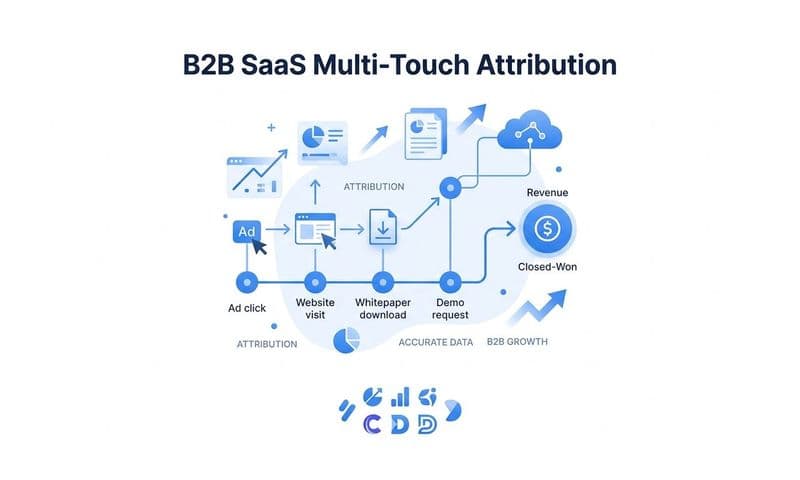
Here is the reality of how most buyers behave: they rarely see one ad, click it, and immediately convert. They discover you through a social ad, come back via a branded search on Google, see a retargeting ad on Bing, and then finally convert. Each ad platform, left to its own reporting, claims full credit for that conversion. Your Meta dashboard says Meta drove it. Your Google Ads dashboard says Google drove it. Your Microsoft Advertising dashboard says Bing drove it.
All three are wrong, and all three are right in a narrow sense. But none of them show you the truth.
Native Bing conversion tracking is valuable, but it operates in isolation. It cannot show you how your Microsoft Advertising campaigns interact with your Meta campaigns, your Google campaigns, your TikTok spend, or your email sequences. Choosing the right software for tracking marketing attribution is critical when you are making budget allocation decisions across channels.
This is where a multi-touch attribution platform like Cometly changes the equation. Cometly connects your Bing Ads data alongside every other channel you run, stitching together the complete customer journey from first click through to CRM event. Instead of seeing each platform's self-reported numbers in isolation, you see a unified view of how all your channels work together to drive revenue.
Cometly's server-side tracking is particularly important in the current environment. Browser-based tracking pixels, including the UET tag, are increasingly blocked by ad blockers, consent management platforms, and browser privacy restrictions. When a conversion happens and the pixel does not fire, that conversion disappears from your data entirely. Server-side tracking captures those conversions at the server level before they ever reach the browser, giving you a more complete and accurate picture of what your campaigns are actually producing.
Beyond visibility, Cometly's conversion sync feeds enriched, accurate conversion data back into Microsoft Advertising's algorithm. Better data means the platform's automated bidding and targeting systems have more to work with, which improves the performance of your campaigns over time. The same enriched data flows back to Meta, Google, and other platforms you run, lifting performance across your entire paid media mix.
Cometly's AI ads optimization also surfaces recommendations across your ad channels, identifying high-performing campaigns worth scaling and flagging underperformers before they drain more budget. For teams managing spend across multiple platforms, this kind of unified intelligence is the difference between reactive optimization and proactive growth.
Your Conversion Tracking Checklist and Next Steps
Getting your Bing Ads conversion tracking right is one of the highest-leverage investments you can make in your Microsoft Advertising account. Here is a quick-reference checklist to make sure you have covered every step:
Define your conversion goals: Log into Microsoft Advertising, navigate to Conversion Goals under Tools, and create goals that align with your actual business outcomes. Start with your highest-value action first.
Install your UET tag: Generate your UET tag from the UET Tags section and deploy it site-wide, either by pasting the code into your site header or through Google Tag Manager. Confirm it is on every page, not just a few.
Configure event tracking: Set up destination URL goals or custom event goals depending on the actions you are tracking. For ecommerce, pass variable revenue values dynamically so your conversion data reflects real order totals.
Verify your setup: Use the UET Tag Helper extension to confirm the tag is firing correctly. Check tag status and conversion goal status inside Microsoft Advertising and allow 24 to 48 hours for initial data to appear.
Analyze and optimize: Add conversion columns to your campaign view, segment by keyword, device, and audience, and use the data to adjust bids and pause underperformers. Consider automated bid strategies once you have enough conversion volume.
Layer in cross-platform attribution: Recognize that last-click attribution within Microsoft Advertising only tells part of the story. Use a multi-touch attribution platform to see how Bing Ads contributes across the full buyer journey alongside every other channel you run.
Accurate conversion tracking is not a one-time setup. It is an ongoing process that improves as you refine goals, add new conversion actions, and connect data across platforms. The foundation you build in Microsoft Advertising is a strong start. Connecting it to a unified attribution view is how you scale with confidence.
If you are ready to see the complete picture of how your Bing Ads campaigns fit into your broader marketing mix, Get your free demo of Cometly today and start capturing every touchpoint across every channel to maximize your conversions.