Pinterest is one of the few ad platforms where users arrive with genuine intent. They are searching for ideas, products, and solutions, which means your ads appear in front of people who are already in a discovery mindset. That is a powerful position for any advertiser.
But here is the problem: running Pinterest ads without solid conversion tracking is like investing in a campaign and then closing your eyes when the results come in. You might be spending real budget on Promoted Pins without any reliable signal showing which campaigns drive purchases, sign-ups, or leads.
The challenge is more nuanced than it sounds. Pinterest users behave differently from users on other platforms. They save pins and return days or even weeks later to take action. That delayed conversion behavior makes standard attribution windows unreliable if you have not configured them correctly. Layer on top of that the signal loss from iOS privacy restrictions, ad blockers, and third-party cookie deprecation, and you have a tracking environment that demands a thoughtful, layered approach.
This guide walks you through every step required to track Pinterest ads conversions accurately. You will learn how to install the Pinterest Tag, configure conversion events, activate the Pinterest Conversions API for server-side tracking, verify your setup, and connect Pinterest data into a full multi-touch attribution stack. Whether you are setting up Pinterest tracking for the first time or troubleshooting gaps in an existing setup, these steps will give you the clarity and confidence to scale what is actually working.
Let us get into it.
Step 1: Set Up Your Pinterest Business Account and Ads Manager
Before you can track a single conversion, you need the right account type. Pinterest conversion tracking tools are only available in Business accounts. If you are currently running ads from a personal account or have not fully configured your Business account, that is your first stop.
Head to business.pinterest.com and either create a new Business account or convert your existing personal account. The process is straightforward, but take a few extra minutes to complete your business profile fully. Pinterest uses this information to categorize your account and improve ad delivery.
Once inside your Business account, navigate to Pinterest Ads Manager. Spend a few minutes familiarizing yourself with the layout. The key areas you will use most are the Campaigns dashboard, the Conversions section, and the Events Manager. The Events Manager is where you will monitor whether your tracking setup is working correctly, so knowing where to find it quickly will save you time during setup and troubleshooting.
The next critical action is claiming your website. This step is often skipped by advertisers who are eager to get campaigns running, but it is non-negotiable if you want full access to conversion data and audience insights.
To claim your website, go to Settings, then click on Claimed Accounts. You will be given three options: add an HTML tag to your site's header, upload an HTML file to your site's root directory, or add a TXT record to your domain's DNS settings. The HTML tag method is the most common and works well if you have access to your site's header code or are using a tag manager.
Once Pinterest verifies the claim, you unlock several important capabilities. You get access to conversion tracking, Rich Pins (which pull live data from your site into your pins), and the ability to build website visitor audiences for retargeting. Having a solid attribution tracking setup starts with these foundational steps.
Common pitfall to avoid: Skipping website verification will block you from accessing conversion data entirely. Even if your Pinterest Tag is installed and firing correctly, unverified websites cannot send conversion signals back to Pinterest in a way that ties to your ad performance. Verify your website before doing anything else.
Once your Business account is active, your website is claimed, and you are comfortable navigating Ads Manager, you are ready to move on to the technical setup.
Step 2: Install the Pinterest Tag on Your Website
The Pinterest Tag is the foundation of your conversion tracking setup. Think of it the same way you think about the Meta Pixel or the TikTok Pixel. It is a snippet of JavaScript that sits on your website and communicates user behavior back to Pinterest. Without it, Pinterest has no visibility into what happens after someone clicks your ad.
To find your Pinterest Tag, go to Ads Manager, click on Conversions, and then select Pinterest Tag. You will see your unique base code snippet. Copy this code in full.
The base code needs to be placed in the <head> section of every page on your website. This ensures Pinterest can track pageviews across your entire site, not just specific landing pages. Here is how to install it depending on your setup:
Manual installation: Open your site's HTML template and paste the Pinterest base code directly inside the <head> tags before the closing </head> tag. If your site uses a CMS like WordPress, you can use a plugin such as Insert Headers and Footers to add the code without editing theme files directly.
Google Tag Manager installation: This is the recommended approach for most marketers because it keeps your tracking code organized and makes future updates easier. Log into your GTM container, click New Tag, and select Custom HTML as the tag type. Paste your Pinterest base code into the HTML field. Set the trigger to fire on All Pages. Name the tag clearly, such as "Pinterest Base Tag," and publish the container. This deploys the Pinterest Tag across your entire site immediately.
Shopify installation: Pinterest has a native Shopify integration that handles tag installation without any manual code editing. In your Shopify admin, go to the Pinterest channel app and connect your Pinterest Business account. The integration automatically installs the base code and configures standard e-commerce events like Checkout and AddToCart. If you also run Google campaigns, you may find our guide on how to set up Google Ads conversion tracking for Shopify helpful for a unified approach.
After installation, verify the tag is firing before you move on. Install the Pinterest Tag Helper Chrome extension. Browse to your website with the extension active. If the base tag is installed correctly, you will see a green checkmark confirming it is firing on the page. If you see errors or no activity, check that the code is in the correct location and that no other scripts are blocking it from loading.
Do not move on to event configuration until the Pinterest Tag Helper confirms your base code is firing correctly on every page. A broken base tag will cause all downstream event tracking to fail.
Step 3: Configure Conversion Events That Match Your Goals
Installing the base code is only the first layer. The base code tracks pageviews, which tells Pinterest that someone visited your site. But pageviews alone do not tell you whether that visit resulted in a purchase, a sign-up, or any other meaningful action. That is where event codes come in.
Pinterest uses a set of standard event types that map to common conversion actions. The main ones you will work with are: Checkout (completed purchase), AddToCart (item added to shopping cart), Lead (form submission or inquiry), Signup (account creation), Search (on-site search), and ViewCategory (category page view). There is also a Custom event type for actions that do not fit neatly into these categories.
Your job in this step is to map your business goals to these event types and then place the corresponding event code on the right pages or actions.
For e-commerce businesses: Place the Checkout event on your order confirmation page. This is the most important conversion event because it ties ad spend directly to revenue. Place AddToCart on the cart page or when the add-to-cart button is clicked. Place ViewCategory on collection or category pages to capture mid-funnel engagement.
For lead generation businesses: Place the Lead event on your thank-you page after a form submission. If you have multiple forms (contact, demo request, newsletter), consider using separate custom events so you can distinguish between high-value and low-value leads in your reporting. Learning how to track sales leads effectively across platforms will help you build a more complete picture of your funnel.
When you configure the Checkout event, include dynamic values to pass revenue, order ID, and product data alongside the event. This is what enables accurate ROAS calculations inside Pinterest Ads Manager. Without revenue data attached to your Checkout events, Pinterest can count conversions but cannot tell you how much revenue each campaign generated.
Here is a simplified example of what a Checkout event with dynamic values looks like in code:
pintrk('track', 'checkout', { value: orderTotal, order_quantity: quantity, currency: 'USD', order_id: orderId });
The exact implementation will depend on how your site passes order data, but most e-commerce platforms make these variables accessible through their templating system or data layer.
One more important configuration to complete in this step is Enhanced Match. Enhanced Match allows you to pass hashed customer data, typically an email address, alongside your conversion events. Pinterest uses this data to improve match rates between your site visitors and Pinterest user profiles. Better match rates mean more of your conversions get attributed to the right ads, which improves the accuracy of your reporting and helps Pinterest's algorithm optimize your campaigns more effectively. This concept is similar to how enhanced conversions in Google Ads work to improve attribution accuracy.
To enable Enhanced Match, you pass the hashed email address in the Pinterest Tag initialization code using SHA-256 hashing. Pinterest's documentation provides the exact syntax, and many tag manager setups can pull the email from a data layer variable if your site pushes it there after login or checkout.
Step 4: Enable the Pinterest Conversions API for Server-Side Tracking
Even with the Pinterest Tag installed and events configured correctly, you are still relying on browser-side tracking. And browser-side tracking has a growing problem: it misses a significant portion of conversions due to ad blockers, iOS App Tracking Transparency restrictions, and the ongoing deprecation of third-party cookies.
The Pinterest Conversions API, often called CAPI, solves this by sending conversion data directly from your server to Pinterest's servers. This communication happens entirely outside the browser, which means it is not affected by privacy settings, ad blockers, or browser limitations. The result is more complete conversion data and a stronger signal for Pinterest's ad delivery algorithm.
Think of it this way: the Pinterest Tag is your front-line tracker that catches most conversions in real time. The Conversions API is your backup system that catches what the tag misses and adds a layer of server-verified accuracy on top of the browser data. Following best practices for tracking conversions accurately means implementing both browser-side and server-side methods together.
There are two main ways to set up CAPI:
Partner integrations: Pinterest has built native integrations with several platforms including Shopify, WooCommerce, and others. If you are on one of these platforms, the integration handles the server-side setup for you. Go to the Conversions section in Ads Manager, select Conversions API, and follow the guided setup for your platform. This is the fastest route and requires minimal technical work.
Direct server-side implementation: If you are on a custom-built site or a platform without a native integration, you will need to implement CAPI directly. This involves making server-to-server API calls to Pinterest's Conversions API endpoint whenever a conversion event occurs. Pinterest's developer documentation provides the full API reference, including required and optional fields for each event type. This route typically requires a developer, but it gives you the most control over what data is sent.
One critical detail when running both the Pinterest Tag and CAPI simultaneously: you must use deduplication to prevent double-counting conversions. Pinterest handles deduplication using a shared event_id parameter. When the Pinterest Tag fires a Checkout event, it sends an event_id. When CAPI sends the same Checkout event from the server, it sends the same event_id. Pinterest matches these two signals and counts them as a single conversion rather than two separate ones.
Without proper deduplication, your conversion numbers will be inflated, your ROAS calculations will be inaccurate, and Pinterest's algorithm will optimize based on misleading data. Always implement event_id deduplication when running both tracking methods.
Step 5: Verify and Test Your Conversion Tracking Setup
You have installed the tag, configured events, and enabled CAPI. Before you trust any data coming out of Pinterest Ads Manager, you need to verify that everything is working as intended. Unverified tracking setups are one of the most common sources of wasted ad spend in digital marketing.
Start with the Pinterest Tag Helper Chrome extension. Browse through your website with the extension active and check the following: the base code fires on every page, event codes fire on the correct pages and actions, and no errors appear in the extension panel. Pay particular attention to your highest-value conversion pages, such as your order confirmation page for the Checkout event or your thank-you page for the Lead event.
Next, open the Events Manager inside Pinterest Ads Manager. This dashboard shows you real-time event activity from both your Pinterest Tag and your Conversions API. You should see event volume, event types, and any error flags that Pinterest has detected. If events are showing as "Unverified," it typically means the event code is not placed on the correct page or the event is not firing in the way Pinterest expects.
Run a live test conversion. Complete an actual purchase or form submission on your own site using a test transaction or a real small-value order if your platform allows it. Then check Events Manager within 24 hours to confirm the event appeared. Confirm that the revenue value, order ID, and any other dynamic parameters are passing through correctly.
Here are the most common issues and how to fix them:
Tag not firing: Check for JavaScript errors on the page that might be preventing the tag from loading. Script conflicts with other tags are a frequent culprit. Use your browser's developer console to look for errors. If you are using GTM, confirm the tag is published and the trigger is set correctly.
Events showing as unverified: Verify that the event code is placed on the exact page or action where the conversion occurs. For example, the Checkout event should fire on the order confirmation page, not the checkout page itself.
Zero conversions reported: Check your attribution window settings in Pinterest Ads Manager. If your attribution window is set too narrowly, conversions that happen days after a click will not be counted. Given that Pinterest users often save pins and return later, a 30-day click attribution window is often more appropriate than a 1-day window. Using dedicated marketing campaign tracking software can help you cross-reference platform data and identify discrepancies faster.
CAPI events not registering: Confirm your server-side implementation is sending the correct required fields and that your API credentials are valid. Check Pinterest's developer console for any API error responses.
Step 6: Connect Pinterest Data to Your Full Attribution Stack
Here is where most Pinterest advertisers leave significant insight on the table. Pinterest's native reporting uses last-touch attribution by default. That means Pinterest takes credit for a conversion if a Pinterest interaction was the most recent touchpoint before the conversion, regardless of what other channels contributed along the way.
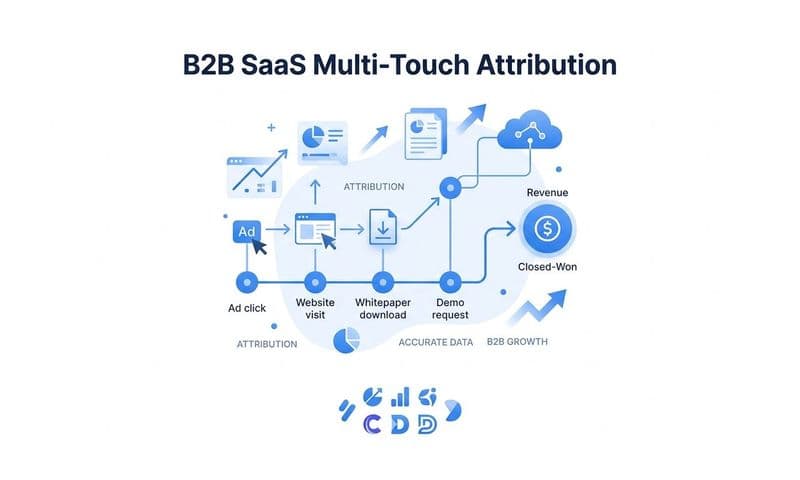
In practice, this creates a distorted picture. Consider a realistic customer journey: someone discovers your product through a Pinterest ad, saves the pin, then searches for your brand on Google a week later, clicks a Google Search ad, and then converts after seeing a retargeting ad on Meta. In Pinterest's native reporting, Pinterest gets zero credit because it was not the last touch. In Meta's reporting, Meta gets full credit. In Google's reporting, Google gets full credit. Every platform is telling you it deserves the budget, and none of them are giving you the full story. Understanding the digital marketing strategy that tracks users across the web is essential for solving this cross-channel attribution challenge.
This is why connecting Pinterest to a multi-touch attribution platform is not optional if you want to make genuinely informed budget decisions.
A platform like Cometly connects your Pinterest ads data alongside all your other ad channels, CRM data, and website events into a single unified view. Instead of evaluating Pinterest in isolation, you can see how it fits into the full customer journey. You can identify whether Pinterest is primarily a top-of-funnel discovery channel that initiates journeys that later convert through other channels, or whether it drives direct conversions on its own. That distinction changes how you allocate budget and how you measure success.
Cometly captures every touchpoint from ad click to CRM event, which means you get a complete picture of how Pinterest interacts with your other channels rather than a siloed view that leads to misallocation. You can compare attribution models side by side, from first touch to linear to data-driven, and understand how each model changes your interpretation of Pinterest's contribution. Exploring the best software for tracking marketing attribution can help you evaluate which platform fits your needs.
Beyond visibility, connecting your attribution data creates a feedback loop that improves ad performance. When you feed enriched, conversion-ready events back to Pinterest's algorithm through conversion sync, you give Pinterest better data to optimize ad delivery. Better data means Pinterest can find more users who are likely to convert, which improves your targeting efficiency over time.
To connect Pinterest to Cometly, you integrate your Pinterest Ads account through the platform's ad channel connections. Cometly pulls your Pinterest campaign data, combines it with cross-channel touchpoint data, and surfaces the insights in a unified analytics dashboard where you can make decisions based on the full customer journey rather than platform-specific last-touch numbers.
Step 7: Optimize Campaigns Using Real Conversion Data
Tracking is only valuable if you act on the data it produces. With your Pinterest Tag, CAPI, and multi-touch attribution all working together, you now have the foundation to make genuinely data-driven optimization decisions.
Start by reviewing Pinterest Ads Manager conversion reports regularly. Filter by campaign, ad group, and individual pin to identify which combinations are driving the lowest cost per conversion and the strongest ROAS. Look for patterns: certain creative styles, audience segments, or bidding strategies that consistently outperform others. These patterns are your scaling signals. Leveraging paid ads analytics across all your channels ensures you are comparing Pinterest performance with consistent metrics.
Attribution window configuration deserves special attention for Pinterest specifically. Because users frequently save pins and return to take action days or weeks later, a narrow attribution window will systematically undercount Pinterest's contribution. Review your typical customer buying cycle and set your attribution window accordingly. For most advertisers, a 30-day click attribution window captures more of the delayed conversions that are characteristic of Pinterest user behavior. You can adjust attribution windows in Pinterest Ads Manager under your conversion event settings.
Use your multi-touch attribution platform to compare Pinterest performance against other channels with a consistent measurement framework. This is where you make budget reallocation decisions based on actual contribution rather than platform-reported numbers. If Pinterest is consistently initiating high-value customer journeys that convert through other channels, it deserves budget credit for that role even if its last-touch conversion numbers look modest. Understanding how ad tracking tools can help you scale ads using accurate data will sharpen your optimization strategy across every platform.
Scale winning campaigns by increasing budgets on ads with strong, verified conversion data. When you increase budget on a campaign that has proven conversion performance backed by both browser-side and server-side data, you are making a confident, data-supported decision. Pause or rework campaigns where conversion data is weak or where cost per conversion is significantly above your target.
Set up a regular monitoring cadence. Check your conversion data weekly. Watch for sudden drops in event volume, which can indicate a tracking issue caused by a site update or code change. Re-verify your Pinterest Tag and CAPI setup after any significant website changes, platform migrations, or redesigns. Tracking setups break more often than most marketers realize, and catching a broken tag quickly prevents weeks of bad data from corrupting your optimization decisions.
Your Pinterest Conversion Tracking Checklist
You now have everything you need to track Pinterest ads conversions accurately and use that data to drive better performance. Before you close this guide, run through this checklist to confirm your setup is complete:
1. Pinterest Business account is active and your website is claimed and verified.
2. Pinterest Tag base code is installed in the head section of every page and confirmed firing via Pinterest Tag Helper.
3. Conversion events (Checkout, Lead, Signup, etc.) are configured with dynamic values and placed on the correct pages and actions.
4. Enhanced Match is enabled and passing hashed customer data to improve match rates.
5. Pinterest Conversions API is active and sending server-side events with proper event_id deduplication.
6. Events Manager confirms both browser-side and server-side events are registering without errors.
7. A live test conversion has been completed and verified in Pinterest's dashboard.
8. Pinterest data is connected to a multi-touch attribution platform for cross-channel visibility.
9. Attribution windows are configured to match your customer buying cycle.
10. A weekly monitoring cadence is in place to catch tracking issues early.
Accurate conversion tracking is not a one-time project. It is an ongoing process that requires regular verification, especially after website changes, platform updates, or shifts in your ad strategy. The marketers who build durable tracking infrastructure and maintain it consistently are the ones who make better budget decisions and scale more confidently over time.
Pinterest's native last-touch reporting is a starting point, not the full picture. To truly understand the value Pinterest drives in your marketing mix, you need cross-platform attribution that connects every touchpoint from the first pin impression to the final conversion. Cometly connects your Pinterest ads data with every other channel to give you a complete, accurate view of what drives revenue, so you can scale the campaigns that actually work. Get your free demo today and start capturing every touchpoint to maximize your conversions.