Snapchat reaches over 800 million monthly active users globally, according to Snap Inc. investor reports from early 2025. For brands targeting Gen Z and millennials, that reach is genuinely hard to ignore. But here is the uncomfortable truth: most advertisers running Snapchat campaigns are working with incomplete conversion data, and they do not even know it.
Without proper conversion tracking, you are making budget decisions based on guesswork. You might be scaling a campaign that looks great in Snapchat's native dashboard but is actually driving zero real revenue. Or you might be pausing ads that are quietly responsible for a significant portion of your sales, simply because the attribution is not connected correctly.
The challenge has gotten more complex in recent years. Apple's App Tracking Transparency framework, introduced in 2021, significantly reduced the reliability of browser-based pixel tracking across every major ad platform, including Snapchat. Add cookie restrictions, cross-device journeys, and the natural self-reporting bias baked into every ad platform's attribution model, and you have a recipe for seriously misleading data.
The good news is that fixing this is entirely within your control. With the right setup, you can track Snapchat ads conversions accurately, understand which creatives and campaigns are actually driving results, and feed better data back into Snapchat's algorithm so it can optimize more effectively on your behalf.
This guide walks you through every step: installing the Snap Pixel, configuring conversion events, implementing server-side tracking via the Conversions API, verifying your data, connecting a third-party attribution platform, and finally using all of that data to make smarter campaign decisions. Whether you are setting this up from scratch or patching gaps in an existing configuration, you will finish with a tracking system you can actually trust.
Step 1: Set Up Your Snap Pixel in Snapchat Ads Manager
The Snap Pixel is the foundation of your Snapchat conversion tracking setup. It is a piece of JavaScript code that lives on your website and communicates user behavior back to Snapchat, connecting ad interactions to on-site actions like purchases, sign-ups, and page views. Before you can track Snapchat ads conversions in any meaningful way, this pixel needs to be installed correctly across your entire site.
Start by logging into your Snapchat Ads Manager account. In the left navigation menu, look for the Events Manager section. This is where all your pixel and conversion event management lives. Click into it and select the option to create a new pixel.
When naming your pixel, use a clear and descriptive convention. If you manage a single brand, something like "BrandName - Main Website" works well. If you run multiple ad accounts or manage clients, include the account or client name in the pixel name. This small habit saves significant confusion later when you are reviewing data across campaigns or troubleshooting issues.
Once the pixel is created, Snapchat will generate a base pixel code snippet. This is the universal tracking code that needs to be placed in the <head> section of every page on your website. The base pixel alone does not track specific conversions, but it does track page views and enables Snapchat to build audiences based on site visitors, which is valuable for retargeting.
You have two main installation options. The first is manual installation, where you or your developer paste the code directly into your site's header template. The second is through a tag manager like Google Tag Manager, where you create a new tag with the Snap Pixel code and set it to fire on all pages. The tag manager approach is generally preferred because it gives you more flexibility and does not require a developer every time you need to make changes. For a deeper look at how proper attribution tracking setup works across platforms, that foundational knowledge applies directly here.
Important tip: Confirm the pixel is installed site-wide, not just on key pages like your homepage or checkout. A common mistake is placing the pixel only on high-value pages, which prevents Snapchat from seeing the full user journey. If someone lands on a blog post, browses a product page, and then converts, you want the pixel capturing that entire path.
Once installed, you are ready to move beyond the base code and configure the specific conversion events that matter for your business.
Step 2: Configure Conversion Events That Match Your Goals
Installing the base pixel is just the beginning. The real value comes from configuring specific conversion events that tell Snapchat exactly what actions matter to your business. Without event-level tracking, all you know is that someone visited your site after seeing an ad. With proper events, you know they purchased, signed up, added a product to their cart, or submitted a lead form.
Snapchat offers a set of standard pixel events that cover the most common conversion actions. These include Purchase, Add to Cart, Start Checkout, Sign Up, Page View, Subscribe, Lead, and several others. For most advertisers, these standard events will cover everything you need. Custom events are available if your conversion action does not fit neatly into one of these categories.
Choosing the right events depends on your campaign objective and business model. Here is a practical breakdown:
Ecommerce brands: Prioritize Purchase (with dynamic revenue values), Add to Cart, Start Checkout, and View Content. These events give Snapchat the data it needs to optimize for buyers, not just browsers.
SaaS and subscription businesses: Focus on Sign Up, Start Trial, and Subscribe. If your funnel includes a demo request or a free account creation, map those to the appropriate events so Snapchat can target users most likely to take those actions.
Lead generation: Use Lead and Submit Form events, firing them on your thank-you page or after a successful form submission. If you use a multi-step form, consider firing an event at key completion milestones. Understanding how to track sales leads effectively ensures these events translate into actionable pipeline data.
When you add event code to your pages, include event parameters wherever possible. For a Purchase event, pass the transaction value, currency, and item category. This richer data improves Snapchat's ability to find high-value customers and gives you better reporting granularity. A basic Purchase event snippet might look like this in concept: fire the event on your order confirmation page and include the order total and currency dynamically populated from your checkout system.
One critical rule: each event should map to one distinct user action. Avoid firing the same event multiple times on a single page load, and be careful not to trigger a Purchase event on any page other than your actual order confirmation page. Double-counting conversions inflates your reported results and causes Snapchat's algorithm to optimize toward the wrong behavior.
After setting up your events, take a few minutes to document which event fires on which page. This simple reference document becomes invaluable during debugging and when onboarding new team members.
Step 3: Implement the Snapchat Conversions API for Server-Side Tracking
Here is where many advertisers leave a significant gap in their tracking setup. They install the Snap Pixel, configure their events, and call it done. But in today's privacy-first environment, relying solely on browser-based pixel tracking means you are likely missing a meaningful portion of your actual conversions.
Apple's App Tracking Transparency framework changed the game for browser-based tracking. When users opt out of tracking, the pixel simply cannot see their conversions. Add ad blockers, browser privacy settings, and the gradual deprecation of third-party cookies, and you have a situation where pixel data alone can significantly undercount what is actually happening. This is the same challenge that makes tracking conversions accurately so critical across every ad platform.
The Snapchat Conversions API, often called CAPI, solves this by sending conversion event data directly from your server to Snapchat, bypassing the browser entirely. Because the data travels server-to-server, it is not affected by browser privacy restrictions, ad blockers, or cookie limitations. Snapchat's own documentation recommends running CAPI alongside the Snap Pixel for the most complete data picture.
Here is how to set it up:
1. Generate your API token. In Snapchat Ads Manager, go to Events Manager, select your pixel, and navigate to the Conversions API section. Generate a long-lived API token. Store this securely, as it authorizes your server to send data to Snapchat on your behalf.
2. Configure your server or integration partner. You have a few options here. If you have developer resources, you can build a direct server-side integration using Snapchat's CAPI documentation. If you prefer a no-code or low-code route, several integration partners and customer data platforms support Snapchat CAPI natively. Some ecommerce platforms also have built-in CAPI support that can be activated with minimal configuration.
3. Map your event parameters. Just like with the pixel, CAPI events should include parameters like email address (hashed), phone number (hashed), IP address, user agent, and transaction data. The more user signals you can pass, the better Snapchat can match server-side events to actual Snapchat users.
4. Enable deduplication. Because you are now sending the same conversion events from both the browser (pixel) and your server (CAPI), you need deduplication logic to prevent Snapchat from counting the same conversion twice. This is done by passing a unique event ID with both the pixel event and the CAPI event for the same action. When Snapchat receives two events with the same ID, it counts them as one. This step is not optional: skipping deduplication means your conversion numbers will be inflated and your optimization signals will be corrupted.
Running pixel and CAPI together with proper deduplication gives you the most resilient tracking setup possible. You capture conversions from users who would have been invisible to browser-based tracking alone, and you give Snapchat's algorithm a richer, more accurate signal to work with.
Step 4: Verify Your Tracking Setup and Debug Issues
Setting up tracking is only half the job. Verifying that it actually works is what separates marketers who trust their data from those who are quietly operating on bad numbers. Before you run a single dollar of spend against your conversion objectives, confirm that every piece of your tracking setup is functioning correctly.
Start with the Snap Pixel Helper, a Chrome browser extension available in the Chrome Web Store. Once installed, visit each key page on your website and open the extension to see which pixel events are firing, what parameters are being passed, and whether any errors are detected. This tool gives you real-time visibility into pixel behavior without needing to dig into code.
Check each of the following pages specifically: your homepage, a product or service page, your cart or checkout page, and your order confirmation or thank-you page. Confirm that the correct event fires on each page and that parameters like purchase value and currency are populating with real values rather than blank or undefined.
Next, open the Events Manager dashboard in Snapchat Ads Manager. This dashboard shows you which events are being received, how recently they fired, and whether there are any match quality issues or error flags. Look for events showing an "Active" status with recent activity timestamps. If an event shows as inactive or has not received data recently, that is a signal to investigate. Keeping a structured approach to marketing campaign tracking helps ensure nothing slips through the cracks during this verification phase.
To run a live test, navigate through your own site as a user would: click a Snapchat ad (or simulate the journey using test tools), complete a conversion action, and then check your Events Manager within a few minutes to confirm the event appeared. This end-to-end test is the most reliable way to confirm your full tracking chain is working.
Common issues to watch for: events firing on the wrong pages, missing parameter values, the pixel not loading on certain page types (especially dynamically rendered pages in single-page applications), and deduplication errors between pixel and CAPI events.
A clean bill of health looks like this: all configured events show Active status in Events Manager, recent event activity is present, parameter data is populated correctly, and no error flags are visible. Once you reach this point, you are ready to run campaigns with confidence.
Step 5: Connect a Third-Party Attribution Platform for Cross-Channel Accuracy
Even with a perfectly configured Snap Pixel and Conversions API, there is a fundamental limitation in relying solely on Snapchat's native attribution: every ad platform has a built-in incentive to take credit for as many conversions as possible.
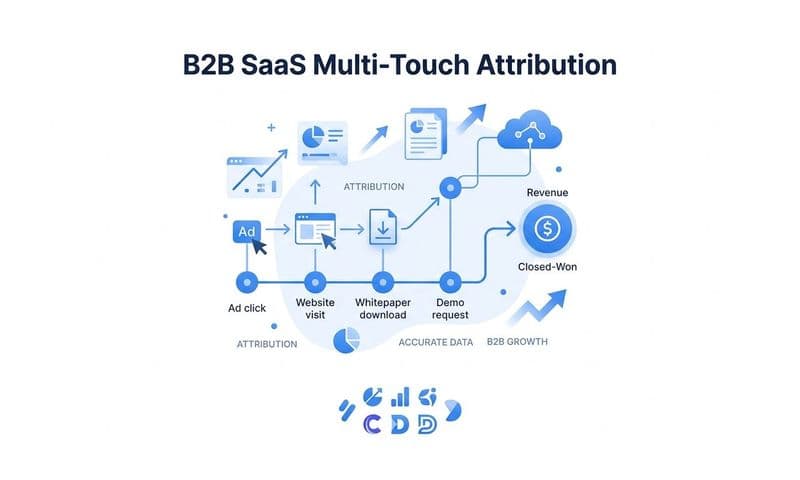
This is not a Snapchat-specific problem. It affects every platform. Meta, Google, TikTok, and Snapchat each measure performance within their own attribution windows, and when a customer interacts with ads on multiple platforms before converting, each platform may claim that conversion as its own. If you add up the reported conversions from all your ad platforms, the total will often exceed your actual number of sales by a wide margin. This self-reporting bias can lead to seriously flawed budget allocation decisions. Understanding marketing attribution platforms and how they solve this problem is essential for any multi-channel advertiser.
A third-party attribution platform solves this by sitting outside the ad platforms and providing an independent view of the full customer journey. Instead of asking each platform how it performed, you get a single, unified picture of which touchpoints actually contributed to each conversion.
This is where a tool like Cometly becomes genuinely valuable for marketers running Snapchat alongside other channels. Cometly connects to Snapchat, Meta, Google, TikTok, and your CRM to track the complete customer journey from first touch to conversion. Rather than trusting each platform's self-reported numbers, you can see exactly which Snapchat ads, ad sets, and creatives are driving real revenue, and how they interact with your other channels.
For teams running campaigns across multiple platforms simultaneously, this cross-channel view is essential. You might discover that Snapchat is consistently driving first-touch awareness for customers who later convert through Google search. Without multi-touch attribution, you would undervalue Snapchat's role and potentially cut budget from a channel that is quietly fueling your pipeline. Exploring the best software for tracking marketing attribution can help you evaluate which solution fits your specific needs.
Cometly also addresses the data quality challenge on the other side of the equation. Through server-side tracking and conversion sync, it feeds enriched, conversion-ready event data back to Snapchat's algorithm. Better data in means better optimization out. Snapchat's machine learning can target more effectively when it receives accurate, complete conversion signals rather than the incomplete picture that pixel-only tracking provides.
The practical result is a feedback loop that improves over time: better attribution data helps you allocate budget more accurately, while better conversion signals help Snapchat's algorithm find more of the right users. Both sides of that equation compound as your campaigns scale.
Connecting a third-party attribution platform is especially important if you are managing significant ad spend across multiple channels and need to make confident decisions about where to invest next.
Step 6: Optimize Your Snapchat Campaigns Using Conversion Data
All of the work you have done in the previous steps only pays off if you actually use the data to make better decisions. Once your tracking is verified and conversion data is flowing reliably, shift your focus from setup to action.
Start by analyzing performance at three levels: campaign, ad set, and individual creative. Which campaigns are driving the highest conversion rates? Which ad sets are reaching audiences that actually buy or sign up? Which specific creatives are resonating enough to push users through to conversion? This drill-down analysis reveals where your budget is working and where it is being wasted.
Use cost per acquisition as your primary optimization metric rather than cost per click or even cost per swipe-up. Engagement metrics are useful for creative testing, but if an ad drives clicks without driving conversions, it is not performing. Reallocate budget away from underperforming ad sets and toward the ones generating real revenue. Leveraging ad tracking tools to scale ads using accurate data makes this reallocation process far more reliable than relying on platform-reported numbers alone.
One area worth experimenting with is attribution window settings. Snapchat offers several options, including 1-day click, 7-day click, and 28-day click attribution windows. The right window depends on your product and purchase cycle. A low-consideration purchase might convert within a day of seeing an ad. A higher-ticket product or SaaS subscription might require a longer consideration period. Testing different windows helps you understand how your audience actually behaves and lets you set bidding strategies that reflect reality.
Build a monitoring rhythm into your workflow. During active campaigns, check conversion data daily to catch any sudden drops that might indicate a tracking issue or a creative that has fatigued. Weekly, review trend data to identify patterns: which days and times drive the most conversions, whether certain audience segments are outperforming others, and how performance shifts as you scale spend. Using paid ads analytics across all your channels ensures you are comparing Snapchat performance in the proper context alongside your other investments.
Watch for tracking drift. Website updates, platform changes, and CMS migrations can silently break pixel events or CAPI connections. A sudden unexplained drop in reported conversions is often a tracking issue rather than a genuine performance decline. Regular verification checks, even just a quick look at Events Manager once a week, keep you ahead of these problems before they affect your campaign decisions.
The marketers who consistently win on Snapchat are not necessarily the ones with the biggest budgets. They are the ones who understand their data well enough to act on it quickly and confidently.
Your Complete Snapchat Conversion Tracking Checklist
With these six steps in place, you have built a Snapchat ads conversion tracking system that goes well beyond basic pixel installation. You are capturing the right events, reinforcing browser-based tracking with server-side data, and layering in independent attribution for a clear, cross-channel view of what is actually driving results.
Before you launch your next campaign, run through this checklist to confirm everything is in order:
Snap Pixel installed site-wide: The base pixel fires on every page of your website, not just key landing pages.
Conversion events configured correctly: Each event maps to a specific user action with proper parameters including value, currency, and relevant metadata.
Conversions API active with deduplication: Server-side tracking is running alongside the pixel, and deduplication logic prevents double-counting.
All events verified as Active: Events Manager shows recent activity and no error flags for each configured event.
Third-party attribution connected: A platform like Cometly is providing an independent, cross-channel view of your full customer journey.
Campaigns optimized on real conversion data: Budget decisions are based on cost per acquisition and attributed revenue, not vanity metrics.
Accurate conversion tracking is not a one-time setup task. As your campaigns scale, your tech stack evolves, and platform updates roll out, revisit your configuration regularly to make sure nothing has broken silently. The confidence to scale your Snapchat investment comes directly from trusting the data behind it.
Ready to get a complete, accurate picture of which ads are driving real revenue across every channel? Get your free demo and see how Cometly's AI-driven attribution can help you capture every touchpoint, eliminate guesswork, and scale your Snapchat campaigns with confidence.