TikTok has become one of the fastest-growing advertising platforms, and marketers are pouring serious budget into it. But spending money on TikTok ads without knowing which campaigns actually drive conversions is like flying blind over a mountain range. You know you are moving, but you have no idea if you are heading toward revenue or a cliff.
The challenge runs deeper than most marketers expect. TikTok's native reporting often tells a very different story than your CRM or analytics tools. Between privacy restrictions, cross-device behavior, ad blockers, and limited attribution windows, getting a clear picture of your TikTok ad performance can feel genuinely frustrating. You end up with numbers that don't match, leads you can't trace, and campaigns you can't confidently scale or cut.
This guide walks you through exactly how to track TikTok ads conversions, from installing the TikTok Pixel to setting up server-side tracking and layering in third-party attribution for a complete, accurate view of what is working. Each step builds on the last, so by the time you reach the end, you will have a conversion tracking setup that actually holds up under scrutiny.
Whether you are running lead generation campaigns for a B2B SaaS product or driving purchases for an ecommerce store, the steps here will help you connect every TikTok ad click to real revenue. You will stop guessing which creatives are performing and start making decisions backed by data you can trust.
Let's get into it.
Step 1: Set Up Your TikTok Events Manager and Define Conversion Goals
Before you place a single pixel or write a single line of code, you need to get clear on what you are actually trying to measure. This sounds obvious, but it is where most tracking setups go wrong from the start.
Log into your TikTok Ads Manager and navigate to the Assets section, then select Events. This is your Events Manager, and it is the central hub where all your conversion data will live. From here, you can set up web events, app events, or offline events depending on how your business model works.
Web events are the most common setup for businesses driving traffic to a website. These track actions visitors take after clicking a TikTok ad, such as completing a purchase, submitting a lead form, or signing up for a free trial.
App events are relevant if you are running campaigns to drive installs or in-app actions for a mobile application.
Offline events allow you to upload conversion data that happens outside the digital environment, such as in-store purchases or phone-based sales, and match it back to your TikTok campaigns. If you need guidance on this approach, learn more about how to track offline conversions and close the attribution gap.
Once you have identified which event type applies to your business, the next step is defining the specific conversion events that actually matter. This is where discipline pays off. It is tempting to track everything, but tracking too many low-value events creates noise that confuses both your analysis and TikTok's optimization algorithm.
Focus on the events that map directly to business outcomes. For ecommerce, that typically means CompletePayment, AddToCart, and InitiateCheckout. For lead generation, it means SubmitForm or a specific thank-you page view. For SaaS, it might be a free trial sign-up or a demo request.
Here is the key insight: map your conversion events to stages in your funnel, not just the final outcome. Tracking mid-funnel events like AddToCart or ViewContent gives TikTok's algorithm more signal to optimize delivery, especially in the early stages of a campaign when final conversion volume is low. But always keep your primary conversion event focused on the action that directly ties to revenue.
Common pitfall to avoid: Firing conversion events on every page interaction, every scroll, or every video play. This dilutes your data, inflates your reported conversion numbers, and gives TikTok's algorithm the wrong optimization signal. Be intentional. Track what matters.
Success indicator: You have a clearly defined primary conversion event and one or two secondary events that represent meaningful funnel progression. Your Events Manager shows these events listed and ready to receive data.
Step 2: Install the TikTok Pixel on Your Website
With your conversion goals defined, it is time to place the TikTok Pixel on your site. The pixel is a JavaScript snippet that fires in the browser when a visitor takes an action on your website, sending that event data back to TikTok's servers.
You have two main installation paths to choose from.
Manual installation involves copying the base pixel code from your Events Manager and pasting it into the <head> section of every page on your website. This gives you the most control and works for any website platform. If you are comfortable with code, this is straightforward.
Partner integrations are available for platforms like Shopify, WooCommerce, and WordPress, as well as through Google Tag Manager. These integrations let you connect your TikTok Pixel without touching code directly. For most ecommerce businesses on Shopify, the partner integration is the fastest and most reliable route. If you also run Google Ads on your store, check out this guide on how to set up Google Ads conversion tracking for Shopify to cover all your channels.
Once the base pixel is installed, you need to configure your standard events. TikTok supports a set of predefined standard events that correspond to common actions:
ViewContent: A visitor views a product page or key landing page. Use this for mid-funnel awareness signals.
AddToCart: A visitor adds a product to their shopping cart. Strong purchase intent signal.
InitiateCheckout: A visitor starts the checkout process. Useful for identifying drop-off points.
CompletePayment: A purchase is completed. This is your primary conversion event for ecommerce.
SubmitForm: A visitor submits a lead form or contact form. Primary conversion event for lead generation.
Each standard event can be enhanced with parameters that pass additional data, such as the purchase value, currency, content ID, or product category. Always include value and currency parameters on your CompletePayment event. This allows TikTok to optimize for revenue rather than just conversion volume, which is a meaningful difference when you are trying to scale profitably.
If none of the standard events match a specific action you want to track, you can create custom events with your own naming convention. Use these sparingly and document them carefully so your team knows what each one represents.
After installation, download the TikTok Pixel Helper Chrome extension and visit your website. The extension will show you which events are firing on each page, whether the pixel ID matches, and whether event parameters are being passed correctly. Green checkmarks mean everything is working. Any errors or warnings need to be resolved before you run campaigns.
Success indicator: Pixel Helper shows your base pixel firing on every page, your conversion events firing on the correct pages, and events appearing in your TikTok Events Manager within a few minutes of triggering them on your site.
Step 3: Implement Server-Side Tracking with TikTok's Events API
Here is where the setup gets more sophisticated, and where many marketers leave significant data on the table by stopping at the pixel alone.
Browser-based pixel tracking has a real problem in 2026: it does not capture everything. Apple's App Tracking Transparency framework, introduced with iOS 14.5, significantly limited the ability of browser pixels to track user behavior on Apple devices. Ad blockers prevent pixel fires for a meaningful portion of web traffic. And increasingly restrictive browser privacy settings continue to reduce the reliability of client-side tracking across the board.
The result is a growing gap between the conversions that actually happen and the conversions your pixel reports. That gap leads to underreporting, which causes TikTok's algorithm to under-optimize, which leads to worse campaign performance and misallocated budget. Understanding the digital marketing strategy that tracks users across the web helps you appreciate why server-side solutions have become essential.
TikTok's Events API solves this problem by sending conversion data directly from your server to TikTok, bypassing the browser entirely. Because the data travels server-to-server, it is not affected by ad blockers, iOS restrictions, or browser privacy settings. You capture conversions that the pixel would have missed.
To set up the Events API, go back to your Events Manager in TikTok Ads Manager and create a new web event using the Events API method. You will generate an access token that authenticates your server's requests to TikTok. Your development team (or your backend platform) then configures your server to send event data to TikTok's API endpoint whenever a conversion occurs.
The key technical requirement is that your server-side events include matching parameters, specifically an event name, a timestamp, and user identification data such as hashed email addresses or phone numbers. This hashed data allows TikTok to match the server-side event to a real user without exposing personally identifiable information.
Best practice: Run both the TikTok Pixel and the Events API simultaneously. This is called a redundant or parallel setup, and it is what TikTok recommends. You will need to implement deduplication logic so that a single conversion does not get counted twice. TikTok handles deduplication automatically when you pass a consistent event ID in both the pixel event and the corresponding API event.
The technical complexity of setting up server-side tracking is real, and it is one of the most common reasons marketers skip this step. This is where a platform like Cometly makes a meaningful difference. Cometly's server-side tracking capabilities handle the technical integration, allowing you to capture the full picture of your conversions without requiring your team to build and maintain custom server infrastructure.
Success indicator: Server-side events appear in your Events Manager alongside pixel events, and your total reported conversion volume increases compared to pixel-only tracking. Deduplication is working correctly, meaning each conversion is counted once.
Step 4: Add UTM Parameters to Every TikTok Ad URL
Pixel tracking and server-side events tell TikTok what happened. UTM parameters tell your analytics tools and CRM where those visitors came from. Both are essential, and they serve different purposes in your attribution stack.
UTM parameters are tags appended to your destination URLs that get captured by tools like Google Analytics, your CRM, and any third-party attribution platform. When a visitor clicks your TikTok ad and lands on your site, the UTM parameters in the URL identify that visitor as a TikTok-sourced visitor, which campaign they came from, and which specific ad they clicked. For a deeper dive into this topic, read our guide on UTM tracking and how UTMs help your marketing.
Use a consistent structure across all your TikTok campaigns:
utm_source=tiktok to identify the traffic source
utm_medium=paid_social to categorize the channel type
utm_campaign=[campaign_name] to identify the specific campaign
utm_content=[ad_name] to identify the specific ad creative
TikTok supports dynamic URL parameters that auto-populate tracking values based on the campaign, ad group, and ad serving the click. Use __CAMPAIGN_NAME__ and __AID__ (Ad ID) in your URL templates so these values populate automatically without manual entry. This reduces errors and saves time when you are managing many ads simultaneously.
Establishing a strict naming convention is non-negotiable. Inconsistent capitalization, spaces instead of underscores, or abbreviated campaign names that change week to week will fragment your data in analytics platforms. You will end up with the same campaign appearing as five different entries because the UTM values were not consistent. A well-designed campaign tracker template can help you standardize naming across your team and prevent this problem.
Common mistake: Skipping UTMs on retargeting campaigns because "the audience already knows us." Every ad click deserves proper tracking, regardless of the campaign objective. Retargeting data is some of the most valuable attribution data you have.
Success indicator: When you check your analytics tool or CRM, TikTok traffic is clearly segmented by campaign and ad, with no untagged sessions appearing under direct or unknown sources.
Step 5: Connect TikTok Data to Your CRM and Revenue Source
This step is what separates marketers who guess from marketers who actually know what drives revenue. Everything up to this point has been about capturing data. This step is about connecting that data to real business outcomes.
TikTok's native reporting stops at the click or the on-platform conversion event. It can tell you that someone clicked your ad and landed on your site. With the pixel, it can tell you that someone submitted a form. But it cannot tell you whether that lead closed into a paying customer six weeks later. It cannot tell you the lifetime value of the customers your campaigns are acquiring. It cannot tell you whether the leads from one campaign are converting at a higher rate in your sales process than leads from another.
That deeper picture only exists when you connect your TikTok tracking data to your CRM. Learning how to effectively track sales leads from ad click through to closed deal is foundational to this process.
The integration works by passing the UTM parameters and click identifiers captured at the point of conversion into your CRM record for that lead or customer. When someone submits a form on your site, your form tool or CRM should capture the UTM values from the URL and store them against the contact record. This creates a direct link between the TikTok ad that drove the click and the CRM record for that individual.
From there, as that lead progresses through your sales pipeline and eventually closes, you can attribute that closed revenue back to the originating TikTok campaign. This is true revenue-level attribution, and it is the only way to calculate an accurate return on ad spend for campaigns that drive leads rather than direct purchases.
For ecommerce businesses, the connection is more direct: your pixel fires a CompletePayment event with a revenue value, and that data flows into your attribution reporting. But even ecommerce marketers benefit from connecting TikTok data to their customer data platform or CRM to understand repeat purchase behavior and lifetime value by acquisition source.
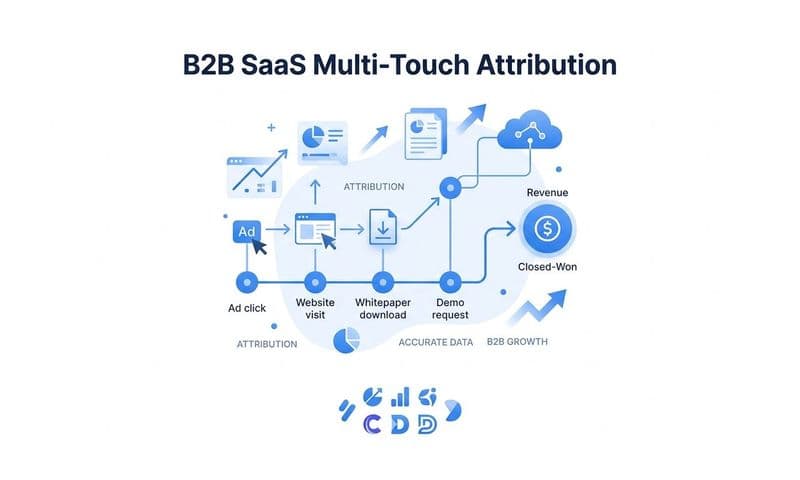
Cometly is built specifically for this kind of connection. It links your ad platforms, CRM, and website to track the entire customer journey in real time, giving you revenue-level attribution across every touchpoint. Instead of looking at TikTok data in one tab and your CRM in another, you see the complete picture in one place: which TikTok campaigns, ad groups, and creatives are actually driving revenue, not just clicks or form fills.
Success indicator: You can open your attribution dashboard and see TikTok campaign performance measured in actual revenue, not just reported conversions. You can trace a closed deal back to the specific TikTok ad that first drove that customer to your site.
Step 6: Validate Your Data and Troubleshoot Tracking Gaps
Setting up tracking is not the finish line. Validating that it is working correctly is just as important, and this step is where most teams drop the ball. Broken tracking that goes unnoticed for weeks corrupts your data, misleads your optimization decisions, and wastes budget.
Start with a structured test. Go through your entire conversion funnel as a real user would: click a TikTok ad (or simulate the traffic with UTMs), land on your site, complete the conversion action, and then verify that the event appears in three places: TikTok Events Manager, your analytics tool, and your CRM. If any of those three do not show the event, you have a gap to investigate.
Common issues to check for:
Duplicate events: If your pixel and Events API are both firing without proper deduplication, you will see inflated conversion counts. Check that your event IDs are consistent between client-side and server-side events.
Missing parameters: Events firing without value or currency parameters mean TikTok cannot optimize for revenue. Check your event configurations and ensure all required parameters are being passed.
Delayed event firing: Some events fire before the conversion is confirmed, such as a purchase event firing before payment processing completes. Ensure your events fire only after the action is definitively complete.
Mismatched event names: If your pixel fires "Purchase" but your Events API sends "CompletePayment," TikTok may treat these as two separate events. Standardize your naming across all tracking methods. These kinds of reporting discrepancies are common across ad platforms — if you also run Facebook campaigns, understanding Facebook Ads reporting discrepancies can help you build a more consistent cross-platform approach.
Beyond initial validation, build a regular audit into your workflow. A weekly or bi-weekly check comparing TikTok's reported conversions against your CRM data will surface tracking drift before it silently corrupts weeks of data. Discrepancies between what TikTok claims and what your CRM shows are normal to some degree due to attribution window differences, but large gaps signal a tracking problem that needs investigation.
Success indicator: Your test conversions appear correctly in all three systems, event counts are consistent with expected volume, and your regular audit shows acceptable alignment between TikTok-reported conversions and CRM data.
Step 7: Use Accurate Conversion Data to Optimize and Scale
All of this setup exists for one reason: to give you the data you need to make better decisions. With reliable conversion tracking in place, you can stop optimizing for what looks good and start optimizing for what actually drives revenue.
Start by analyzing performance at every level of your campaign structure. Which campaigns are driving the lowest cost per acquisition? Which ad groups are reaching audiences that convert at the highest rate? Which creatives are generating the most revenue, not just the most clicks? These are the questions that reliable tracking makes answerable. Investing in the right ad tracking tools can help you scale ads by surfacing these insights automatically.
One of the most powerful things you can do with accurate conversion data is feed it back to TikTok's own algorithm. TikTok's delivery optimization relies on the conversion signals you send back through the Events API. The richer and more accurate that signal, the better TikTok can identify users who resemble your best customers and serve your ads to them. This is what Cometly's Conversion Sync does: it sends enriched, conversion-ready events back to TikTok (and other ad platforms), improving targeting, delivery optimization, and overall ad ROI.
Cometly's AI-powered ads optimization recommendations take this further by identifying high-performing ads and campaigns across your entire ad portfolio. Instead of manually sifting through performance data across multiple platforms, you get clear guidance on where to increase spend and where to pull back, based on verified revenue data rather than platform-reported metrics.
The shift in mindset this enables is significant. Instead of asking "which ad has the highest click-through rate?" you start asking "which ad drives the most revenue per dollar spent?" Those are very different questions, and only the second one actually matters for building a profitable advertising program.
Scale what works by increasing spend on campaigns with verified positive ROI. Cut what does not work based on actual performance data, not gut feel or TikTok's self-reported numbers. This is how you compound your advertising results over time.
Success indicator: Your budget allocation decisions are driven by revenue-level attribution data. You can point to specific TikTok campaigns and creatives and say with confidence: these drive profitable customers, and here is the data to prove it.
Putting It All Together: Your TikTok Conversion Tracking Checklist
Accurate conversion tracking is not a one-time setup. It is an ongoing practice that requires regular validation, maintenance, and refinement as your campaigns evolve and tracking technologies change. But the foundation you build by following these seven steps will give you a significant advantage over competitors who are still flying blind.
Here is your quick-reference checklist:
1. Set up TikTok Events Manager and define your primary and secondary conversion events based on real business outcomes.
2. Install the TikTok Pixel via manual code or partner integration, configure standard events with proper parameters, and verify with Pixel Helper.
3. Implement the TikTok Events API for server-side tracking, run it in parallel with your pixel, and configure deduplication.
4. Add UTM parameters to every TikTok ad URL using a consistent naming convention and TikTok's dynamic parameters.
5. Connect your TikTok tracking data to your CRM to attribute revenue back to specific campaigns and creatives.
6. Validate your full tracking setup with test conversions and establish a regular audit schedule to catch drift early.
7. Use accurate conversion data to optimize campaigns for revenue, feed enriched data back to TikTok's algorithm, and scale what is proven to work.
The marketers who win on TikTok are not necessarily the ones with the best creative instincts. They are the ones who know exactly what their ads are producing and make decisions accordingly.
If you want a unified view of your TikTok performance alongside every other channel you run, Cometly brings it all together. From server-side tracking to multi-touch attribution to AI-powered optimization recommendations, it gives you the complete picture you need to scale with confidence. Get your free demo today and start capturing every touchpoint to maximize your conversions.