App install campaigns can drive significant growth, but without proper tracking, you are essentially flying blind. You might be pouring budget into channels that look successful on the surface while the ads actually driving installs go unnoticed. The challenge intensifies with iOS privacy changes, cross-platform user journeys, and fragmented data across ad networks.
Picture this: You are running install campaigns across Meta, Google, and TikTok. Each platform reports thousands of installs, but your revenue is not matching expectations. Some users install and never open the app. Others complete onboarding but churn within days. Without granular tracking, you cannot tell which campaigns attract valuable users versus those who download and disappear.
The stakes are high. Every dollar spent on low-quality installs is a dollar you could have invested in campaigns that drive real growth. But here is the good news: with the right tracking infrastructure, you can see exactly which ads, channels, and touchpoints lead to real installs and downstream revenue.
This guide walks you through setting up comprehensive tracking for your app install campaigns. You will learn how to capture install data accurately, connect it to your marketing efforts across platforms, and make confident optimization decisions based on complete attribution. By the end, you will have a clear system that shows not just who installed your app, but which marketing touchpoints actually influenced that decision.
Step 1: Define Your Tracking Goals and Key Events
Before you install a single SDK or configure any platform, you need clarity on what success actually looks like. Not all installs are created equal, and tracking everything without purpose creates noise instead of insight.
Start by distinguishing between a successful install and a quality install. A successful install means someone downloaded your app. A quality install means they opened it, completed onboarding, and took a meaningful first action. That first action varies by app type: for a fitness app, it might be completing a workout. For a finance app, linking a bank account. For a game, finishing the tutorial.
Map out the post-install events that indicate real value. These typically include account registration, first purchase, subscription activation, or reaching a specific feature milestone. Document these events with clear names and parameters. If you track a purchase event, define whether you are capturing just the transaction or also the revenue amount, product category, and user segment.
Think through your attribution needs from a budget perspective. You need to know cost per install, but more importantly, cost per quality install and install to conversion rate. Understanding conversion tracking for app installs helps you measure whether your five dollar acquisition generates fifty dollars in lifetime value or results in immediate churn.
Create a tracking specification document before implementing anything. List every event you want to track, the parameters for each event, and which platforms need to receive this data. Include your attribution window preferences, the user identifiers you will use, and how you will handle users who interact across multiple devices.
This upfront work prevents painful gaps later. Many marketers rush to implementation, only to realize weeks into a campaign that they are not tracking a critical conversion event or that their attribution window does not match their actual user journey. Defining your requirements now saves you from flying blind when budgets are on the line.
Step 2: Set Up Your Mobile Measurement Partner (MMP)
Your Mobile Measurement Partner serves as the central hub for app install attribution. It receives data from ad networks when users click or view your ads, captures the install event when users download your app, and connects those two data points to attribute the install correctly.
Choose an MMP that integrates seamlessly with your ad platforms and your broader attribution system. The major players offer similar core functionality, but integration quality varies. Check that your chosen MMP supports server-side tracking, offers robust fraud prevention, and can send enriched conversion data back to your ad platforms through their conversion APIs.
Installing the SDK requires following platform-specific guidelines for both iOS and Android. For iOS, you will integrate the SDK into your Xcode project and configure your info.plist file with the necessary permissions. For Android, you will add the SDK to your Gradle dependencies and update your AndroidManifest.xml. Each MMP provides detailed documentation, but the core steps involve importing the SDK, initializing it with your app credentials, and implementing the tracking calls for your key events.
Pay special attention to iOS implementation in the current privacy landscape. You need to implement App Tracking Transparency prompts correctly and configure SKAdNetwork for aggregated attribution when users decline tracking. Understanding the iOS App Tracking Transparency impact on your campaigns helps you prepare for these limitations.
Configure postback URLs to send install data to your ad networks and analytics platforms. A postback is a server-to-server notification that fires when an install occurs, telling the ad platform that their ad led to a conversion. Each ad network requires specific postback parameters, and your MMP typically offers templates for major platforms. Set these up for every network you run campaigns on.
Test everything in sandbox mode before going live. Most MMPs offer testing environments where you can simulate installs and verify that data flows correctly. Run test installs from each ad platform you use. Check that install events appear in your MMP dashboard, that postbacks fire to the correct ad networks, and that attribution matches your expectations. Catching configuration errors in testing is far better than discovering them after spending real budget.
Step 3: Configure Deep Links and Attribution Windows
Deep links are the technology that enables tracking the user journey from ad click through the app store to first app open. Without proper deep linking, you lose visibility into that critical path, making attribution incomplete or impossible.
Start by setting up basic deep links that direct users to specific content within your app. When a user clicks your ad, the deep link can take them directly to the product they saw advertised rather than just your app homepage. This improves user experience and provides better tracking of which creative elements drive installs.
Implement deferred deep linking to attribute installs even when users do not have the app installed at click time. Here is how it works: A user clicks your ad on their phone but does not have your app installed. They land on the app store, download your app, and open it for the first time. Deferred deep linking captures that original ad click, stores the attribution data temporarily, and connects it to the install event when the user finally opens the app. Without this, you would lose attribution for every new user who clicks your ad.
Configure attribution windows that match your typical user journey. An attribution window defines how long after an ad interaction you will credit that ad with an install. Proper app install attribution tracking requires understanding your product and typical user behavior to set appropriate windows.
Implement universal links for iOS and app links for Android to ensure seamless tracking across devices and scenarios. Universal links allow iOS users to open your app directly from a link without routing through Safari first. App links do the same for Android. Both technologies improve user experience and tracking accuracy by creating a direct path from ad to app.
Test your deep link implementation thoroughly. Click your ads on different devices and operating system versions. Verify that users land in the correct app location, that attribution data flows properly, and that the experience works smoothly whether the app is already installed or needs to be downloaded first.
Step 4: Connect Your Ad Platforms and Enable Server-Side Tracking
Linking your MMP to your ad platforms creates the feedback loop that powers optimization. Ad platforms need to know which ads drive valuable installs so their algorithms can find more users like the ones who convert.
Start by connecting your MMP to Meta, Google, TikTok, and every other platform where you run app install campaigns. Most MMPs offer one-click integrations with major ad networks. You will typically authenticate your ad account, select which events to share, and configure how data flows between systems.
Enable server-side event tracking to capture data that client-side tracking misses due to privacy restrictions. Since iOS 14.5, many users opt out of tracking, which limits what client-side pixels can capture. Implementing first-party data tracking for ads sends conversion data directly from your servers to ad platforms, bypassing browser and device-level restrictions.
Set up conversion APIs to feed accurate install and post-install event data back to ad platforms. Meta's Conversions API, Google's Enhanced Conversions, and TikTok's Events API all serve the same purpose: they receive conversion data from your server and use it to optimize ad delivery. When you send enriched data through these APIs, including details like revenue value, user attributes, and post-install actions, ad platforms can optimize for quality installs instead of just install volume.
Configure which events trigger API calls. At minimum, send the install event itself. But to unlock real optimization power, also send post-install events like registration completion, first purchase, and subscription activation. The more signal you provide about what constitutes a valuable user, the better ad platforms can optimize delivery.
Verify that install events appear correctly in each ad platform's dashboard. Run test campaigns with small budgets and confirm that installs show up with proper attribution. Check that the install counts in your ad platform dashboards roughly match what your MMP reports. Some discrepancy is normal due to different attribution methodologies, but major gaps indicate a configuration problem that needs fixing.
Step 5: Implement Cross-Platform Attribution
Users rarely follow a linear path to installing your app. They might see your ad on desktop, research your app on their laptop, and finally install on their phone days later. Without cross-platform attribution, you miss critical touchpoints and misunderstand what actually drives conversions.
Connect your app install data to your web analytics and CRM to see the full customer journey. If you run web campaigns alongside app campaigns, you need a unified view of how these channels work together. A user might click a web ad, visit your website, then later search for your app and install it. Both touchpoints contributed, but siloed tracking would only credit the app store search.
Track users who discover your app on desktop but install on mobile. This happens frequently, especially for productivity apps, finance apps, and services where users research on a larger screen before committing. Implement cross-device tracking by using consistent user identifiers when possible. Email addresses, phone numbers, or account IDs can connect a desktop session to a mobile install when users log in or create an account.
Build a unified view that shows which marketing efforts contribute to installs across all channels. This means connecting data from your web analytics, your MMP, your ad platforms, and your CRM into a single source of truth. Exploring attribution for mobile app campaigns helps you understand how different touchpoints work together to drive conversions.
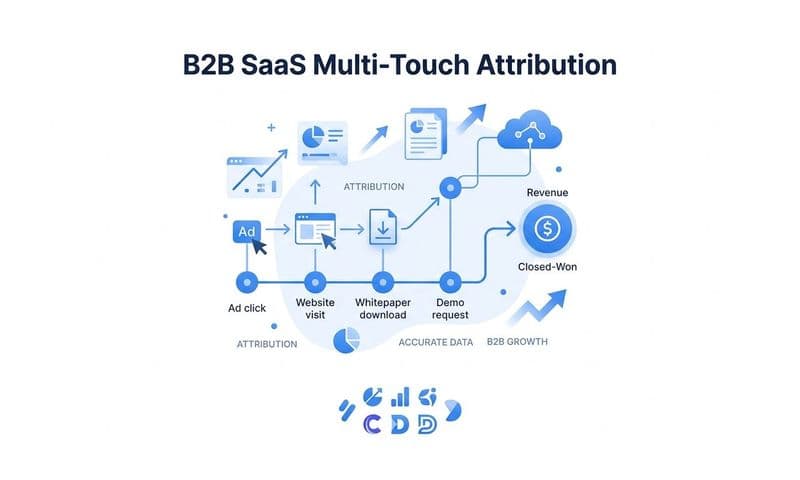
Consider the complexity of multi-touch attribution for app installs. A user might see a display ad on desktop, click a social ad on mobile, visit your website, and then install your app. Which touchpoint deserves credit? First-touch attribution credits the initial display ad. Last-touch credits the social ad. Multi-touch models distribute credit across the journey. Choose an attribution model that reflects how your marketing actually works.
Use server-side tracking to connect web and app data even when users do not log in immediately. Probabilistic matching techniques can identify when the same user moves between devices based on signals like IP address, device type, and timing patterns. While less precise than deterministic matching through login credentials, probabilistic methods help fill attribution gaps.
Step 6: Validate Your Tracking and Troubleshoot Common Issues
Even perfectly configured tracking systems need validation. Small errors in implementation can lead to massive attribution gaps that undermine your entire optimization strategy.
Run test installs from each ad platform to confirm attribution is working correctly. Create small test campaigns on Meta, Google, TikTok, and any other networks you use. Click your own ads, complete the install process, and verify that the install appears in your MMP dashboard with correct attribution. Check that postbacks fire to the ad platforms and that the install shows up in their reporting interfaces.
Check for discrepancies between MMP data, ad platform data, and your internal analytics. Some variance is normal because different systems use different attribution methodologies and timing windows. But if your MMP reports one thousand installs while your ad platform shows five hundred, you have a problem. Investigate whether postbacks are firing correctly, whether attribution windows match, and whether you are comparing the same time periods.
Address common issues before they affect campaign decisions. Missing postbacks often result from incorrect URL configuration or firewall rules blocking server-to-server communication. Reviewing advertising campaign tracking gaps helps you identify and resolve these problems systematically.
Set up alerts for tracking failures so you catch problems before they affect campaign decisions. Configure your MMP to notify you when install volumes drop suddenly, when postback failure rates spike, or when attribution rates fall below normal levels. These alerts help you identify and fix issues quickly rather than discovering them weeks later when reviewing performance.
Document your troubleshooting process for common scenarios. When attribution breaks, you need to diagnose the issue quickly. Create a checklist: verify SDK integration, check postback configuration, confirm attribution windows, review ad platform authentication, test deep links. Having a systematic approach helps you resolve issues faster.
Step 7: Analyze Results and Optimize Your Campaigns
Accurate tracking means nothing if you do not use the data to make better decisions. The final step is building a regular analysis and optimization process that turns attribution insights into improved campaign performance.
Review install attribution data by campaign, ad set, and creative to identify top performers. Look at which campaigns drive the highest install volumes, but do not stop there. Segment your analysis by creative format, messaging angle, and audience targeting. You might discover that video ads drive more installs than static images, or that certain messaging themes resonate better with high-value users.
Look beyond install volume to post-install quality metrics like retention and revenue. A campaign that drives one thousand installs at three dollars each might seem more efficient than one driving five hundred installs at five dollars each. But if the first campaign's users churn within days while the second campaign's users subscribe and generate ongoing revenue, the second campaign is actually the winner. Using ad performance tracking for app installs helps you measure day-one retention, day-seven retention, first purchase rate, and lifetime value by campaign source.
Use attribution insights to reallocate budget toward channels driving valuable users. Once you identify which campaigns attract users who stick around and convert, shift budget away from high-volume, low-quality sources toward those that drive real business results. This often means paying higher cost-per-install rates for better user quality, which improves overall return on ad spend.
Analyze creative performance with attribution data to understand what messaging drives quality installs. If certain ad creatives consistently attract users who complete onboarding and make purchases, create more variations in that style. If other creatives drive installs but poor retention, pause them even if their cost-per-install looks attractive.
Set up regular reporting cadences to continuously improve campaign performance. Weekly reviews help you catch trends early and make tactical adjustments. Monthly deep dives allow you to analyze cohort behavior and lifetime value patterns. Quarterly strategic reviews inform budget allocation and channel mix decisions. Consistent analysis turns your tracking investment into ongoing performance improvements.
Putting It All Together
Tracking app install campaigns accurately requires intentional setup across multiple systems, but the payoff is clear visibility into what drives growth. With proper tracking in place, you can stop guessing which campaigns work and start making decisions based on real data.
Quick checklist to ensure you have covered everything: Define your key install and post-install events with clear specifications. Implement your MMP with proper SDK integration for both iOS and Android. Configure deep links and attribution windows that match your user journey. Connect ad platforms with server-side tracking and conversion APIs. Build cross-platform attribution for the full customer journey across devices. Validate tracking with test installs from each ad platform. Analyze and optimize based on accurate attribution data and quality metrics.
The difference between basic tracking and comprehensive attribution is the difference between knowing installs happened and understanding which marketing efforts actually drove them. When you can see the complete picture, from first ad impression through install to downstream revenue, you make smarter budget decisions and drive better results.
Remember that tracking is not a one-time setup. Privacy regulations evolve, ad platforms update their APIs, and user behavior changes. Plan to review and update your tracking infrastructure regularly to maintain attribution accuracy as the landscape shifts.
Ready to elevate your marketing game with precision and confidence? Discover how Cometly's AI-driven recommendations can transform your ad strategy. Get your free demo today and start capturing every touchpoint to maximize your conversions.