If you are running paid ads, email campaigns, or organic social posts and you cannot tell which ones are actually driving pipeline and revenue, UTM tracking is the foundation you are missing. Traffic shows up as "direct" or "unattributed," and suddenly your marketing decisions are based on gut feel rather than data. That is a costly problem to ignore.
UTM parameters are short snippets of text added to your URLs that tell your analytics tools exactly where a visitor came from, what campaign brought them, and which specific ad or link they clicked. They are the connective tissue between your marketing activity and your attribution reporting.
This guide walks you through every step of building a reliable UTM tracking system, from creating your first tagged URL to analyzing performance inside your attribution platform. Whether you are a solo marketer at a B2B SaaS company or part of a growth team managing dozens of campaigns across multiple channels, this process will give you a single source of truth for your marketing data.
By the end, you will know how to structure UTM parameters consistently, avoid the common mistakes that corrupt your data, and connect UTM data to actual revenue outcomes using a platform like Cometly. Let's get into it.
Step 1: Understand the Five UTM Parameters and What Each One Does
Before you tag a single URL, you need to understand what you are actually building. UTM parameters are five standardized fields that attach to your URLs and pass traffic source data into your analytics platform. Each one captures a different dimension of attribution.
utm_source: Identifies where the traffic is coming from. Think of this as the publisher or platform. Examples include google, facebook, linkedin, or newsletter.
utm_medium: Identifies the marketing channel or mechanism. This is how the traffic arrived, not where it came from. Examples include cpc, email, organic-social, or display.
utm_campaign: Identifies the specific campaign driving the traffic. This could be a product launch, a seasonal promotion, or an ongoing brand awareness effort. Examples include q2-demand-gen or product-launch-june.
utm_term: Used primarily for paid search campaigns to capture the keyword that triggered the ad. This parameter is optional but valuable for keyword-level attribution in Google Ads.
utm_content: Used to differentiate between multiple links within the same campaign or to support A/B testing. For example, if you have two banner ads pointing to the same landing page, utm_content lets you distinguish which one drove the click.
Of these five, utm_source, utm_medium, and utm_campaign are the core required parameters for meaningful attribution reporting. utm_term and utm_content are optional but add granularity when you need it.
Here is what a fully tagged URL looks like in practice:
https://yoursite.com/demo?utm_source=linkedin&utm_medium=cpc&utm_campaign=q2-demand-gen&utm_content=banner-v2
Breaking that down: the traffic came from LinkedIn (source), through a paid click (medium), as part of the Q2 demand generation campaign (campaign), and specifically from the second banner variant (content).
Common pitfall to avoid: Confusing utm_source with utm_medium is one of the most frequent mistakes teams make. The source is the platform or publisher. The medium is the channel type. Mixing these up corrupts your channel grouping in analytics, making it impossible to accurately compare performance across paid, organic, and email channels. Keep them distinct and you will save yourself hours of cleanup later.
Step 2: Build a Naming Convention Before You Tag a Single URL
Here is where most teams skip ahead and pay for it later. Before you generate a single tagged URL, you need a naming convention that everyone on your team follows without exception. UTM parameters are case-sensitive, which means "Facebook," "facebook," and "fb" will appear as three completely separate traffic sources in your analytics data. That fragmentation makes channel reporting nearly useless.
The fix is simple but requires discipline: decide on your naming rules before you launch anything, document them, and enforce them.
Here are the core principles for a clean naming convention:
Always use lowercase. No exceptions. "Google" and "google" are different values to your analytics platform. Lowercase everything to eliminate case-sensitivity issues entirely.
Use hyphens instead of spaces. Spaces in URLs get encoded as "%20," which creates messy-looking parameters and occasional tracking errors. Hyphens are clean, readable, and universally safe.
Be descriptive but concise. A campaign name like "q2-2026-saas-demand-gen" tells you exactly what it is. A name like "campaign1" tells you nothing six months later when you are reviewing historical data.
Standardize your medium values. Agree on a fixed list of accepted medium values for your team. Common standards include: cpc, email, organic-social, display, affiliate, referral, and direct-outreach. Do not let individuals invent new medium values on the fly.
A practical naming convention template your team can adopt immediately looks like this:
utm_source: platform name in lowercase (google, linkedin, facebook, newsletter)
utm_medium: channel type in lowercase (cpc, email, organic-social, display)
utm_campaign: quarter-year-initiative (q2-2026-product-launch)
utm_content: creative-variant or placement (hero-image-v1, cta-button-blue)
Document this in a shared spreadsheet or team wiki before any campaign goes live. Include a "valid values" tab that lists every approved source, medium, and campaign naming pattern. When someone on your team creates a new campaign, they reference the doc first and add new entries before tagging URLs. This single habit prevents the majority of UTM data quality issues teams face.
Consistent naming also directly impacts your attribution accuracy. When you are using multi-touch attribution models to understand which touchpoints contribute to pipeline, those models rely on clean, consistent UTM data to classify touchpoints correctly. Inconsistent naming means misclassified touchpoints and inaccurate channel performance data.
Step 3: Generate Tagged URLs Using a UTM Builder
With your naming convention documented, you are ready to start building tagged URLs. The most accessible starting point is Google's Campaign URL Builder, a free tool that lets you input your base URL and UTM parameters and outputs a complete tagged URL ready to use. It is straightforward and a good option for teams just getting started.
For paid channels running at scale, manual URL building becomes impractical quickly. This is where dynamic parameters come in.
Google Ads ValueTrack Parameters: Google Ads supports dynamic value insertion using ValueTrack parameters, which automatically populate UTM fields with real-time campaign data. For example, {campaignid} inserts the actual campaign ID, {adgroupid} inserts the ad group ID, and {keyword} inserts the keyword that triggered the ad. A UTM string using dynamic parameters might look like: utm_source=google&utm_medium=cpc&utm_campaign={campaignid}&utm_term={keyword}. This eliminates manual entry and reduces human error significantly.
Meta Ads Dynamic Parameters: Meta Ads Manager offers its own set of dynamic URL parameters that auto-populate values like campaign name, ad set name, and ad name. Using these means your UTM data stays accurate even when campaign names change, because the values are pulled dynamically at the time of the click.
Here is how to structure UTM tags by channel type:
Paid Search: utm_source=google, utm_medium=cpc, utm_campaign={campaignid}, utm_term={keyword}
Paid Social: utm_source=facebook, utm_medium=cpc, utm_campaign=q2-2026-awareness, utm_content=video-ad-v1
Email: utm_source=newsletter, utm_medium=email, utm_campaign=june-product-update, utm_content=cta-button
Organic Social: utm_source=linkedin, utm_medium=organic-social, utm_campaign=thought-leadership
Direct Outbound: utm_source=outbound-sequence, utm_medium=email, utm_campaign=q2-2026-outbound
One important distinction to understand: Google Ads has its own auto-tagging feature that appends a gclid parameter to URLs automatically. This gclid passes data directly between Google Ads and Google Analytics without requiring manual UTM parameters. However, if you are using a third-party attribution platform like Cometly alongside Google Analytics, you will want manual UTM tags in addition to gclid, because the third-party platform reads UTM parameters rather than gclid.
Critical pitfall: Double-tagging occurs when both auto-tagging and manual UTMs are active simultaneously and conflict with each other. Check your Google Ads account settings to confirm whether auto-tagging is enabled, and align your UTM strategy accordingly to avoid overwriting or duplicating parameter data.
Step 4: Implement UTM Tracking Across Every Active Channel
Building a naming convention and generating tagged URLs is only useful if you actually apply them consistently across every channel driving traffic to your site. One untagged channel creates a blind spot in your attribution data. Here is a channel-by-channel implementation checklist.
Paid Search (Google Ads, Microsoft Ads): Apply UTM parameters at the final URL level for every ad. Use dynamic ValueTrack parameters for campaign and keyword fields. Confirm that auto-tagging settings align with your attribution platform requirements.
Paid Social (Meta, LinkedIn, TikTok): In Meta Ads Manager, add UTM parameters in the URL Parameters field at the ad level. LinkedIn Campaign Manager has a dedicated tracking field for UTM parameters. TikTok Ads Manager supports manual UTM tagging in the destination URL field. For LinkedIn and TikTok specifically, neither platform auto-tags the way Google does, so manual tagging is required for every ad.
Display and Programmatic: Tag every creative URL before uploading to your DSP or display network. If your display partner uses click trackers, confirm that UTM parameters survive the redirect chain intact.
Email Campaigns: Apply UTMs to every link in every email, including newsletters, nurture sequences, re-engagement campaigns, and transactional emails. Most email platforms like HubSpot, Mailchimp, and Klaviyo have built-in UTM tagging settings. Enable them at the account or campaign level and override with specific values where needed. Use utm_content to differentiate between multiple CTAs within a single email.
Affiliate and Content Syndication: Provide your partners with pre-built tagged URLs. Do not rely on partners to tag links themselves. Build the URLs, test them, and hand them over ready to use.
Inside Meta Ads Manager, you can apply UTM parameters at the campaign, ad set, or ad level. Ad-level tagging gives you the most granular data and is generally the recommended approach for B2B SaaS teams that want to understand which specific creative is driving conversions.
In Google Ads, navigate to the final URL field within each ad and append your UTM string. For search campaigns, use the account-level or campaign-level campaign tracking template to apply parameters consistently without editing every ad individually.
Before you launch anything: Test every tagged URL by clicking it and verifying that the parameters appear correctly in your analytics platform or attribution tool. A broken UTM tag that passes no data is worse than no tag at all, because it creates unattributed sessions that look like direct traffic. Testing takes two minutes and prevents hours of data investigation later.
Step 5: Connect UTM Data to Your Attribution Platform for Full-Funnel Visibility
This is where UTM tracking moves from a basic analytics exercise to a genuine revenue intelligence capability. Most teams stop at Google Analytics, where UTM data shows them sessions, bounce rates, and goal completions. That is useful, but it is not the full picture.
The real question for B2B SaaS teams is not which campaign drove the most clicks. It is which campaign drove the most pipeline and closed-won revenue. Those are very different answers, and they require connecting your UTM data to your CRM and revenue data.
A platform like Cometly is built specifically to bridge this gap. When a visitor arrives on your site with UTM parameters in the URL, Cometly captures those parameters and associates them with the visitor's session. As that visitor progresses through your funnel, whether they fill out a demo request form, enter a trial, or eventually become a paying customer, Cometly maps the original UTM source data to each stage of that journey. The result is attribution that connects utm_campaign values directly to pipeline stages and closed revenue, not just clicks.
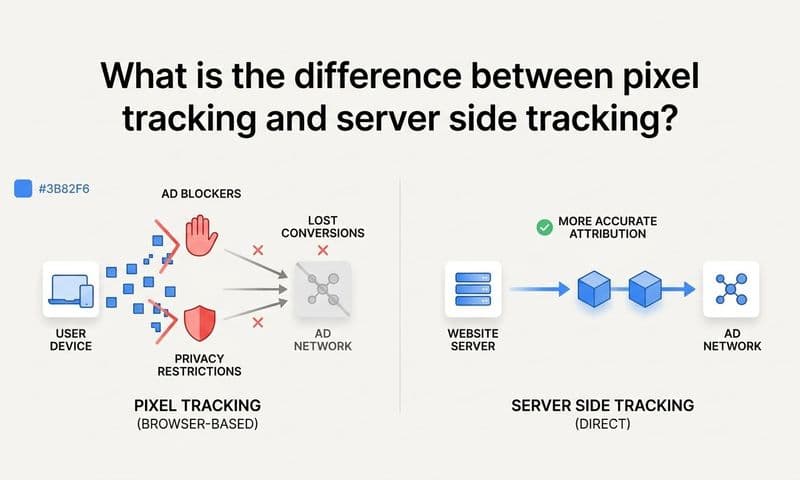
This matters especially for B2B SaaS companies with long sales cycles. The gap between a visitor clicking a LinkedIn ad and that same person becoming a closed-won deal can span weeks or months. Without persistent UTM capture, that original source attribution gets lost. Cometly's server-side tracking and Conversion API integration preserve UTM data even when browser cookies are blocked or users switch devices between touchpoints, which is increasingly common.
Multi-touch attribution models depend entirely on clean UTM data to work correctly. When Cometly distributes conversion credit across every touchpoint in a customer journey, it uses the UTM parameters attached to each interaction to classify and credit those touchpoints accurately. If your UTM naming is inconsistent, the model misclassifies touchpoints and your channel performance data becomes unreliable.
With Cometly connected to your UTM data, you can also feed enriched, conversion-ready events back to Meta and Google. This improves the ad platform algorithms' ability to target and optimize toward the audiences most likely to convert into actual revenue, not just form fills. That feedback loop between your attribution data and your ad platform AI is one of the highest-leverage things a B2B SaaS marketing team can build.
Success indicator: You know this step is working when you can open your attribution dashboard and see, by utm_campaign value, exactly how much pipeline and closed revenue each campaign has generated. Not impressions, not clicks, not sessions. Pipeline and revenue. That is the signal that your UTM tracking system is doing its job.
Step 6: Audit and Maintain Your UTM Data Quality Over Time
UTM tracking is not a set-it-and-forget-it system. Data quality degrades over time through human error, team turnover, inconsistent naming, and campaigns that launch without proper tagging. A monthly audit practice is what separates teams with reliable attribution data from teams that are constantly second-guessing their numbers.
Here is a practical monthly audit checklist:
Check for untagged traffic. In your analytics or attribution platform, look at your direct traffic volume. A sudden spike in direct traffic often signals that a campaign launched without UTM parameters, and sessions that should be attributed to a specific source are falling into the direct bucket instead.
Review for duplicate parameter variations. Search your source and medium reports for near-duplicate values like "Google" and "google," "fb" and "facebook," or "Email" and "email." Each duplicate represents fragmented data that needs to be corrected and prevented going forward.
Audit active campaigns for missing coverage. Cross-reference your list of active campaigns against your UTM tracking spreadsheet. Any campaign that is live but not appearing in your attribution reports likely has missing or broken UTM tags.
Review new traffic sources. Occasionally, traffic will appear from sources you did not intentionally create. This can indicate that a partner, affiliate, or syndication partner is sending traffic without proper tagging. Reach out and provide them with correctly tagged URLs.
Beyond the monthly audit, establish a UTM governance process for your team. Designate one person as the owner of the naming convention document. Require that new campaigns get their UTM parameters reviewed and approved before launch. This is not bureaucracy for its own sake. It is the operational discipline that keeps your attribution data trustworthy over time.
Maintain a master UTM tracking spreadsheet that logs every tagged URL your team creates. Include columns for the destination URL, all five parameter values, the campaign launch date, and the channel. This record becomes invaluable during audits and when onboarding new team members who need to understand your tagging history.
Platforms like Cometly can help surface anomalies automatically, flagging sudden changes in direct traffic or drops in attributed sessions that indicate something in your UTM chain has broken. Using your attribution platform as an early warning system for data quality issues is one of the most practical ways to stay ahead of problems before they compound.
Putting It All Together: From Tagged URLs to Revenue Insights
You now have a complete UTM tracking system. Here is the six-step checklist in summary:
1. Understand the five UTM parameters and what each one captures: source, medium, campaign, term, and content.
2. Build a naming convention with lowercase values, hyphens instead of spaces, and a documented list of approved parameter values before any campaign launches.
3. Generate tagged URLs using a UTM builder, and use dynamic parameters in Google Ads and Meta Ads to automate tagging at scale.
4. Implement UTM tracking across every active channel: paid search, paid social, email, display, affiliate, and content syndication, and test every URL before launch.
5. Connect your UTM data to an attribution platform like Cometly to map traffic sources through to pipeline, revenue, and AI-driven optimization.
6. Audit your UTM data monthly to catch naming inconsistencies, untagged campaigns, and data quality issues before they compound.
UTM tracking is the foundation of accurate marketing attribution, but it is not the destination. Clean, consistent UTM data unlocks the ability to understand which channels and campaigns are genuinely driving revenue, not just traffic. It gives your team the confidence to scale what is working and cut what is not, based on real data rather than assumptions.
When you connect that UTM data to a platform like Cometly, you go further still. You get multi-touch attribution across the full customer journey, AI-driven recommendations for scaling high-performing campaigns, and the ability to feed enriched conversion data back to your ad platforms for smarter optimization. That is the complete picture that modern B2B SaaS marketing teams need to compete.
Ready to connect your UTM data to actual revenue outcomes? Get your free demo and see how Cometly turns your UTM tracking into full-funnel attribution intelligence.