Most B2B SaaS marketing teams are not short on data. They have dashboards, ad reports, CRM records, and analytics platforms. What they often lack is a clear picture of how a prospect actually moves from seeing an ad for the first time to becoming a paying customer. That gap is not a data problem. It is a framework problem.
The customer journey is the framework that closes that gap. It maps every interaction a prospect has with your brand, from the first impression to the closed deal and beyond. But understanding the customer journey is not just an academic exercise. Every component of that journey, when properly tracked and attributed, tells you something specific about where your budget is working and where it is being wasted.
For B2B SaaS teams trying to make confident decisions about ad spend, channel mix, and messaging strategy, understanding which components are part of the customer journey is a practical requirement. By the end of this article, you will know exactly what those components are, how they connect, and what it takes to measure each one accurately.
The Building Blocks Every Marketer Needs to Know
Before you can track the customer journey, you need to understand what it actually is. At its core, the customer journey is the full sequence of interactions a prospect has with your brand, from the moment they first become aware of you through purchase and into the ongoing relationship that follows.
In B2B SaaS, this is never a straight line. Prospects discover your brand, disappear for weeks, return after a colleague mentions you, attend a webinar, read three blog posts, request a demo, and then go quiet again before finally signing a contract. The path is messy, non-linear, and influenced by factors you may never fully see. That complexity is exactly why having a clear framework matters.
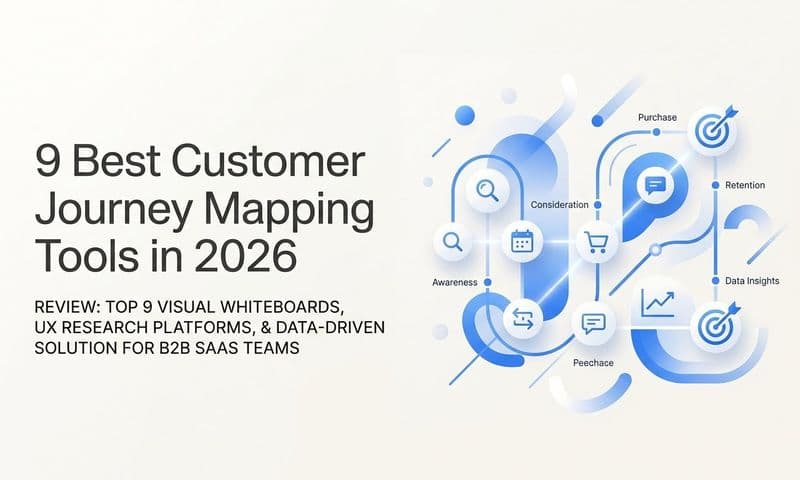
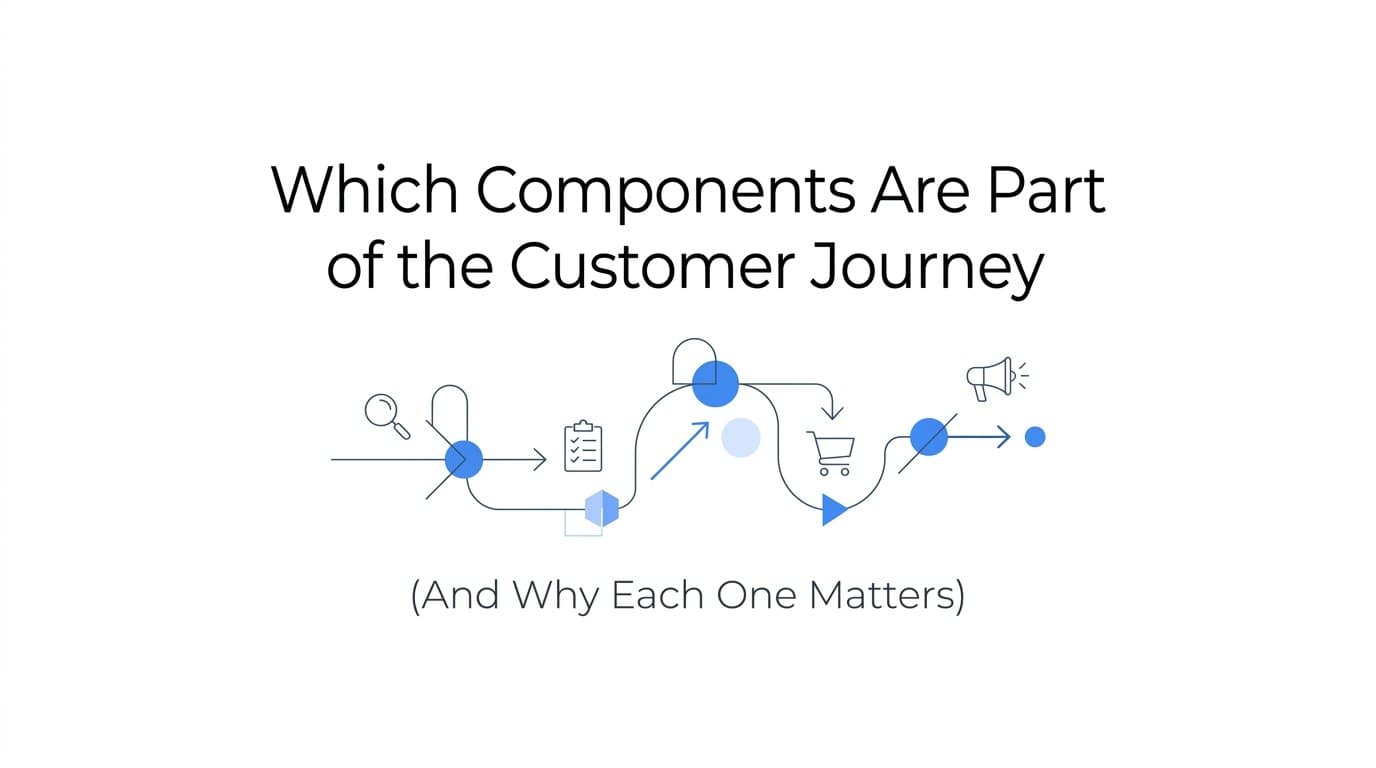
The five core stages of the customer journey give you that framework:
Awareness: The prospect discovers that your brand exists. This might happen through a paid search ad, a LinkedIn post, a referral from a peer, or an organic search result. At this stage, they are not evaluating you yet. They are simply becoming aware that a solution like yours exists.
Consideration: The prospect is now actively evaluating options. They are comparing vendors, reading reviews, consuming your content, and trying to understand whether your solution fits their problem. This stage tends to involve multiple touchpoints and often multiple stakeholders in B2B buying scenarios.
Decision: The prospect has narrowed their options and is moving toward a choice. This is where demos, proposals, pricing conversations, and final objections live. Sales and marketing both play a role here, and the handoff between them is a critical moment in the journey.
Purchase: The transaction occurs. In SaaS, this might be a self-serve signup, a contract signature, or a subscription activation. This is the conversion event that most attribution models are built around, but it is not the end of the journey.
Retention and Expansion: The post-purchase relationship determines long-term revenue. Renewals, upsells, and referrals all originate here. For SaaS businesses with recurring revenue models, this stage is often where the most significant revenue is generated over time.
Understanding these stages matters for three practical reasons. First, it shapes budget allocation. Different stages require different channels and different levels of investment. Second, it informs messaging strategy. A prospect in the awareness stage needs different content than one who is ready to decide. Third, it tells you which channels to prioritize at each phase, so you are not spending awareness-stage budget on bottom-of-funnel audiences or vice versa.
Touchpoints: The Individual Moments That Shape Every Decision
If the journey stages are the map, touchpoints are the individual steps a prospect takes along the route. A touchpoint is any specific interaction a prospect has with your brand across any channel. A click on a Google ad, a view of your LinkedIn sponsored post, a visit to your pricing page, a download of a case study, a reply to a sales email: each of these is a touchpoint.
Touchpoints fall into three broad categories, and each plays a different role in the journey.
Paid touchpoints include any interaction driven by advertising spend. Google Ads, LinkedIn Ads, Meta Ads, display retargeting, and sponsored content all fall here. Paid touchpoints are typically strongest at driving awareness and re-engagement, and they are the most directly attributable because ad platforms capture click and impression data automatically.
Owned touchpoints are interactions that happen on channels your brand controls directly. Your website, landing pages, blog content, email sequences, and product demos all count. These touchpoints tend to dominate the consideration and decision stages, where prospects are doing deeper research before committing.
Earned touchpoints are interactions that happen outside your direct control. Organic search rankings, third-party review sites like G2 or Capterra, peer referrals, and word-of-mouth mentions are all earned. These touchpoints carry significant trust weight, particularly in B2B buying decisions where social proof from peers often matters more than any ad you can run.
Here is where the complexity of B2B SaaS becomes particularly relevant. A single prospect in a typical B2B journey may interact with anywhere from six to twelve touchpoints before converting. They might click a Google ad, visit your homepage, leave, see a retargeting ad on LinkedIn, return to read a blog post, sign up for a webinar, receive a follow-up email, request a demo, and then close weeks later after a sales call. Every one of those interactions contributed to the outcome.
The problem is that most teams default to crediting only one of those touchpoints, usually the last one before conversion. This is the trap of last-touch attribution, and it systematically distorts your understanding of what is actually driving results. The Google ad that started the journey gets zero credit. The blog post that re-engaged a cold prospect gets ignored. The only touchpoint that gets recognized is the final one, which may have simply been the last step in a journey that was already well underway.
Understanding which components are part of the customer journey means recognizing that every touchpoint in that sequence contributed something. The goal of attribution is to understand how much credit each one deserves, not to pretend that only one interaction mattered.
Channels, Attribution Models, and the Data Layer Underneath
Touchpoints happen through channels. Channels are the distribution mechanisms through which your brand reaches prospects and through which prospects interact with you. Google Ads, Meta Ads, LinkedIn Ads, organic search, email, direct traffic, and referral sites are all channels. Each one tends to perform differently depending on the journey stage.
Paid search channels often excel at capturing demand that already exists, making them effective at the consideration and decision stages when prospects are actively searching for solutions. Paid social channels like LinkedIn and Meta are typically stronger at the awareness stage, reaching prospects who are not yet searching but fit your ideal customer profile. Email is most powerful in the middle and lower funnel, nurturing prospects who have already engaged. Organic search builds trust and drives consideration-stage traffic over time.
Understanding your channel mix at each journey stage is how you allocate budget intelligently rather than spreading spend evenly and hoping for the best.
Attribution models are the logic layer that sits on top of your touchpoint and channel data. They determine how credit for a conversion is assigned across the interactions that preceded it. The four models you need to understand are:
First-touch attribution gives all credit to the first interaction. It answers the question: what is driving awareness and bringing new prospects into the funnel? Useful for understanding which channels are best at generating top-of-funnel reach.
Last-touch attribution gives all credit to the final interaction before conversion. It answers the question: what is closing deals? Useful for understanding bottom-of-funnel performance but blind to everything that happened earlier in the journey.
Linear attribution distributes credit equally across all touchpoints. It acknowledges that every interaction contributed something, though it does not attempt to weight them by actual influence.
Data-driven attribution uses algorithmic weighting based on actual conversion patterns to assign credit. It is the most sophisticated model and the most accurate when you have sufficient data volume, because it reflects how your specific audience actually behaves rather than applying a fixed rule.
None of these models is universally correct. The right model depends on the business question you are trying to answer. For budget planning, data-driven or linear models give a more complete picture. For channel-specific optimization, first-touch and last-touch each reveal something useful.
Underneath all of this is the data layer that makes attribution possible in the first place. Conversion events need to be captured accurately. That requires pixel tracking or server-side event tracking for website interactions, CRM integration for pipeline and sales data, and revenue data for closed-won attribution. When any part of this data layer is incomplete or broken, you develop blind spots in your journey analysis. You may think a channel is underperforming when the reality is that your tracking is simply missing events.
From Lead to Revenue: Mapping the B2B SaaS Journey Specifically
B2B SaaS customer journeys are fundamentally different from B2C journeys, and those differences have direct implications for how you track and attribute results.
In B2C, a single person discovers a product, evaluates it, and buys it, often within a single session or a few days. In B2B SaaS, the journey typically spans weeks or months, involves multiple stakeholders across different roles, and includes a mix of marketing and sales interactions that all need to be tracked together to understand the full picture.
A realistic B2B SaaS customer journey might look like this. A director of marketing at a target company sees a LinkedIn ad and clicks through to a blog post. They read the post, leave, and return three days later via organic search to visit the pricing page. They sign up for a free trial or submit a lead form. That action triggers an MQL designation in the CRM and a handoff to the sales development team. An SDR sends a personalized email, books a discovery call, and the prospect attends a product demo. The sales team sends a proposal. The prospect goes quiet for two weeks while internal stakeholders review options. A follow-up email re-engages them. They sign a contract.
Every step in that sequence is a trackable component of the customer journey. The LinkedIn ad click, the organic search visit, the pricing page view, the form submission, the email open, the demo attendance, the proposal review, and the contract signature are all events that can and should be captured.
But here is where many B2B SaaS teams lose visibility. Marketing teams are typically good at tracking the top of this funnel: ad clicks, website visits, form submissions. Once a prospect enters the CRM and becomes a sales opportunity, the connection between marketing activity and revenue outcomes often breaks down. Marketing may know that a campaign generated fifty leads. What they often cannot tell you is how many of those leads became closed-won revenue, or which specific touchpoints were most common in the journeys of the prospects who actually converted.
This gap between MQL and closed-won is one of the most significant blind spots in B2B SaaS marketing. It means that budget decisions are being made based on lead volume rather than revenue outcomes, which can lead to investing heavily in channels that generate plenty of leads but very few actual customers.
How to Track Every Component Without Losing Data
Full-journey tracking in B2B SaaS requires a connected technical setup that spans the entire funnel. There is no single tool that handles everything out of the box, which is why data gaps are so common. Understanding what each layer of tracking needs to do is the first step toward building a setup that does not leave you blind.
At the top of the funnel, you need event tracking on your website and landing pages to capture ad clicks, page visits, and content interactions. Traditionally this has been done through browser-based pixels from ad platforms like Meta and Google. These pixels fire when a user lands on your site and send event data back to the ad platform, enabling attribution and retargeting.
In the middle of the funnel, form submissions, demo requests, free trial signups, and email engagement all need to be captured as conversion events. These events need to flow into your CRM so that marketing activity can be connected to specific contacts and accounts.
In the lower funnel, pipeline stage progression, proposal activity, and ultimately closed-won revenue need to be tracked as events that can be tied back to the original marketing touchpoints. This is where CRM integration and revenue data sync become critical.
The challenge is that each of these layers faces its own tracking vulnerabilities. Browser privacy changes, including Intelligent Tracking Prevention in Safari and the ongoing deprecation of third-party cookies, have significantly reduced the accuracy of pixel-based tracking. Ad blockers prevent pixels from firing entirely for a meaningful portion of your audience. Disconnected tools between marketing and sales platforms create gaps where data simply does not transfer.
Server-side tracking and Conversion API integrations have emerged as the modern solution to these problems. Instead of relying on a browser pixel to fire and send data, server-side tracking captures events directly from your server and sends them to ad platforms through a secure API connection. Meta's Conversion API and Google's Enhanced Conversions both support this approach. Because the event capture happens server-side rather than in the browser, it is not affected by ad blockers or browser privacy restrictions.
The result is more complete event data, better attribution accuracy, and more reliable signals sent back to ad platforms to improve their own targeting and optimization algorithms. When you feed better data to Meta or Google's machine learning systems, those systems make better decisions about who to show your ads to, which compounds the benefit over time.
Turning Journey Data Into Decisions That Drive Growth
Tracking every component of the customer journey is not the end goal. The end goal is using that data to make smarter decisions about where to invest and how to grow.
When you have a complete, connected view of the customer journey from first ad click to closed-won revenue, budget allocation becomes a data-backed exercise rather than an educated guess. You can see which channels are most effective at generating awareness, which ones drive consideration-stage engagement, and which touchpoints consistently appear in the journeys of your highest-value customers. That knowledge tells you exactly where to increase spend and where to pull back.
For example, you might discover that organic search drives a large share of your leads but that prospects who enter through paid LinkedIn ads have shorter sales cycles and higher average contract values. Without full-journey data, you might deprioritize LinkedIn because the cost per lead looks high. With full-journey data, you can see that LinkedIn leads close faster and at higher values, making the channel more efficient on a revenue basis even if it looks expensive on a lead basis.
AI-driven analysis of journey data takes this a step further. When you have enough event data flowing through a connected system, AI can surface patterns that would be nearly impossible to identify through manual reporting. Which ad creative types correlate with faster sales cycles? Which touchpoint sequences produce the highest lifetime value customers? Which channels are driving awareness for accounts that eventually close, even if those channels do not appear in last-touch reports? These are the kinds of insights that separate teams making confident, compounding decisions from teams that are always reacting to incomplete information.
This is exactly the problem that Cometly is built to solve. Cometly connects your ad platforms, website events, CRM pipeline stages, and revenue data into a single, unified view of the customer journey. Instead of stitching together reports from five different tools and hoping the numbers align, you get one source of truth that shows every component of the journey in context.
With Cometly, you can track every touchpoint from the first ad impression through to closed-won revenue, compare attribution models to understand what is really driving results, use server-side tracking to capture events that browser-based pixels would miss, and get AI-powered recommendations that identify your highest-performing campaigns and channels. For B2B SaaS marketing teams that want to stop guessing and start making data-backed decisions, that kind of visibility changes everything.
Putting It All Together
The components of the customer journey are not abstract concepts. They are the actual building blocks of how your prospects move from strangers to customers, and each one carries information that can make your marketing more effective when tracked and measured correctly.
To summarize what we covered: the journey stages (Awareness, Consideration, Decision, Purchase, and Retention) define the mindset and intent level of your prospect at each phase. Touchpoints are the individual interactions that move prospects through those stages, spanning paid, owned, and earned channels. Attribution models are the logic that assigns credit to those touchpoints, and choosing the right model depends on the question you are trying to answer. The data layer underneath all of this, including server-side tracking, CRM integration, and revenue data sync, is what makes accurate attribution possible. And the B2B SaaS journey specifically requires visibility from first impression all the way through to closed-won revenue, not just to the lead form.
Understanding these components is not a theoretical exercise. It is a practical requirement for any B2B SaaS team that wants to allocate budget with confidence, optimize campaigns based on revenue rather than vanity metrics, and build a marketing operation that compounds over time.
If you are ready to connect every component of your customer journey and see exactly which ads and channels are driving real revenue, Get your free demo of Cometly today and start capturing every touchpoint that matters.