You're running campaigns on Google, LinkedIn, Meta, and maybe a few other channels. Leads are coming in. The dashboards look busy. But when your CEO asks which channels are actually driving revenue, you hesitate. Sound familiar?
This is one of the most common frustrations in B2B SaaS marketing. Teams invest significant budget across multiple channels, collect mountains of data, and still cannot confidently answer the most important question: what is actually working? The gap between activity and insight leads to gut-feel budget decisions, over-investment in channels that generate noise rather than revenue, and a persistent inability to scale what is genuinely performing.
The problem is not a lack of data. It is a lack of connected data. Platform dashboards report their own metrics in isolation, CRMs track leads without tying them back to originating campaigns, and attribution models are often set to defaults that tell a misleading story. The result is a marketing mix that looks productive on the surface but is difficult to optimize with confidence.
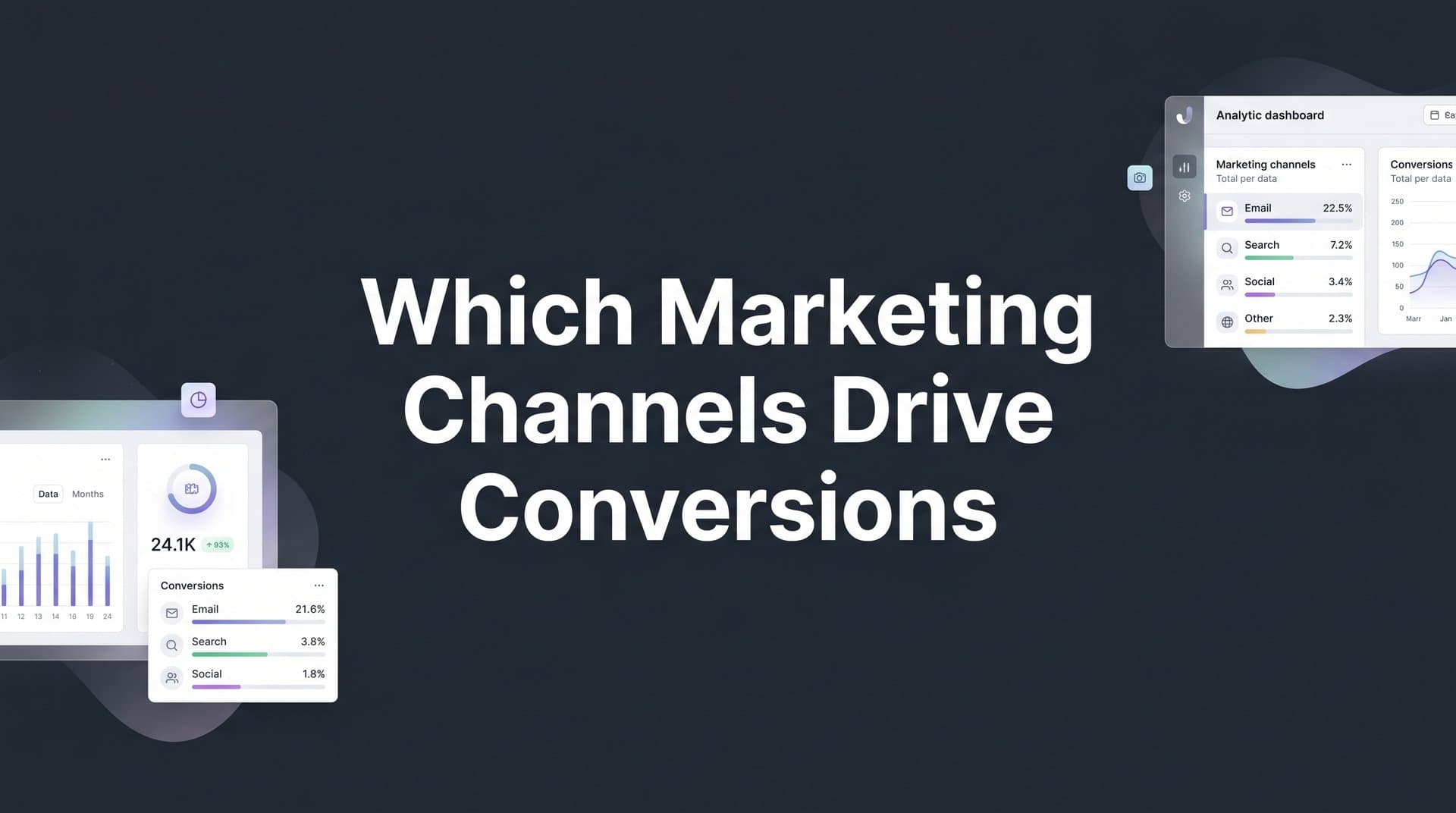
Understanding which marketing channels drive conversions is not just a reporting exercise. It is a strategic growth lever. Get it right, and you can allocate budget with precision, scale what works, and stop funding what does not. This article breaks down why channel measurement is harder than it looks, which channels tend to perform in B2B SaaS, how attribution models shape your understanding of performance, and how to build a data strategy that connects ad clicks to closed-won revenue.
Why Channel Performance Is Harder to Measure Than It Looks
Here is the thing about B2B SaaS buyers: they rarely convert after a single interaction. A typical buyer might discover your product through a LinkedIn ad, read a few blog posts over the following weeks, attend a webinar, click a retargeting ad, and then search for your brand name before finally booking a demo. That journey spans multiple channels, multiple sessions, and often multiple weeks or months.
When you rely on last-click attribution, only the branded search gets credit. Every other touchpoint that shaped the decision disappears from the report. This is why single-source attribution is not just incomplete; it is actively misleading. It creates a distorted view of which channels matter and pushes budget toward channels that close deals rather than the ones that initiate or nurture them.
Platform-reported metrics compound this problem. When Google Ads tells you a campaign generated 50 conversions, it is measuring against a conversion event it defined, often a form fill or a page visit, not a closed deal. Meta's ROAS figures are self-reported within Meta's ecosystem and do not account for what happens after a lead enters your CRM. Each platform has an incentive to show its own performance in the best possible light, which means cross-channel reality is always more complicated than any single dashboard suggests.
The most significant breakdown happens in the gap between a lead converting and that lead becoming a paying customer. Many channels are excellent at generating leads but poor at generating revenue. Without tracking what happens downstream in the sales process, you cannot distinguish between a channel that fills your pipeline with qualified opportunities and one that floods your CRM with contacts who never progress past the first call.
This is the core measurement challenge for B2B SaaS teams. Solving it requires moving beyond platform metrics and building a connected view of the entire customer journey, from first ad impression to signed contract.
The B2B SaaS Channels Most Likely to Drive Pipeline
Not all channels serve the same purpose in the funnel, and understanding their distinct roles is essential before you can evaluate their relative performance. Let us look at how the major performance marketing channels typically function in a B2B SaaS context.
Paid Search: Paid search, particularly Google Ads, captures demand that already exists. When someone searches for "project management software for remote teams" or "best CRM for B2B SaaS," they are signaling active intent. This makes paid search highly effective at the bottom of the funnel, where buyers are evaluating options and moving toward a decision. The challenge is that accurate conversion tracking is essential. Without it, you are optimizing toward clicks or form fills rather than the pipeline value those clicks actually generate.
LinkedIn Ads: LinkedIn occupies a unique position in B2B marketing because of its targeting precision. You can reach specific job titles, seniority levels, company sizes, and industries in ways that no other paid social platform matches. This makes LinkedIn particularly effective for reaching decision-makers and economic buyers who are not yet actively searching for a solution but fit your ideal customer profile. LinkedIn tends to perform well for awareness and consideration-stage campaigns, though cost-per-click is typically higher than other platforms, which makes revenue attribution even more important to justify the spend.
Meta Ads: Meta excels at scale and retargeting. For B2B SaaS teams, Meta is often most effective when used to re-engage audiences who have already visited your site or interacted with your content. The platform's broad reach also makes it useful for building awareness at scale, particularly when targeting lookalike audiences modeled on your existing customers. Like LinkedIn, its value is frequently underestimated when attribution is limited to last-click models.
SEO and Content Marketing: Organic channels are among the most undervalued in attribution reports, and the reason is structural. Blog posts, comparison pages, and educational content tend to influence buyers early in the journey, often months before a conversion event. Last-click models assign zero credit to a piece of content that introduced a buyer to your product category, even if that content was the reason they ever considered your solution. When you look at assisted conversions or multi-touch attribution, organic channels frequently reveal far more pipeline influence than their last-click numbers suggest.
The key insight is that these channels are not competitors; they are collaborators. Paid search captures demand that content marketing helped create. Retargeting ads re-engage visitors that LinkedIn campaigns brought to your site. Evaluating any single channel in isolation misses the cumulative effect of a well-coordinated marketing mix.
How Attribution Models Change What You Think Is Working
Attribution models are not neutral. Each one tells a fundamentally different story about which channels deserve credit, and choosing the wrong model can send your budget in entirely the wrong direction.
Last-click attribution is still the default in many tools, and it consistently produces a skewed picture. It over-credits the final touchpoint before conversion, which in B2B SaaS is often a branded search or a direct visit. Channels that initiated the relationship or kept the buyer engaged during a long consideration cycle receive zero credit, even if they were essential to the outcome. Over time, optimizing to last-click attribution means you will gradually defund the channels that are actually generating awareness and interest.
Multi-touch attribution models distribute credit across all touchpoints in the customer journey, which produces a more accurate reflection of how channels work together. The most common multi-touch models each take a different approach:
Linear attribution gives equal credit to every touchpoint in the journey. It is simple and avoids the extremes of single-touch models, though it does not account for the fact that some touchpoints are more influential than others.
Time-decay attribution assigns more credit to touchpoints that occurred closer to the conversion event. This works reasonably well for shorter sales cycles where recency is a meaningful signal, but it still under-credits early-stage channels in longer B2B journeys.
Data-driven attribution uses machine learning to assign credit based on how each touchpoint actually contributed to conversion outcomes across your dataset. It is the most sophisticated model available, but it requires sufficient conversion volume to produce reliable results.
Choosing the right model depends on your specific context. If your average sales cycle is three to six months and deals involve multiple stakeholders, a linear or data-driven model will give you a more accurate picture than last-click. If your product has a short trial-to-paid cycle, time-decay may be sufficient.
The practical implication is significant. Many B2B SaaS teams that switch from last-click to multi-touch attribution discover that their organic content and top-of-funnel paid social campaigns have been driving far more pipeline than their reports suggested. This changes budget conversations entirely. What looked like an underperforming channel suddenly reveals itself as a critical part of the conversion path, and what looked like a star performer may be taking credit for work done by other channels upstream.
Connecting Channel Data to Revenue, Not Just Leads
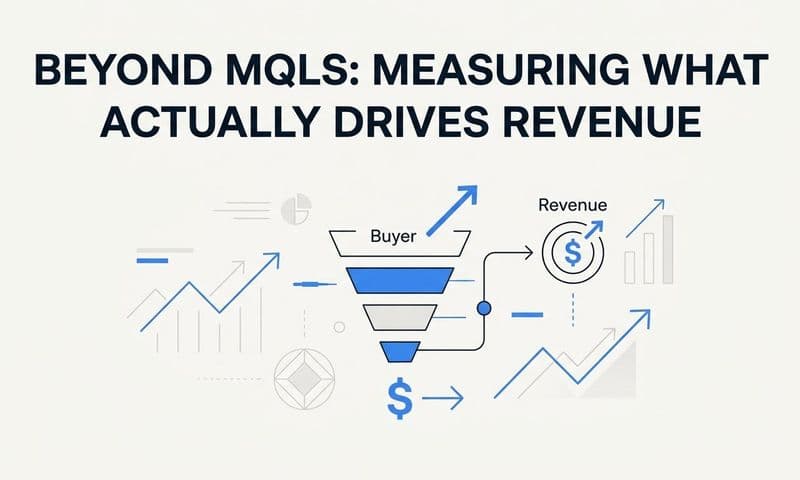
Lead volume is a seductive metric. It is easy to measure, easy to report, and it feels like progress. But for B2B SaaS companies, lead volume is a lagging indicator of channel quality at best and a misleading one at worst. The metric that actually validates channel performance is revenue: pipeline value generated, opportunities created, and deals closed.
The gap between leads and revenue is where most channel measurement strategies fall apart. A channel might generate a high volume of MQLs that look impressive in a marketing report but consistently fail to convert into paying customers. Without connecting CRM data back to the originating channel, you cannot see this pattern. You keep investing in a channel that generates activity rather than outcomes.
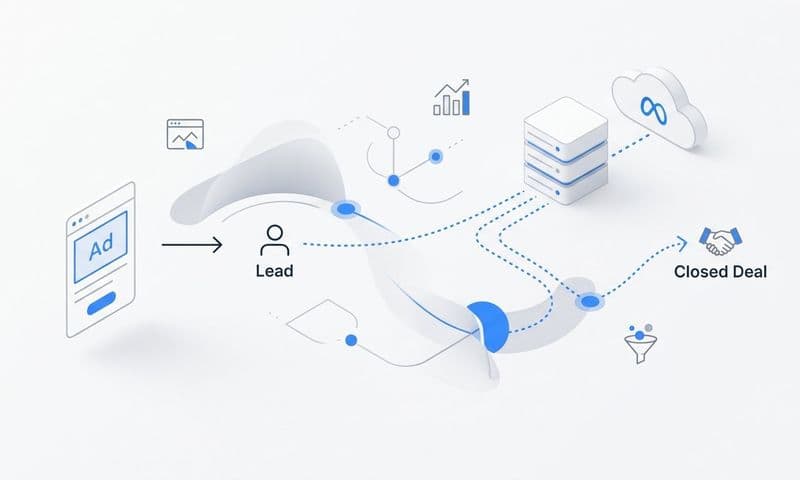
Closing this loop requires integrating your CRM with your ad platform data. When you can trace a closed-won deal back to the specific campaign, ad set, and channel that first touched that account, you gain a completely different view of channel performance. Cost per lead becomes cost per pipeline dollar. Channel comparisons shift from volume-based to revenue-based.
Server-side tracking and Conversion API integrations play a critical role in making this work. Browser privacy changes, iOS updates, and the gradual deprecation of third-party cookies have significantly degraded the quality of pixel-based tracking. When a conversion event fires on the client side, it is increasingly likely to be blocked, dropped, or misattributed due to browser restrictions. Server-side tracking bypasses these limitations by sending conversion data directly from your server to the ad platform, preserving signal quality and reducing data loss.
Meta's Conversion API and Google's Enhanced Conversions are the primary implementations of this approach. By passing enriched, first-party conversion data, including CRM-level events like opportunity created or deal closed, back to these platforms, you give their algorithms better signals to optimize against. Instead of optimizing for form fills, you can optimize for the types of conversions that actually become customers. This improves targeting precision and compounds over time as the platform's AI learns from higher-quality data.
The result is a measurement infrastructure that connects the full arc of the customer journey: from the first ad click to the signed contract, with every touchpoint in between accounted for.
Building a Single Source of Truth for Channel Performance
One of the most common obstacles to understanding which marketing channels drive conversions is data fragmentation. Google Ads reports in Google Ads. Meta reports in Meta. Your CRM tracks leads and deals. Your website analytics tool tracks sessions and behavior. Each of these systems uses different attribution logic, different conversion definitions, and different time windows. When you try to compare performance across channels using their native dashboards, you are not comparing apples to apples. You are comparing apples to entirely different types of fruit.
This fragmentation creates conflicting reports that undermine confidence in the data. Marketing says LinkedIn drove 40 opportunities last quarter. Sales says they cannot trace those back to LinkedIn. Finance wants to know the cost per closed deal by channel and gets three different answers depending on which tool you ask. The result is decision-making based on the loudest voice in the room rather than the most accurate data.
A centralized attribution platform solves this by aggregating touchpoint data from every channel into a single, consistent view. Instead of pulling reports from five different tools and trying to reconcile them in a spreadsheet, you have one place where every channel is measured against the same conversion events, the same attribution model, and the same revenue data from your CRM.
This is where AI-driven insights add meaningful value. Rather than manually scanning dashboards to identify patterns, an AI layer can surface which channels and campaigns are over- or under-performing relative to their actual contribution to revenue. It can flag when a channel's cost per pipeline dollar has shifted, identify campaigns that are generating leads but not customers, and recommend budget reallocation based on revenue contribution rather than surface-level metrics.
Platforms like Cometly are built specifically for this use case. By connecting ad platforms, CRM data, and website analytics into a unified attribution view, Cometly gives B2B SaaS marketing teams the ability to compare channel performance with AI-driven insights and make budget decisions grounded in revenue data rather than platform-reported metrics.
Turning Channel Insights Into Smarter Budget Decisions
Accurate attribution is only valuable if it changes how you act. The practical outcome of understanding which marketing channels drive conversions is the ability to make confident budget decisions: scaling what works, cutting what does not, and reallocating investment based on revenue contribution rather than activity metrics.
Once you know which channels are generating pipeline at the lowest cost per revenue, the budget conversation changes. Instead of defending spend based on impression counts or lead volume, you can point to cost per closed deal by channel and make a clear case for where additional investment will generate the highest return. Channels that generate leads but not customers become visible, and you can redirect that budget toward channels with a proven track record of driving revenue.
Feeding enriched conversion data back to ad platforms compounds these gains. When Meta and Google receive high-quality, CRM-level conversion signals, their optimization algorithms become more effective. They learn which types of users are most likely to convert into paying customers, not just form-fill leads, and they adjust targeting accordingly. Better data in means better performance out, and this improvement compounds over time as the platforms accumulate more signal.
Channel evaluation should not be a one-time audit. The most effective B2B SaaS marketing teams treat it as a recurring process tied to pipeline reviews. Channels that perform well in one quarter may shift as competition increases, audiences saturate, or buyer behavior changes. Building a regular cadence of channel performance review, anchored to revenue data rather than vanity metrics, keeps your budget aligned with what is actually driving growth.
Putting It All Together
The question of which marketing channels drive conversions cannot be answered by looking at platform dashboards in isolation. Google will tell you Google is working. Meta will tell you Meta is working. Without a connected data strategy that links ad clicks to CRM events to closed-won revenue, you are making budget decisions based on self-reported metrics from systems with an inherent bias toward their own performance.
Answering this question accurately requires multi-touch attribution that reflects the full customer journey, server-side tracking that preserves signal quality in a privacy-first environment, and CRM integration that connects marketing activity to downstream revenue outcomes. It requires a single source of truth where every channel is evaluated on equal terms, and AI-driven insights that surface what the data is telling you before the next budget cycle forces a decision.
Cometly is built to make this possible for B2B SaaS teams. From capturing every touchpoint across your ad platforms and CRM to feeding enriched conversion data back to Meta and Google, Cometly gives you the connected data infrastructure to know, with confidence, what is driving your revenue and what is not.
If you are ready to move beyond platform dashboards and start making every budget decision with real attribution data, Get your free demo today and see exactly which channels are driving your pipeline and revenue.